
Sacha Mullin Has No Fear of Expression With “Social Touch”
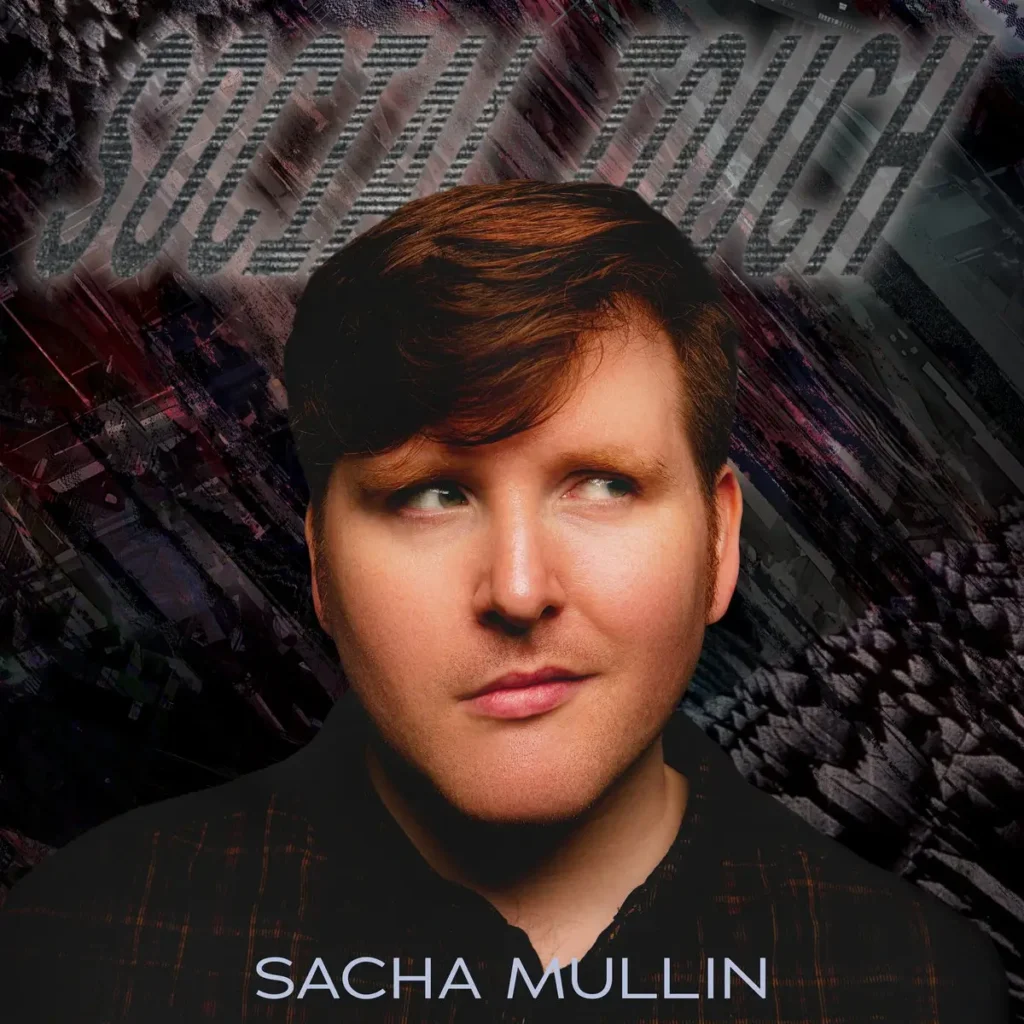
Sacha Mullin can be proud of what he’s created. Drawing inspiration from artists like Kate Bush, Joni Mitchell, and Geike Arnaert, he’s able to craft a sound that feels distinctly his own, while still carrying qualities comparable to legends like Jeff Buckley and David Sylvian. With Social Touch, he’s able to bring out a more theatrical and avant-garde side of pop. It is straightforward and almost experimental at the same time. The melodies and rhythms can be unconventional, and the arrangements can become cinematic without losing the central pop sensibility—forming a sense of movement throughout the record, whether that comes from the rhythms and layered instrumentation, or the way his vocals lay against the production. Hypocenter carries a dark, almost cinematic urgency, with a catchy rhythmic pulse that gives the song a feeling of constant motion, similar to tracks like Bed All Day, Don’t Wanna Hurt You, and Joy. Mullin’s voice moves with the track unironically, comfortably shifting between controlled passages and almost operatic and theatrical moments. Photo Credit: Michael Izquierdo, @izqueerdo. This credit also applies to the featured image above. The quality of his voice also adds a unique texture to his tracks—like how he stretches vowels and enunciates certain words to add a bit more flair to it. Mullin seems to examine how every word sounds in his mouth and in the track sheet. This is where the comparisons to Freddie Mercury and David Sylvian begin to make more sense! For one, there is the larger-than-life vocal presence of Mercury, and also the artful quality associated with Sylvian. This is not to say that Mullin is trying to imitate his heroes; he simply takes those qualities, molds them according to his ideal musical landscape, and very carefully makes them his own. Mullin’s Social Touch maximizes the sound of each instrument, and nothing feels like it is simply there to fill space. The guitars, bass, piano, synthesizers, and other elements each have their own character and moment to shine. Mullin’s arrangement can be dense, as with one of the tracks, Tears Into Platinum, but the elements rarely feel overcrowded or out of place. There seems to be an almost architectural quality to how the production took shape: each piece is placed deliberately, with enough room for them to perform and breathe while still contributing to the larger picture. Social Touch is versatile, as it can find its way to almost every situation with ease. Be it in a club, on casual drives, at intimate dinners, or even at formal gatherings. You can listen casually and simply enjoy the melodies without overthinking them, but you can also put on headphones and discover and dissect layers that you may have missed the first time, and you may just find yourself surprised! Social Touch can be background music, but it can also become the main event, and that is not an easy balance to achieve. Another thing is Mullin’s pen game: he is not afraid to stretch his vocabulary and explore how certain words would fit into a series of seemingly uncoordinated mixtures of words, yet they somehow make sense—truly avant-garde and unafraid, quite complex and unique. Mullin’s use of language revolves around how he bends it around a melody rather than simply being placed inside a conventional modern-day pop structure. His lyricism seems to be a collection of words that might initially appear loose, but as the song develops, the logic begins to reveal itself. There is something playful about that approach. That fearlessness translates into his music as a whole. With two b-sides, Sacha Mullin showcases his art-rock songwriting and pop-forward musical direction with his fourth album, Social Touch, out on the 19th of October 2026. Follow Sacha Mullin Globe Spotify Bandcamp Youtube Instagram Promoted Content About the Author
Sacha Mullin Has No Fear of Expression With “Social Touch” Read More »