
loader image

November 2026

Valentinfever Stalks Abandoned Streets With the Heavy Sludge and Raw Bite of Ghost Town

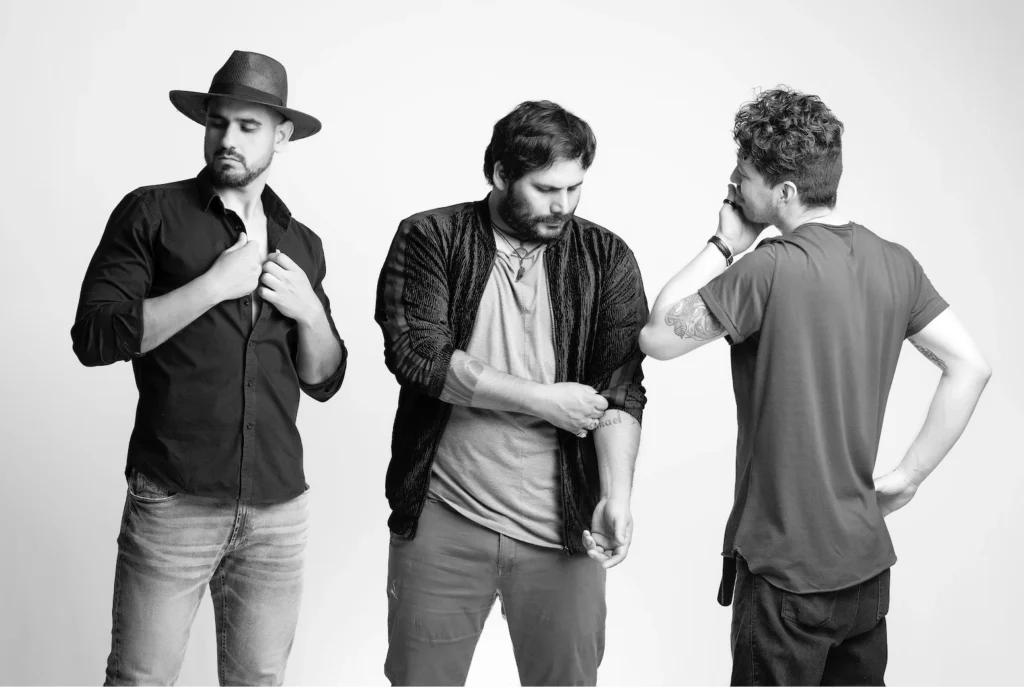
In my home I lock myself? The crowd don’t go away,” starts the vocal on “Ghost Town,” landing with the unvarnished ache of someone staring out a rain-streaked window at an empty apartment. Rather than bathing the phrase in polite reverb, the voice sits dry and exposed right in the center channel. There is an immediate weariness to the delivery that recalls the early grunge circuit, where self-doubt was not treated as aesthetic branding but as a heavy coat impossible to shake off. When the vocal cracks slightly on the climb upward, you can sense the isolation turning into combative frustration. Behind that strained microphone work, the rhythm section locks into a bruising, unhurried cadence. The bass guitar carries a round, overdriven growl that pins the low end firmly to the floorboards, leaving the drum kit room to hit with natural acoustic headroom rather than modern sample replacement. You can hear the crack of wooden sticks on snare rims and the metallic sustain of the crash cymbals decaying naturally. The power trio setup forces every player to pull their weight, trading studio overdub polish for the scraped knuckles and mechanical drag of three musicians leaning hard into the downbeat. That tension sharpens as the song builds into its central plea, where the vocal snaps between exhaustion and feverish defiance. “Are you gonna judge me like a preacher / In the streets, I calm my fever,” the singer snarls, stretching vowels until they fray against the amplifier hum. The imagery tangles spiritual healing with sensory numbness, capturing that peculiar psychological drift where feeling nothing at all feels safer than dealing with the wreckage outside. It avoids the polished melodrama common in modern radio rock, choosing instead to let the physical friction of breath against copper wiring speak for itself. Formed in 2020, ValentinFever approaches the studio with an ethos rooted in the unvarnished lineage of Soundgarden and early Silverchair. Instead of relying on digital grids and endless vocal doubles, the band treats the power trio format as a discipline of subtraction. You can trace that directness back to classic grunge and early 2000s garage rock, where songs were road-tested in dive bars rather than assembled on laptop screens. That dedication gives the arrangement an urgency that keeps the three-minute runtime feeling direct and purposeful. When the extended guitar solo tears open the back half of the track, it foregoes flashy scalar runs in favor of sustain, feedback manipulation, and bent blue notes that cry out in genuine distress. ValentinFever understands that heaviness does not come from layer upon layer of digital distortion, but from the physical space between a drum kick and an overdriven tube amplifier. “Ghost Town” leaves behind the slick tricks of contemporary production to deliver an honest, bruised rock song that earns its catharsis through sweat and spit. Instagram Spotify Youtube

Valentinfever Stalks Abandoned Streets With the Heavy Sludge and Raw Bite of Ghost Town Read More »

Son of Cormack Turns 20 Years of Songwriting Into a Long-Awaited Debut

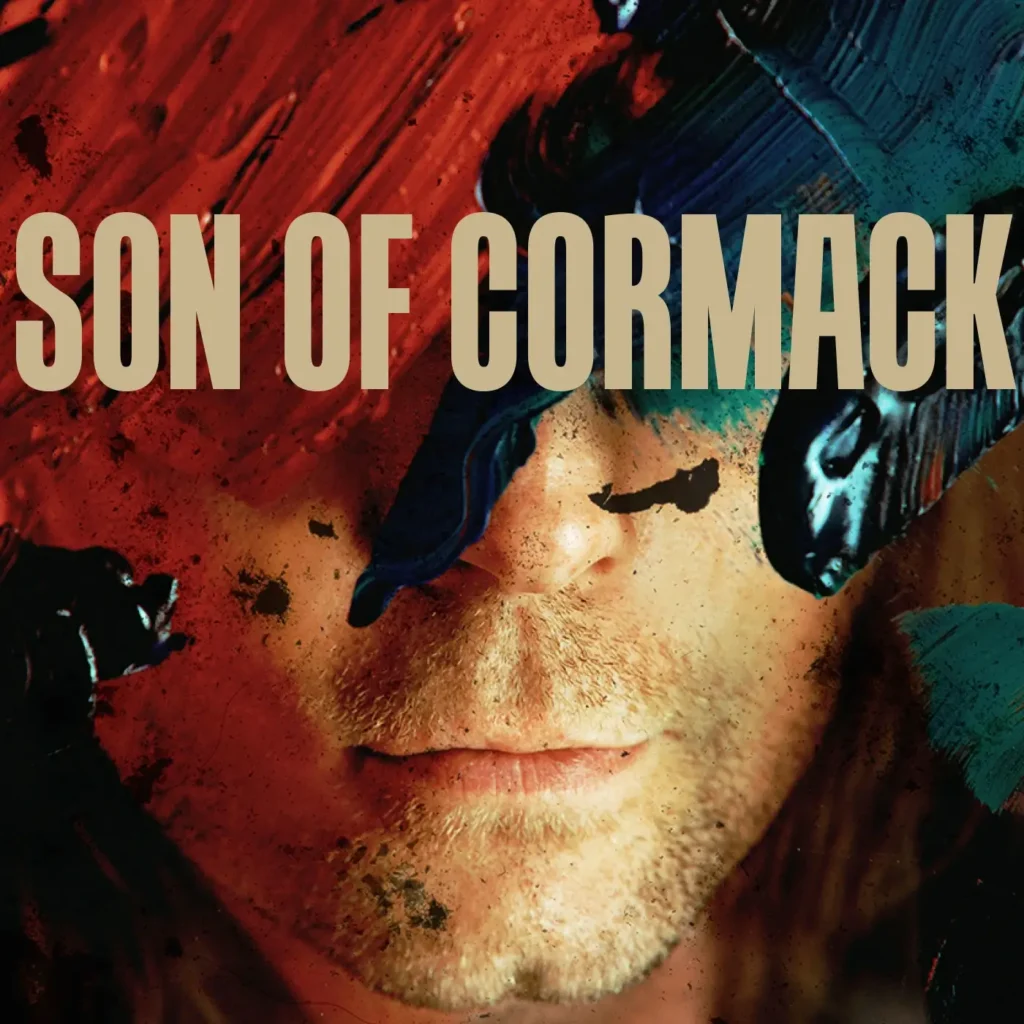
British-Irish singer-songwriter George McCormack taking the long way home with 10-tracks that comprise a collection of songs spanning two decades. Hailing from the UK with a number of penchants encompassing alternative rock, blues, folk, Americana and trip-hop. Instead of one defined sound, McCormack allows the songs to explore their own paths. A few are high-powered numbers complete with pounding riffs, while a couple others are ballads with a lo-fi, washed out feel and others are filled with mellow acoustic sections and lush instrumentals. But the intimate songwriting tying it all together comes from one man’s life. The opening track is the fast paced “Out of Body Kinda Week” with its pounding drums and crispy guitars. McCormack belts out a rock inspired vocal, at times in a dull roar like fashion then lifts when the chorus hits with a more roaring sound. The song features some jazz inspired guitar playing over the verses, preventing it from feeling cliché and “something missing,” as the singer suggests, as he experiences the perplexing sensation of a bad patch. The list for “Panic Attack” is extremely minimal, based mainly on mysterious keyboard beats and modest drums. The song explores the helplessness felt when a loved one is going through something and you want to help but cannot. Like many of the songs here, McCormack’s voice is pretty modest, but there are small bursts of power that occasionally shine through. The soft brushes on the drums keep the song moving while not losing the intimacy of it all. On “Mother’s Son,” McCormack adopts a more introspective approach, exploring identity, family and existential musings that may lack clear-cut solutions. The song is laid-back, fueled by an acoustic guitar rhythm with laid-back percussion and flows with a stream-of-consciousness lyric style that is part storytelling, part musings. Its detached, free approach is inviting, especially as the melody begins to take shape. ‘Shade’ is a touch too mysterious. The chiller setting and unflamboyant approach makes this quite a departure from the heavier guitar parts elsewhere on the album. McCormack doesn’t give everything away on this one, making for a further departure from the norm. Things stir with “Accelerate to a Standstill,” a prior single that laments the human tendency to always keep moving without really progressing. Its energetic speed is a stark foil to its more somber matter – and it also applies to our collective inaction towards the climate catastrophe. This is a fun play between the forward thrust of the song and the stagnation implied by its title. “I Love It When It Rains In Texas” is one of the album’s more memorable detours. Based on a bluesy guitar riff that recurs, the song gradually gets heavier with more layers added as it progresses. It allows some space for the slow-burning song to breathe while the more aggressive guitar riffs give it a bit of a Southern rock feel with a little touch of sadness behind the blues, which could come from McCormack moving from England to Austin, Texas, where he now resides. “I’m on Fire” keeps the guitar-centric vibe going until “She Walks on Fire” ramped up the drama even more. One of the older numbers in the set, it kicks off with a bluesy-picked guitar pattern and a simple bass line, as the arrangement builds. When the drums arrive, the band’s presence is full and heavy in a good way, charging the song forward while McCormack’s singing gets louder and more fierce. “Trying Times” takes a step out of the personal and directly addresses the struggles and pressures of getting through those tough times. It offers a moment of thoughtfulness before the final song of the album, “She Rages Against Me.” The latter song concludes the album on a more combative note, with the song’s stops and turns and shifts in volume preventing the tune from falling into a routine groove. Instead, it leaves something unresolved. There’s that feel at play here of a slightly grittier, more rootsy flavor to his sound, more Tom Petty than the more emotionally stark, acoustic-driven approach of the latest stuff from Ryan Adams, It’s not that he’s aping other artists, it’s just that he shares a similar sound and sensibility; guitar-driven, data-tinged storytelling, melodies that sometimes have a dash of bark to them. Son of Cormack may not be setting out to do something different and that’s just fine. Its strength is the blending of the various elements, the openness to trying new things and the personal touches in the songs. Not all of the tracks may be quite as convincing as others, but the variety of sounds holds appeal, especially to fans of alternative rock with a bluesy feel. Thumbing through a drawer of songs he’s written and gathered over the years, McCormack of course struggled with what to use, what to revisit and how to put on a record what he wanted to say. Twenty years after starting, he’s got a debut in which a couple of editions of himself come together. It’s been a long time, but the record makes a persuasive argument for it. Follow Son Of Cormack Globe Facebook Spotify Bandcamp Youtube Instagram Promoted Content About the Author

Son of Cormack Turns 20 Years of Songwriting Into a Long-Awaited Debut Read More »

Sunny Loudin’s “Best Damn Woman” Is a Breakup Anthem That Isn’t Trying to Be the Bigger Person

Some breakup songs have a cry-in-the-pillow, stare-into-the-rain approach. Sunny Loudin’s “Best Damn Woman” takes that to the next level: you go ahead and do all that, then get up, throw on some fancy clothes and tell your ex what a disaster they’ve just inflicted on their career by losing you. Sunny Loudin‘s “Best Damn Woman” is a revenge anthem posed as a rock power ballad. Its moral center is refreshingly straightforward: “You had a good thing, you blew it, now deal with that.” Loudin isn’t exactly looking to give her erstwhile partner a clean getaway; why should she? There’s an Alanis Morissette sense to the song’s emotional candor. Not exactly a sonic comparison, more like the feeling that it’s great to be able to raise hell in your car with a full-throttle expression of discontent. Loudin peels the common elements of pain from a broken heart- wasted hours, empty promises, the dawn of awareness that the person you loved simply wasn’t worth the time-and douses everything with a healthy dose of electric guitar. The end result doesn’t sound so much like a melancholy epilogue as a giant middle finger. The arrangement takes care of most of the work. Starting with Loudin’s 12-string acoustic strumming and Amit’s electric guitar playing, the song initially sounds fairly subdued and personal and slowly evolves into a more expansive and huge rock sound, both in volume and in scope as the guitars grow more aggressive, the drums punch their way through louder and Loudin’s singing grows ever more intense. It’s a somewhat slow building song, but one that actually delivers on this principle rather than dumping everything on you immediately. Vocally, she channels Florence Welch at times, especially with the way she teeters into the theatrics of the rock, but maintains the grit beneath, as well. There’s a pinch of goth in the approach, but with Loudin maintaining the center of the song so it doesn’t sound like it’s trying to be a film score, but honestly, it could be. What I like about “Best Damn Woman” is that it recognizes when you’re missing someone and when you’re missing the person you used to be whenever she gave them the benefit of the doubt. Loudin sings as someone who’s finally walked away from the bargaining table. “Best Damn Woman” is a prime example that sometimes a big enough guitar, a confident enough voice and a little venom are just what a girl needs to follow a breakup with a girl power anthem. Follow Sunny Loudin Globe Facebook Spotify Youtube Instagram Promoted Content About the Author

Sunny Loudin’s “Best Damn Woman” Is a Breakup Anthem That Isn’t Trying to Be the Bigger Person Read More »

Brooke Law Finds Herself Between Heartbreak and Home on ‘Take Me Home’

These days, one in every few artists says they’re “keeping it real,” stripping down and being their “authentic” selves. All you need, it seems, is a guitar, a growling voice and some sort of insinuation that you’re from Nashville in your press release. Brooke Law, however, has a bit more in her arsenal. Her new single “Take Me Home” is an emotional, genre-bending combination of country, rock and pop from the London-based singer-songwriter. Law takes a few cues from Janis Joplin and Alanis Morissette, who knew there’s a time to sing in perfect pitch, and a time to make music that’s almost tactile. Joplin could make you feel her impact on the ground, while Morissette knew anger, heartbreak and doubt can be rich material for stadium rock. And Law’s been talking some good country-rock style in Crow, and the hard, simple punch of Etheridge. Not that Law’s out to sound like any of those – it’s more that their style is rooted in a world where attitude can work as well as technique. Lyrically, ‘Take Me Home’ is essentially about the space we have between the life we were meant to live and the life we actually live. It’s nothing new, I suppose, but it’s not something that’s been done to death either: We all need writers like country music, after all, as they make despair and longing universal. Think Patty Griffin’s ‘Heavenly Day’, Tom Petty’s ‘Wildflowers’, or perhaps even Bruce Springsteen’s ‘The River’-these are all songs that know that home may not just be a place you can go back to. Sometimes it’s a notion, a recollection or an emotion you’ve been chasing after for a while.  It’s this emotional tug that makes Law’s new song so appealing. Instead of taking the happy ending of wanting somewhere to belong, she delves into the disillusionment, the disappointments, the not knowing, that make the idea of wanting a home so compelling. This angle feels more compelling than yet another girl-made-good story.  In terms of musical style, Law is a fusion of the punch of rock, the wide range of a pop musician and the story telling foundation of country. Her voice carries much of the singer’s performance thanks to its range, soaring from emotional sincerity to a gritty power with a raspy punch that is a signature feature of her live performance. Inspired by such diverse artists as Bonnie Raitt and Sheryl Crow, Law provides a distinctive individual to a genre free from classification.  In the end, her biggest asset is that she feels no need to compromise herself. Take Me Home captures grit, melody and the depression we can all identify with, but keeps her honesty front and centre. Follow Brooke Law Globe Facebook Spotify Youtube Instagram Tiktok Promoted Content About the Author

Brooke Law Finds Herself Between Heartbreak and Home on ‘Take Me Home’ Read More »

“Wash Away” by Meghanne Storey is a Clean Slate With a Touch of Grunge at the Edges

Sometimes you need a clean break. A blank slate, a new set of circumstances, maybe an entire reinventing of yourself. Or, if you’re a singer-songwriter, you write a tune about it and rope some friends into the studio. That’s more or less what happened with “Wash Away,” the new single from a pair of Pacific Northwest singer-songwriter-musicians, Meghanne Storey and Brandt Parke. Parke wrote “Wash Away” about 10 years ago when he was in a downward financial spiral and feeling pretty lost, then passed the track along to Storey, who had her own emotional investment in the song. The end result sounds like a compelling mixture of grunge, jazz and indie pop. Perhaps more surprising considering the three genres in question, “Wash Away” doesn’t rely on any commercialized alternative-rock archetype but combines a bunch of styles and musicians. Parke takes care of the lead guitar, Sorensen’s the bassist and violinist, and Matt Fury occupies the drum chair. With all the instruments existing in harmony and individual space, the track comes across as a jam session among talented artists rather than a new bed for one singer-songwriter. Storey’s voice in particular. Her style is related in some respects to Natalie Merchant and Sarah McLachlan with its focus on expressive singing and straightforward sentiment. “Wash Away” takes that musical landscape a little further in a jazz-tinged direction. Then there’s something even more lovable about the story behind the song. Parke wrote it during a low point in his life with its theme of beginnings and closing chapters ultimately taking a life of its own within the track. Store one’s familiarity with a song lends it a second life, taking an older tune and, thanks to a kindred spirit, working its way into a new project where its new co-creator can take a fresh approach and unearth some hidden gems in the process. And that, I guess, is the truly wonderful thing about music: a song can be timeless if you just find the right person to slip it on, give it another spin and discover something new. “Wash Away” is ultimately a laid-back, soulful compilation of a song, an alt-pop song that and this can’t be overstated enough, reaps the benefits of its mixture of genres and the expertise of the musicians involved. Sometimes a new beginning isn’t about a completely new you. Follow Meghanne Storey Globe Facebook Spotify Bandcamp Youtube Instagram Tiktok Promoted Content About the Author

“Wash Away” by Meghanne Storey is a Clean Slate With a Touch of Grunge at the Edges Read More »

“Phantom” by Sara Diana Is A Little Bit Spooky, But A Whole Lot Ready For The Dance Floor

Halloween is done and dusted, but it would seem the ghosts didn’t get the memo. Sara Diana‘s “Phantom” is filled with enough spook factor to make the haunting sound like a perfect escape plan. The single was released as a surprise for her fans and takes a more dance-focused pop style, with a supernatural theme paired with an upbeat track that seems more interested in keeping the party alive than scaring you stiff. “Phantom” is about what haunts us: loneliness, self-doubt and those inopportune “what ifs” that make us want to scream. The phantom is a metaphor for those hidden parts of ourselves that exist only when no one else is paying attention. It’s not original, but it’s still nice to take something heavy and make it into an enormous, bright, theatrical pop song – because who’s really better equipped to dance with their demons than a songwriter? What keeps this from falling apart is exactly that juxtaposition. The synth-heavy, strut-ready dance production of the song gives it a lot of forward push, while the sinister, candy-coated lyrics lend a bit of a distinctive touch to this otherwise conventional party-pop track. You could draw a line between Diana’s blaring, monster-movie sensibilities and some of Michael Jackson’s “Thriller,” and between her very glamorous, pseudo-Western take on dance music and Lady Gaga’s own more disquieting work, in The Fame Monster. Both could serve as descriptions of the kind of creepy-cool spectacle Diana seems to be going for: unnerving, but still fun. There’s also an intriguing duality to this core idea. At a surface level, this is a track that would be fitting in a Halloween dance party – but the music and lyrics are about a more personal thing, as a way to face those personas we hide within ourselves. That gives “Phantom” a bit more depth than a typical seasonal gimmick and the production maintains the liveliness of the music and Diana’s vocal imbues the track with its dramatic flair.  Diana still has a lot of evolving to do as an artist and “Phantom” is a very fun way to begin that process. The song is super catchy and lively and dark enough to add a little edge to the radio-friendly dance-pop. It may be about ghosts, but this song is anything but dead.  Ultimately, “Phantom” is the type of tune that should make you want to dim the lights, blast the music and break out your poor dance moves. And if some supernatural entity comes to dance with you, at least it’s got a good musical selection. Follow Sara Diana Globe Spotify Youtube Instagram Tiktok Promoted Content About the Author

“Phantom” by Sara Diana Is A Little Bit Spooky, But A Whole Lot Ready For The Dance Floor Read More »

“Wolves” by BLØSMM Opens the Cage and Sets the Monsters Free

There’s a satisfying, comforting quality about a rock band who hear what the world needs is more darkness: an extra couple guitars that will bury you beneath their crushing weight, a singer who’s just learned her power bill’s gone up. So look no further than BLØSMM, the Phoenix-based female-fronted hard rock band, with “Wolves,” the loudest song they’ve got and quite possibly the most affectionately vicious song I’ve ever heard. And if you think that’s sweet & cozy, you’re mistaken. With a focus on banishing demons and drawing strength from that struggle, Wolves is a much more heavy-handed but ultimately encouraging take on an individual’s need to change. There’s a real sense of purpose to the heaviness in the track as if BLØSMM are dragging a little every last vestige of inner turmoil out of its hiding spot and giving it the kicking it so rightfully deserves. The song boasts pounding drums, crushing guitars, industrial noises and chilling melodies to build an environment that is both one of cinematic drama and primal chaos. Credit: Jim Louvau Jordan White is the song’s emotional front, with a vulnerable sound to bring a human element, while Jim Louvau’s guest screams add a frantic ferocity. That juxtaposition is what makes the structure work so well, the melodic portions offering a place to breathe before the heavier screams come back to lead the charge once again. Its production seems large without being empty, with the guitars conveying weight and presence and the ambient noises adding volumes rather than just noise. Rather than languish in the darkness, Wolves consider it something to wrestle with, decipher and vanquish. It’s no relaxing Sunday afternoon lullaby, but as a potent, passionate hard rock song, it makes a rather compelling argument for falling headfirst into the storm and emerging on the other side the better for it. There’s a familiar draw to how BLØSMM combine the more aggressive elements of their sound with more approachable ones. Like Bring Me The Horizon, for example, especially some of their more electronic-leaning work, where the very heavy production feels right at home alongside some of the biggest hooks you’ve ever heard. Or there’s something Linkin Park about it, too: taking personal pain and translating it into stadium-sized catharsis. Another more surprising coincidence is Moor Mother, whose love of darkness, trauma, feminism and individual rebellion manifests regularly in her music as relentless sonic experimentation. While the styles are quite different, there is a similar logic at play: using pure sonic force as expression and as a result, BLØSMM deliver emotion through the sonic terrain of modern hard rock. At the end of the day, Wolves isn’t trying to sell you on the idea that facing your internal monsters is exactly that comfortable. Sometimes you’re going to need a microphone, a wall of guitars and a space to go out and blow off some steam. BLØSMM has all three.   Follow BLØSMM Globe Spotify Facebook X-twitter Youtube Instagram Tiktok Promoted Content About the Author

“Wolves” by BLØSMM Opens the Cage and Sets the Monsters Free Read More »

Black Box by Unrivaled: Catholic Guilt, Existential Dread and the Joy of Turning Everything Up to Eleven

Dying. Divinity. Angst. That unthinkable thought that maybe, just maybe, there’s no god, no ghost, no afterlife at all waiting for you on the other side of the grave. Not exactly what’s running on the stereo in the background of your average frothy afternoon, but Cincinnati’s long-running emo rockers, Unrivaled have never been one to let convention lead the way. Their 2026 sophomore record, Black Box, is an emo rock opera on life, death and the great mysteries thereof, told with an almost dogged DIY mentality that’s borderline offbeat. And in some ways, it’s quite fitting: if you’re going to spend an album questioning the state of this universe, at least do so at the top of your lungs. Since their start in 2019, Unrivaled has been exploring a sound that is the blending of punk, alt-rock and metal. Taking the powerhouse guitar work of bands like Iron Maiden and Avenged Sevenfold and injecting the melodic despair of bands like Rise Against, Sum 41 and My Chemical Romance. It’s an eclectic blend of classic metal’s theatrical flair and the angsty melodies of bands from the early 2000s emo era. Basically, you’re gonna be as likely to get a guitar solo and an emotional breakdown. Hopefully at the same time. Credit: Photo by Batt Kilbarger Black Box is so close to 37 minutes that it certainly can’t require you to sacrifice an entire weekend. The 12 songs on the record oscillate between heavy alternative rock, pugnacious punk and emo lyricism for what is a fairly forward-facing record. And four songs in particular highlight the record’s emotional concerns in a way that’s more laser-beam than spotlight. Call Me Liar might just be the most interesting emotional place to start the album. Rather than another boring “I’m so sad” song, this one gets into the self-doubt and low self-esteem that can slowly eat away at a person’s sense of self. It’s so brutally honest; honest about the failure, the sadness and the anger that drives the song. And the compelling thing about it is that the song’s strength isn’t necessarily in its comforting qualities; more so its ability to make you hear the pain. Think My Chemical Romance in their little confessional state, but with a more punk-rock attitude like Rise Against.   DVR (Hey Mister) reaches far darker depths of this emotional discomfort. Frustration, emotional exhaustion and the ever more ominous sensation of losing control drive the track – with its lyrics bouncing between screams for honesty, references to drugs and an ongoing request for some closure. There’s an awkwardness to this, the lament to a potential savior who can set things to rights which sounds eerily similar to the more miserable narrative styles of early 2000s emo and alt-punk. The effect is that much more uncomfortable because this isn’t a feeling that will be completely fixed by the last chorus; sometimes you just need to ask them to stop making everything worse.   Presumed Dead could possibly be the most direct exploration of this, confronting mortality using the vivid imagery. Lyrically it provides its listeners with images of suffocation, being enclosed, the terrifying prospect of being buried alive whilst asking if anyone can hear him. It is a bold way to present our existential anxiety: not something that we ponder from a distance but an imminent, horrible fate. It certainly influences the emotional high stakes of My Chemical Romance’s overblown songwriting, but this has the integrity and sound of something closer to pop-punk and alt-rock that hits harder and is definitely not for the faint of heart. Promise subverts this instinct to a fear of death and instead reduces it into a desperate plea for assurance. One of the most disturbing features of this section is that it poses the possibility of the singer’s otherworldliness by asking “would you believe that I am already dead?” The lyrics become a repetition of the need for someone to maintain order whilst the world unravels. This arguably has the most emotionally naked connotations of any section of the record, as it tries to do so whilst dealing with the cold realities of existence. It has an approachable melodic quality that will have a lot of people listening from Rise Against fans to the more soppy side of alternative music. At the end of the day, this is an ambitious foray into more serious musical territory from a band that has been honing its act for a few years. Everything from the punk/metal/emo sounds to the character-driven themes of Catholic guilt, death and existential angst is ultimately rooted in one musical and conceptual place.   “Black Box” might not provide all the answers to life’s great mysteries or unravel the enigma of death in 37 minutes. Sometimes there is no need for a spiritual awakening. Sometimes there’s no time for a philosophical revolution. Sometimes you just need a really loud guitar and some baggage to go with it and if there’s no one waiting on the other side, at least we had a modern rock opera to soundtrack us there. Follow Unrivaled Globe Facebook X-twitter Spotify Bandcamp Youtube Instagram Tiktok Promoted Content About the Author

Black Box by Unrivaled: Catholic Guilt, Existential Dread and the Joy of Turning Everything Up to Eleven Read More »