

loader image

2026

Winchester 7 & the Runners’ No Worse For Wear Makes the Ukulele Rock. Yes, Really

First, a word or two about the ukulele: it has a reputation. Show-it-off-at-the-beach or throw-some-cover-songs-at-a-party-and-hope-somebody-takes-interest or buy-some-to-make-you-want-to-buy-a-car commercial mode. And, of course, Winchester 7 & the Runners decided to get into all that by plugging one in and starting an indie rock band. Somehow, though, it works. On No Worse For Wear, the electric tenor ukulele is not a novelty to tickle your fancy. It is the headliner, riffing its melodies throughout a musical brew inspired by the sounds of 60s rock, surf, garage, old time pop and new indie rock. It is as familiar as it is odd, conjuring up an aura of strangeness and familiarity that doesn’t require the guitar. There is more afoot for the Atlanta-based band than the idea of convincing a weird instrument can be powerful. Throughout the EP, Winchester 7 & the Runners tackle the new challenges of technology and the internet and how to navigate the world when being a human is more complicated than ever before. Fortunately, they tackle it without every song feeling like a TED talk with a groove. The World From My Bed asks: Are we able to handle the pressures of the endless amount of information vying for our consciousness? The proposition that we’re better off not to spend so much of our free time glued to our screens is nothing new. I think I first heard someone say that same thing right after she posted about her digital detox to Instagram. However, the melodies of the song push the topic across in a friendly, not quite preachy way. ‘Waitin’ Here for You’ looks at how music still brings us together in a changing technological world. It’s a colossal topic to try to cover off on a pop song, but the band keeps the attention on people. For all the speculation over what the machines will do next, people still crave art to stir their emotions. The machinery can change; the craving can’t. Lastly, “I’m Goin’ Down” focuses on those who pick us up after our self-esteem takes a hit. An entry that’s conceptually simple, but even out of context, not every song has to have a painful point. Sometimes, you just need to hear that life doesn’t end when you have a bad day. “Ballad of the Bishop of Eastwood” is another example of a song that is more driven by narrative than a hook. It’s as if Eastwood has taken the feel of an ancient folk story and presented it in modern indie rock – influenced, yet capable of giving us its own unique identity. There is no need to draw attention to the song’s impressiveness – just keep the story coming. Guy Page of Coach Party contributed drums and mixing. Airinna Namara features on “The World From My Bed,” while Jenny Conlee of The Decemberists contributed keys to “The Way You Moved.” These contributions brighten the proceedings without allowing the recordings to become collections of one-off personalities. Winchester 7 & the Runners have branched further out from your average band, with videos, visualizers, podcasts, livestreams and a digital archive, Continuum Relay. It’s quite an undertaking of a multimedia project, but all that jazz would be meaningless if the tracks weren’t any good. Luckily, though, No Worse For Wear finds a firm musical identity. The mix of nostalgic and modern touches on the EP keeps things from feeling like they’re firmly rooted in the past or overly enamored with the future. Now, a band that reinvents indie rock should not have to make its case here and, in this case, the band doesn’t really have to. But to build a full-throttle rock band around a ukulele is a feat and one the Winchester 7 & the Runners pull off with actual purpose; it’s not for the novelty. Follow Winchester 7 & the Runners Globe Facebook X-twitter Spotify Soundcloud Bandcamp Youtube Instagram Promoted Content About the Author

Winchester 7 & the Runners’ No Worse For Wear Makes the Ukulele Rock. Yes, Really Read More »

Richard Tyler Epperson’s “One Thought Away” Transforms a Humdrum Moment Into a Rock Meltdown

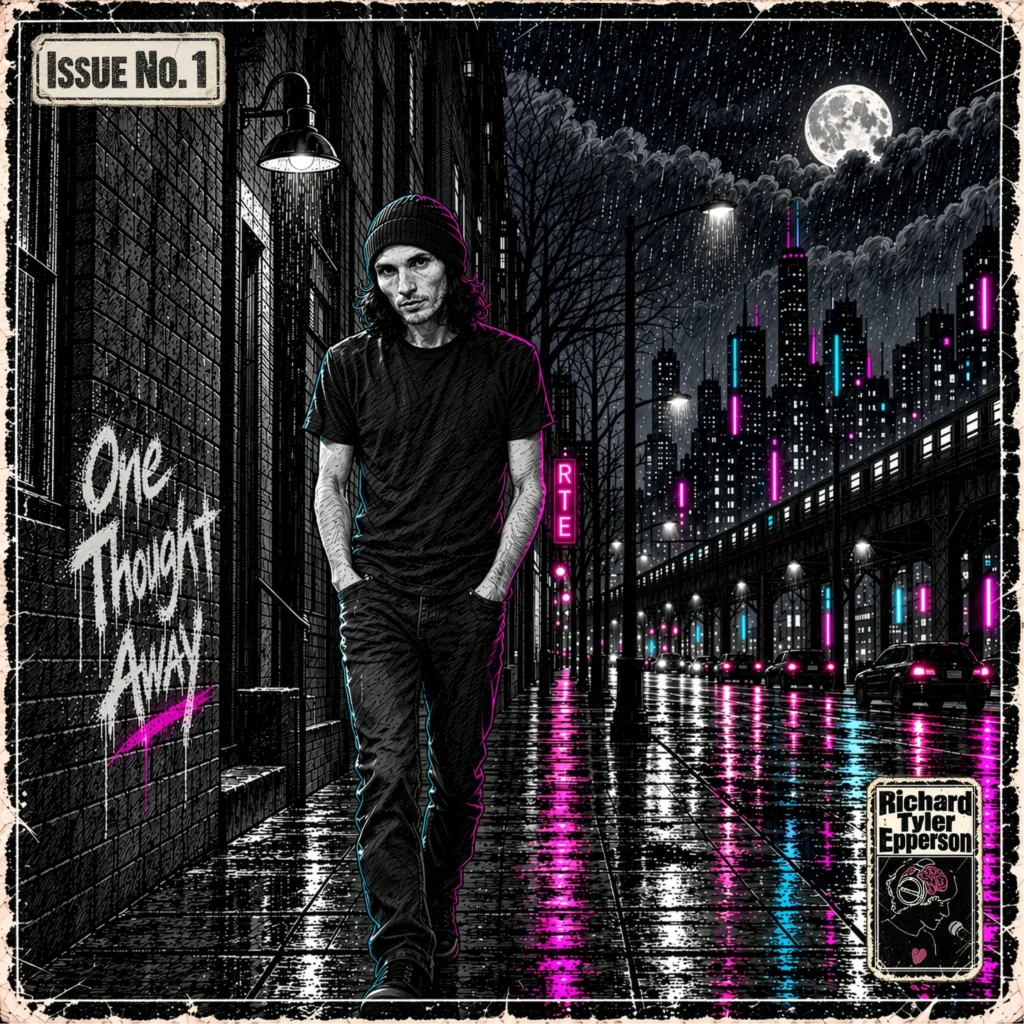
One minute: a piano and a singer. The next: everything is trying to blow the walls down. Richard Tyler Epperson’s “One Thought Away” begins softly, gradually swirling into an angry mixture of live drums, guitars and distorted synths. It’s a familiar move in alternative rock, but the fun lies in how Epperson develops it. The Salt Lake City songwriter, multi-instrumentalist and producer handles nearly the entire track himself, with drummer Nate Barnes joining in the second half. Before the song accelerates to full speed, Epperson delivers a rhythmic, talk-rap passage that adds another dimension before the guitars kick the door down. That switch-up lifts ‘One Thought Away’ above a vanilla quiet-verse-loud-chorus routine. I’ve seen genre mixing go the way of throwing a bunch of sounds in a bowl and calling it experimental. Here, though, the arrangement develops through gradual escalation, moving from its exposed opening to a punchier, denser climax. It’s not just about getting louder; the song keeps changing shape along the way. “One Thought Away” also returns Epperson to the fuller sound of his 2025 album, Fragmented Night, following the more pared-back Open Book Sessions. He describes the new song as a darker, more experimental evolution of that sound. If the sudden explosion of sound is a little much for you, at least the song makes its trajectory clear: it opens softly and ends loudly.  There’s a larger concept at work, too. “One Thought Away” is being presented as “Issue No. 1” of a graphic-novel-inspired musical and visual universe, accompanied by an animated music video. That’s an ambitious premise for a single, although building a fictional universe around a song doesn’t, ahem, automatically make the music more compelling. TThe track still has to make that world feel real, and its dynamic build does more to achieve that than the concept alone. “One Thought Away” doesn’t change the game in alt-rock, but it puts a fresh spin on a well-worn model, twisting it enough to keep you listening. The song’s real achievement is making that shift feel like more than a volume knob being turned.  Follow Richard Tyler Epperson Globe Facebook Spotify Youtube Instagram Tiktok Promoted Content About the Author

Richard Tyler Epperson’s “One Thought Away” Transforms a Humdrum Moment Into a Rock Meltdown Read More »

Lil Mike’s “Talk Heavy” is All About the Power of Self-Belief

It’s one thing to talk about a big game, and another to have one to talk. Hip-hop has explored that dichotomy, with varying levels of success: from fiery masterpieces to a man showing off how much his watch cost for the 47th time. Lil Mike’s “Talk Heavy” takes a more personal approach to that age-old art of making a statement, balancing the confidence of a rapper with something to prove against the vulnerability that comes with chasing something bigger. Raised in Anderson, Indiana, Lil Mike was drawn to hip-hop at the age of 11 or 12. His influences include 50 Cent, Lil Wayne, André 3000, Biggie, Tupac, Eminem, and Kendrick Lamar—artists who each bring their own attitude, whether through their lyrics, delivery, or presence. On “Talk Heavy,” Lil Mike is finding his own way to express that confidence. Featuring T.G.I.FREE, the song explores ambition, self-belief, and the determination to keep moving forward despite doubt and pressure. There’s a competitive edge to it, but the more compelling moments come when that confidence makes room for vulnerability.  After all, it’s easy to believe when everything’s right. It’s a lot more difficult when you’re facing doubt, discouragement and the lingering thought that maybe you haven’t got it all together. Lil Mike knows that you don’t have to ignore these difficulties to be confident. In his opinion, owning your shortcomings doesn’t diminish the legitimacy of your aspirations. That outlook gives ‘Talk Heavy’ more substance than a simple ‘I’m the best’ record. Lil Mike wants to do more than simply tell you he’s on the right path; he’s focused on staying consistent in the chase. Building his name independently, Lil Mike isn’t letting the size of his hometown determine how far he can go. While the message itself is familiar, it carries more weight when Lil Mike presents it as a work in progress rather than a problem already solved. The next step is to stake his claim and make it undeniable. And that’s the message of “Talk Heavy,” where Lil Mike is upfront about his focus: ambition without losing sight of his roots, confidence without masking flaws, evolution without losing touch of who he is. He’s still developing his voice, but his determination to make music that leaves an impression is clear. Follow Lil Mike Facebook X-twitter Spotify Youtube Instagram Promoted Content About the Author

Lil Mike’s “Talk Heavy” is All About the Power of Self-Belief Read More »

The Stray Lions’ “Small Talk in Stereo” Leaves Plenty Of Afterthoughts

Have you ever listened to a record that feels so close yet distant at the same time? Like there’s a certain pull to it, like something just draws you in without ever letting you get too comfortable. That’s exactly how Small Talk in Stereo leaves you feeling. And it makes sense coming from a band whose artistry thrives in the space between intimacy and expansiveness. Hailing from Roanoke, Virginia, The Stray Lions have always made room for both the grand and mundane. And it’s much more evident on their second full-length album, Small Talk in Stereo, a 10-track project about connection, distance, and the search for meaning in ordinary moments.  Opening the album with a song like ‘Someplace Else’ is a solid way to get you in your feelings right from the start. There’s no lengthy intro, just a voice and a guitar quietly singing about old mistakes, missed chances, and someone who’s already moved on. But it doesn’t stay in those slow, restrained instrumentals, as if it’s showing you what regret sounds like when you put it into guitars and let it all out. Before Sunrise follows in that same reflective tone, and it tells you exactly what the title suggests. With every repetition of “there she goes,” the image becomes clearer: a fleeting figure against the first light of morning that is almost impossible to get out of your mind. But it’s not all warmth and emotions. Roll On enters with fuzz and a meaner attitude. Instead of wistful reflections, it brings something with a little more grit and bite. Pacific Blue is short, yet it leaves plenty of space for you to sit with it. The repeated questions may seem like indifference, but the insistence makes it hard to buy. Maybe they don’t care anymore, or maybe they just wish they didn’t. Cigarettes And Coffee is such a hit because what do you mean someone else gets how a random Tuesday can ruin your whole mood? It’s like a portrait of a tired person running on coffee and cigarettes, but in a catchy way that even wallowing in misery sounds so damn good. Call Your Name got that vibe from a vinyl record that your dad plays every Sunday morning. There’s something warm and old-fashioned about it, especially in the simplicity yet timeless imagery of its lyrics. One thing about this album is its versatility. They might move through different moods and textures, yet they don’t lose the edge that makes them recognizable. And it’s something that a lot of bands struggle with: finding room to experiment without making their sound feel disjointed.  Across the album is an intuitive quality; the arrangements have enough depth to make you sit with it, because everything just feels cohesive and immersive. Their songwriting, on the other hand, is just as compelling. They have a knack for creating something out of the mundane and the everyday. Whether it’s a fleeting moment or a passing thought, they make sure you’ll feel it as if it’s your own.  It’s just so refreshing to listen to an album as honest and genuine as this. Right now, there’s a sea of records trying to be bigger, louder, or more ambitious, but The Stray Lions offer something more worthwhile. Small Talk in Stereo is the kind of album that won’t gather dust in your playlist; it’s the one you return to, not out of habit but because there’s always something worth hearing again. For an album called Small Talk In Stereo, this one sure does give you plenty of reasons to keep the conversation going. Follow The Stray Lions Globe Bandcamp Instagram Spotify Promoted Content About the Author

The Stray Lions’ “Small Talk in Stereo” Leaves Plenty Of Afterthoughts Read More »

The Entitled Sons Ditch the Stadium Riffs for an Absolutely Brutal (but Brilliant) Acoustic Gut-Punch

Listen, when a band of raging UK indie rockers decides, “you know what, let’s turn it down,” you either get a boring filler track or something truly special. The Entitled Sons, a Somerset-based indie group of brothers, have given up their usual festival set of energetic anthems for something a bit more personal on their new release Epitaph (Not There). The track, which sounds suspiciously like it was written in the aftermath of a long late-night conversation over a pint, trades in the usual rock band grandeur for something more stripped-back and raw. There are no cinematic metaphors or well-worn rock band tropes about living life on the edge, just a devastating look at loss and survivor’s guilt, re-living phone calls to a friend, and wishing you’d picked up the phone when they called. It’s all quiet acoustic guitar picking and a fragile-sounding but powerful vocal performance, with even the most unguarded moments in the vocal delivery serving as dramatic peaks. But then it all opens up and bursts out at 2:40 with a burst of electric guitars and drums, as if the narrator is finally losing their composure. Even in the context of a more bombastic arrangement, the gentle strumming of the acoustic guitar provides a grounding, almost guiding backbone to the performance.  I’m not sure what the band’s usual approach is to writing songs, but for the last year, they’ve been hand-screening their own merch, touring the country in independent venues, building an impressive word-of-mouth following (we’ve been getting a ton of comments on social media asking us to keep an eye out for them), and I wouldn’t have missed it for the world. The band could have easily jumped on the well-trodden path of anthemic stadium anthems that most of their contemporaries seem so obsessed with, but they left it all in the mix, even the occasional muttered conversations and room noises. It doesn’t sound like a single for a major label looking to appeal to adult contemporary radio listeners. It’s far too raw and personal for that. It’s the sound of a real band, not a polished corporate product. If you’re a fan of this style of music, you should definitely give it a listen! Follow The Entitled Sons Globe Facebook Spotify Youtube Instagram Tiktok

The Entitled Sons Ditch the Stadium Riffs for an Absolutely Brutal (but Brilliant) Acoustic Gut-Punch Read More »

Becky Arundel’s ‘Silence’ Makes a Case for Starting Over

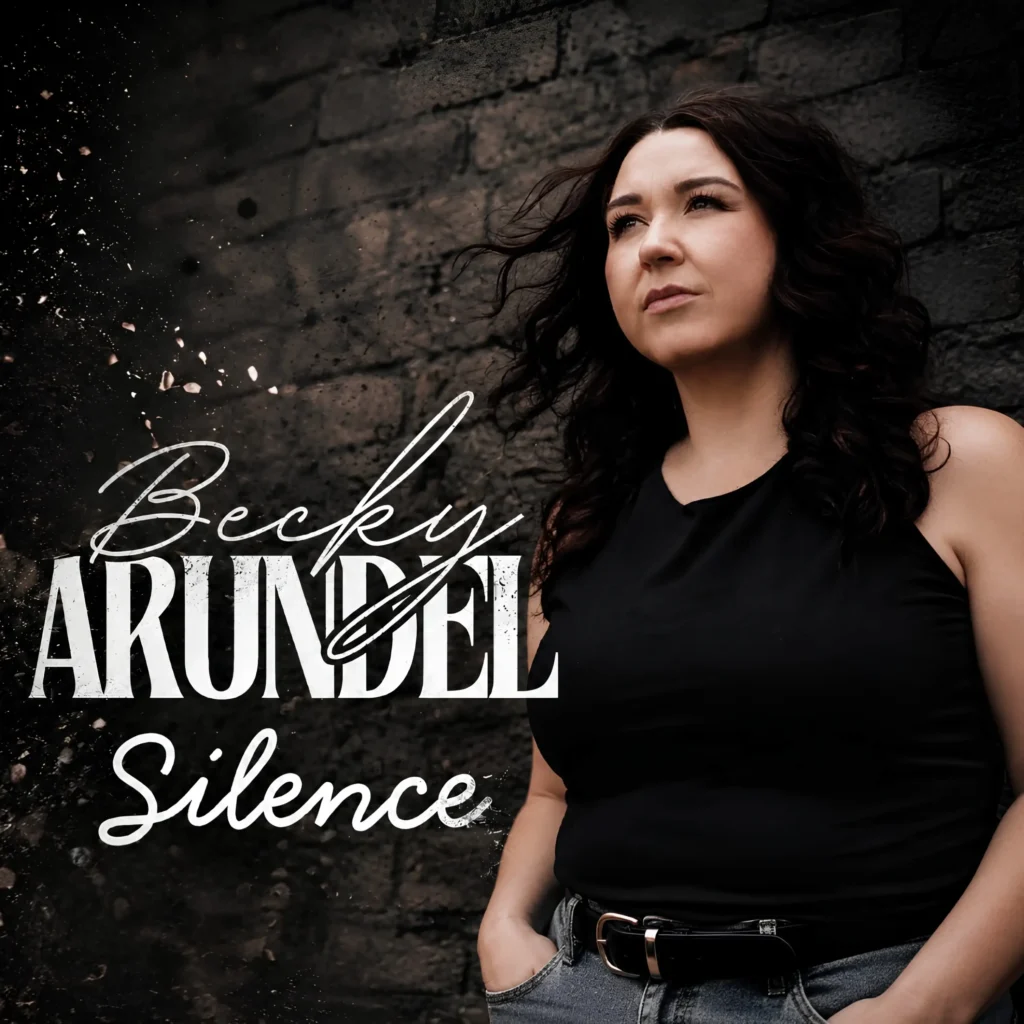
Getting back into music after time away is one thing. Getting back into music with a song called “Silence” is another. Becky Arundel, a songwriter from Bridlington, East Yorkshire, is ready to return and she’s doing so with a fresh band. The title “Silence” does get us thinking: could this be about devastating heartbreak? A relationship gone awry? Or the absolutely tragic feeling of someone not replying to your messages? Yes, and. That means whatever you want it to mean. Arundel, who began performing as a teenager, spent five years honing her songwriting at BIMM London and recording songs with award-winning producer Jamie Sellers. That’s a fair chunk of time to work on her craft, and her time away from performing makes this return feel like a chance to pick up the conversation again.  That conversation falls somewhere in the mix of pop, country, and folk. Inspired by artists like Luke Combs, Adele, and Amy Macdonald, Arundel draws from an eclectic set of influences: Combs brings a country edge, Adele knows her way around a huge vocal, and Macdonald makes folk-pop feel instantly accessible. The single’s description sums up how these influences shape Arundel’s music: “big vocals, big choruses and folk influences.” And those big choruses seem particularly, if not ironically, suited to a song like “Silence.” Its cinematic, buoyant sound brings to mind a sweeping Disney ballad or a Eurovision entry gearing up for its big moment. It’s the kind of musical drama that practically begs for a chorus to soar, with enough emotional heft to make you imagine the camera pulling back as the singer reaches the final note. Subtlety is not necessarily the point; sometimes you want a song to go big and commit to the bit. Yet there is something appealing about the context of this release, too. After stepping away from performing and returning to her hometown, Arundel is preparing to release music with new bandmates by her side. It’s a reminder that a life in music doesn’t always follow a straight line. Sometimes you have to step back to work out whether you still have something to say. “Silence” marks the next chapter for a songwriter who has spent years developing her craft and is now ready to take it beyond the rehearsal room. Whether its grand, uplifting sound can make its emotional message land is ultimately what will matter most. But if Arundel’s return is anything to go by, sometimes stopping isn’t the last word. Sometimes it’s just the pause before the big chorus. Follow Becky Arundel Facebook Instagram Spotify Promoted Content About the Author

Becky Arundel’s ‘Silence’ Makes a Case for Starting Over Read More »

Vüxin’s ‘Bumblebees’ Wants You to Escape Modern Life

Life these days wears you out. What better way to escape the grind than to sing about it? “Bumblebees” is a German indie-folk song about a very simple fantasy: be free from the noise, reacquaint yourself with nature, be with the people you love, and live happily ever after. In other words, it’s a hippy song. However, it’s a hippy song that won’t make you want to throw your speakers in a river. The central concept of Vüxin isn’t exactly revolutionary: folk music has been trying to convince us that civilization is a horrible waste while trees are the best thing that’s ever happened since about five minutes after civilization first invented folk music. “Bumblebees” is effective because it is so unceremoniously committed to ignoring that fact. Credit: Photo by Julietta Kunkel Instead, the song settles into its atmosphere. Vüxin’s take on it always lends a certain intimacy to the track, and her vocals don’t have that super-polished quality to them that can sometimes make current indie-folk seem a bit too sterile. There’s warmth in the air, but also an edge, which prevents this song from feeling like a granola ad. What I love most about this record is contrast. Vüxin’s songwriting draws from her environment and nature, but that doesn’t mean that she’ll be singing about sunshine, flowers and acoustic guitars (though I’m sure she’d do that if she wanted to.) Her songs walk the line in the middle of two opposing feelings; between bright and dark, between calm and movement, between far away and right next to you.  Ironies abound in finding this song about fleeing society as a recorded track that will find its way to your phone, laptop, or Bluetooth speaker. However, that also means this track isn’t an instruction manual on how to escape civilization as we know it. Vüxin isn’t saying you have to run to the woods and become a woodland cryptid. She’s providing you with the fantasy of leaving it all behind and honestly, fair enough. “Bumblebees” is not attempting to reinvent indie-folk, nor would it be able to, but it doesn’t need to. The beauty lies in the details; the intricate tapestry of arrangements, charismatic vocals, subtle changes in tone, and dimly lit mood. Vüxin is a newcomer to the music scene, but she already seems to have a musical universe of her own, and visiting it is enticing.  Sometimes the quietest protests we can participate in are just making music that reminds us there’s more out there than what’s on the screen and, yeah, maybe we should head on over there. Follow Vüxin Spotify Youtube Instagram Promoted Content About the Author

Vüxin’s ‘Bumblebees’ Wants You to Escape Modern Life Read More »

DownTown Mystic Brings the Old Magic of Rock ’n’ Roll to Life on “Maybe Love’s a Crime”

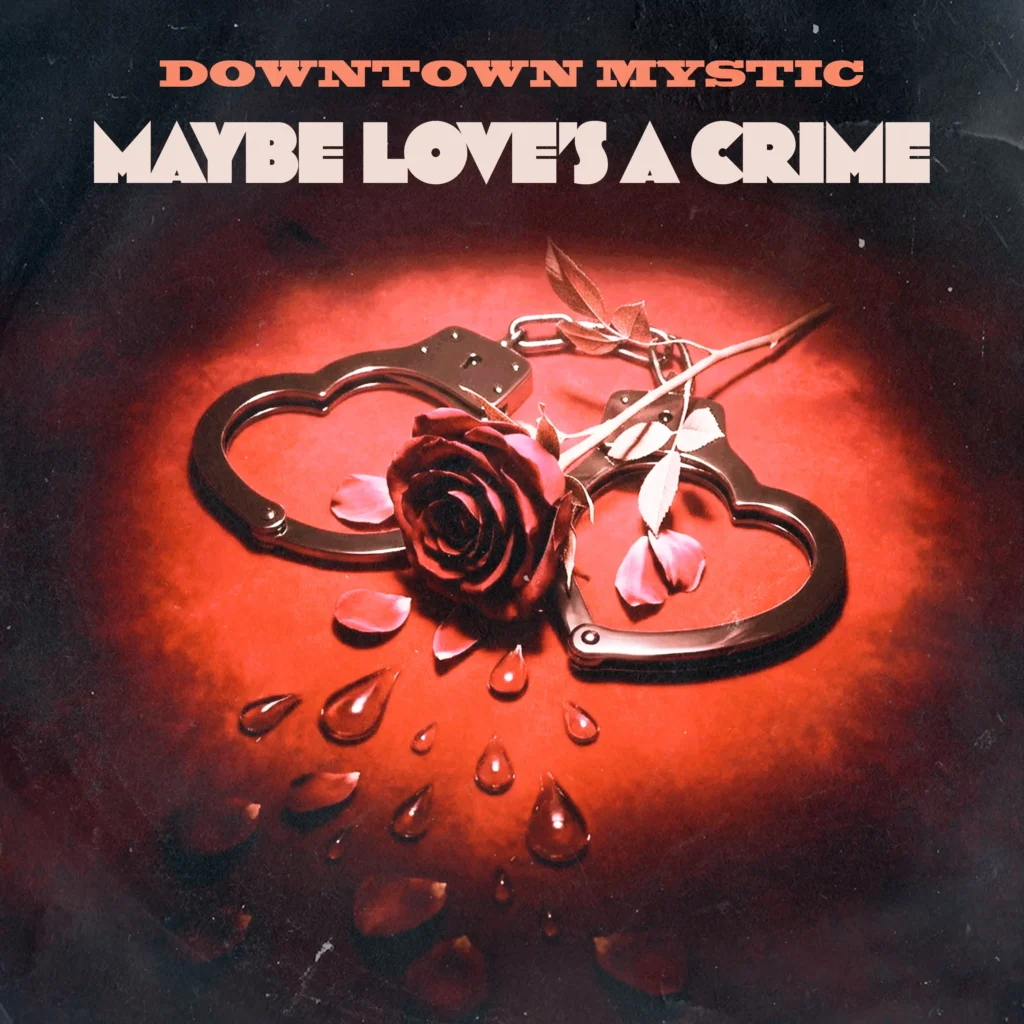
You can dismiss the song before you’ve heard it as another nostalgic trip, or you can find out if the artist can convince you the old machine is still working. Maybe Love’s A Crime by Down Town Mystic sits somewhere in the middle of the two camps, and I mean that as a compliment. DownTown Mystic is the brainchild of American rocker Robert Allen, who has a somewhat unique take on what really should be considered rock music: vintage guitars, old-school recording, harmonies, storytelling and a bit of swing to separate rock ‘n’ roll from the equally blurry “Rock,” a term that, by his logic, is applied to everything bigger than a bedroom acoustic rehearsal. Credit: Mark Maryanovich Photography Maybe Love’s A Crime comes close to that sentiment. Its core is a Dion-sounding shuffle, possessing the unpretentious, rambling groove of ’60s-era rock yet not feeling like someone has unearthed an ancient record, blown off the dust and pressed play. That shuffle is, essentially, the song’s motor. Instead of pumping through distortion or just turning everything way up, the song derives its power through groove. The piano, electric Rhodes and guitars fill out the arrangement and add some dimension, but they are not showboating. You can feel that somewhere in the performance. It doesn’t feel like it was carefully and precisely constructed in a studio and then cleaned up to perfection. It does have a bit of a loose feeling to it, but that actually works because the musicians really do get the groove.  Allen’s larger scope of musical reference points is equally recognizable: Tom Petty, Bruce Springsteen, Buffalo Springfield, Rockpile, the entire span of Americana and roots-rock. None of that is highbrow obscurity, but the genius of DownTown Mystic is how comfortably he can stay within those parameters while blending musical styles instead of wowing audiences with a history lesson. That also gives Maybe Love’s A Crime a healthy sense of identity. It doesn’t have a desire to be today’s rock with a phony modern sound. It is more contemporary in its recording quality and performance assurance than it is trendy in its adoption of whatever production magic is in fashion. That is also kind of refreshing. Maybe Love’s A Crime seems content not to attempt to reinvent the wheel as far as rock music goes. It appears to want the groove, the guitars, the shuffle and the band-playing-in-a-room feeling. The old classics still work. You’ve just gotta finesse ’em. Follow DownTown Mystic Globe Facebook X-twitter Spotify Soundcloud Youtube Instagram Promoted Content About the Author

DownTown Mystic Brings the Old Magic of Rock ’n’ Roll to Life on “Maybe Love’s a Crime” Read More »

QUINTESSE and KARL JOSEF Discover the Power in “On My Way”

We are spoilt for choice when it comes to pop tunes about facing difficult times. They typically drop with an almighty chorus, a few sweeping orchestral arrangements and a suggestion that you’re probably best walking around on a mountaintop while you’re at it. On My Way by QUINTESSE featuring KARL JOSEF stops along the way on a more measured journey from despair to uplift. Written and composed by Claudia Heinrich-Witzenthaler (QUINTESSE), “On My Way” features lyrics and arrangement tailored specifically for Felix (performing as KARL JOSEF). Originally created for Felix’s sister Victoria as she fought through years of challenges toward a major milestone, the song’s personal narrative explores being underestimated, doubted, and triumphantly moving on. In terms of music, the song feels right at home in the world of pop-rock, drawing loosely from the genre of earnest songwriting as it was practiced by James Capaldi, Tom Walker and Passenger. The song follows its emotional curve in a fairly predictable way, but that’s not necessarily a problem. The verses whisper before they scream, giving space for the arrangement to build gradually. That’s an especially significant build as it is the baritone voice of Felix Karl Josef who is carrying much of the work. He does this with a good degree of warmth, but more significantly, he does it without sounding like an already-accomplished voice trying to sound Important. The performance feels quite natural, which is appropriate for a song about having confidence rather than faking it. The guitar and saxophone are what give the song its more unique musical personality. Together they ensure On My Way will not be so easily confused with the other various uplifting pop-rock anthems that are currently doing the rounds. The saxophone especially brings a new layer of interest to an already fairly standard emotional landscape. As a project, QUINTESSE is already a very unusual one. It unites mother Claudia Heinrich-Witzenthaler and her 21-year-old son Felix, who is currently prioritising his engineering studies over a quick rise to stardom. With choir experience and his first professional studio recording, Felix has potential and is still working out what he’s able to offer as a singer – rather than an aspiring star being pitched into a ready-made career. Which makes the song’s emphasis on genuine content seem less like an advertising ploy and more like the real point. On My Way will not have to reinvent pop-rock. It actually thrives by simply encouraging things to unfold naturally, giving the voice, guitar and saxophone room to carry a fairly straightforward idea without overloading it with too much production. And sometimes it is enough. You don’t always need a revolutionary sound. Sometimes you only need a song that has somewhere to go. Follow QUINTESSE Instagram Youtube Tiktok Promoted Content About the Author

QUINTESSE and KARL JOSEF Discover the Power in “On My Way” Read More »