

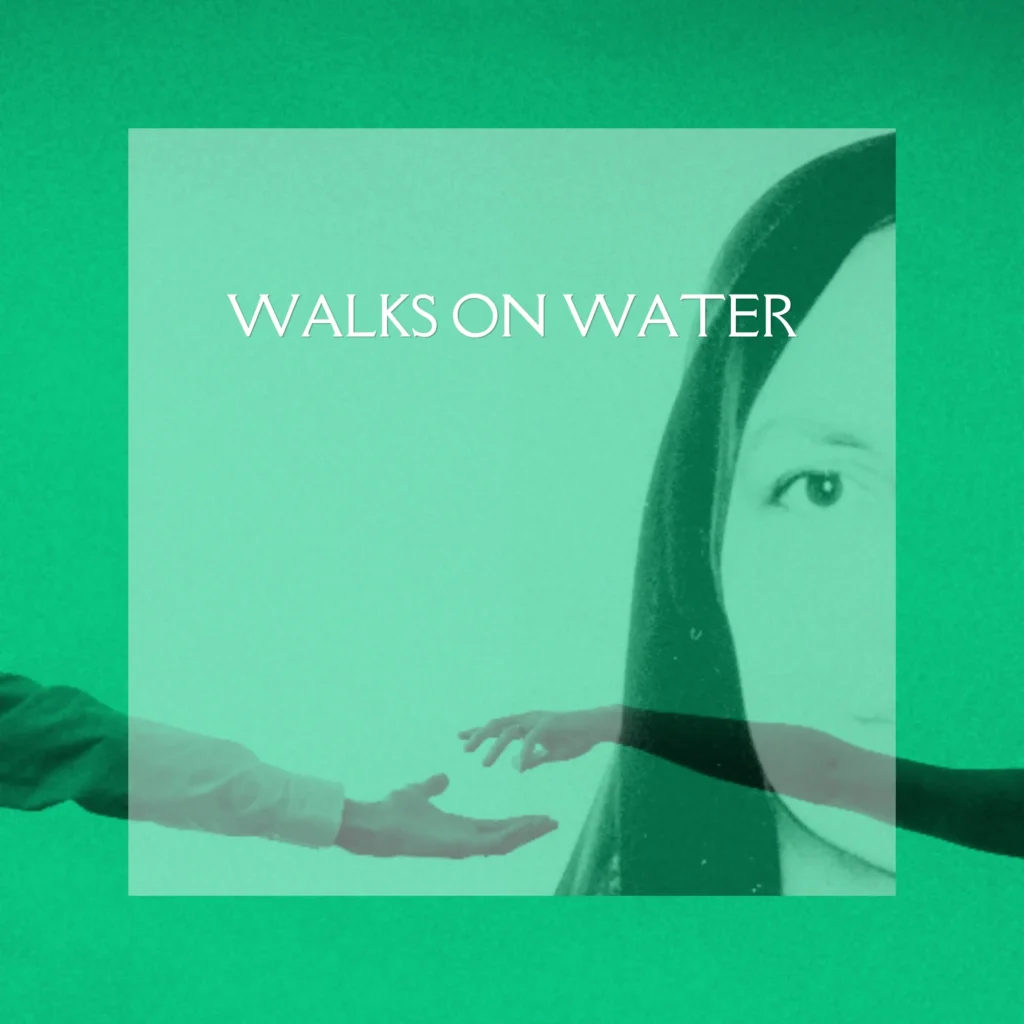
Some songs arrive dressed for the occasion. Walks on Water arrives barefoot, smelling faintly of incense, old books, midnight air and the kind of romantic trouble that probably requires several volumes of poetry to explain.
Layla Kaylif’s second single from her forthcoming album is an unusually literary piece of pop: a sensual, atmospheric duet that takes fragments of Syrian poet Nizar Qabbani’s love poetry and lets them drift into Kaylif’s own writing. South-East London R&B and soul artist ISRA3L provides the other half of the conversation, giving the song a warmer, earthier presence as Kaylif’s harmonies hover around him.

The result feels less like a conventional love song and more like a poem discovering that it has accidentally wandered into a recording studio.
Kaylif has built much of her career around these sorts of crossings. Anglo-Arab, Oxford-educated in Arabic literature, she has made a habit of pulling poetry, folklore and cultural memory into contemporary songwriting.
Its strongest quality is how naturally the different influences sit together. Qabbani’s imagery provides the bones, while Kaylif’s own lyrics act as connective tissue, transforming fragments of existing poetry into something with its own emotional momentum. Rather than simply presenting literary references as decoration, she allows them to become part of the song’s language.
There is something appropriately fluid about the arrangement, too. The melody began with Kaylif humming over simple chords before collaborator Reed Pittman reinterpreted the phrasing, subtly shifting the emphasis and helping move the song toward a male perspective. That eventually became the duet with ISRA3L, whose voice gives the track a grounded R&B quality.
Walks on Water doesn’t seem particularly interested in showing off. It lets the vocals carry the drama, with Kaylif’s harmonies curling around ISRA3L rather than constantly demanding the spotlight. The sensuality comes through in the spaces between the words as much as the words themselves.
And that’s probably where the title starts making sense. There is something almost weightless about the song, as if desire, devotion and poetry are all being allowed to float in the same room without anyone asking them to explain themselves.
Kaylif has described her musical instinct as one of reimagining things. Here, that instinct works beautifully. She takes something old, something personal and something contemporary, puts them in the same boat and somehow keeps the whole thing afloat.
Follow Layla Kaylif
About the Author

A tenured media critic known working as a ghost writer, freelance critic for various publications around the world, the former lead writer of review blogspace Atop The Treehouse and content creator for Manila Bulletin.