loader image

2026

Manic Wave Shred Sacred Cows on Explosive Punk Track ‘All or Nothing’

No one escapes the weight of Sunday morning dogma quite like a garage band with blown out amplifiers and something urgent to say. On their ferocious single All or Nothing, Manic Wave tear through the strictures of the Bible Belt with a thrilling brand of alternative punk that feels immediate and wildly liberating. From the very first crack of the snare beat they convert spiritual pressure into pure electric velocity and refuse to compromise an inch. It is an explosive statement of independence from an act that understands how friction creates heat. The chorus hits like a runaway freight train with the singer howling “Jesus couldn’t save me / You’re the one that’s got to change me” over a barrage of crunchy guitars and relentless rhythms reminiscent of early The Replacements. That collision between religious trauma and primal rock irreverence gives the track its irresistible bite and explosive excitement. They turn sanctimonious guilt inside out and convert it into a sweaty basement party track. Listen to the rhythm section around 1:45 where the bass drives straight through the distortion while the guitar solo bites back with razor sharpness. That momentum never stalls for a single second. The writing on lines like “she called down the Holy Ghost and got religious on me” carries the sardonic wit of classic garage rock troublemakers while keeping its feet firmly planted in modern angst. Manic Wave do not merely play loud because noise is cheap. They play loud because the feelings behind these words demand every bit of volume the soundboard can handle and that sincerity burns through every single bar of the composition. This is raw punk rock at its absolute finest and most uninhibited. If you have ever felt trapped by small-town expectations or rigid moralizing then playing this track at maximum volume is the ultimate antidote. Manic Wave have made an instant classic for everyone who prefers their redemption loud and rowdy. Facebook Spotify Instagram

Manic Wave Shred Sacred Cows on Explosive Punk Track ‘All or Nothing’ Read More »

JC Flow’s “Still Becoming” Is Powerful Because We Don’t Have to Have It All Together

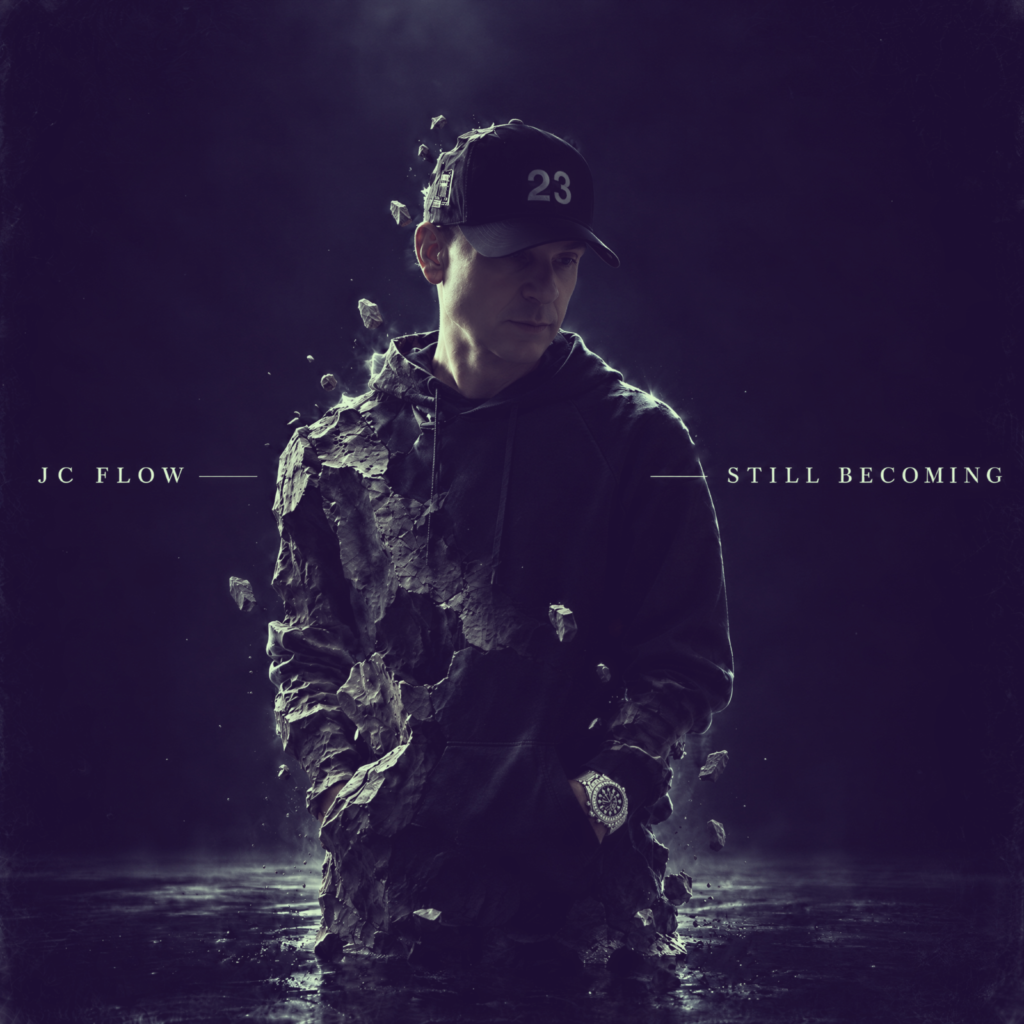
There’s no shortage of the advice in song form that’s telling you to not take life laying down. Life seems to be an obstacle course that everyone must face, and the radio gods are obligated to play at least one song a day with some chart-topping motivational cliché. The challenge is making a song about growing as a person feels like a human is experiencing it and not just a motivational poster. Seattle hip-hop artist JC Flow takes a more introspective approach on “Still Becoming”. Instead of presenting healing as some triumphant, neatly packaged conclusion, the song focuses on the uncomfortable business of figuring yourself out while you’re still very much in the middle of the mess. Based around atmospheric, cinematic beats of hip-hop, “Still Becoming” allows for JC Flow to wrestle with his emotions. The verses share that quiet intensity of emotion, that consideration of continuing on with life as if everything is all right. That’s a strange vulnerability, because life doesn’t wait to roll out the red carpet with a chorus in the sky for you to understand your purpose here. Sometimes, you just move on through the day and see what tomorrow brings. And this is the message at the heart of the song. The title itself throws out the idea that becoming a better version of yourself is an end goal. It’s a journey and a pretty uncomfortable one at that. You can have your wins and still be feeling pretty shiteful. You can know where it hurts you without knowing how to fix it straight away. JC Flow seems happy to take the contradiction, rather than pretend he’s figured it out. His music settles in between the alternative rap, soulful rap and inspiring music quadrant. It’s cinematic in the production but poetic when it’s performed and it really does embrace the introspective side of this track. It’s heavy but it’s not so much that it’s restricting and the melodies really come in to help give this song that bit of comfort in a dark moment. Definitely, inspirational hip-hop can suffer from the same leaden fault: the more sincere and explicit the song, the closer it comes to preachiness. “Still Becoming” works best when it stays in the word “yet”; refusing to rush on from the discomfort to the comfort.  “Still Becoming” is likely not going to solve motivational rap, but it’s much more humble in its approach to becoming better than yourself. There’s no cheat code to healing, no one track to get you ahead in this personal development game, and there’s no promise that tomorrow is any easier than today. Maybe all you can do is come to terms with today. And honestly, that’s a much more useful message than pretending you’ve already made it. Follow JC Flow Globe Facebook X-twitter Spotify Soundcloud Bandcamp Youtube Instagram Tiktok Promoted Content About the Author

JC Flow’s “Still Becoming” Is Powerful Because We Don’t Have to Have It All Together Read More »

Mick J. Clark’s “It’s Getting Near Christmas” Brings the Festive Chaos Early

Christmas music has a pretty specific job. It needs to make you feel warm and fuzzy about the season while conveniently ignoring the fact that you still have presents to buy, people to visit, money to spend and approximately seventeen things to finish before December 25. It’s a genre built on the promise that everything is magical, even when you’re one delayed delivery away from losing your mind. Mick J. Clark’s “It’s Getting Near Christmas” embraces the inevitable cheesiness, leaning into that familiar excitement and delivering an upbeat pop-rock song about the countdown to the big day. Clark says he wanted to capture the season’s excitement, stress and romance, which is a reasonably ambitious assignment for a holiday single. Fortunately, Clark keeps things upbeat with a familiar holiday bop and cozy, pulsing instrumentation. Jingle bells and cheerful chimes establish the Christmas spirit from the start, while shimmering synthesizers and a bouncy bassline add a touch of festive sparkle. The production hits that sweet spot for a Christmas pop song: melodic enough for a seasonal playlist while retaining the familiar sound of conventional pop-rock. Thick vocal harmonies reinforce the song’s optimistic feel, as though the festivities are already in full swing, with lights and tinsel up before the Halloween candy has even been eaten. “It’s Getting Near Christmas” isn’t trying to dismantle the holiday-song formula or offer a radical new interpretation of festive anxiety. It knows the assignment, brings the jingle bells and gets on with it. The song’s appeal lies in that straightforwardness. Put it on while decorating the house, driving to a family gathering, or attempting to turn a pile of shopping bags into something resembling an organized Christmas. That approach carries over to “It’s Getting Near Christmas.” The track isn’t interested in making the holidays complicated. It wants to soundtrack the anticipation, the decorations and the general feeling that something special is just around the corner. And sometimes, that’s enough. Christmas doesn’t need every song to reinvent the sleigh. Sometimes, you just need a catchy tune to make wrapping presents feel slightly less like an unpaid seasonal job. Follow Mick J. Clark Globe Facebook X-twitter Spotify Soundcloud Youtube Instagram Tiktok Promoted Content About the Author

Mick J. Clark’s “It’s Getting Near Christmas” Brings the Festive Chaos Early Read More »

The House Flies Make a Beautiful, Gothic Cacophony on “Lions and Ore”

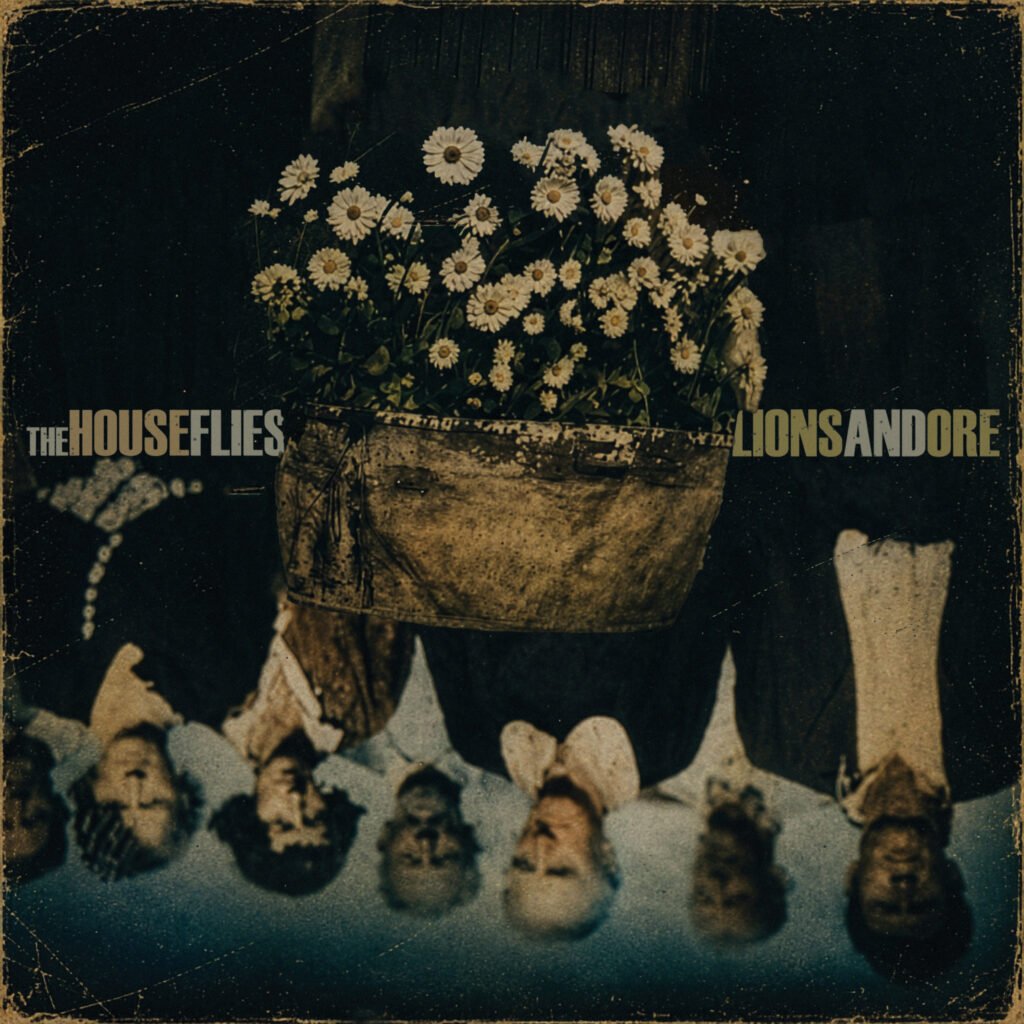
A lot of things get called gothic these days. Add some reverb to a guitar, write a song about being sad, throw in a black-and-white photo of an abandoned building and congratulations: you’ve apparently discovered the darkness within the human soul. The House Flies understand that being dark is the easy part. Making that darkness feel like somewhere you could actually live is a different story. On “Lions and Ore,” the Illinois four-piece built seven songs out of post-punk, gothic rock and heavy guitar music, letting repetition and sudden changes in volume do the talking. The record is dark, textured and physical. Guitars stretch out, rhythms settle into stubborn grooves and quieter passages hang around long enough to make the heavier sections feel like something breaking through a wall. It’s the band’s most expansive album yet and it knows that getting loud means very little if you haven’t given the listener a reason to care first. The music can be hypnotic, but it can also feel like being trapped in a conversation with someone who keeps saying, “No, wait, there’s something else” and then staring silently at the floor. Thankfully, the band usually makes the wait worthwhile. The opening track, “Goodnight, Goodnight, Lover Dear,” sets the tone with a collision of religious imagery and everyday intimacy. Hymnals and chapel bells sit alongside an unmade bed and cotton sheets. It’s an oddly effective combination: the grand language of faith meets the messy reality of being close to another person. The song doesn’t need to tell us whether that closeness is sacred or doomed. It lets both possibilities hang in the air. “Lost Literature” brings a more melodic, danceable groove to the gloom. There’s a pop song hiding in here, if you’re willing to dig through the static to find it. Images of rental cars, late-night drives and memories that refuse to stay put give the track the feeling of leaving somewhere without knowing where you’re headed. You can imagine two people sitting together in uncomfortable silence before finally getting into a car and driving off. No dramatic argument, no grand goodbye. Just the quiet realization that whatever held them together might not be working anymore. Then “Derelict Crawl” pulls the album back into darker territory. Its bass and drums establish a steady, almost mechanical pulse, while the guitar shifts between a wiry twang and bursts of distortion. Alex Riggen’s vocals remain airy and detached, making the refrain of “We don’t belong” sound less like a battle cry than an unpleasant fact everyone has agreed to ignore. The song doesn’t explode into some triumphant declaration of outsider identity. It just keeps crawling. “Shelter Me” continues the album’s search for comfort in uneasy places, before “The Glass, The Orchard” closes things out. The latter began as a folk guitar part Riggen wrote for his solo project, Wilhelm, before the rest of the band helped turn it into a full song. That quieter origin feels fitting. Beneath the distortion and gloomy atmosphere, The House Flies are often working with something delicate. They just don’t seem particularly interested in protecting it from the noise. There’s a distinctly Midwestern gothic quality to “Lions and Ore,” but it doesn’t rely on theatrical horror. The unsettling thing isn’t a monster lurking in the basement. It’s the thought that someone once made dinner in this house, slept in this bedroom and expected to wake up here the next morning. Now the place is empty. A similar feeling of history emerges from the religious language on the album. Though church and religious ideologies come in sizes from small country structures to fire and brimstone notions of faith, the words of the songs suggest listeners could assume whatever faith they wish while experiencing them. It’s not about religion; it explores how religion gets mixed up in fear, memory and routine. The title alone is like a tiny version of the record; an extract from the lyric “how your touch calmed lions and ore” and alongside something hazardous and breathing, there’s something heavy and sunken. That tension exists throughout the entire album: tenderness next to distortion, fealty next to skepticism, the usual against the unfamiliar. Even the title works like a miniature version of the album. Taken from the lyric “How your touch calmed lions and ore,” it puts something dangerous and alive beside something heavy and buried. That contrast runs through the record: tenderness against distortion, devotion against doubt, the familiar against the strange. The House Flies don’t make decay sound harmless and they don’t rush to turn every ugly feeling into a lesson. “Lions and Ore” is content to sit with the discomfort, let the guitars grind away and see what’s left when the noise finally settles. It’s a record about places, people and feelings that refuse to disappear completely even after you’ve convinced yourself you’ve moved on. Follow The House Flies Globe Bandcamp Youtube Instagram Facebook Spotify Promoted Content About the Author

The House Flies Make a Beautiful, Gothic Cacophony on “Lions and Ore” Read More »

Dick Cole’s King of Cool Rocks Like He’s Got Nothing to Prove

If you’ve ever wondered what wisdom, humor, and life’s rough edges sound like when bottled into a few tracks, Dick Cole’s King of Cool might just be your next favorite spin. And it’s probably because there’s a lot of mileage behind the man himself. A retired military officer, pilot, author, and avid motorcyclist, Cole has lived long enough to offer a record with grounded, lived-in quality. With six tracks in total, the EP proves there’s more to rock and roll than just turning up the volume. The EP opens with King of Cool, and it has that classic rock groove sound that is such a fitting tribute to Steve McQueen. Think of it as a soundtrack for the opening credits of a classic Hollywood flick that immediately tells you how good the movie is going to be. And while it sounds confident and effortlessly stylish, underneath is still this genuine affection for the man behind the image. He No Longer Asks follows without the swagger from the opening track. It’s slow,  with a hint of tension brooding underneath. Think of a portrait of love slowly fading except it’s painted in restrained, wine-soaked guitars and melodies. Lainey enters with slick guitar lines, like the kind of music you’d come across in a roadside bar. The steady rock-blue rhythm doesn’t stop it from having depth as the line goes “He remembers how healing can start in the dark.” Still Vertical will have you nodding your head and grinning on the dance floor with its no-filter humor. Somehow, it turns the aches of aging into a cheeky rock anthem that makes getting older sound like a hell of a good time. Last Bird out of Saigon might be the most personal out of all tracks, with its vivid lyricism about memories of surviving war and the battlefield. While Standing in the Shadow wraps the EP with a reflective, thought-provoking tale of temptation and guilt.  Despite the range in its themes, there’s appeal in its willingness to get a little messy. A man with a background like Cole could easily brag about triumphs or clean resolutions, but King of Cool offers room for regret, uncomfortable pasts, and a sharp humor to keep you listening.  These days, it can be easy to find a song that sounds good on the first listen, but finding one with a story that holds your attention is another matter. Cole brings a little of both, if you ever need noise to tap your feet or something to chew on when you start to lean in a little closer. All in all, if you’re after rock and roll with personality and songwriting with something to say, King of Cool is one hell of a pick.  Follow Dick Cole Spotify Icon-music Youtube Soundcloud Bandcamp Instagram Facebook X-twitter Promoted Content About the Author

Dick Cole’s King of Cool Rocks Like He’s Got Nothing to Prove Read More »

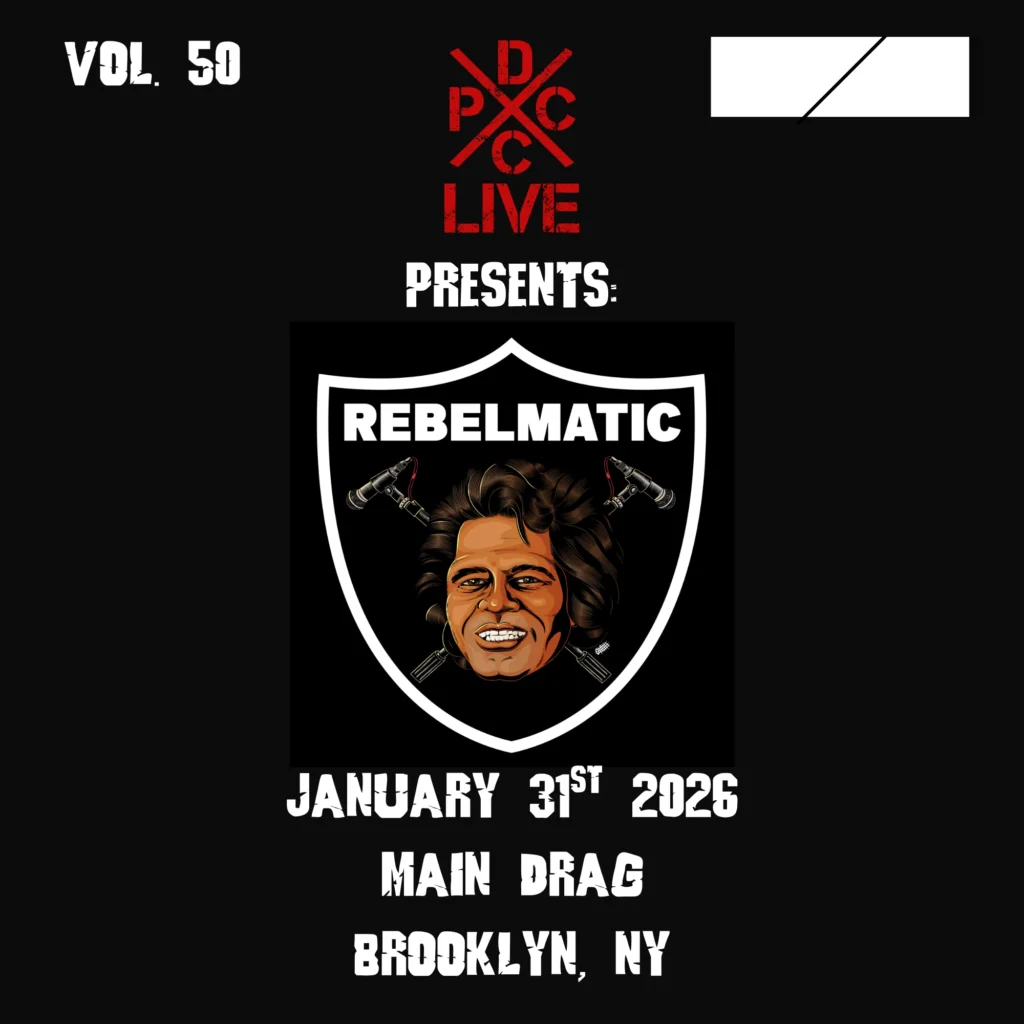
Rebelmatic’s DCxPC Live Vol. 50 Puts James Brown in a Mosh Pit and Lets the Pit Dance

A punk band can be described in so many ways. You can call it loud, aggressive or unrelenting. You can also throw a bunch of adjectives at it until it sounds like a particularly miserable job. Or you can do what New York band Rebelmatic does and describe its music as “James Brown in a mosh pit.” It’s a ridiculous image, but that’s part of the reason it works: picture the Godfather of Soul plunked into a room packed with frantic punks, bouncing and flailing around as the music hangs on to its groove. Someone has likely taken a few backhands, but the rhythm is still going. This is a little more than just a clever marketing gimmick; on DCxPC Live Vol. 50, the album captures that moment of friction that makes the band so compelling: music can go at you while still knowing it’s a fun thing to do. Credit: @put.over.photo Rebelmatic has elements of hardcore, punk, funk, hip-hop, metal, and soul within it. In the band’s arsenal, it makes for a sound that’s distinctly “Rebelmatic”: The guitars carry the crunchy imperfections; the bass and drums push the tracks ahead; and Creature’s vocals act as a voice of purpose (warning: pun incoming) to maintain the product cranking. It’s heavy without being gloomy, rhythmic without lacking its sting, and politically aware without sounding like a public service announcement screamed at prime volume through a damaged amp. That balance matters. Aggressive music has never had a shortage of anger. What’s more interesting is what happens when that anger becomes something people can share. Rebelmatic’s sound carries a sense of defiance, but it also leaves room for positive energy and collective release. The band isn’t simply interested in making a room louder or more hostile. It wants the room to move. Recorded at Main Drag in Brooklyn, DCxPC Live Vol. 50 brings that physicality without overediting how it’s presented. Swirling guitars and pounding vocal melodies collide with a rhythm section that keeps the tunes charging headlong. It’s kind of muddy, and when everything gets layered on top of the next, the delivery might be a little overwhelming if you prefer all your instruments separated. But a live album shouldn’t be cleaned up for the sake of clarity. There’s a difference between recording a song that’s meant to be played and made to sound a certain way, and capturing the same song in the process of being played to a live audience. Rebelmatic has the latter in its favor. It’s the energy, not the slickness, that’s the draw: the rhythm section provides the guitars with their backbone, the vox cut through the clutter, and the band’s shared influences collide in the middle. The looseness gives it a certain groove that’s hard to replicate in a more polished recording. That mix of aggression and groove comes through in “P.O.N.Y. (Product of New York),” a track that wears the band’s hometown identity on its sleeve. It’s a fitting showcase for Rebelmatic’s energetic sound, where the punk attack doesn’t cancel out the rhythm that keeps everything moving. “Blood N Gold,” meanwhile, brings a more confrontational edge, with themes of value, struggle and societal conflict that fit the band’s interest in music as more than just an outlet for noise. “Alive On Arrival” adds another chapter to the band’s recent run of material and takes on a different character in the live setting, where the performance’s immediacy becomes part of the song’s appeal. Rebelmatic has spent years building this identity onstage. The band has appeared at AFROPUNK and Punk Island, shared stages with Pure Hell, Death and Slick Rick; and earned support from H.R. of Bad Brains, Angelo Moore of Fishbone and DMC of Run-DMC. Those connections make sense. Rebelmatic occupies a space where punk’s confrontational spirit meets funk’s rhythmic discipline and hip-hop’s swagger. These influences don’t feel like separate ingredients thrown into a blender; they’re part of a musical conversation that has been going on for decades. Onstage, the heaviness and the groove don’t have to take turns. They can collide, overlap, and make each other more interesting. The release comes from DIY label DCxPC Live, which marks its 50th volume with the album and its second live release featuring Rebelmatic. The label plans a limited pressing of 200 copies on ecomix graphite vinyl, alongside a digital release through Bandcamp. There will be no Spotify or Apple Music edition. That decision reflects the label’s commitment to independent music, though it also puts an extra step between the band and listeners who rely on mainstream streaming services. Still, scarcity isn’t a substitute for substance. A limited pressing doesn’t automatically make a record essential, and underground credentials won’t rescue music that has nothing to say. Fortunately, Rebelmatic offers more than the appeal of an exclusive release. Its sound has a clear point of view, one shaped by the friction between hardcore aggression and a groove that refuses to sit still. DCxPC Live Vol. 50 RebelMatic Live at Main Drag by RebelMatic DCxPC Live Vol. 50 isn’t a pristine document and its rough mix can occasionally make the songs feel more chaotic than exhilarating. But that imperfection is part of the record’s character. Rebelmatic understands that resistance can have rhythm, that heaviness can swing, and that a mosh pit doesn’t have to stop dancing just because the guitars get louder. “James Brown in a mosh pit” might sound like a joke. Here, it’s a pretty convincing mission statement.  Follow Rebelmatic Globe Facebook Spotify Soundcloud Bandcamp Youtube Instagram Tiktok Promoted Content About the Author


Rebelmatic’s DCxPC Live Vol. 50 Puts James Brown in a Mosh Pit and Lets the Pit Dance Read More »

Paul Jarmer Explores Grief and Recovery on “Stay”

Some things you can try to live down for years, only to realize it’s too late. Time is one of them. So is the final moment you wish you’d had with someone you loved. Minnesota singer-songwriter Paul Jarmer‘s “Stay” sits in that minefield, morphing grief and regret over his mother’s loss into a gnarly alternative-rock ode, the kind of love that hurts and the struggle to stay present in your own life. The song need not complicate its feelings. Guitars shimmer and chime over slow, thumping drums and, in time, evolve into a fuller soundscape that leaves Jarmer’s exhausted vocal cords room to breathe. His voice feels ragged and weary, like that of someone who’s actually endured what he’s singing about. It’s not a cry of grief for effect, but rather a confession from a guy who’s still trying to work it out himself. Then comes the lyric that changes everything: “I finally got sober, just like I promised you.” It’s an achingly simple line. In the context of Jarmer’s life, it’s a decade packed into one sentence. He sings from the experience of addiction, homelessness, mental health struggles, and the work he’s put into taking control of his life. His mom was among the few who stayed by his side through those years. Now she’s gone, and that promise stands as a testament to his perseverance, one he wishes he could share with her directly. That’s where “Stay” finds its emotional center. It boils down to the questions grief tends to leave you asking: Did I spend enough time with that person? Should I have called more? Did they realize how much they meant to me? No satisfying answers are waiting down the line. Sadly, grief doesn’t offer customer service. The bigger story of Jarmer’s musical comeback is just as compelling. After the turmoil of addiction and the long struggle to climb out of it, he’s slowly found his way back to the simple but powerful art of songwriting, now more aware of the stories he needs to tell. And “Stay” tells its story without burying its message beneath a tangled mass of musical flourishes. In the end, “Stay” is a requiem for the harsh reality of growth. Jarmer has reached a place of stability: he’s sober and at peace, but his mom can’t see it. There’s nothing he can do about that. What he can do is hold on to the promise he made and turn this soft, sad goodbye into one more conversation he wasn’t prepared to have. Follow Paul Jarmer Facebook Spotify Bandcamp Youtube Instagram Tiktok Promoted Content About the Author

Paul Jarmer Explores Grief and Recovery on “Stay” Read More »

Anna Kameneva traces a path of self-discovery in ‘Silk Way To Myself’

Self-discovery is a funny thing. Everyone’s doing it, nobody seems to have a complete instruction manual for it and somehow we’ve collectively decided that the best way to explain the process is through songs about following your dreams. Anna Kameneva’s “Silk Way To Myself” takes that familiar idea and gives it a more distinctive cultural backdrop, combining contemporary pop with musical inspiration drawn from Uzbekistan’s heritage. The single takes its central metaphor from the ancient Silk Road, the historic network of trade routes that connected communities and facilitated the exchange of goods, ideas and culture. It’s a fairly simple metaphor, but a helpful one. It’s not usually a one-moment, clouds-will-part-whoosh-you-fly-up-and-into-a-very-satisfying-epiphany kind of thing to discover yourself. It’s a long, sometimes mysterious process of listening to yourself, gathering knowledge about yourself and trying not to make the same mistakes. Hopefully. More fascinating (and more unexpected) is “Silk Way To Myself” ‘s link to traditional Uzbek hand-weaving: the patterns that craftspeople produced on their looms while crafting them are what triggered the musical identity of the song, translating traditional craftsmanship into the heart of the modern pop track. It’s a wonderful twist: the physical pattern created through repetition leads to inspiration for the sonic pattern of the track. The past doesn’t just sit there feeling vulnerable; it actually shapes the creation of music. Then there’s the “lele” part, which leads to the song’s highlight-a memorable, playful hook. That’s a key component when you’re writing a song about personal development; otherwise it could just as well be a string of motivational memes set to music. The hook keeps it all tangible and fun. Like “Silk Way To Myself” leans into that desire to take real life and forge it into a song, this time drawing on Uzbekistan’s cultural influences. That refrain, of “believe in yourself, follow your dreams and find your own path” isn’t exactly fresh, but the cultural reference adds a little more personalization to a familiar phrase. Sometimes it’s not about creating a destination entirely new. It’s about understanding why you’re headed for a particular destination. Follow Anna Kameneva Spotify Youtube Instagram Tiktok Promoted Content About the Author
Anna Kameneva traces a path of self-discovery in ‘Silk Way To Myself’ Read More »

Drea Dominique’s “Roll” Is About Allowing Yourself To Catch Feelings

Loving someone can lead you to do some pretty dumb things: you dwell on a text for 20 minutes, read signs of great potential into a totally standard interaction and overlook red flags left and right when the energy is right. “Roll” by Drea Dominique is about the fun part of all that – falling for someone without the unnecessary trauma. A Miami native R&B singer provides a laid-back easy sound on this one, which could easily be the soundtrack to a late-night cruise with a person you secretly love more than you want to admit. Everything feels easy here, anchored by a slow groove that gives the song space to breathe. Nothing about this feels pushy or hard to get your attention. “Roll” is from Dominique’s Romantic Tragedies phase, a body of work that stems from having lost someone she loved. With that in mind, the playful air of the song is a pleasant departure. Instead of wallowing another three minutes in heartbreak, Dominique has the chance to write about what it feels like when you’re ready to have fun being into someone once more. That’s a refreshing alternative to the messiness of romance, particularly for an overthinker like her. That’s the beauty of the song. Dominique isn’t overcomplicating a simple concept with a million metaphors and filler lines to make every single lyric sound like it belongs in the montage at the end of a breakup film. “Roll” is perfectly happy to live in the joy of having a crush and wanting to see what happens. You don’t always need a lyrically innovative song to prove your point: Sometimes you just want a track to listen to while you’re doing your decision-making. “Roll” doesn’t need to break new ground to make its mark. It’s aware of the mood it wants to create and not only delivers on that front, but keeps walking the walk. And for all the time you’ve wasted trying not to like them, sometimes a song is just better off playing along. Follow Drea Dominique Instagram Spotify Promoted Content About the Author
Drea Dominique’s “Roll” Is About Allowing Yourself To Catch Feelings Read More »

CHANNELS’ “MOTHER” Elevates Spiritual Skepticism to Atmospheric Rock

Religion, spirituality and the entire process of working out what you believe can be complex, particularly if the beliefs you once readily lapped up appear to be faltering. CHANNELS‘ debut single, “MOTHER,” takes those doubts and constructs an appropriately epic soundscape for them, a world where the divine has all the power and a touch of menace. The Chicago band features Kelsey Montanez, Hannah Hovland Johnson and Jesse Greco, three singers who aim to translate weighty existential questions into rock-and-roll. The band’s list of sonic references includes Interpol, Queens of the Stone Age, Muse and Radiohead, which should help you get a sense of what kind of psycho-spiritual territory they’re treading: brooding atmospherics, muscular guitars and sounds that feel like they’re coping with an existential crisis. To be fair, rock music has always excelled at those. “MOTHER” was built around a view of God that challenges the more familiar, traditionally masculine models of spiritual authority. At a time when many musicians would turn to tidy and safe interpretations of spirituality, CHANNELS introduces its music to the listener with all its mystery and power. And, instead of replacing an image of God with a different image of God, it makes us wonder why those images felt more natural to us to begin with. It is an indie-rock fare, wandering into synth-heavy, atmospheric territory before effortlessly elevating to a head-bobbing musical momentum that still isn’t close enough to “background” music for you to block it out. That “thing” lies in the contrast between the atmospherics with which this track explores, with the assurance of the rock instruments giving it “somewhere to go” as it does so. It feels less like a neat, declarative statement of faith and more like a soundtrack for questioning everything you thought you knew. As for the vocals, that brings even more to the song. Montanez’s haunting voice is beautifully complemented by Hovland Johnson’s more gritty approach, which packs a little more punch-just what you need for a tune that plays on both sensitive vulnerability and strength. Greco’s multiple-tracked guitar work sets the tone for the track’s dark, commanding momentum. For a debut, “MOTHER” is a nice introduction to a band more interested in ideas than bringing the house down in a dark room. The theme of the record lends meaning to the mood and the fusion of hard rock and electronic textures gives the band a sound worth exploring further.  CHANNELS aren’t providing any hard and fast answers here, which is no bad thing. The odd thing about belief is not in knowing what to believe, but in finally having the space and the ability to challenge what you do. Follow CHANNELS Instagram Spotify Promoted Content About the Author

CHANNELS’ “MOTHER” Elevates Spiritual Skepticism to Atmospheric Rock Read More »