
loader image

New Music

Throughout a Different Kind, Social Gravy Pulls Off a Pretty Remarkable Trick

Look, it’s rare that music manages to feel both intensely personal and universally relatable, but A Different Kind from Social Gravy? That’s exactly what it does in spades. This isn’t just an EP; it’s a journey that zigzags between the personal and the grand, the emotional fireworks and the quiet introspection, and it does it all with a surprising amount of swagger. The whole thing kicks off with “Happening Now,” which grabs you by the collar and drags you into this cinematic, just-about-to-shift moment. It’s big. It’s anthemic. The song wraps themes into a melody that sticks in your head and feels almost effortless. It’s intellectual, sure, but it’s also got this smooth, infectious hook that pulls you in without you even realizing it.  We then pivot into “Love You Better” which is this small, intimate scene where you’re up close, feeling the heat of attraction and devotion. The song moves from acoustic to electric, and it’s like the arrangement gets the push-pull dynamic of the relationship it’s describing. It’s sensual, but not in a shallow, throwaway way. There’s real vulnerability here; the kind that makes you feel like you’re hearing someone’s inner monologue. It’s just a really tender, human moment. Social Gravy proves that they can write more than just epic anthems; they can nail something deeply personal without losing the emotional connection.  Then there’s the third track “Anywayz”. It’s raw, it’s frenetic, it’s messy and it’s beautiful. The guitars hit like a hammer, and the drums are like a pulse you can’t escape. It’s got that feeling of emotional volatility that only certain relationships can produce, where the highs are dizzying and the lows are crushing. It should fall apart, but it doesn’t. Instead, Social Gravy takes this chaos and somehow makes it feel controlled, deliberate even. It’s the kind of messy beauty that makes you want to turn it up to 11 and just feel. And then we get to the title track, “A Different Kind,” which wraps the whole EP up in a perfect bow. If the rest of the songs were about the personal and the romantic, this one simply pulls back to get into the big questions of identity, love, uncertainty. It’s existential in the best way and it’s a daring choice for a closer, and it works. The track is quiet but powerful, a revelation that carries more weight than any anthem could. Throughout A Different Kind, Social Gravy pulls off a pretty remarkable trick: they manage to stay cool and composed while also confronting the emotional weight of their themes. The production is sleek, but not so shiny that it glosses over the rawness of their message. This isn’t music that’s trying to spoon-feed you emotions or preach to you from a soapbox; it’s a conversation. One that spans love, identity, and connection; all the while keeping their signature sound intact. It’s cinematic, it’s melodic, and there’s just enough grit to give it the weight it needs. If you’re into the edgier, more emotional side of indie rock (for my personal comparison point, think Wild World-era Bastille, but with more soul and less polish), Social Gravy is doing it right. They’re not here for a quick viral hit or a fleeting moment. They’ve got staying power, and A Different Kind proves they’re ready to deliver songs that stick with you long after the last note fades. Follow Social Gravy Globe Facebook Twitter Spotify Soundcloud Youtube Instagram Promoted Content About the Author

Throughout a Different Kind, Social Gravy Pulls Off a Pretty Remarkable Trick Read More »

Lily Galin’s “What’s your story” Holds Your Unguarded Heart Gently

Only a few debut singles break free from the pressure to sound different or hand out all their flashy skills to grab attention. Lily Galin’s What’s your story is one of those few, something that makes you feel safe without that fixation to outperform everyone. Hailing from the heart of the music scene, Lily Galin is a Chicago-based singer songwriter. With this much-anticipated original single, she starts to cement her place in the scene with exceptional vocal talent and songwriting prowess.  At the very beginning, What’s your story already feels personal. The delicate piano motif and the airy synths creates a kind of space that will let you open up your heart completely unguarded.  Galin’s voice holds a sense of comfort, like a tap on your shoulder while saying “I’ve been there and I felt it, too.”  One thing about this track is its sincere effort to understand you: no unnecessary noise, no pretentious attempt to save you from your struggles. It’s just enough to make you feel you’re not alone, and honestly? It’s not just musicality that creates something like this—it’s empathy, the very act of being human is what makes this moving. And the way Galin turned her personal journey into a shared experience shows the artist she is, sincere and genuine.  Follow Lily Galin Facebook Youtube Promoted Content About the Author

Lily Galin’s “What’s your story” Holds Your Unguarded Heart Gently Read More »

CANTBUYDEEM’s “It’s Whenever” Feels Like a Drink Someone Actually Made for You; Shaken, Not Stirred, Handed Over With a Wink

Most summer anthems are like fast food: they exist, they’re edible, you vaguely enjoy them in the moment, and then they vanish from memory about three songs later. CANTBUYDEEM’s “It’s Whenever”, on the other hand, feels like a drink someone actually made for you; shaken, not stirred, handed over with a wink. It’s confident without being desperate for your approval, and that’s what makes it stick. The production isn’t busy. It doesn’t need to be. It’s airy, low-key, with just enough bass to feel substantial without ever bulldozing the vocal. You could call it minimal, but that’d be selling it short; it’s more like deliberate restraint. There’s space here, and in that space CANTBUYDEEM manages to sound both laid back and quietly defiant. He doesn’t rap like someone begging for your attention. He raps like someone who knows you’re already listening. And here’s the thing: a lot of tracks try to shove their “depth” in your face, as if whispering about struggle over a piano played at changing time signatures which is then looped makes them profound. “It’s Whenever” is smarter than that. It’s casual on the surface; half diary entry, half flex, but if you actually pay attention, you notice how survival, style, and selfhood are braided together. It’s not trying to beat you over the head with a moral; it just lets the vibe carry the weight of the meaning. The hook is deceptively simple. It doesn’t scream “anthem,” but it seeps into your head anyway, the way an offhand phrase from a friend ends up being repeated for weeks. And that’s sort of the point; the song isn’t about spectacle, it’s about inhabiting a mood. It’s the sound of someone shrugging off hardship, not because it doesn’t matter, but because carrying yourself with composure does. There’s a duality here I really like: on one hand, it’s breezy enough to soundtrack your summer barbecue; on the other, it’s got enough grit to remind you that ease doesn’t come free. CANTBUYDEEM threads those opposites together without ever calling attention to the balancing act. It just feels natural, which is annoyingly rare. So is this the next big radio single? Probably not; it’s too subtle for that. But that’s exactly why it’s good. It’s a track that doesn’t waste time pandering to whatever microtrend TikTok has decided is the future of music. Instead, it just does its thing, and does it well. And honestly, that’s refreshing. “It’s Whenever” is cool, confident and crucially; not disposable. Which is more than I can say for most of what’s clogging up summer playlists right now. Follow CantBuyDeem Spotify Promoted Content About the Author

CANTBUYDEEM’s “It’s Whenever” Feels Like a Drink Someone Actually Made for You; Shaken, Not Stirred, Handed Over With a Wink Read More »

Geoff Abraham Band’s When Love Is at the Root Is Just a Great Song; Plain and Simple

There’s something incredibly funny about how rock music in 2025 manages to exist in two parallel universes. In one, you’ve got aging stadium acts still charging the price of a used car for a ticket, playing the same setlist they’ve been running since 1983. In the other, you’ve got a wave of bands trying to reinvent rock as though it’s a science experiment: layering it with EDM drops, AI lyrics, and production so shiny you could use it as a mirror. And then, quietly in the middle of all this, comes the Geoff Abraham Band with their new single When Love Is At The Root. It’s not trying to save rock, it’s not trying to demolish it, and crucially, it’s not trying to sell you an NFT of a guitar solo. Geoff Abraham Band’s When Love Is At The Root is just a great song; plain and simple. The first thing you notice is the guitar. It doesn’t sound like it’s been auto-tuned, EQ’d to death, or built in a lab somewhere in Los Angeles. It sounds like an actual human plugged into an amp, turned the volume up, and played something they cared about. It’s bluesy, it’s raw, but it’s got that swagger that keeps it from being dusty nostalgia. You can hear the ghosts of Keith Richards and Joe Walsh somewhere in there, or at least the part of them that isn’t cashing royalty checks. Add a pinch of Bonamassa’s showmanship, Marcus King’s soul, and Gary Clark Jr.’s “I make blues relevant again” energy, and you get the general idea. But it never collapses into tribute act territory. Abraham’s voice and playing keep it squarely in his lane. In the wrong hands, it’s Hallmark-level platitudes set to guitar noodling. But here it works, partly because Geoff Abraham sings it with a grit that suggests he actually believes it. It doesn’t sound like a lecture. It sounds like a reminder. What I love about this track is that nothing feels like it’s straining to be impressive. The rhythm section holds down the groove like it’s the most important job in the world (which it kind of is). The guitar solo doesn’t feel like an ego trip; it feels like part of the conversation the song’s already having with you. Everything is in service of the track, and in 2025, that’s almost radical. By the time it’s over, you’re not just left humming a riff; you’re left thinking about why this style of music still works. Because when you strip away all the gimmicks, blues-driven rock has always been about honesty. And When Love Is At The Root is honest. Not groundbreaking, not reinventing the wheel; just honest in a way that sneaks up on you. The Geoff Abraham Band isn’t trying to chase algorithms. They’re trying to make music that still matters when the algorithm forgets you exist. And with When Love Is At The Root, they’ve done exactly that.  Follow Geoff Abraham Band Globe Facebook Spotify Youtube Instagram Promoted Content About the Author

Geoff Abraham Band’s When Love Is at the Root Is Just a Great Song; Plain and Simple Read More »

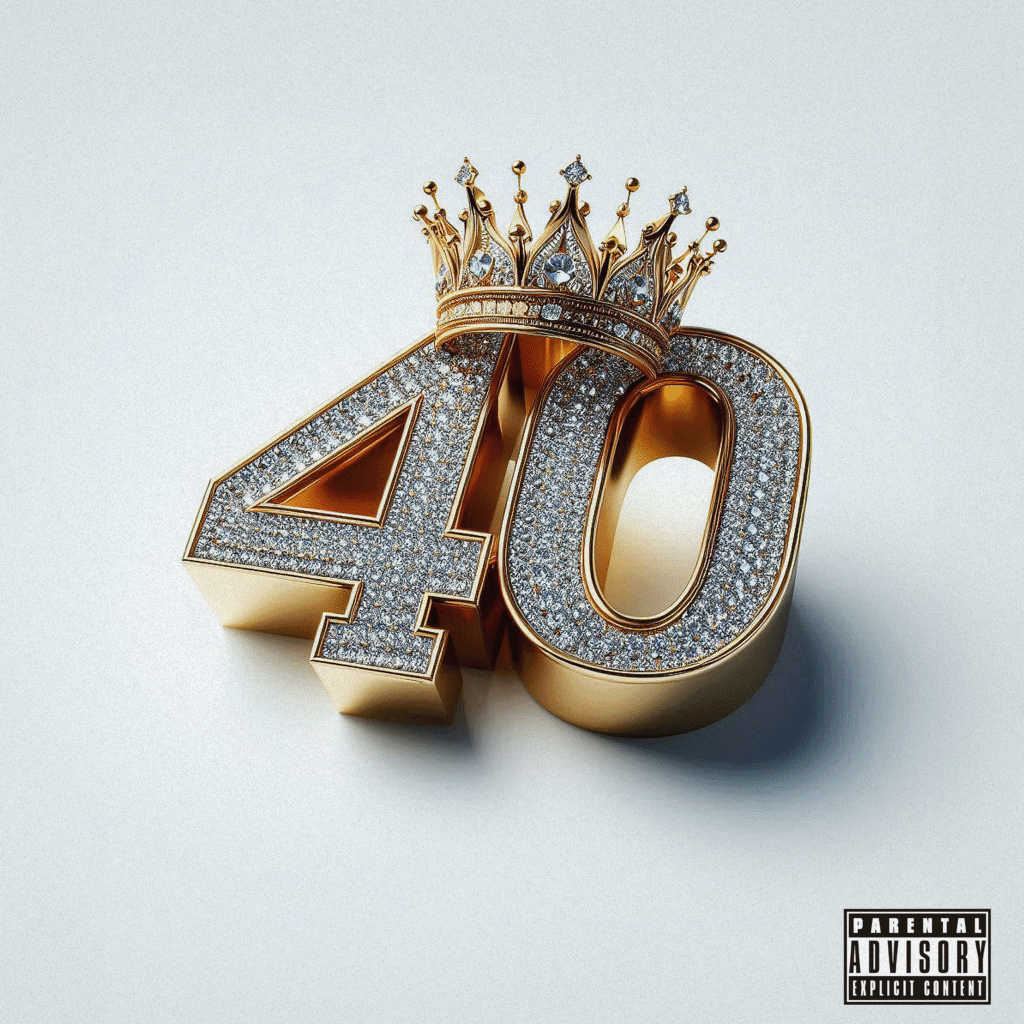
Baby T’s 40 isn’t a record built for a season; it’s built to last

Some albums exist purely to be ignored. They fill playlists, soundtrack laundry cycles, and evaporate from memory the moment they end. 40, the new 11-track project from three-time World Entertainment Awards nominee Baby T, is not one of those albums. This is a record that refuses to be background noise. It’s not content with providing a vibe or politely waiting in line for its thirty seconds of algorithmic relevance. It wants permanence. It’s a flag planted firmly in the ground, an album designed to be revisited, argued over and if Baby T has his way; remembered. The title alone signals intent. Forty: not just an age or a number but a vantage point, the kind of milestone where experience hardens into perspective. But while the name suggests reflection, the music pulses with urgency. This isn’t Baby T reminiscing from a safe distance, this is Baby T insisting these stories still matter now, in the present, in a world where tracks are consumed like fast food. He’s not selling nostalgia, he’s asserting relevance. And across the album, he blends Caribbean soul, street grit, and classic hip-hop lyricism into something that feels less like a playlist of songs and more like a cinematic journey. It’s tempting to say Baby T is reinventing hip-hop here, but that would be wrong. What he’s really doing is reinforcing its foundations. There’s no desperate attempt at trend-chasing, no hollow gestures at futurism. Instead, he’s taking the wheel; the same wheel Nas used on Illmatic to document a world with laser precision, the same wheel that Kanye polished during The College Dropout with his blend of soul samples and sharp with; 40 takes that wheel all the while reminding us it still works. Baby T doesn’t imitate them so much as enter into conversation with them, folding their influence into his own cultural lineage. Where others lean into pastiche, Baby T leans into inheritance. The result feels grounded, confident, and much larger than him alone. Part of the magic comes from how the album sounds. The beats radiate wealth, not in the sterile sense of overproduced pop rap, but in the way bling-era hip-hop once wore its production like armor. Strings swell, horns burst, gospel layers rise, and the bass punches with precision. Yet for all the sheen, the music never feels hollow. “Greed” is the clearest example of this paradox: the track shimmers with polish, the kind of beat that could soundtrack a champagne commercial, but Baby T’s lyrics slice against the gloss, dismantling the very culture of excess the production tempts you to enjoy. It’s a trick, a trap, and a commentary rolled into one. Other songs swing in the opposite direction. “Dem Ones” abandons critique in favor of swagger, camaraderie, and sheer bounce. The Caribbean inflections in its rhythm keep it rooted in place, a celebration of pride and joy rather than a stern lecture. The centerpiece, though, is “Things About To Change.” Positioned as the first proper track after an intro, it functions as a manifesto more than a single. Over triumphant horns and layered vocals, Baby T draws out his mission statement: equal parts reflection and defiance, hopeful but grounded. It’s motivational, but it avoids the cloying self-help vibes that weigh down so many “inspirational” rap tracks. Instead, the grit in his delivery keeps the optimism tethered to reality, as though he knows hope without honesty is just marketing. This sense of contradiction runs throughout 40. A verse may shift from bravado to vulnerability in seconds, but Baby T thrives in these moments because he isn’t interested in flattening himself into a brand-friendly archetype. He is, instead, trying to capture the full mess of being human; pride and shame, clarity and confusion, survival and celebration. That approach resonates most when his Caribbean roots surface, not as ornamental nods to heritage but as the very heartbeat of the record. The cadences, rhythms, and references don’t appear for the sake of “representation,” they anchor the entire project in lived identity. Yes, the album isn’t flawless, but those imperfections are also what make it feel human. Baby T is not presenting himself as a finished product, carefully smoothed for mass appeal. He’s presenting himself as someone who has lived, endured, and chosen to share the uneven truth of it. The cinematic scope of the production doesn’t erase that humanity; it amplifies it, making the contradictions larger than life. Baby T’s 40 isn’t a record built for a season; it’s built to last. Follow Baby T Facebook Twitter Youtube Instagram About the Author

Baby T’s 40 isn’t a record built for a season; it’s built to last Read More »

Shu Lee Made a Dare on Fusion of Colours

Every other week, some indie artist pops up declaring they’ve reinvented music with their laptop and a £10 mic from Gumtree. And usually, it’s fine. Charming, rough around the edges, occasionally surprising, but not exactly the stuff of revolutions. Then along comes Shu Lee, who actually means it. His second album Fusion Of Colours isn’t just DIY in the sense of “I mixed this on Audacity and my cat coughed in the background so I kept it in.” It’s DIY in the militant sense: Lee wrote every note, played every instrument, sang every line, did the recording, engineering, cover art, and even the release strategy; all is on a budget that would barely cover a round of drinks in Sydney. Out of this stubborn independence comes MFDM (Multifaceted DIY Music), Lee’s self-declared philosophy. And for once, you can’t accuse an artist of overselling it. Now, when I first read the album notes, my reaction was: Sure mate, nine languages and nine genres on one record, I bet. It sounded like one of those bold claims you skim on Bandcamp before realizing the music is just lo-fi shoegaze with extra steps. But here’s the embarrassing bit: I actually had to research this, and Lee wasn’t lying. Dharug and Mandarin really do share space on one track. There’s another with five languages stacked like a Jenga tower. The sheer fact-checking required to keep up with this album should probably count as part of the listening experience. It’s rare that a record makes you doubt reality enough to open Wikipedia before track three. The record begins with “I Am A Pyx,” a track that sets the tone without ever settling into one. What starts small and intimate soon swells into something bigger and almost hymn-like. It’s less a tidy song and more a statement: fragility and resilience wrapped together, declaring presence before anything else. Then comes “Magpie On The Roof,” lighter on the surface but with bite underneath. Folksy and jangly, it’s playful in a way that never feels throwaway, like a suburban snapshot that’s equal parts charm and sharp edge. From the start, Lee sets up the album as a pendulum: swaying between confessional intimacy and broader cultural manifesto. Here’s where Fusion Of Colours makes its strongest case for itself: in the way it uses language as sound. “Bada Buru” combines Dharug, an Indigenous language of Western Sydney, with Mandarin Chinese, Lee’s heritage tongue. On paper it sounds like an experiment waiting to collapse under its own ambition. In practice, it flows with a strange inevitability, like two languages meeting not for the first time but after centuries of waiting. “Kampung Halaman” pushes the idea even further. It weaves Malay, Tamil, Mandarin, English, and Spanish into one track; not neatly, not smoothly, but deliberately jagged. Instead of pretending cultures slot together like Lego bricks, it highlights the tension, friction, and beauty of living across them. Even if you don’t follow the words, you feel their overlap like colliding memories. It’s not catchy in the playlist sense; it’s compelling in the lived-in sense. Lee never lectures, but politics run under the record like groundwater. One track feels like an elegy without being fully sad, another like a protest disguised as a joke. “Love Song to Lebanon” aches with solidarity, folding Middle Eastern textures into a piece that balances mourning with celebration. And then, in a sharp pivot, “We Should Get Married But We Can’t Afford It” delivers biting humour through an upbeat, jangly pop-rock anthem about economic precarity. It’s witty, sharp, and the kind of thing you could easily imagine drunkenly belting out with friends. Later, “Yin and Yang” shifts to the philosophical, fusing electronic beats with traditional strings. It leans earnest, but Lee earns it: contradictions are the whole point of this record, and here they’re spelled out in sound. What makes Fusion Of Colours memorable isn’t the trivia of a bunch of languages or nine genres. It’s how the record insists on messiness as method. The raw edges, the uneven takes, the sudden tone shifts; they aren’t mistakes. They’re the philosophy. Lee’s MFDM isn’t about faking polish; it’s about refusing to sand off the awkward truths of real life. In a moment where “fusion” often just means tossing a bongo loop into an EDM track, Lee offers something different. This isn’t fusion as playlist garnish. It’s fusion as survival. It’s testimony. It’s not about sounding global for the sake of branding; it’s about sounding like Shu Lee. By the end of Fusion Of Colours, what you’ve heard isn’t just a record but an argument disguised as one. It argues that identity is messy, that hybridity isn’t optional, that language can be both barrier and bridge. And it makes that case without waiting for mainstream approval or caring about it. Shu Lee made a dare on Fusion Of Colours. And honestly? It’s one worth taking.  Follow Shu Lee Youtube Spotify Promoted Content About the Author

Shu Lee Made a Dare on Fusion of Colours Read More »

Bank Statements by BobbyBullRun is motivational fuel wrapped in clean beats and sharper business bars

So, you’ve decided to escape the 9-to-5 grind, crush your limiting beliefs, and manifest generational wealth. Congratulations: you’re either about to start your fourth side hustle or you’ve just wandered into the motivational speaker side of YouTube. And right in the middle of that energy vortex sits Bank Statements, a hip-hop album by BobbyBullRun that is, somehow, both dead serious about entrepreneurship and… kind of a banger? Let’s be clear: this isn’t just rap music with a few finance buzzwords lazily thrown in. No. This is commitment. This is financial literacy set to 808s. This is what happens when someone stares directly into the “rise and grind” aesthetic for too long and, instead of starting a podcast, makes an actually decent album. Bank Statements is pitched as the soundtrack for entrepreneurs, and that description doesn’t feel like clickbait in the slightest. BobbyBullRun is a man on a mission: help you start your LLC and nod your head at the same time. These tracks are less “flex culture” and more “fiscally responsible swagger,” offering the rare experience of hearing a trap beat under lyrics about retirement plans and asset diversification… and having it work surprisingly well. Now, let’s talk sonics. The production is clean. Like, suspiciously clean. This album sounds like it went through more rounds of feedback than your failed pitch deck. It’s sleek, minimal, and built to let the message breathe, which is good, because the message is dense. The beats don’t just slap. Rather, they invest, compound, and yield. You could probably even write them off on your taxes. Bobby’s voice lands somewhere between A$AP Rocky’s relaxed glide and Jay-Z’s “let me teach you something” gravitas, but it’s not a pastiche. It’s more like he’s studied the blueprints (pun absolutely intended) and decided to build a WeWork for beats. His flow is tight, confident, and never strays from the mission: deliver value. Even the metaphors are on-brand. He’s not spitting fire; he’s reallocating his bars into higher-performing narrative assets. The track “401k” feels like it deserves its own TED Talk; a surprisingly subtle yet compelling case for long-term investing that somehow manages to be both practical and emotionally resonant. It’s the proper tone-setter for an album that blends financial literacy with musical polish, creating something more purposeful than your typical hustle anthem. Other highlights include “Cash Flow,” which frames multiple income streams as a character arc; “Streams,” a meta reflection on digital revenue models; and “Bankster,” a darker, more brooding take that evokes the mood of a financial thriller. “S&ME” stands out as well, cleverly tying together personal value and market dynamics in a way that feels both timely and unexpectedly sharp. Now, if you’re thinking, “Isn’t this whole ‘financial advice in hip-hop’ thing kind of new?” Well, no. Not really. Jay-Z did it with The Story of O.J. before it became a meme. Nipsey Hussle lived it. Macklemore’s first hits were about that heavily. Even early Kanye had real things to say about debt and economic mobility before, you know… everything. The point is this; the tradition is there, it’s just not typically this focused. What makes Bank Statements interesting is how unironically it leans into its message. It’s not trying to hide the fact that it’s educational. It’s the opposite of subtle. This is the album equivalent of a friend telling you to max out your Roth IRA while somehow still making it sound cool. Which is alarming. And maybe a little inspiring. It would’ve been easy for this record to fall into the spreadsheet trap; too much lecture, not enough groove. But BobbyBullRun strikes a careful balance. The lyrics are practical without being dry. The production is lush but not distracting. And the result is an album that actually might make you check your bank app after listening… not because you’re sad, but because you’re motivated. In a genre that sometimes leans too hard into fantasy of hyper-luxury, instant fame and infinite chains; Bank Statements is refreshingly grounded. It’s not about pretending you own five companies. It’s about building one. Slowly. Deliberately. With a budget. Bank Statements by BobbyBullRun is motivational fuel wrapped in clean beats and sharper business bars. So if you’re tired of rap that only flexes the end result, and you’re ready for something that actually talks about the process, complete with line items, compound interest, and emotional maturity, Bank Statements is for you. Just don’t be surprised if it inspires you to start that LLC you’ve been putting off. This is an album best played while updating your budget spreadsheet, applying for an LLC, or finally committing to that 3-hour YouTube deep dive on index funds, Bank Statements is the soundtrack for anyone trying to level up without selling out. If you’ve ever wished Jay-Z had a finance degree, imagined A$AP Rocky casually quoting Rich Dad Poor Dad, or just want music that teaches you something while still vibing hard, this is it. Follow BobbyBullRun Instagram Promoted Content About the Author

Bank Statements by BobbyBullRun is motivational fuel wrapped in clean beats and sharper business bars Read More »

Leather Laces Aren’t Just Setting the Mood on Marching in the Fog; They’re Staging a Siege

Some bands make music you can throw on while you do the dishes. Leather Laces do not. You can’t fold laundry to Marching in the Fog without feeling like the socks are staging an uprising. Their third single is not background noise. It’s foreground warfare. Marching in the Fog doesn’t politely request space; it takes it by force. By the time you realize what’s happening, the march has already begun, and you’re either moving with it or being dragged along. The song doesn’t care if you’re multitasking, it doesn’t care if you’re “just in the mood for something chill.” It’s hostile to chill. It demands presence, like a drill sergeant screaming in your face but with guitars grinding against metal and synths stabbing through the fog. Where other artists might angle for playlist-friendliness, Leather Laces aim for total incursion. Marching in the Fog isn’t here to score your errands; it’s here to turn them into combat scenarios. The track doesn’t start so much as it advances. Slow, deliberate, heavy. The tempo doesn’t sprint, doesn’t swagger; it marches, ritualistically, like a column of boots grinding into wet pavement. Guitars are less “played” than “weaponized,” snarling through static, while metallic synths stab through the mix like searchlights sweeping for intruders. And then there’s the percussion: not a beat, but artillery fire, dragging the whole piece forward with grim inevitability. You don’t “get into” Marching in the Fog. You submit. The clever bit here is restraint. Leather Laces don’t just hammer you for four minutes straight. Rather, they know how to let the smoke linger. Sections dissolve into digital haze, almost ambient, like you’ve slipped into the fog of war itself. But before you can get too comfortable, the march snaps back in, dragging you by the collar into the theater of action. That tension between atmosphere and assault, suspension and detonation, is what makes the track so gripping. Stylistically, it’s a Frankenstein’s monster of cyberpunk synthwave, industrial grit, and heavy electronic textures. Imagine a soundtrack for a stealth mission in a neon-drenched dystopia; some lone figure slipping through alleyways, hacking terminals, dodging drones. It’s cinematic, but not in a Marvel-score way; more like the kind of low-budget cyberpunk film where you can smell the fog machine. _SHOE · Marching In The Fog But here’s the thing: calling Marching in the Fog “cinematic” undersells it. “Cinematic” is what you call the royalty-free strings on a YouTube trailer for an app no one will ever download. Cinematic music can fade into the background, politely setting a mood while you scroll your phone. Leather Laces aren’t just setting the mood on Marching in the Fog; they’re staging a siege. By the end, Leather Laces don’t just sound like a band; they sound like architects. They’re not writing songs, they’re building environments; dense, suffocating, and impossible to ignore. Marching in the Fog is music for infiltration, for resistance, for that moment when the smoke clears and you realize you’ve already been surrounded.  Follow Leather Laces Youtube Promoted Content About the Author

Leather Laces Aren’t Just Setting the Mood on Marching in the Fog; They’re Staging a Siege Read More »

Chloe Sofia’s The Girl Next Door Is Less a Revolution and More a Revival

There’s a strange kind of nostalgia baked into The Girl Next Door. On the surface, it’s a shiny debut pop-rock single from Chloe Sofia, but a quick listen and it becomes clear that what you get is pure early-2000s teen-slacker-rock; the kind you’d hear sandwiched between Michelle Branch and Avril Lavigne on a high school mixtape burned onto a stack of Maxell CDs. It’s got the chunky guitars, the no-frills drumbeat, and that sense of slightly grimy, whatever-I’m-not-trying-that-hard energy that was everywhere in the days of low-rise jeans and Sharpie’d Converse. The production leans all the way into that era. The guitars are punchy but uncomplicated, like they’ve been lifted from a lost episode of Laguna Beach where someone actually has the guts to be mad about something. The drums crash forward with garage-band earnestness, resisting the temptation of 2020s hyper-compression and instead settling for a “you get what you get” authenticity. It doesn’t reinvent the wheel, but that’s the point; it’s an affectionate callback to the sound of teenage rebellion when three chords and a sneer were all you needed to sell out a Hot Topic. Photo credit: All images © Pm2media There’s a sense of familiarity in the delivery, but it never feels like imitation—it’s more like a nod while keeping her own footing.  The storytelling is sharp and straightforward: asserting that she is in fact “not the girl next door” option, leaving Chloe to channel all the melodrama into biting lines and belted choruses. It’s confessional, a little bratty, a little too honest all transplanted into a looser, 2000s-slacker framework. This blend makes for an interesting tension. On one hand, the track feels familiar; almost aggressively so, like it’s staging a revival of an era most of us had half-forgotten. On the other, Chloe’s delivery brims with enough sincerity that it sidesteps parody and lands as something authentic. Chloe leans into her own grit and bite, carving out a sound that feels more throwback than imitation. It doesn’t read as someone chasing trends—it feels like her claiming space with a voice and style that’s distinctly her own. Chloe Sofia’s The Girl Next Door is less a revolution and more a revival; a time capsule of early-2000s slacker-pop energy, updated with a Gen Z edge. The influence is there, but Chloe Sofia’s presence gives the track its own spark, keeping it from feeling like pure homage and instead turning it into something fresh and personal. Follow Chloe Sofia Globe Spotify Youtube Instagram Tiktok Promoted Content About the Author

Chloe Sofia’s The Girl Next Door Is Less a Revolution and More a Revival Read More »

Standout Drops from Indie Filipino Artists that You’ll Actually Want to Hear

If you think you’ve heard it all, you’re totally wrong. These days, the local scene is brimming with fresh, unique drops from rising indie acts—each one carrying distinct sounds that will straight up make you say “OPM can sound like this.” Here are some releases from emerging Filipino artists you don’t want to miss out! Filipino indie-rock artist Weil Ylagan’s “VOYL” (Venom On Your Lips) is peak obsession, kicking off like temptation wrapped in leather and flames. While some settle for that tamed, contained sound, Weil makes way with his fiery, raw energy to win you over that even your “not-so-tolerant-to-dark, gritty-rock” friend will find themselves spinning it on repeat. VOYL is the type of track that doesn’t ask for your permission—it just straight up seduces its way into you and before you even notice, it’s already buried under your skin. It’s intoxicating, lethal, and strangely comforting—like willingly selling your soul even just for one fleeting moment of bliss.  Follow Weil Ylagan Spotify And if you’re feeling like headbanging over heartache, Pasig-based band ALLIS.’ “Cry For Help” is more than enough to let you succumb to that existential weight. The cohesive hem of crushing riffs, punchy percussion hits, and guttural vocals is a descent through layered plea to be heard and held. Once they catch you with explosive, bold arrangement, the track crashes into you with its verses. Lyrically, it feels like standing at an unstable edge, channeling the frustration of someone who is silenced and shut out by the world. Although different to their usual sound of alternative rock, the band fits so well to metalcore like it’s always been theirs. Follow ALLIS. Spotify For a debut single, StitchLoop’s “CYCLES” is a striking, remarkable introduction to the band’s sound and artistic identity. It feels like an endless loop of emotional turbulence, the one that lets you dive head first into a mind full of suffocating thoughts and silent battles—the one most people carry in every step but seldom voiced out. Despite its heaviness, the Pasig-based band managed to evoke a faint sense of hope in the midst of it all. And what makes this more compelling is it doesn’t feel forced or manufactured. It doesn’t arrive with a performative attempt to save you, but reaches out to let you know that in all these cycles, you’re not alone. Whether you’re looking for raw, introspective tracks that don’t rely on shock value and overly-used gimmicks, these tracks from fresh indie talents will have you in a chokehold.  Follow StitchLoop Spotify About the Author

Standout Drops from Indie Filipino Artists that You’ll Actually Want to Hear Read More »