loader image

New Music

For I The Badger’s “All Hail” Is A Protest Disguised As A Banger

Some songs are bangers, while some speak truth. But For I The Badger delivers both, and they’re not here to be polite. With “All Hail”, they drag forty years of political lies and betrayal through a raw fusion of punk, funk, and soul. For I The Badger is a Lincoln-based band with Stuart Whelan on vocals and guitar, Scott Mumby on bass and backing vocals, and Ben Owen on drums. This time, they’re back on the stage with a release that feels less like a song and more like a statement against political scandals and the rise of right-wing ideologies. All Hail rings with slick basslines and crisp percussion hits right from the start, like they’ve decided to kick the door open and straight up confront your conscience. And before you could even turn away, the vocals enter like a sermon, the same energy as what you hear from church except this time, this isn’t about Jesus but the populists, their blind followers, the false saviors we kept on crowning.  Each word from Whelan carries a kind of exhaustion that breeds resignation and rage. The line, “it’s real, my dread is real,” floats between a psalm and a chant for the politically weary. What makes this real good is they’re not just singing about it, they protest, they question, they refuse to settle with it. And the best part? This isn’t just a one-time statement for them, For I The Badger have built a sound anchored from uncomfortable truths — whether it’s politics, survival, or class, they make sure it reaches you hard and deep. Overall, For I The Badger’s “All Hail” won’t just give you something to bang your head into, you’ll get a punch in the face or a sharp kick that enrages and enlightens all at once.  Follow For I The Badger Spotify Bandcamp Instagram Promoted Content About the Author

For I The Badger’s “All Hail” Is A Protest Disguised As A Banger Read More »

William Locks’ “If I could say” Holds Grief And Closure In One Breathe

When music is born out of something deeply personal, it feels like an invitation to watch someone’s ribcage being cut open — vulnerable, beating, and bleeding all at once. That’s how William Locks’ “If I could say” feels like, and it will surely leave a mark. William Locks, also known as songwriter Willem van der Sluijs, is a singer-songwriter from Rotterdam, Netherland. With his latest single If I could say, he shares a story influenced by his past relationship with his ex-girlfriend, reflecting on a tragic accident that took her life years ago.  At the first touch of the string and keys, the ache and longing reaches you immediately, like it’s mentally preparing you for everything that will follow. Then Locks’ voice comes in with, “I still talk to you in the quiet nights, like the stars could bring you back to life,” like he had been carrying grief for so long that it became a part of him.  If I could say is longing, grief, and regrets in one record. With Locks’ lyricism, you don’t just hear his emotions, you feel it in your bones as if his loss is yours to begin with. This is grief in its rawest form, messy and drowning, but never sad for sadness’ sake.  At some point, you’ll realize that William Locks’ “If I could say” isn’t just another emotional track, this isn’t just his confessions and sorrow, this is closure and him finally letting it all breathe.  Follow William Locks Spotify Youtube Instagram Tiktok Promoted Content About the Author

William Locks’ “If I could say” Holds Grief And Closure In One Breathe Read More »

Aeons Isn’t Just Esprit D’Air’s Most Accomplished Album; It’s Their Manifesto

There’s something almost poetic about Aeons landing in a world that feels like it’s collapsing and rebooting every other week. Esprit D’Air; the eternally DIY, never-quiet, never-dead metal project has always sounded like it was forged in the middle of an existential crisis, but this time, the crisis feels mutual. Where Oceans (2022) and Seasons (2024) explored emotional turbulence through grand cinematic scope, Aeons is the turbulence; a dense, defiant, melodic storm of a record that doesn’t just reflect chaos but thrives in it. It’s not an album you simply listen to; it’s one that drags you through the clockwork of time, shows you every rusted gear, and dares you to come out the other side still believing in progress. From the first seconds, Aeons makes it painfully clear this isn’t your average modern metal release. It doesn’t posture. It doesn’t chase trends. It declares war on them. Esprit D’Air have outgrown their old labels; J-rock, metalcore, visual kei, whatever the algorithm calls it now and built something bigger, something stranger. Entirely written and self-produced by the band, Aeons blends progressive metal’s precision, post-rock’s vastness, and electronic intensity into a sound that’s mechanical and human in equal measure. Where other bands polish their rough edges to death, Esprit D’Air leaves the scars visible. You can hear the sweat, the anxiety, the sheer willpower keeping this whole thing upright and it’s glorious. This is also the first Esprit D’Air album that’s truly theirs. Gone are the guest features from industry heavyweights like Ben Christo and Tim “Ripper” Owens; gone is the sense of compromise. Aeons is the sound of total creative control, and it pays off. The record is huge. Not in a bloated “we’ve discovered Dolby Atmos” way, but in the sense that every element feels precisely placed and emotionally deliberate. It’s heavier, sharper, and more personal than anything they’ve done before. Sonically, Aeons is staggering. Kai’s production strikes that impossible balance between precision and chaos; clean enough to breathe, messy enough to feel real. The guitars bite and shimmer; the synths float like ghosts; and the vocals, equal parts clarity and desperation, cut straight through the noise. Nothing about it feels accidental, but nothing feels sterile either. It’s what happens when perfectionism collides with passion and refuses to compromise. Lyrically, Aeons obsesses over time; not as a poetic metaphor, but as an active antagonist. Every song feels like a confrontation with entropy. Stardust, the emotional core of the record, is where this theme crystallizes. It’s slow, glacial, and devastatingly beautiful; electronic textures bleeding into sweeping guitar harmonies, creating a feeling of being suspended in a loop you can’t escape. It’s a rare kind of existential dread: not loud, not violent, but deeply human. The opening track feels like a descent into the machine: a cold, digital heartbeat that gradually unravels into Kai’s soaring vocals and needlepoint guitar work. His voice carries that paradox he’s mastered; weary yet unbroken, like someone staring down time itself and daring it to move faster. The follow-up, Chronos, already a fan favorite, hits even harder in context. It’s rhythmically complex, with riffs that stutter and pulse like clock gears grinding together. It’s precise but cinematic, all urgency and inevitability; the sound of progress when you’re not sure progress is worth it anymore. Then there’s Silver Leaf, where the storm pauses just long enough to show you the wreckage. It’s a masterclass in emotional duality; aggression wrapped in melancholy, beauty bruised by distortion. Every note seems to ache under the weight of its own beauty, and Kai’s production ties it all together with unsettling control. There’s no filler here; every shimmer of synth and low-end growl of Takeshi’s bass feels intentional, almost surgical. Midway through, Lost Horizon and Broken Mirror push things further into chaos. The Deftones and Spiritbox comparisons are obvious; those shimmering harmonics, that sense of drowning in sound, but Esprit D’Air use those influences as tools, not crutches. These tracks sound like the walls of time cracking open: industrial percussion colliding with atmospheric guitar lines, metallic yet dreamlike. Even when the riffs get punishing, Kai never loses sight of melody. That’s Esprit D’Air’s secret weapon; they’re heavy, yes, but they’re also heartbreakingly tuneful. By the time you reach 絶望の光 and Like a Phoenix, you can feel the light breaking through the static. The tone lifts; the melodies expand; Kai’s vocals sound more defiant than defeated. This isn’t the triumphant “we made it” kind of survival; it’s the quieter, more honest one. The kind where simply continuing to exist counts as victory. Even the final stretch refuses to coast. One of the closing songs plays like a sigh after an hour of tension; fragile, fading, but sincere. And then 羽ばたけ arrives, blending folk-rock warmth into Esprit D’Air’s futuristic palette. It shouldn’t work, but it does. It feels like morning after an endless night; not triumphant, but resolute. The sound of a world still spinning, even if it shouldn’t. In the end, Aeons isn’t just Esprit D’Air’s most accomplished album; it’s their manifesto. It’s about surviving time, resisting collapse, and finding meaning in persistence. It’s not optimistic, but it’s honest. And in a world this uncertain, that honesty feels revolutionary. This isn’t nostalgia for what metal used to be; it’s a challenge to what it’s become. Aeons don’t want to comfort you; it wants to wake you up. And for a band that’s built an empire from independence and sheer willpower, that’s exactly what makes it matter. Follow Esprit D’Air Tiktok Instagram Youtube Facebook Spotify Promoted Content About the Author


Aeons Isn’t Just Esprit D’Air’s Most Accomplished Album; It’s Their Manifesto Read More »

Luke Pacuk’s 1983 Is Less a Nostalgia Trip Than a Reckoning

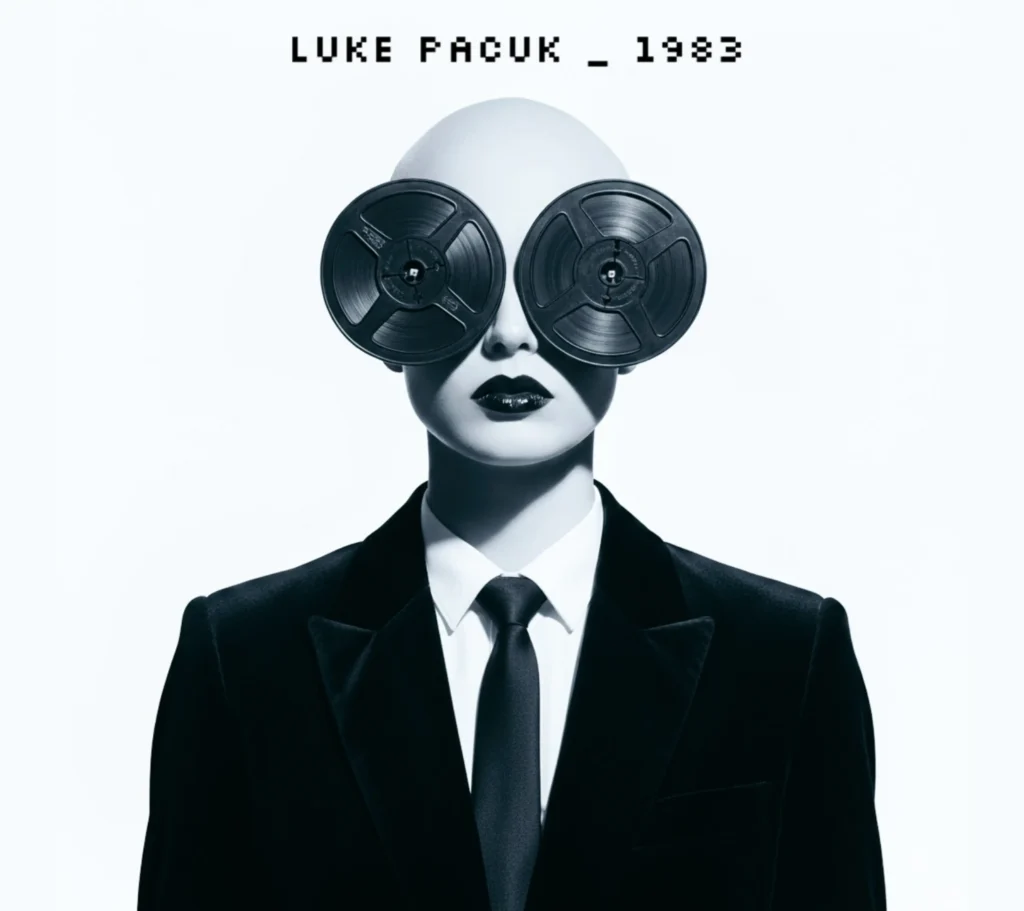
Luke Pacuk’s 1983 isn’t just another artist raiding the thrift shop of eighties nostalgia. If anything, it’s a full-scale reconstruction project. This record doesn’t merely wear its influences on its sleeve; it embalms them, reanimates them, and sends them staggering into the modern world with unnerving confidence. The result sounds less like a retro pastiche and more like a broadcast from a parallel timeline where post-punk and new wave never died, just got meaner, smarter, and slightly more self-aware. Luke Pacuk (who wrote, performed, and produced everything himself) has built a sonic universe that feels tactile and human despite its mechanical surface. He leans into the contradictions that defined the best eighties records: synthetic yet emotional, angular yet lush, alien yet somehow deeply personal. The title itself is an obvious homage, but what 1983 really captures is the anxiety of living in an era that worships the future while quietly mourning the present. The opener, Emily is the first real spark of warmth, riding a bassline that sounds straight out of a lost Factory Records session. It’s got that post-punk propulsion; the feeling that the song itself is sprinting toward a horizon it’ll never reach. Pacuk’s vocal delivery is more emotional here, less filtered, and it’s where his approach to melody starts to shine. He doesn’t write hooks so much as haunt them. Everything feels slightly unfinished, as if he’s deliberately leaving space for the listener to fill in the blanks. That tension between construction and collapse becomes the album’s recurring motif. By the time Death Has Found Us arrives, the record has fully slipped into its nocturnal groove. The track fuses post-punk basslines with art-rock atmospherics, channeling the kind of manic energy that makes you feel both alive and slightly doomed. It’s dark but not self-serious; Pacuk clearly understands that melodrama only works if you let it border on the absurd. The production feels bigger here, with swirling guitar feedback and synth layers stacked like scaffolding. It’s the sort of track that could easily collapse under its own weight, but Pacuk holds it together through sheer conviction. The title track, 1983, hits like a time machine crash-landing in a neon alley. The drums slam around in huge reverb, the synths swirl like a storm over a half-dead city. It’s moody, weirdly cinematic, and just self-aware enough to avoid sounding like a costume party. Instead of just copying the ’80s, Pacuk digs into its ruins; finding beauty in the decay, emotion in the static. It feels less like nostalgia and more like someone rebuilding a broken future out of flickering lights and old tape hiss. Keep Dreaming shifts the energy again, embracing synth-pop brightness without losing the album’s underlying unease. It’s sleek, danceable, and deceptively optimistic; like someone smiling while the ceiling caves in. This is where Pacuk’s production really shines. He knows how to make cheap gear sound expensive and polished equipment sound like it’s being held together by duct tape. There’s a tactile messiness to it all; a reminder that perfection is often the enemy of emotion. Tracks like Blue Morning and The Sound of Fire operate as two halves of the same nervous system. Blue Morning is introspective and slow-burning, a haze of synth swells that feels suspended in time. It’s the comedown after the rush, the moment you realize the party’s over and the lights are still flickering. The Sound of Fire picks the pace back up, driven by sharp, chiming guitar riffs that wouldn’t sound out of place on an early U2 record, but filtered through Pacuk’s more claustrophobic sensibilities. Together, these two tracks form the emotional core of 1983: the push and pull between hope and decay, between holding on and letting go. As the album moves into its final act, It’s Over Now strips away much of the gloss. The production becomes minimal, giving space for Pacuk’s vocals to sit closer to the surface than anywhere else on the record. It’s quietly devastating; the sound of someone coming to terms with everything that’s already fallen apart. There’s no grand catharsis here, just resignation. And yet, in that restraint, there’s something almost comforting. Then comes You Gotta Go Home, the closing track that feels deliberately out of step with everything that precedes it. Gone are the synths and mechanical rhythms; in their place are acoustic guitars and the faint hum of something that might actually be hope. It’s raw and vulnerable in a way that feels almost jarring after thirty minutes of digital tension. It doesn’t resolve the album’s emotional contradictions; it just acknowledges them, and maybe that’s the point. Across its ten tracks, 1983 doesn’t so much revive the sound of a bygone era as it interrogates it. Pacuk uses the familiar language of the eighties; its drum machines, its shimmering guitars, its longing: all of it to ask what happens when we realize the future those sounds once promised never arrived. The result is an album that feels haunted by its own influences but never trapped by them. Luke Pacuk’s 1983 is less a nostalgia trip than a reckoning; a reminder that the past we romanticize was never as simple, or as shiny, as we’d like to believe. It’s an album that understands something most retro records forget: that nostalgia isn’t about returning to what was, but confronting what still lingers. Follow Luke Pacuk Instagram Spotify Promoted Content About the Author

Luke Pacuk’s 1983 Is Less a Nostalgia Trip Than a Reckoning Read More »

Elion Melody’s “Engraved Onto Infinity” Delivers Everything Its Name Promises

It makes a difference when an artist wants you to feel something instead of just shoving their sound at your ears for streams and plays. Elion Melody’s “Engraved Onto Infinity” does exactly that, inviting you to sit with his curation that feels like a love letter showcasing his suave confidence and vulnerability. Originating from the bustling city of New York, United States, Elion Melody is back with a 12-part album, Engraved Onto Infinity. Collaborating with key contributors such as producer Karie from Romania, and featuring artists like DILAN SKIES, justrob., and Manneto, Elion offers a full set of cohesive, catchy tracks anchored from romantic endeavors and long-distance relationships.  In My Feels opens the album real smooth and slow, the kind that will immediately lift you on cloud nine with the love of your life who makes everything make sense. Elion’s vocals glide like he’s ready to give it all as he sings, “do anything I could to prove that you′re my woman.” It’s soulful and catchy, something to listen to when you want to believe in falling in love again.  Whatever You Need follows with neon-lit glow intimacy where the room starts to get playful and heated up. The beats are catchy yet minimal, polished yet warm at the same time. And while it rings like a bedroom or pillow talk, there’s sincerity and devotion as he drops the line “propose this ring on top of Saturn”.  Another standout track is Machi’s Interlude, opening with distorted, whisper-like vocals. It’s a confession wrapped in tenderness and haze. The part “your love is all I need, your love is all I see,” isn’t a grand, dramatic statement but definitely something more real and delicate: certainty. If you’re into club-ready tracks, Gyal Dem Hips hits that spot that brings movement. You’ll get charismatic and syncopated percussion, channeling your playful Shenseea and Shakira. It’s sensual and fun, the kind of track that gets your hips moving on its own.  Nights Without You lands on the sadder edge with slower, melancholic beats. It’s the kind of love that keeps you awake at 3 a.m, the source of your comfort and ache at the same time. Elion will make you feel his yearning and devotion like it’s yours with delivery and words like “I’ll keep up the fight” and “I’ll lay down my life so we can survive”. Each track in this curation was kept minimal, not empty or hollow but intentionally layered, letting you feel R&B’s warmth and soul, hip-hop’s pulse, and pop gloss all throughout the record. It gives your ears a break from everyone trying too hard to sound complex or different. And while production catches you off guard, his lyricism will make you stay until the end. He doesn’t hide behind polished beats to sound “catchy”, he narrates, builds up a story with words that are lived in and honest. He then delivers it through smooth and buttery vocals, mesmerizing you to the point where you’ll also feel what he’s crooning about. Whether it’s love, yearning, heartbreak, or bedroom banters, Elion makes sure it reaches you deep and intense.    All in all, Elion Melody’s “Engraved Onto Infinity” goes beyond a mere album. It’s a record of someone’s heart stretched by distance and time zones that holds depth and meaning, all told through his artistic evolution and distinct sound palette.  Follow Elion Melody Facebook Twitter Spotify Soundcloud Bandcamp Youtube Instagram Tiktok Promoted Content About the Author

Elion Melody’s “Engraved Onto Infinity” Delivers Everything Its Name Promises Read More »

Across Its Ten Tracks, Avaraj’s The Crumble Isn’t Neat, nor Should It Be

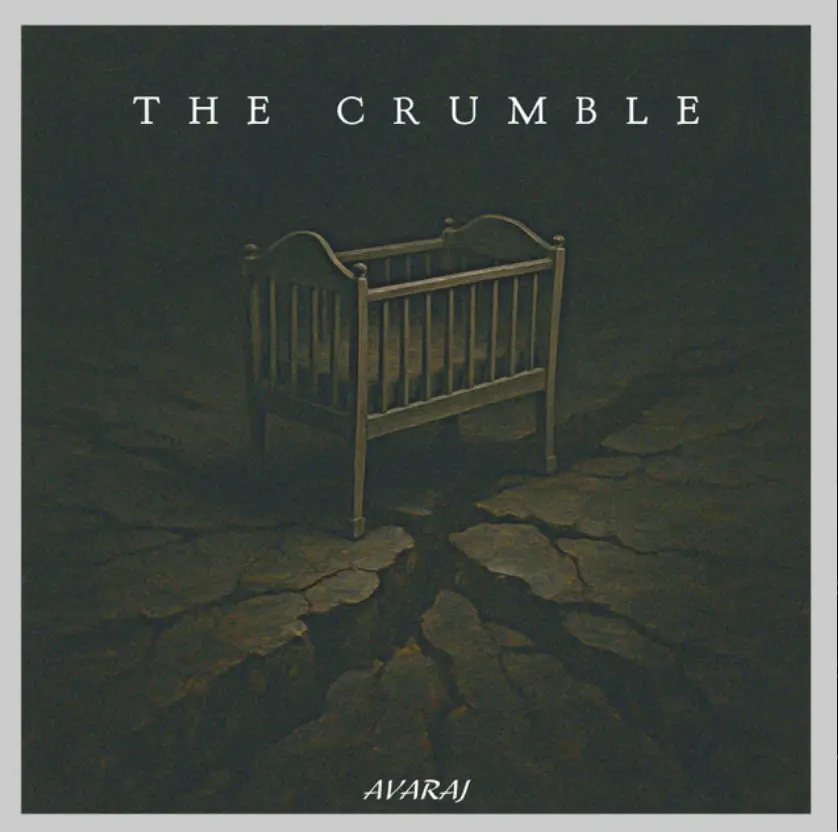
Heartbreak albums are nothing new. Everyone from Adele to your coworker with a ukulele has made one. But The Crumble, the debut full-length from Georgia-born singer-songwriter Avaraj, isn’t just about heartbreak. Rather, it’s about the aftermath when the love songs stop working and all that’s left is the noise in your head. Written in the shadow of miscarriages and a marriage coming apart, it’s a record about loss so total it stops being poetic. It’s grief with eyeliner on, self-produced in a home studio where the walls probably remember everything she tried not to say. The opening track, Romance, sets the stage with deceptive calm; a soft glow of Sade-meets-Lianne La Havas intimacy built around an anthemic synth-pop piano hook. It’s not the sound of falling in love but the sound of watching it fade. The lyrics hover somewhere between nostalgia and denial, like she’s singing to a ghost who hasn’t realized they’re dead yet. You can almost see the candlelight flickering out. Then Two Lines arrives and extinguishes it completely. It’s a piano ballad twisted through trap percussion, intimate to the point of claustrophobic. The metaphor at its center lands like a punch, especially once the double meaning sinks in. Think Passenger’s “Wicked Man’s Rest” rewritten for the age of pregnancy tests and social media doomscrolling. The mix is bare, haunted. It’s the sound of someone trying to rationalize loss through rhythm because silence is unbearable. The title track, The Crumble, changes everything. Gone is the stillness; in its place comes a snarling, defiant burst of noise that feels less like a song and more like an exorcism. Avaraj trades quiet heartbreak for something raw and feral; the kind of emotional eruption that happens when every other means of expression has failed. The production, shaped by her DIY sensibility, sounds both ragged and enormous: drums hit like they’re trying to break out of the mix, guitars buzz with distorted tension, and her unvarnished, strained, and unflinching voice sits defiantly at the center. It’s a chaotic fusion of styles that shouldn’t coexist but somehow do: imagine Julien Baker fronting debut-era Paramore, recording through thunder and a half-broken amp. The guitars waver between grunge grit and indie-rock shimmer before collapsing back into glorious distortion; a track that feels perpetually on the brink of falling apart, and that’s what makes it so alive. Lyrically, Avaraj doesn’t mourn. If anything, she confronts. The Crumble becomes both a breakup song and a reckoning with identity, a metaphor for how people disintegrate when their foundations collapse. Her voice shifts between fragility and fury, trembling one moment, spitting venom the next, and yet the melody never loses its grip; destruction delivered with a hook you can hum. Each sonic layer feels like a conversation between chaos and clarity: snarling guitars against eerie synths, a bass that rumbles like thunder, drums rolling like an oncoming storm. By the end, everything dissolves into static; a literal crumble, refusing neat closure. It’s not about mourning what’s lost, but marking what survives. The Crumble isn’t clean, and it isn’t supposed to be; it’s the sound of someone piecing themselves together through distortion and defiance; proof that even in ruin, there’s rhythm. But then, instead of wallowing, Avaraj pivots. What Could’ve Been slides back into emotional ruin, but with the slick melancholy of blackbear, all wounded vocals and minimalist trap beats, heartbreak framed like a pop confessional. It’s over-the-top, yes, but so is heartbreak. That’s kind of the point. By the time Perfect Storm hits, she’s fully in reconstruction mode. The track welds EDM’s euphoric build-and-drop formula to raw emotional honesty, a Whethan-like banger that turns pain into motion. It’s danceable, even triumphant, in that way where you realize catharsis sometimes looks suspiciously like denial. Then comes the finale, Perfect Weekend, and it’s like waking up the morning after an emotional tornado. Built around a Creed-style piano melody (a brave move in 2025), it swells into something cinematic and strangely holy. When the drums finally fade, what’s left isn’t closure; it’s exhaustion, and maybe a flicker of acceptance. Across its ten tracks, The Crumble isn’t neat, nor should it be. It’s the sound of someone trying to rebuild from rubble using whatever’s still within reach from trap snares, grunge riffs, cheap synths to stubborn honesty. The genre-hopping feels chaotic, but that’s also what makes it real. Grief, after all, doesn’t care about cohesion. If The Crumble has a message, it’s that survival isn’t glamorous. Healing isn’t cinematic. Sometimes it’s just sitting in a room with your laptop and broken heart, pressing “record” because the alternative is silence. And in doing so, Avaraj has made something raw, unfiltered, and undeniably alive; a soundtrack for anyone who’s ever watched their world fall apart and decided, somehow, to keep singing anyway. Follow Avaraj Globe Facebook Spotify Soundcloud Youtube Instagram Promoted Content About the Author

Across Its Ten Tracks, Avaraj’s The Crumble Isn’t Neat, nor Should It Be Read More »

For All Its Screaming, Distortion, and Collected Chaos, More Than It Leaves You With Is Not an EP About Despair; It’s About What’s Left After It

There’s a very specific kind of catharsis that only noisy, emotionally reckless post-hardcore can give you. It’s not pretty, and it’s not designed to be. It’s the kind of music that feels like someone finally snapping halfway through a breakup text and deciding to scream the rest of it into a microphone. Manhattan’s egret understand this perfectly. Their debut EP, More Than It Leaves You With, doesn’t just capture that feeling; it marinates in it. It’s the sound of three people taking grief, anxiety, and memory, and throwing it all into a blender set to “existential crisis.” The band formed in early 2023 and sound like they’ve already lived through the entire lifespan of three separate bands. They’ve pulled from decades of underground screamo and post-hardcore, smashed that together with the melodic sensibilities of pop-punk, and come out the other side with something jagged but weirdly beautiful. Think of it like a car crash choreographed by someone who’s very particular about timing. The opener, Sunshowers, pretends it’s going to be gentle for all of ten seconds before it detonates. It’s the kind of intro that gives you whiplash in the best way. The vocals claw their way through a wall of distortion, equal parts pleading and furious. It’s a declaration of intent: this isn’t going to be a comfortable listen, but it’s going to be a truthful one. Aperture might be the EP’s best moment. There’s a riff here that could’ve wandered straight out of Bowie’s “Heroes” if Bowie had spent more time in a basement venue with a busted PA system. It’s an anthem disguised as a breakdown; hopeful, desperate, and loud enough to rattle your ribcage. You can feel the band trying to drag something transcendent out of the noise, like they’re clawing at the walls of their own sound all throughout its six-minute runtime Then comes First slowly, then all at once, which is basically a thesis statement for the entire record. It starts tender, almost shy, then abruptly tears itself apart. The transition from melody to mayhem is so abrupt it feels deliberate; a sonic metaphor for how grief never politely announces itself. You’re fine one minute, and the next, everything’s broken glass and feedback. By Hold your breath until, things start to feel almost unbearably intimate. The song plays like a panic attack that someone’s tried to mix at a reasonable volume. The rhythm section locks into a heartbeat that’s just slightly too fast, the guitars shimmer and stutter, and the vocals feel like they’re being whispered from inside a collapsing house. And then there’s Anechoic. God, what a closer. The title drops right before the entire song caves in on itself. What starts as a haunted murmur spirals into moshpit-ready sludge, like the band are collapsing under the weight of their own catharsis. The vocals sit just out of reach in the mix, which somehow makes the whole thing hit harder. You can hear the emotion, but you can’t quite grab it. It’s grief turned into sound; a presence that refuses to fully manifest. For all its screaming, distortion, and collected chaos, More Than It Leaves You With is not an EP about despair; it’s about what’s left after it. Each track wrestles with loss; of people, of self, of time, but it never gives up the fight. There’s something deeply human about the way egret handle their noise. It’s imperfect, impulsive, and occasionally overwhelming, but it’s alive. If there’s one thing this EP proves, it’s that sincerity still has teeth. In an age where emotional distance is treated like cool detachment, egret have gone in the opposite direction. They’ve made something messy, raw, and undeniably earnest. More Than It Leaves You With doesn’t want to impress you; it wants to remind you what it feels like to care about something so much it hurts. Follow egret Tiktok Instagram Youtube Spotify Promoted Content About the Author

For All Its Screaming, Distortion, and Collected Chaos, More Than It Leaves You With Is Not an EP About Despair; It’s About What’s Left After It Read More »

Sleeping Fits Is an Album About Friction Between the Organic and the Artificial

Matt Chabe’s debut as Sleeping Fits feels like the kind of record you stumble across by accident; an unassuming Bandcamp upload that turns out to be a miniature world of fuzz, heat, and human messiness. It’s the product of a one-man operation based outside Guadalajara, Mexico, recorded with what Chabe calls “busted amps and cheap guitars.” That roughness is the album’s signature; not an accident to be fixed but a sound to be inhabited. Sleeping Fits is desert-rock filtered through an art-school lens, a mix of Songs for the Deaf-style swagger and late-era Bowie theatricality that somehow still leaves room for pop hooks. The record opens with Crystal Lizard (Was Gonna Be the Name of This Band); a perfectly chaotic overture that sets the tone. It’s equal parts joke and manifesto: the title sounds self-effacing, but the song burns with conviction. Layers of grimy guitar fuzz stack over a drum groove that could fall apart at any moment, grounding the album’s aesthetic of collapse-as-beauty. It feels like Chabe’s nod to the DIY ethic; unpolished, raw, but utterly alive. It’s an introduction that tells you what kind of trip you’re in for: you’re not being chauffeured; you’re holding onto the roof rack. I Feel Fine follows, immediately flipping the mood. The riffs are dirtier, the pacing looser; somewhere between Queens of the Stone Age and early Foo Fighters if both were playing through thrift-store speakers. Chabe’s vocals hover between sneer and sincerity, reflecting the album’s emotional push-and-pull: everything’s falling apart, but at least we can dance about it. This is also where you start to hear his melodic instincts shine. Beneath the grime and distortion are big, sticky choruses that recall mid-2000s alt-radio, but twisted into something stranger and more personal. After that high point, Soneto de la catástrofe brings things back to the sand and smoke. Its Spanish title which translates to “Sonnet of the Catastrophe” hints at Chabe’s life in Mexico, but the song’s mood feels universal; wearied, poetic, and strange. The riffs feel exhausted but beautiful, like something half-remembered from a fever dream. It’s where the record’s tone shifts from rebellion to reflection. A personal highlight, If I Wore Any / Leftenant, acts as both a reset and a revelation. It’s the most fully realized song here; musically expansive and lyrically unguarded at a brisk three-minute runtime. The riffs stretch wider, the production breathes, and Chabe’s voice finally feels centered rather than buried under noise. You can hear flashes of Bowie’s Blackstar here; the existential dread wrapped in gorgeous melody, but also echoes of Truckfighters’ stoner-rock density. This track is where the album’s loose themes of disillusionment and endurance crystallize: surviving late-stage capitalism, self-doubt, and the urge to give up; all through sheer stubborn creativity. Then comes Anti-Fashion, perhaps the record’s most Bowie-adjacent moment. The angular riffs and disjointed rhythm section make it sound like something off Lodger if it had been produced in a desert bunker. It’s sardonic but self-aware; a song that seems to poke fun at trend-chasing musicians while being stylish as hell itself. The chorus lands like a punchline you almost don’t get until it’s too late. By the time we get to The Kissing Disease introduces a new texture: sleazy post-punk groove melting into an almost poppy refrain. It’s Chabe’s best songwriting moment; the balance between grit and gloss, cynicism and earnestness. It’s got the propulsion of early Arctic Monkeys but filtered through desert dust and a migraine. The closer, Sylphide, doubles as both finale and thesis statement. It begins soft, almost hesitant, before descending into a full-on desert-rock dirge; hypnotic, scorched, and cathartic. It’s the sound of the record folding in on itself, as if Chabe is taking one last look at everything he’s built before letting it dissolve in static. When the final notes fade, it feels less like closure and more like resignation: the calm after a long creative exorcism. What makes Sleeping Fits remarkable isn’t technical perfection; it’s the sincerity baked into every imperfection. The in-house mixing might be a bit rough, the vocals occasionally obscured, but it all adds to the authenticity. It’s a record that embraces its flaws because that’s the point: to sound alive, not engineered. It’s music that feels like it was built with bare hands, not assembled by committee. In the end, Sleeping Fits is an album about friction between the organic and the artificial, beauty and burnout, sincerity and irony. It’s lo-fi glam for a world too tired to glam up anymore. And for a debut recorded in the heat with broken gear, it’s astonishing how vivid and alive it sounds. Chabe might call it “art-rock pop at war with late-stage capitalism,” but for the rest of us, it’s something simpler: proof that imperfect music can still feel perfect. Follow Sleeping Fits Spotify Bandcamp Instagram Promoted Content About the Author

Sleeping Fits Is an Album About Friction Between the Organic and the Artificial Read More »

The Sad Season Bring Back the Raw Heart of Rock on “It’s All Too Loud in Here”

The Sad Season isn’t lying when they named their EP “It’s All Too Loud in Here”. And it’s a whole experience that goes beyond mess and volume. It’s rock in its purest, deepest form, the one that’s heartfelt and brutal in one go. London-based band, The Sad Season was originally a duo consisting of Mikee (sikTh) and Tomasz, and now have been playing with Sian on bass and Ralph on drums. This time, they step on the stage with a 3-part EP embedded with dirty garage rock, 60s psych, and progressive post-rock sensibilities. Hermits Under Blankets wraps you in distortion and pounding drum hits, the kind that could shake the whole stadium grounds with every note while still feeling deeply personal despite its volume. The song plays out like a scene caught in a night vision lens: dark, ghostly, with every motion captured in green light. The vocals charge with force and emotion, restless yet so good it transports you to the height of your emotions while repeatedly saying “it can’t be me.”  Tungsten Lights wastes no time, welcoming you immediately with loud guitars while dropping the lines, “you came so far to see, everything is falling underneath.” The arrangement is blunt and explosive, like a dream where you’re running on a loop through the woods, can’t escape, can’t wake up. But by the time they say, “now you have found your love, your love to keep”, it feels like the chaos subsides as the light starts to pour back in.  Breathing Out The Smoke ends the EP on a strong note. The layers come in one by one starting with punchy percussion beats, pulsing bass, to fuzzy guitar riffs. Musically, it feels like an emotional rollercoaster from the way it explodes, whispers, and shouts. The vocals carry this smoky, hazy, and restless energy, heightening the tension of the track. As you get closer to the edge of the song, you’ll be hit by the repetitive lyrics sung in different intensity, the kind that will leave you with a mantra or a ritual  It’s everything the title promises — it snaps, bites, hits with power and intensity. You’ll also definitely hear the band’s diverse influences from Leonard Cohen, Sonic Youth, and The Velvet Underground. What you’ll love most about this curation is their ability to turn melancholy, anger, and heartache into positivity, empowerment, and love. It doesn’t end with their musical prowess because their lyricism peaks with the meaning and imagery. You won’t get noise hiding behind distortion, you’ll get meaning, depth, an The Sad Season’s It’s All Too Loud in Here gives you rock before it was taken over by gloss and polish creating a space that is cinematic and introspective all at once. Follow The Sad Season Globe Facebook X-twitter Spotify Youtube Instagram Tiktok Promoted Content About the Author

The Sad Season Bring Back the Raw Heart of Rock on “It’s All Too Loud in Here” Read More »

“Live at the George Tavern”: A Reminder That the Most Exciting Thing About Music Is When It’s Happening Right Now

There’s an unspoken rule in the music industry that everyone just sort of accepts: never release live versions of songs that don’t already exist in studio form. You’re supposed to be sensible. Methodical. You record, you mix, you master; you remove all the dangerous edges before letting anyone actually hear you. CAN’T STOP TALKING clearly missed that memo. Or, more accurately, they read it, laughed, and then set it on fire in front of everyone. Their new EP, Live at The George Tavern, isn’t just a rebellious little experiment; it’s a loud, messy, sweat-drenched argument that live recordings can be the realest thing a band ever does. The George Tavern, for the uninitiated, is one of those semi-mythical London venues that seems to exist in a parallel universe where everyone from Nick Cave to The Last Dinner Party has performed at least once. It’s small, hot, and steeped in the kind of creative grime that money can’t replicate. This is where Live at The George Tavern was born; a four-song snapshot recorded on one of the hottest nights of the year, in front of a crowd that sounds like they could’ve torn the floorboards up by the final track. The result isn’t just an EP; it’s a document of combustion, the sound of a band becoming. The opener, “Angel in Disguise (Live)”, doesn’t gently invite you in. Rather, it kicks the door down, hands you a drink, and dares you to keep up. The guitars shriek and shimmer in equal measure, the rhythm section sounds like it’s seconds away from breaking the stage, and the vocals swing wildly between desperate and divine. It’s a perfect mission statement: CAN’T STOP TALKING don’t just play songs; they stage miniature uprisings. Then there’s “Easy Tiger (Live),” which slinks in with the confidence of a band that’s fully aware they’re onto something. It’s tight, swaggering, and surprisingly sensual depending on how you view it. Her harmonies slip in like a secret between friends, turning choruses into confessions. Drummer Luca summed up their approach perfectly: “We wanted to be bold, to do something that isn’t being done, sharing the live experience globally with our fans. If you can’t get from Oostende to the East End, why should you miss out?” It’s a simple idea, but that’s what makes it radical. By the time “Business as Usual (Live)” hits, any sense of “business” has long gone out the window. The song pulses with jagged funk-rock energy, like Talking Heads reimagined for a generation raised on TikTok and tinnitus. It’s chaos that somehow still lands on its feet. The band and the crowd are feeding off each other in a perfect loop, and you can hear that symbiosis, the mics catching snippets of cheering, laughter, maybe even disbelief. The closer, “Down to Mexico (Live),” could’ve been a cooldown, but instead it’s a slow-burn explosion. It teases restraint, then abandons it entirely, building into a crescendo so cathartic that the final cheer feels like a collective exhale. You can practically hear the walls sweating. And here’s the fun part: none of these songs have studio versions. Not yet. They will in 2026, but let’s be honest: there’s a good chance the studio takes will never capture this same spark. And that’s fine. Live at The George Tavern isn’t a prelude; it’s the point. It’s the sound of risk, immediacy, and community; the kind of thing that doesn’t get better with editing, only duller. If you really want to understand what CAN’T STOP TALKING are doing, go see them live. Bring earplugs. Bring friends. Because this EP isn’t just a release. Rather, it’s a reminder that the most exciting thing about music is when it’s happening right now, and everyone in the room knows they’ll never hear it quite like this again. Follow CAN’T STOP TALKING Instagram Spotify Promoted Content About the Author

“Live at the George Tavern”: A Reminder That the Most Exciting Thing About Music Is When It’s Happening Right Now Read More »