

loader image

New Music

The Fans Applauded Is Not Trying to Present a Polished Version of Confidence or Success

There’s a very specific kind of vulnerability that only shows up right before you’re about to do something you’re not entirely sure you can pull off. Not the dramatic, cinematic kind. Rather, the quieter, more internal version, where the panic is mostly happening in your head while everything on the outside looks completely fine. The Fans Applauded, the latest single from Exzenya, is built almost entirely around that moment, and to its credit, it doesn’t try to overcomplicate it. The premise is simple: you’re on stage, you’re overwhelmed, and you’re seriously considering the possibility that this might fall apart in real time. What the song does well is resist the urge to rush past that feeling. A lot of tracks with this kind of theme tend to treat fear as a brief obstacle on the way to a triumphant payoff. Here, the hesitation actually lingers. You can feel that uncertainty sitting underneath the performance, like it hasn’t quite resolved yet. It’s less “I overcame my fear” and more “I’m still in it, but something is starting to shift.” That shift comes through the central idea of the track: the audience. Instead of framing confidence as something that comes from within, the song leans into the idea that sometimes it’s external. The turning point isn’t a sudden burst of self-belief; it’s the crowd responding, singing along, applauding. And that changes things. Not instantly, not completely, but enough. The fear doesn’t disappear; it just becomes manageable. Musically, the soft pop-rock approach fits that arc pretty neatly. It stays restrained for most of the runtime, letting the vocals carry the emotional weight rather than building everything around a massive, cathartic release. That restraint works in the song’s favor as it keeps the focus on the experience itself rather than trying to manufacture a bigger moment than the story really calls for. The Fans Applauded is not trying to present a polished version of confidence or success. It’s documenting the point right before that; where things are uncertain, where doubt is still very much present, and where the outcome could realistically go either way.  Follow Exzenya Globe Facebook X-twitter Soundcloud Youtube Instagram Tiktok Spotify Bandcamp Promoted Content About the Author

The Fans Applauded Is Not Trying to Present a Polished Version of Confidence or Success Read More »
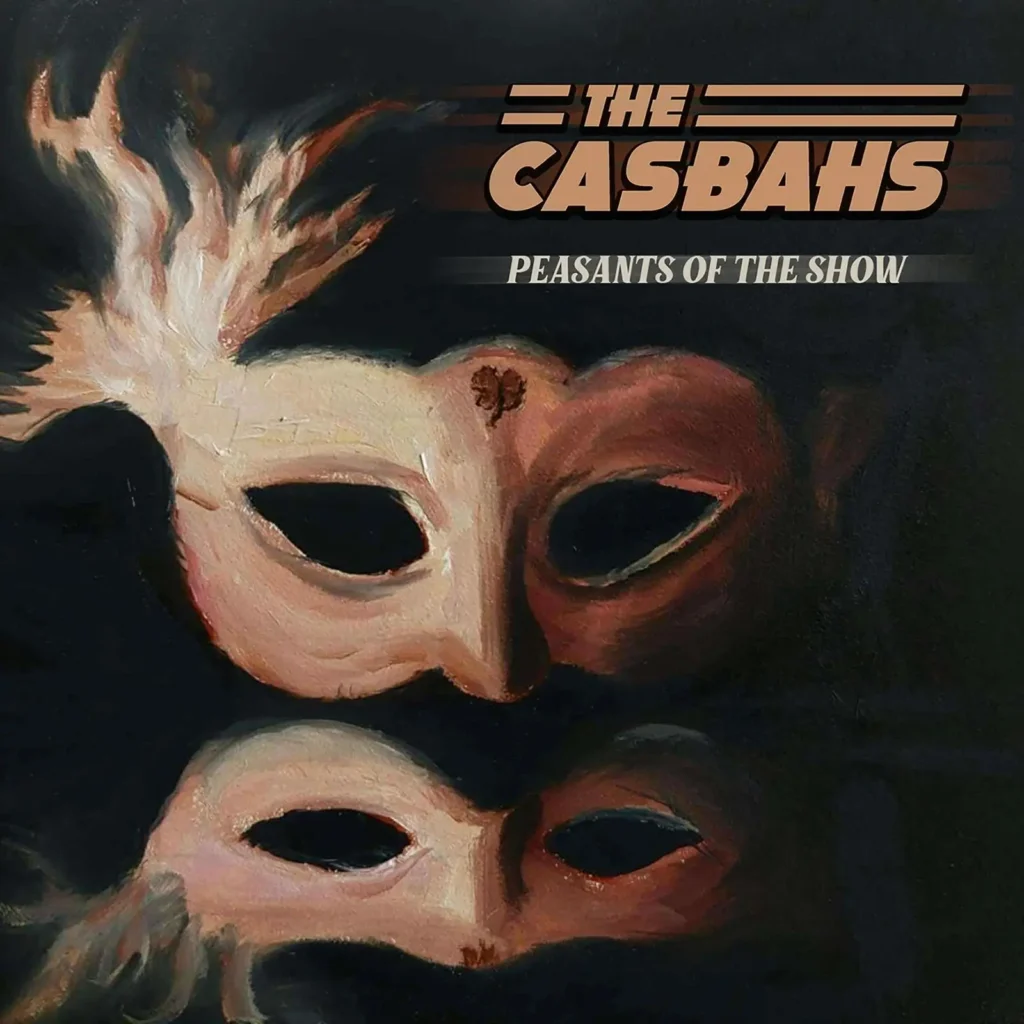

Peasants of the Show Is a Solid, Well Crafted Guitar Record That Pulls From a Deep Well of Influence and Turns It Into Something That Feels Immediate and Alive

A great British guitar album doesn’t just wear its influences on its sleeve; it practically hands them to you, makes eye contact, and goes, “you know exactly what this is,” before doing it anyway with enough conviction that you stop caring. Peasants of the Show, the sophomore record from County Durham’s The Casbahs, lives right in that space. It’s steeped in decades of UK rock history, but crucially, it doesn’t feel stuck there. It feels like a band that’s figured out how to use that history as a launchpad rather than a crutch. Right from the start, “Crossfire” sets the tone in a way that’s almost aggressively confident. You get this pulsing, no-nonsense rock energy, guitars pushing forward with just enough swagger to sell the whole thing without tipping into parody. When the vocal comes in, it’s delivered with that slightly theatrical, debonair edge that British indie rock has been refining for the better part of two decades. And then the chorus of “The band is on the run / England’s all but done” hits, and it’s dramatic, maybe a little tongue-in-cheek, but it works because the band commits to it completely. There’s a clear lineage here, with echoes of Arctic Monkeys’ early bite coming to mind, but it doesn’t feel like cosplay. It feels lived-in. “Electric Daydreams” shifts the tone without losing momentum, leaning into a more spacious, slightly twangier sound. This is where the album starts to show its range, not by abandoning its core identity, but by stretching it. The track’s refrain has this loose, almost nostalgic quality to it. It’s the kind of song that feels like it’s been written with one eye on the past, but not in a way that’s trying to recreate it exactly. More like it’s borrowing the mood. And then you get to “Northern Skies,” which is probably the point where the album’s sonic expansion becomes most obvious. The inclusion of elements like mandolin and that faint alt-country edge could’ve easily felt like a gimmick; bands do this all the time, adding “texture” as a way to signal growth, but here it actually lands, carrying a kind of quiet yearning that contrasts nicely with the more immediate punch of the earlier tracks. It’s still recognizably The Casbahs, just viewed from a different angle. What’s interesting about Peasants of the Show is how it balances those two modes: the direct, riff-driven rock songs and the more introspective, twang-leaning moments. “Ghosts In The Dust” swings things back toward the former, bringing a sharper, punchier energy that mirrors the album’s opening stretch. It’s not reinventing the formula at this point, but it doesn’t really need to. The strength is in how consistently the band executes it; tight songwriting, clear hooks, and a sense that everyone involved knows exactly what the track is supposed to do. And that consistency matters, because this is the kind of album that could very easily fall into the trap of blending together. Guitar records like this live or die on their ability to maintain distinct identities across tracks without losing cohesion, and for the most part, The Casbahs manage it. The integration of instruments like harmonica and mandolin helps, but more importantly, it’s the shifts in tone of moving between urgency and reflection that keep things engaging. Contextually, it also feels like the right moment for a record like this. Coming off a run of well-received singles in 2025 and support from platforms like BBC Introducing, Peasants of the Show doesn’t sound like a band trying to prove they belong anymore. It sounds like a band that’s already been let in the door and is now figuring out how to make the space their own. That said, the album isn’t trying to radically redefine British guitar music, and it doesn’t pretend to. What it does instead is refine a sound that’s already well-established, adding just enough variation to keep it from feeling stale. It’s not about breaking the mold; it’s about bending it slightly, seeing how far it can stretch without snapping. By the time the album wraps up, what sticks isn’t any single massive reinvention or unexpected left turn. It’s the overall sense of confidence. Peasants of the Show knows exactly what it is: a solid, well-crafted guitar record that pulls from a deep well of influence and turns it into something that feels immediate and alive.  Follow The Casbahs Facebook X-twitter Spotify Bandcamp Youtube Instagram Tiktok Promoted Content About the Author

Peasants of the Show Is a Solid, Well Crafted Guitar Record That Pulls From a Deep Well of Influence and Turns It Into Something That Feels Immediate and Alive Read More »

“Dreamer” Isn’t Trying to Be Subtle or Ambiguous

“Dreamer,” the second single from HZPROD’s War Torn project track is a song that clearly wants to mean something; not just vibe, not just sound good in the background, but actually carry a message with some weight behind it. It doesn’t hide what it’s about. If anything, it walks in already mid-conversation, like you’re expected to catch up quickly. The production sits in this interesting space between traditional boom-bap and something a bit more atmospheric. You’ve got the familiar drum backbone. It’s solid, grounded, the kind of rhythm that feels like it understands its job and shows up on time, but it doesn’t just sit there looping like it’s waiting for something more interesting to happen. Instead, it’s paired with these textures that feel just a little off-center in a deliberate way, like they’re constantly threatening to wander somewhere else but never quite do. They drift in and out around the edges of the mix, not enough to distract you, but enough to make you notice that there’s something else going on beneath the surface. Long story short: the beat knows its role: support the message without getting in the way of it. The verses lean into global themes, including but not limited to conflict, inequality, exploitation and all of that pulling references from regions like parts of Africa and the Middle East. It’s heavy subject matter, and the track doesn’t really try to soften that. Instead, it presents it pretty plainly, which gives everything a sense of urgency. There’s a clear intention here: this isn’t just storytelling for its own sake, it’s trying to point outward, toward real-world issues that don’t neatly resolve in three minutes. At the same time, the hook shifts things slightly. It brings in this more hopeful tone; focused on belief, freedom, resilience, which creates a contrast with the verses. And that contrast is doing a lot of the emotional work. Without it, the track might feel overwhelming. With it, there’s at least a sense that it’s building toward something, even if that “something” is more about awareness than resolution. The fact that War Torn functions as an ongoing awareness project, with ties to organizations like Save the Children, makes the track feel less like a standalone release and more like part of a larger effort. “Dreamer” isn’t trying to be subtle or ambiguous. It’s trying to be clear, direct, and purposeful and whether or not that fully lands for you probably depends on how much you value that kind of clarity in your music. Follow HZPROD Globe Facebook Spotify Soundcloud Youtube Instagram Tiktok Promoted Content About the Author

“Dreamer” Isn’t Trying to Be Subtle or Ambiguous Read More »

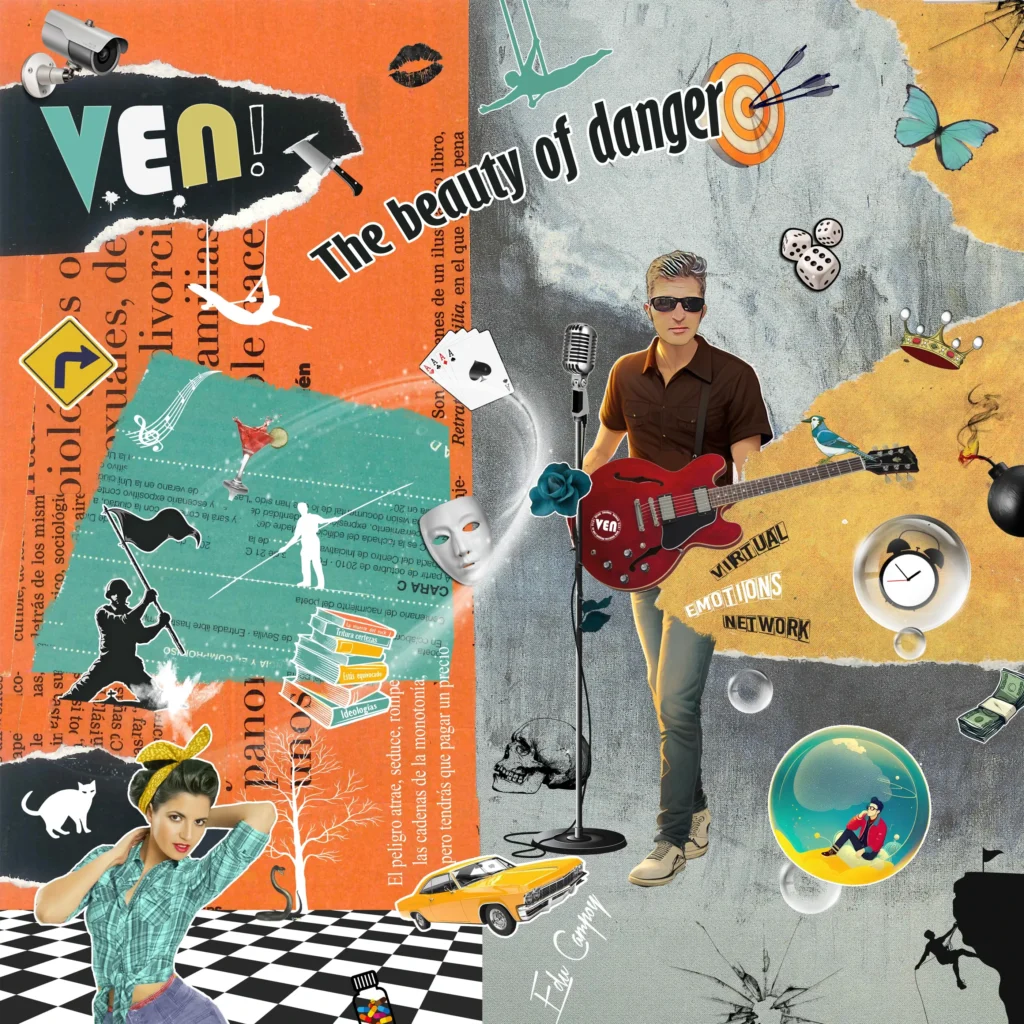
The Beauty of Danger Builds This Collage of Thoughts About Freedom, Identity, and Modern Life

There’s a very specific kind of project that doesn’t just present ideas; it kind of circles them, pokes at them, contradicts itself, and then just… leaves you there to figure out how you feel about it. The Beauty of Danger sits squarely in that space. It’s not trying to tie things up neatly, and it’s definitely not interested in giving you a clean emotional resolution. Instead, it builds this collage of thoughts about freedom, identity, and modern life, and lets the contradictions do most of the talking. “NOW” is the clearest entry point into all of this, mostly because it immediately frames the EP’s central tension. You get this recurring lyric of “now is forever”, which sounds reassuring until you actually think about it for more than five seconds. Forever is a long time. The track builds around that idea through this almost mythic figure with lines like “The man who died free / He loved, fought, and lost to win” It’s a romantic image, but also a slightly uneasy one. Freedom here isn’t peaceful; it’s something you struggle toward, something you might not even fully understand while you’re chasing it, something V.E.N! keeps deliberately unresolved. Intro track “Cloud of Bliss” (Nube de Felicidad) pulls things inward, and this is where the EP starts playing with perception in a more direct way. The lyrics don’t describe reality so much as they reshape it depending on emotional state with such great lines like “If I don’t have love / I believe that love does not exist / If I’m not free / I believe that freedom does not exist”. These aren’t bold philosophical claims; they’re quietly worrying ones. It’s the idea that your internal state can completely overwrite your understanding of the world.   “The Silence of God” takes that uncertainty and pushes it further into existential territory. It’s not subtle about it either. It’s hopeful, technically, but in a very restrained way. Like, yes, there’s light, but you’re still in the room with the cracks. Then “Coliving, Polyamory and E-Scooter” just drops all the abstraction and gets weirdly specific which lands less like a statement and more like a coping phrase people say until it becomes true. The track leans into that contradiction with lines like “I’m in control… or maybe not”. It’s blunt, but that’s the point; it cuts through the EP’s more abstract moments with something uncomfortably real. By the time “Walk on Fire” closes things out, the project pulls back into something more personal, but the outside world never fully disappears: “The boys are fighting in the mud, no rules / “The news on TV spreads fear as if nothing is wrong” And against that, the song offers connection as something fragile but necessary: “I know you can talk through the silence, and walk on fire” It’s not as a grand solution; just as something to hold onto. That’s really what The Beauty of Danger ends up being. Not answers, not clarity; just a series of ideas that don’t quite line up, but feel honest in how they don’t. Follow V.E.N! Globe Facebook X-twitter Spotify Soundcloud Bandcamp Youtube Instagram Tiktok Promoted Content About the Author

The Beauty of Danger Builds This Collage of Thoughts About Freedom, Identity, and Modern Life Read More »

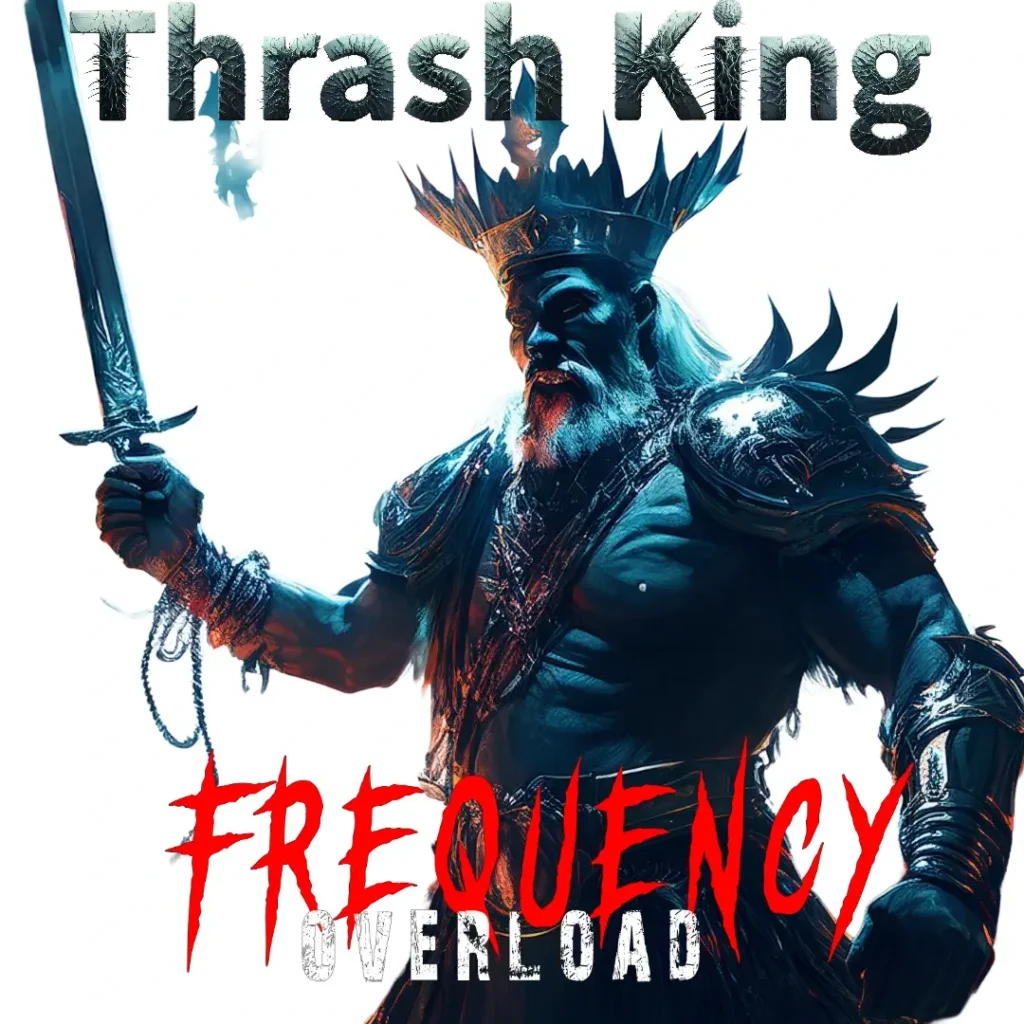
“Thrash King” Feels Like a Band Flexing What They Already Know Works

Thrash King by Frequency Overload doesn’t waste time pretending it’s going to ease you in. It just kicks the door open, throws a riff at your face, and expects you to deal with it. The intro actually takes a slower route. Bass, drums, and guitar build things up for over a minute, setting a darker tone before the chaos hits. It creates tension, but it might feel a bit drawn out if you’re expecting that instant thrash punch. Which, honestly, is exactly what you’d want from a track with that name. Then this thick wall of guitars and drums will hit you, the kind that feel locked in and slightly out of control at the same time. It’s fast, it’s loud, and it leans hard into that classic thrash energy, but not in a way that feels like it’s stuck in the past. There’s enough punch in the production to make it feel current, even if the DNA is very much old-school metal. The riffs are doing most of the talking here, and they’re solid. Not overly flashy, not trying to show off for no reason; just tight, aggressive, and built to keep momentum going. It feels like a band that knows exactly what they’re good at and isn’t interested in overcomplicating things. Which is refreshing, because a lot of metal tracks end up getting lost in their own technical ambition. Vocals-wise, it’s rough in a way that fits. There’s this gritty, almost pushed-to-the-limit delivery that blends into the chaos instead of sitting cleanly on top of it. Sometimes that means the words get a little buried, but it also makes the whole thing feel more intense, like everything’s happening at once instead of being neatly separated. The track is pretty much full throttle the entire way through. No big switch-up, no moment where it pulls back and resets. But depending on what you’re here for, that might not even be a problem. This isn’t trying to be a dynamic, genre-bending experience; it’s trying to hit hard and keep hitting and to be fair, it does exactly that. “Thrash King” feels like a band flexing what they already know works: fast riffs, heavy drums, and just enough chaos to keep things interesting. It’s not reinventing metal, but it doesn’t need to. It just shows up, makes noise, and leaves before you get bored. Follow FREQUENCY OVERLOAD Globe X-twitter Bandcamp Instagram Tiktok Facebook Spotify Youtube Promoted Content About the Author

“Thrash King” Feels Like a Band Flexing What They Already Know Works Read More »

“Intimacy” by Milyam Is Minimalist, Polished, and Very Aware of Itself

Some songs ease you in gently. “Intimacy” by Milyam doesn’t really bother with that. Rather, it just sort of appears, like you’ve walked into a room where the lights are already low, the air is heavy, and something quietly dramatic has been happening for a while without you. There’s no big intro, no attention-grabbing moment designed to hook you in five seconds. Instead, it leans into the atmosphere first and trusts that you’ll either follow along or leave and to its credit, that confidence mostly works. The production sits firmly in that atmospheric downtempo space, but it’s not trying to impress you with complexity. It’s minimal in a very deliberate way; soft pulses, spaced-out textures, and just enough movement to keep things from completely drifting off. Everything feels placed rather than performed, which gives the track this slightly hypnotic quality. Not sleepy, exactly, but definitely operating at a slower, more controlled pace than most R&B-adjacent releases right now. What really carries the song, though, is the vocal. It’s restrained, almost to the point where you start wondering if it’s building toward something bigger and then you realize that this is the point. There’s not really an explosive chorus waiting around the corner. No dramatic shift. Just a steady, intimate delivery that stays close, like it doesn’t want to break the mood that it’s carefully set up and that restraint is either going to pull you in or push you away. There’s not a lot of middle ground here. “Intimacy” leans more into feeling than specificity. It’s less about telling a detailed story and more about maintaining a tone; something soft, slightly distant, and emotionally controlled. You’re not being guided through a narrative so much as being asked to sit in a particular space for a few minutes. Which, again, is a choice. A very intentional one. What’s interesting is how consistent that vision is. There’s a clear aesthetic at play. It’s minimalist, polished, and very aware of itself. Nothing feels out of place, but nothing really breaks the surface either. It’s smooth to the point of being almost frictionless. “Intimacy” is undeniably cohesive, and it nails the late-night, ethereal vibe it’s going for. But it also keeps you at arm’s length the entire time, never quite letting things get messy or fully vulnerable. Follow Milyam X-twitter Spotify Youtube Instagram Promoted Content About the Author

“Intimacy” by Milyam Is Minimalist, Polished, and Very Aware of Itself Read More »

Loyalty & Respect Focuses on Doing the Fundamentals Really Well; Solid Production, Clear Themes, and Performances That Understand Exactly What Kind of Project They’re On

A good rap project doesn’t bother announcing itself with spectacle. No dramatic reinvention, no desperate attempt to chase whatever sound is currently trending on TikTok; just beats, bars, and a very clear sense of purpose. Loyalty & Respect by Solar Soundz is exactly that kind of project. It doesn’t try to convince you it’s important. It just sort of is. And weirdly, that confidence ends up doing more heavy lifting than any overproduced rollout ever could. From the moment “Samcro” opens the EP, you get the sense that this is built on familiarity in the best way possible. The beat leans into that classic boom bap backbone of dusty drums, grounded rhythm, but there’s enough weight in the mix to keep it from feeling like a nostalgia exercise. It’s not trying to recreate the past so much as remind you why it worked in the first place. There’s no gimmick here, which in 2026 almost feels like one. Then the title track, “Loyalty & Respect,” comes in and basically lays out the thesis in plain terms. No metaphors you need a decoder for, no abstract concept stretched across three verses; just direct, value-driven writing that knows exactly what it’s about. And that clarity is kind of the point.  What’s interesting, though, is how much of that clarity comes from the production rather than just the lyrics. Solar Soundz keeps everything tight and intentional behind the boards. The beats don’t overcrowd the verses, which sounds like a basic thing but is surprisingly rare. Instead, they leave space for the rappers to sit in. And that decision ends up shaping the entire feel of the project. “Close Friends” leans into reflection without tipping over into melodrama. It’s personal, but not in a way that feels performative. Meanwhile, “This Life” strips things back even further, giving the verses room to breathe in a way that makes every line land harder. There’s a kind of quiet confidence in letting a track be minimal and trusting that the writing will carry it. Then you get to “Built on Will,” which is probably where everything clicks into place. The track carries that same grounded energy, but there’s an added weight to it; partly because of the writing, and partly because of the feature. Bringing in Benny the Butcher is a very specific choice, and it works because the production meets him exactly where he operates best. This is the kind of beat that feels tailor-made for the Griselda camp: grimy but clean, hard without being overproduced, detailed without losing its edge. “In the Sky” pulls things in a slightly different direction, leaning more into atmosphere. The repeating chorus sticks in your head in that slightly hypnotic way that sneaks up on you after the track ends. It adds a kind of lift to the EP, a contrast to the grounded, street-level perspective of the earlier tracks. “Rescue You” brings in a bit more soul, rounding out the emotional palette without disrupting the overall identity. And by the time you reach “Red Roses” and “Matrix Mirage,” the project feels complete in a way that doesn’t rely on a big, dramatic finale cleanly, confidently and without overstaying its welcome. And that’s ultimately what Loyalty & Respect does best. It doesn’t try to reinvent anything. It doesn’t need to. Instead, it focuses on doing the fundamentals really well; solid production, clear themes and performances that understand exactly what kind of project they’re on. Follow Solar Soundz Globe X-twitter Spotify Youtube Instagram Tiktok Promoted Content About the Author

Loyalty & Respect Focuses on Doing the Fundamentals Really Well; Solid Production, Clear Themes, and Performances That Understand Exactly What Kind of Project They’re On Read More »

“Ride the Storm” Feels Raw Without Sounding Unfinished

Some songs try to sound big by throwing everything at you at once. “Ride the Storm” by Fanny Alexandra does the opposite; it strips things back so much that when something does hit, you actually feel it. It’s the musical equivalent of someone leaning in and saying, “no, listen,” instead of shouting across the room. And weirdly, that restraint ends up making it hit harder than a lot of louder, busier tracks trying to do the same thing. From the start, the song settles into this dark, slow-burn groove built around gritty guitar work that feels more blues than straight alt-rock. It’s not flashy, not overly polished’ if anything, it sounds like it’s actively resisting polish. The tone is rough around the edges in a very deliberate way, like sanding it down any further would ruin the whole point. There’s space in the arrangement too, which is doing a lot of heavy lifting. Instead of constantly filling every second, the track lets things hang, building tension by just not resolving it immediately. That tension is really what drives the song. It doesn’t explode so much as it tightens. The guitars circle around the same ideas, the rhythm stays steady but heavy, and everything feels like it’s slowly closing in on something without quite getting there. It’s cinematic, but not in the “huge orchestra, dramatic swell” way. Rather, it’s more like a long, quiet shot where you know something’s about to go wrong, you just don’t know when. Then there’s the vocal performance, which is probably the most interesting part of the whole thing. Instead of going full power all the time, Fanny Alexandra keeps it controlled, almost restrained, like she’s holding something back on purpose. That makes the emotional weight feel more real, less performative. When the intensity does creep in, it feels earned rather than forced, which is a surprisingly rare thing in this kind of track. And that’s kind of the trick “Ride the Storm” pulls off. It feels raw without sounding unfinished, and it builds atmosphere without relying on big, obvious moments. It’s not trying to overwhelm you; it’s trying to pull you in and keep you there, sitting in that tension for as long as possible. And by the end, you realize it didn’t need to shout to make its point. It just needed to stay exactly as intense as it is. Follow Fanny Alexandra Spotify Instagram Promoted Content About the Author

“Ride the Storm” Feels Raw Without Sounding Unfinished Read More »

In a Music Scene Where Every Project Is Supposed to Be a “Statement,” i connect with beats more than humans Is Content Being a Snapshot

There’s a specific moment in every underground music fan’s life where you discover a new micro-scene online and immediately fall down a rabbit hole. One minute you’re listening to whatever your usual rotation is, the next minute you’re six producers deep into some hyper-specific SoundCloud tag like “plug rage ambient trapcore” wondering how you got here. i connect with beats more than humans, the latest project from CXBIS, feels exactly like that moment. Technically, it’s being presented as an album. Realistically, it behaves more like a short EP or a loose compilation of experiments; eight tracks that run quickly, hit hard, and leave before they’ve had time to overthink themselves. And that’s not a criticism. In fact, it’s kind of the entire point. The project exists because CXBIS recently discovered the plug sound and decided to see what would happen if he leaned into those abrasive bass textures and weirdly groovy melodic loops for a while. The result is something that sits comfortably in the same chaotic neighborhood as Yeat and Playboi Carti’s rage-era experiments: blown-out bass, slightly surreal atmosphere, and a general sense that structure is more of a suggestion than a rule. Tracks like “ill breaking your fucking neck (anybody)”, immediately tells you what kind of project this is going to be. First of all, the title alone feels like it was typed at 2:37 a.m. while someone was extremely confident about something. But more importantly, the production comes in loud, distorted, and impatient. The bass doesn’t gently introduce itself; it kicks the door down. It’s the sort of opener that works less like a traditional “first track” and more like someone hitting play halfway through a mosh pit. Then “ONI” follows up by leaning into the eerie side of the plug aesthetic. The beat has this slightly ominous quality, like something lurking behind the distortion. The melodies drift around in that oddly hypnotic way plug beats tend to do, where you’re not entirely sure why the loop works, but your brain is absolutely locked into it anyway. “ISEE” slows things down just enough to reveal what CXBIS probably liked most about the sound in the first place: the groove. Underneath all the distorted bass and chaotic textures, there’s actually a pretty strong sense of rhythm running through the track. Plug beats often hide their catchiness under layers of noise, but when the rhythm settles in, it becomes weirdly addictive. Who Knows? sits near the center of the project and kind of sums up the entire vibe. The name itself almost feels like an explanation for the project’s creative approach: try things, see what sticks, move on. The production mixes abrasive bass with a bouncing rhythm that lands somewhere between hypnotic and slightly unhinged — which, to be fair, is exactly where the rage scene tends to live anyway. Then we get “piss stain,” which continues the project’s commitment to embracing rawness over polish. It’s messy in a deliberate way, the kind of track that feels like it was built quickly and confidently rather than meticulously engineered. And honestly, that spontaneity works in its favor. “Whatever (right)” offers one of the project’s few moments of relative calm. The bass is still there, obviously; this is still a rage-adjacent project after all, but the pacing relaxes slightly, giving the groove a chance to breathe. It’s a small change, but it helps keep the project from turning into eight consecutive minutes of sonic demolition. Then “bands to make her dance” pushes the energy back up again with a beat that feels built almost entirely around movement. The rhythm here is the star of the show; less chaotic, more propulsive. It’s the sort of track that feels engineered for speakers rather than headphones. CXBIS has been pretty upfront that this project came from stumbling across the plug sound and deciding to try it out. It’s not trying to redefine the genre, and it’s not pretending to be some grand artistic manifesto. It’s a quick, curious dive into a style that caught the artist’s attention. And there’s something refreshing about that honesty. In a music scene where every project is supposed to be a “statement,” i connect with beats more than humans is content being a snapshot; a moment where an artist tried something outside their usual sound just to see how it felt. Sometimes those experiments lead to entirely new directions Sometimes they just make for a fun eight-track detour. In this case… well… who knows? Follow CXBIS Instagram Youtube Spotify Promoted Content About the Author

In a Music Scene Where Every Project Is Supposed to Be a “Statement,” i connect with beats more than humans Is Content Being a Snapshot Read More »

“USA” Isn’t Trying to Guide You Gently Toward a Conclusion or Offer a Neatly Packaged Takeaway

Some songs ease you in. “USA” by OpCritical just kicks the door open, knocks something over on the way in, and immediately starts arguing with the room. It’s loud, a little chaotic, and very clearly not interested in subtlety. From the first few seconds, the track plants its flag and refuses to move, diving headfirst into commentary about the current state of America with the kind of urgency that feels less composed and more accumulated; as if this isn’t a carefully drafted statement so much as everything spilling out at once. And crucially, it never really calms down. If anything, “USA” treats escalation as a design choice. Instead of smoothing its edges or pulling back for contrast, it keeps stacking intensity on top of itself, as if worried that pausing might dilute the message. The result is a track that feels constantly in motion; not evolving in a traditional sense per se, but pushing forward through sheer insistence. It’s less about crafting a neat arc and more about maintaining pressure. That same mindset shows up in the production. “USA” doesn’t settle into a single genre long enough to be pinned down, jumping between rock, punk, grunge, and trap with a kind of deliberate restlessness. The guitars hit hard and upfront, carrying that raw, slightly abrasive energy all the while the rhythm runs about just enough to keep things interesting. Underneath it all, there’s an Arabic-inspired motif threading through the track, adding an unexpected layer that subtly destabilizes the whole thing. It’s not there to smooth anything out; it’s there to make the song feel like it’s leaning slightly off-center at all times. The track operates in big strokes. It doesn’t tiptoe around its ideas; it leans into them, using heightened imagery to frame a country caught in a constant state of tension. People are either checking out or digging in, and that push-and-pull becomes the song’s emotional engine. There’s a sense that everything is happening at once, that there’s no clean resolution waiting at the end, just a series of reactions to an ongoing situation. “USA” isn’t trying to guide you gently toward a conclusion or offer a neatly packaged takeaway. It’s trying to hold your attention long enough to make sure you hear it. And whether you agree with it or not, it commits fully to that goal; loudly, relentlessly and without much interest in doing anything halfway. Follow OpCritical Globe Soundcloud Youtube Promoted Content About the Author

“USA” Isn’t Trying to Guide You Gently Toward a Conclusion or Offer a Neatly Packaged Takeaway Read More »