loader image

New Music

This Swedish Metal Veterans Reclaim Their Past With Ferocious Precision

Stepping straight into the furnace with a re-imagined weapon, Swedish metal outfit NERVED deliver a crushing statement of intent on Don’t Lie. Originally released back in 2008 on their album Finally Nerved, this track always possessed a ferocious core, but here it finally gets the massive stadium-sized production and punishing low end it deserved. The guitars hit like a wall of concrete while the rhythm section pounds with unrelenting focus. It creates a thunderous entrance that immediately commands complete attention. By bringing in The Unguided vocalist Richard Sjunnesson to lend his signature growl, the band elevates the entire composition into a terrifying modern metal standard. His ferocious throat-tearing delivery counterbalances the soaring melody of the hook, creating a intense back-and-forth tension that feels alive and explosive. Listening to the collision of clean hooks and guttural snarls feels like watching two distinct storm systems crash into each other over open water. The arrangement cuts away all unnecessary fluff and gets right down to the bone. You can hear every bit of anger in the rhythm guitars as they churn beneath the verse, and when the chorus explodes with the line ‘Don’t lie’, the sheer scale of the sound stage fills every inch of headphone real estate. There is no lingering hesitation here because every riff is swung like a sledgehammer. Bands often struggle when returning to old material, but this re-recorded version demonstrates how years of touring and refining a signature sound can turn a good idea into an absolute juggernaut. It channels the legendary spirit of classic Gothenburg metal while maintaining the crisp punch of modern alternative metal production. The sheer power radiating from the speakers during the final breakdown at three minutes in will leave your neck sore for days. This track stands as a towering beacon for independent rock acts everywhere who refuse to let their best ideas sit forgotten in back catalogues. It serves up pure adrenaline with zero compromises, setting a massive standard for everything that follows on their album Kompromat. If you crave heavy riffs paired with unforgettable melodies, put this at the top of your playlist immediately and turn the volume all the way up. Facebook Spotify Youtube

This Swedish Metal Veterans Reclaim Their Past With Ferocious Precision Read More »

Themindwillnotletgo’s Burnout: Turning Anxiety Into an Electrifying Rock Record

Credit: artwork: Andy Warren There is no such thing as universal burnout. One may try to sleep or take a vacation, whine it out with a friend or just stare blankly at a wall, wondering how you ever ended up here. TheMindWillNotLetGo, on the other hand, has chosen the more pragmatic method: plug in a guitar, turn it to eleven and compose an entire album inspired by being burnt out. Burnout is an album comprising nine tracks concerning disastrous relationships, tantrums and self-destructive behaviors, all combined with a hearty dash of anxiety. It masterfully melds alternative rock and a little bit of dark punk-pop into an experience that has catchy melodies interspersed between moments of pure sonic aggression, but nothing in it fakes perfection. The tone is set immediately on “lucky”, introduced by a deceptively cheerful opening then followed by an explosion of distorted guitars to reveal one of the strongest features of burnout: despite concerning a narrator who is completely depleted of energy, it rocks out to the very end with the vivacity of a stable desktop with seventeen error messages working tirelessly in the background. “wildfirehurricane” picks up speed with a similar aggressively inspired style of music, although it details the chaos of relationships more as an inherent part of it than something experienced from an outsider’s perspective; essentially, one is caught inside the burning moment rather than watching it from a safe distance. Two styles of anger are exhibited with “paynomind” and “spit”. The latter being a furious alternative rock track which employs extremely fast lyrics and a sharp, piercing solo from what appears to be its punk-ish companion. Though two different paces appear throughout the album they don’t result in a droning sound throughout the record; one has simply given way to the extreme, thus broadening the range. This diversity also appears on my album stand-out track, “beautifulpain.” This track comes to our aid with quieter, acoustic vibes and a gentle melody that is accompanied with such a steady bass line to make our hearts feel relief from such an intense, emotional ride and has the tendency to compliment the more extreme-leaning tracks even more. If all of the songs hit such a hammering volume as all the other songs present the audience may feel tired out. This album is a bit like that classic train station where every departure must be accompanied with the grand slam ending, otherwise the listener might be missing something from the departure from the station. “crashandburn” sets forth this mission as the last track with it a three or so minute track in which you are propelled forward by over 170 bpm until its inevitable collapse; in some parts you may be seeing yourself either making peace with a lover or completely destroying yourself, but you are seeing two conflicting personalities doing so that gives this song a lot of emotional intensity and highest highs; a truly heart-pounding rock track. Both “she” and “usedtobe” delve into how memory should have nothing to do with destroying your present. “she” talks about growing so far apart that you no longer seem like the same person, while “usedtobe” reminisces upon a previous, perhaps less skilled, version of yourself that makes even your new self no better than the original. Both give you those deep, melancholic yet honest moments without making them feel too clean-cut or presented with packaged, moralizing lessons. Thealbum concludes with an incomplete: “amistilldreaming” Burnout isn’t trying to show you any of the answers, all of the loops it brings up: the self-doubt, the panic attack brought upon from certain situations, the breakdown of relationships-it will put all of these to a climax and leave you alone to figure out what happens afterward. It’s what is necessary and inevitable for an increasingly panicked state. However, with all of these melancholy, disturbing matters, what makes burnout so incredible is that every second of the album is uninhibited joy to listen to-regardless of what is happening to the protagonist, each song absolutely revels in the music; although it explores how to conquer hardship, it demonstrates a definite love for pure rock music, amplified in sonic extremes. What I have noticed, oddly, is how it indirectly gives us reason to feel optimistic even with these emotional issues at hand: You cannot fix every little problem in your mind, you really cannot, but you absolutely can translate them to three spectacular minutes of rock and roll. Burnout is everything you could need. It’s melodic, but far from sterile. Heavy, but with enough hook to keep you going. Morally and emotionally complicated, but always honest about it having any definitive answers for the narrator. Most of all, it genuinely sounds like the product of somebody who deeply loves rock music. If that isn’t reason enough to turn up the volume then I don’t know what is. Follow TheMindWillNotLetGo Globe Facebook Spotify Youtube Instagram Tiktok Promoted Content About the Author

Themindwillnotletgo’s Burnout: Turning Anxiety Into an Electrifying Rock Record Read More »

“Forever Lost” Is Raw, Heavy, and Impossible to Polish Away

There’s something immediately satisfying about a heavy rock song that refuses to sound too clean. “Forever Lost,” the latest single from Southampton outfit Blacklight Vice, understands that sometimes the little imperfections are exactly what make a recording feel alive. The track marks the band’s first collaboration with new vocalist Drew Knowles and a clear step toward heavier territory. Recorded at The Ranch Studios in Hampshire with producer Matt Janke, “Forever Lost” sounds less like a carefully sterilized studio product and more like a band being captured in the middle of something loud, messy and very real. Credit: Marianne Harris Photograpy You can hear it in the details. Fingers scrape across guitar strings. The room seems to breathe around the instruments. Amplifiers crackle and feedback naturally. None of it feels like something that needed to be scrubbed out in the editing process. Instead, these sounds give the track an almost physical quality, as if Blacklight Vice are playing directly in front of you. “Forever Lost” bursts forth with an almost primal, subterranean-dwelling rhythm and grungy guitar riff which is followed quickly by the arrival of the full, charging band in full and potent rhythm and stride. The drumming is impressive in its heft and the guitars apply distortion with a level of taste such that the song doesn’t drown under the noise. If anything, the overall arrangement of the piece has a slight looseness which serves it exceptionally well as it comes with an unpredictable nature sorely lacking in over-processed contemporary rock fare. Knowles cuts a similarly convincing performance throughout, snarling during the denser, harder parts and finding a certain groove and rhythm in melodic passages. With room for the vocals to operate, he avoids muffling the song’s impact and the result is a song that remains sufficiently angsty throughout and yet feels anything but unfocused. That matters because “Forever Lost” isn’t simply interested in sounding heavy. Beneath the distortion is a fairly human story about reaching a point wherein continuing to live under someone or something else’s negative influence is no longer an option. The heaviness becomes part of that narrative: frustration turning into resistance, darkness giving way to the possibility of finding purpose again. The song also benefits from its pacing. Instead of maintaining the same level of aggression throughout, Blacklight Vice allows the intensity to rise and fall. A more restrained passage creates tension before the band eventually lets loose again, making the louder sections hit harder. For a first release with Knowles, “Forever Lost” makes a convincing case for this new chapter of Blacklight Vice; one that shows the band capable of unleashing hell that is truly eternal. Follow Blacklight Vice Globe Facebook X-twitter Spotify Youtube Instagram Tiktok Promoted Content About the Author

“Forever Lost” Is Raw, Heavy, and Impossible to Polish Away Read More »

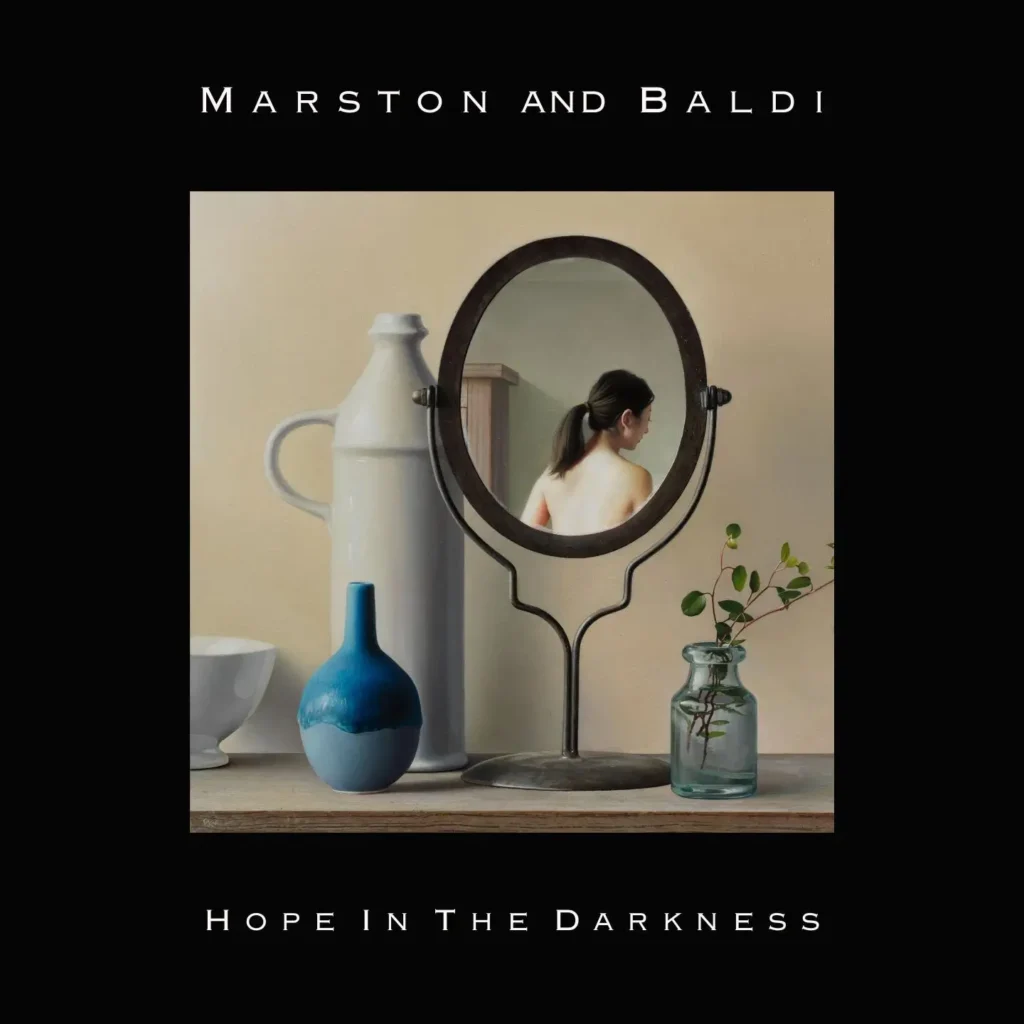
Marston and Baldi Deliver ‘Hope in the Darkness’ in Under Two Minutes

Painting featured in the artwork:“The Sound from the Opposite Shore” 対岸の音 (4S)2023by 卯野 和宏 (Uno Kazuhiro) At an age where some songs can’t figure out their intent for several minutes, Marston and Baldi offer us a track that wasted barely a breath to get there. Within the runtime of one and a half minutes, this indie pop-rock ballad says exactly what it means with little in the way of flourish; a characteristic that makes it feel right at home in the age of TikTok. But brevity does not mean the song is emotionally shorthanded. “Hope in the Darkness” starts from a melancholic place, leaning into the kind of quiet sadness that gives its eventual optimism something to push against, only to grow into something more intimate and restrained and allowing the song to establish its emotional weight without overplaying it. The contrast in its parts contains the song’s most compelling trait. Instead of ignoring the existence of the darkness, Marston and Baldi place this song on the assumption that the beauty of hope stems precisely from the fact that something must be overcome. The sadness lends the promise some much-needed credibility. Musically, the song treads between the territory of indie rock and that of indie pop, with atmospheric undercurrents accompanied by enough drive to keep the ballad from getting too morose. While there are plenty of recognizable melodic archetypes here from the melancholic opening to the huge chorus and the sense of resolution, the limited arrangement keeps these structures moving. And this is where the song’s one-and-a-half-minute runtime becomes more than just a novelty. “Hope in the Darkness” is remarkably easy to consume without feeling disposable. It gets in, establishes its mood, delivers its emotional peak and gets out.   At the same time, the song does not feel like a cynically constructed track designed for short attention spans. The track’s emotional arc feels earned and well-structured, with the narrative of shifting vulnerability and burgeoning hope making it feel like it has an internal journey in spite of its restricted length. Written and performed by Giorgio Baldi, Matthew Marston and Gabriele Ratti and produced and mixed by Giorgio Baldi, “Hope in the Darkness” succeeds through its uncluttered construction. It doesn’t need epic arrangements or even an extensive runtime to express the important idea that even in dark times, there can be light. Sometimes you only need a couple of minutes to remind someone that things can get better and if that reminder happens to fit neatly into the TikTok era, all the better. Follow Marston and Baldi Spotify Promoted Content About the Author

Marston and Baldi Deliver ‘Hope in the Darkness’ in Under Two Minutes Read More »

Blade Of Thorns Navigates Emotional Abyss on “Deep Waters”

There are only so many ways a rock band can tell you things are crap. They can scream at the listener, then lower the guitar tuning until the neighbors’ furniture begins to hum with their own existential rage, write a chorus explicitly about the nature of despair and scream it at an increased volume. Or, if you’re Blade Of Thorns, do all of the above, while simultaneously making it sound like being pulled underwater and drowned with no hope of rescue. On the latest release by London-based industrial-rock band Blade Of Thorns “Deep Waters” is precisely as unsubtle a statement of intended mood and thematics as the title promises, that a person is feeling overcome by their own thoughts rather than presenting these difficulties as something that can be overcome through an inspiring quote over a sunset backdrop, The result is heavy, dramatic and surprisingly earnest, with no pretense of making things better.  The track steadily builds an atmosphere and introduces the guitars before they begin their contracted obligations; namely to become utterly enormous. The drums are a consistent pounding force and the thick baseline is meant to represent what constantly presses onward in the ears. Guitars do the same and add further abrasion to the overall work. This is not to overlook the guitar solos, It seems that the lead guitar isn’t just there to decorate the song: the melodies bring with them an additional layer of the song’s emotional texture. Though somewhat short, the solos are melodic and lamenting rather than triumphant; and it brings the listener above the oppressive weight of the rest of the track only to give them a brief respite before bringing them back under. And “Deep Waters” doesn’t have any pretense of permanent escapism anyway. What that message has to sound like here is exactly this song. There’s no performative melodrama in the darkness of “Deep Waters”: no shadow-monsters lurking in the corners. There’s just the familiar darkness and that familiar ringing sound in a person’s head; once that internal noise rises and drowns out the noise that it originally mimicked, the arrangement begins to draw in on itself again and become slightly less melodic, though still rhythmically heavy. “Deep Waters” has the advantage of not forcing us to think the music only can be violent, only can be the emotional; we have our guitar riffs that are their own cry and our guitar solo that may well be what one feels they need to say but cannot for any reason say, and our trek down into that deep water only to find the surface at the end of it. Blade Of Thorns doesn’t make the trip there a welcoming affair; they just make the long drop worthwhile. Follow Blade Of Thorns Globe Spotify Youtube Instagram Tiktok Promoted Content About the Author

Blade Of Thorns Navigates Emotional Abyss on “Deep Waters” Read More »

Quinetik’s “Astronaut Dreams” Is Basically a Late Night Existential Crisis With a Beat

There is a very specific kind of song that hits differently when it is 2 a.m., you have headphones on, you absolutely should be asleep and your brain has suddenly decided that now is the perfect time to review every terrible decision you have ever made. Quinetik’s “Astronaut Dreams” fits that category pretty damn well. The track is a mix between styles pioneered by Kid Cudi and Travis Scott, building itself around hypnotic drums, spacious production and Quinetik’s relaxed, melodic delivery. Nothing is fighting for attention.   The song deals with ambition, distance, self-reflection and that weird feeling of wanting to escape while simultaneously having absolutely no idea where you’re supposed to escape to. Because apparently the human solution to being confused is to imagine yourself several hundred million kilometers away from the problem. Musically, the comparisons to Kid Cudi and Travis Scott make sense. “Astronaut Dreams” has that same hazy, floating quality where the vocals aren’t merely sitting on top of the instrumental; they become part of the atmosphere. There’s also something more playful in the production that recalls the dancier Aminé tracks, keeping the track from disappearing completely into the cloud-rap fog, and that balance is probably the best thing about it. This is chilled-out hip-hop, but it isn’t boring. It’s melodic without becoming aggressively commercial. It’s atmospheric without sounding like Quinetik discovered reverb five minutes before recording the song and decided to put it on absolutely everything. And yes, introspective hip-hop is hardly a new invention. Rap has been staring into the abyss for decades. At this point, the abyss probably has its own Spotify playlist. The trick is making that familiar emotional territory actually feel like you. “Astronaut Dreams” gets surprisingly close to doing that because it doesn’t seem interested in pretending Quinetik has solved the mysteries of existence. Instead, the song sits comfortably inside the uncertainty. There is ambition, but also distance. There is movement, but also hesitation. There is the desire to get somewhere without necessarily knowing where “somewhere” is. It’s the kind of song you can throw on during a late-night drive, stare out of a bus window while listening to, or play while pretending that lying motionless in bed and thinking about your entire life counts as productivity. Quinetik isn’t reinventing hip-hop here and he doesn’t need to. “Astronaut Dreams” understands its lane, builds a convincing atmosphere and gives that atmosphere enough personality to make you want to come back. Sometimes you don’t need answers. Sometimes you just need a good beat while you continue not figuring your life out. Follow Quinetik Globe Facebook Youtube Instagram Tiktok Promoted Content About the Author

Quinetik’s “Astronaut Dreams” Is Basically a Late Night Existential Crisis With a Beat Read More »

Elay, “Ayaw at Gusto”: A Brutally Sparse Autopsy of Disintegrating Devotion

Alone steel string guitar squeaks against dry fingertips before a soft, close mic vocal drifts into the quiet air, instantly establishing Elay as an unsparing chronicler of grief on “Ayaw at Gusto”. The recording carries zero studio polish or glossy gloss, favoring instead the ambient room noise of late-night isolation where every quiet intake of breath registers with uncomfortable proximity. You can hear the damp acoustics of a bedroom setup where tape hiss rubs against warm analog warmth. No artificial grandeur intrudes. What begins as a solitary confession soon widens into something far heavier when low-pass filtered synthesizers creep across the edges of the stereo field. Writing in unadorned Tagalog, Elay zeroes in on the exact micro-moment when a partner stops fighting and starts withdrawing affection completely. Her vocal delivery remains conversational and deadpan, refusing showy vibrato or dramatic melisma even as she recites devastating lines like “Ayaw mo na akong pakinggan / Ayaw mo na akong unawain” and the chilling shift to “Gusto mo na akong palayain.” The harmony stays stubbornly cyclical across three minor chords. Pain needs no resolution. Stacked vocal harmonies appear at 1:04, sighing wordlessly in the background like ghost tracks leaking through an open window. When the rhythm drops after the first minute mark, the transition hits with the blunt weight of a muffled heartbeat. A rounded sub bass note blooms beneath a crisp, unquantized rimshot and a pillowy kick drum that drags slightly behind the beat in classic hip-hop production fashion. The snare snaps dryly. That sudden pocket works. By anchoring an acoustic lament to a slow-slumping drum cadence running near seventy beats per minute, the arrangement pulls the physical listener into a hypnotic head nod that contrasts sharply with the desolation unfolding above it. Within the broader landscape of contemporary Original Pilipino Music, this brand of heartbreak song, often filed under the cultural banner of hugot, can easily tilt into overwrought melodrama or sugary radio ballast. Elay sidesteps those traps entirely by pulling cues from the restrained indie folk of Clara Benin while maintaining the street-level grit of lo-fi underground beatmakers. The result shares space with modern Southeast Asian indie innovators who prioritize conversational candor over theatrical projection. She keeps her world small, specific, and unvarnished. What makes “Ayaw at Gusto” linger long after the final guitar decay fades is its absolute refusal to offer comforting closure. When Elay ends the track on the chilling realization “Ayaw mo na sa akin,” she does not plead for a second chance or scream into the void, but walks out the door under a shroud of heavy silence. It cuts clean. By fusing traditional singer-songwriter intimacy with a dragging downtempo pulse, Elay delivers an exceptional, bone-dry document of romantic ruin that marks her as one of the sharpest new voices in Philippine indie music. Spotify Youtube

Elay, “Ayaw at Gusto”: A Brutally Sparse Autopsy of Disintegrating Devotion Read More »

Drums For Clowns Turns a Private Emergency into a Full-Throated Crisis On ‘Grave Concern’

Drums For Clowns and Kit Cooper’s ‘Grave Concern‘ sounds like several consecutive all-nighters. In the morning, instead of feeling the relief that exhaustion usually affords, your mind convenes a high-alert, totally unrequested all-hands meeting where nobody feels prepared for any of it. The song is frantic, angry, emtionally obsessive; the kind of track that doesn’t have a lot to contribute to your basket of flowers and well-wishes. Rather, “Grave Concern” is tense, atmospheric and full of emotional restlessness, the kind of thing that doesn’t even bother pretending some things can just be explained away and tidied up. With so many songs about feeling lonely or going through tough times often winding themselves into inspirational power ballads with an uplift hidden beneath the weight of hardship, it was refreshing to find that the band is much less interested in neat or inspirational resolutions. This track simply sits with the discomfort; it does not make a move to transcend the uncomfortable by explaining what lies beneath it. Their guitars build the energy and drama of the song without ever seeming to attempt a total sonic reinventing purely for the sake of relatability. They are experienced. They sound confident in what they’ve put together and especially confident with presenting the bleak truthfulness that makes a great track so gripping. They’ve found a sound with their guitars that vacillates from tense atmosphere to a sweeping solo that builds with force all the while their drumming powers the song with their anxious energy throughout. There is something really cinematic in their arrangements without it sounding like a movie trailer company has just discovered what Sad™ is. There’s an intimacy there that you’re rarely in awe of- it feels like the particular type of darkness that comes with not being able to stop thinking. The singer isn’t so much delivering a carefully prepared statement on suffering as much as what it feels like to actively struggle. The line about “the things people carry that the world never sees” is certainly not trying to offer a lecture but actually feels quite relatable to the point of just really giving listeners the impression that somebody’s being really honest right now. It does come as a surprise though that the song is able to somehow be really sad but not exhausting at the same time. It sits with discomfort and sadness but it does so without dwelling nor offering fake encouragements with fake positivity. Instead, any hint of anything positive in this piece feels tentative rather than expected and this makes it all the more convincing than any cheap attempt at a happy ending. Grave Concern is dreary, restless, but also strangely beautiful and perhaps there’s nothing more to ask from what we’re given. Follow Drums For Clowns & Kit Cooper Facebook X-twitter Spotify Youtube Instagram Promoted Content About the Author

Drums For Clowns Turns a Private Emergency into a Full-Throated Crisis On ‘Grave Concern’ Read More »

Cashus King and Big O Turn Struggle, Faith, and Survival Into Something Richer on Water to Wine

There’s a very old idea in art that suffering makes you better. Usually this is nonsense. Suffering mostly makes you suffer. But hip-hop has always been unusually interested in what happens when people take the things that hurt them and turn those things into something useful, whether that’s a verse, a beat, a career, or simply a reason to keep going. Water to Wine, the new collaborative album from Los Angeles rapper Cashus King and London producer Big O, takes that idea literally. The album’s central metaphor comes from the biblical story of Jesus turning water into wine and because apparently one metaphor wasn’t enough, Cashus spends fourteen tracks turning water into rain, rivers, soda, medicine, sweat, tears, holy water and eventually wine. The album works because Cashus understands that transformation is not the same thing as pretending everything is fine. Water to Wine is interested in change, but it is also interested in addiction, grief, racism, family, history, poverty and the general inconvenience of being a human being with unresolved problems. Big O gives all of this a surprisingly coherent musical environment, building a world that feels fluid without making every song sound like somebody poured a swimming pool over the mixing desk. “Barry Water” establishes the rules before Cashus really gets started. A spoken-word introduction sits over atmospheric instrumentation and frames humanity as something capable of creation and destruction. Then “LikWid (Big Fish)” throws us into the deep end. The production hits harder, Cashus starts moving faster, and the water imagery becomes street imagery: flooded neighborhoods, survival, addiction, police, hustling. His writing is dense enough that you could probably spend several listens just fishing individual lines out of it. “Precipitation,” featuring Fashawn, expands the metaphor into history. Here, rain becomes a way of talking about slavery, forced conversion, colonialism and the long afterlife of systems designed to oppress Black people. This is where the album’s ambition becomes obvious. Cashus isn’t using water because it sounds poetic. He’s using it as a substance that can carry history from one place to another. And then there is “Drippin’ (Soakin’ Poems),” which is basically what happens when a rapper decides the correct response to having a lot of things to say is to say approximately all of them at once. Cashus attacks the track with a frantic, almost electrically charged delivery, turning writing itself into a kind of chemical reaction. It is messy, aggressive and occasionally absurd, but the intensity is part of its charm. The album becomes much more vulnerable on “Drownin’,” which may be its emotional low point in the best possible sense. Cashus describes grief and addiction as something physically inescapable: every attempt to reach the surface is followed by another wave. There is no inspirational speech waiting around the corner to rescue him. The line between surviving and simply continuing to drown is deliberately blurred. Elsewhere, “Like Lava for Water” turns toward family, particularly his mother, with Cashus acknowledging the people who helped carry burdens he could not. “Hydration (Reign)” answers that heaviness with something gentler: an argument for continuing to water the things you still hope might grow. The album’s idea of hope is therefore refreshingly practical. You don’t wait around for a miracle. You keep watering the plant. Big O deserves considerable credit for making all of this feel like one album rather than fourteen songs that happened to share a Dropbox folder. His production shifts between boom-bap, jazz, soul, G-funk and darker textures without losing the underlying identity of the project. “Potions,” featuring G-Holy, moves into a smoother West Coast groove, while “Swimmin’” goes for a more triumphant, trap-influenced energy. “Swimmin’” is also where the album briefly loses some of its depth. The fish, sharks, Superman and Flash imagery becomes more about momentum than meaning. It isn’t bad; it just feels comparatively lightweight after songs dealing with addiction, colonialism and grief. Eventually someone has to rap about being a shark, I suppose. “Streams,” featuring Blu, Frannie EL and Shari, brings the album back into more reflective territory, with Blu’s verse about fatherhood, loss and faith giving the song an emotional center. After thirteen tracks of transformation, the album arrives at a culmination in the song “Wine” only to discover that transformation does not magically erase the things that caused it. Cashus reflects on his father’s death, writer’s block, purpose and the question of what any of this is actually for. The phrase “turn the water to the wine and turn the wine to art” could sound like a motivational poster if handled badly. Here, it lands as the album’s thesis. The miracle isn’t that pain disappears. The miracle is that you can make something from it. That is what makes Water to Wine work. It is not subtle, and sometimes it is so determined to explain its metaphor that you can practically see the concept waving from across the room. But its sincerity is difficult to dismiss. Cashus King has spent much of his career turning lived experience into dense, searching rap, while Big O gives those thoughts a musical world spacious enough to breathe in. This is an album about becoming something else without pretending you were never what you were before, and that’s about as close to a miracle as you’re going to get. Follow Cashus King & Big O Spotify Instagram Spotify Instagram Promoted Content About the Author


Cashus King and Big O Turn Struggle, Faith, and Survival Into Something Richer on Water to Wine Read More »

Wild Synchros Revives Early 2000s MTV Alternative Rock Nostalgia With Pure Melodic Brilliance

Picture driving down a rain-slicked highway at midnight with the radio turned up as the raw distortion of classic guitars fills the air, because that exact electric feeling comes rushing back the moment Wild Synchros drops Riding in the Back Seat. Hailing from Barcelona, this independent outfit captures the spirit of early 2000s alternative rock with total authority and modern clarity. The track opens on a crunching guitar riff that immediately calls to mind prime Jimmy Eat World and Foo Fighters, setting up a propulsive groove that never lets go. What makes this single work so insanely well is the unforced sense of emotional weight that surges through every bar. The verses drift on a tight bassline and crisp drum beat before the guitars explode into a wall of overdrive, carrying a hook so massive that you will be singing it back before the second verse even hits. Lines like ‘back seat made me free’ and ‘my heart recognizes you’ land with genuine conviction, delivered in a vocal performance that perfectly balances raspy edge with soaring melodic power. By the time the track hits its halfway point, Barcelona indie rock has found a bold new standard-bearer in Wild Synchros. The arrangement shifts into an atmospheric breakdown around two minutes in where suspended chords ring out and the drums build a steady rhythm, creating a sense of tension that makes the final chorus payoff hit like a tidal wave of golden energy. It feels like the lead single off a lost film soundtrack from the classic MTV era when alternative rock ruled the airwaves. The production balance deserves massive credit here too because every instrument gets room to breathe without sacrificing the raw punch of the rhythm section. Clean guitar fills counter-play the heavy rhythm chords while subtle vocal harmonies widen the stereo field during the biggest moments, proving that Wild Synchros knows exactly how to craft an unforgettable stadium-sized chorus on independent terms. Riding in the Back Seat is an absolute triumph of nostalgic alternative songwriting that demands to be played loudly on repeat. Wild Synchros has delivered a timeless anthem that feels both deeply familiar and wildly exciting, marking them as an independent act ready for massive international stages.  Facebook Spotify Youtube

Wild Synchros Revives Early 2000s MTV Alternative Rock Nostalgia With Pure Melodic Brilliance Read More »