
There’s a very old idea in art that suffering makes you better. Usually this is nonsense. Suffering mostly makes you suffer. But hip-hop has always been unusually interested in what happens when people take the things that hurt them and turn those things into something useful, whether that’s a verse, a beat, a career, or simply a reason to keep going.
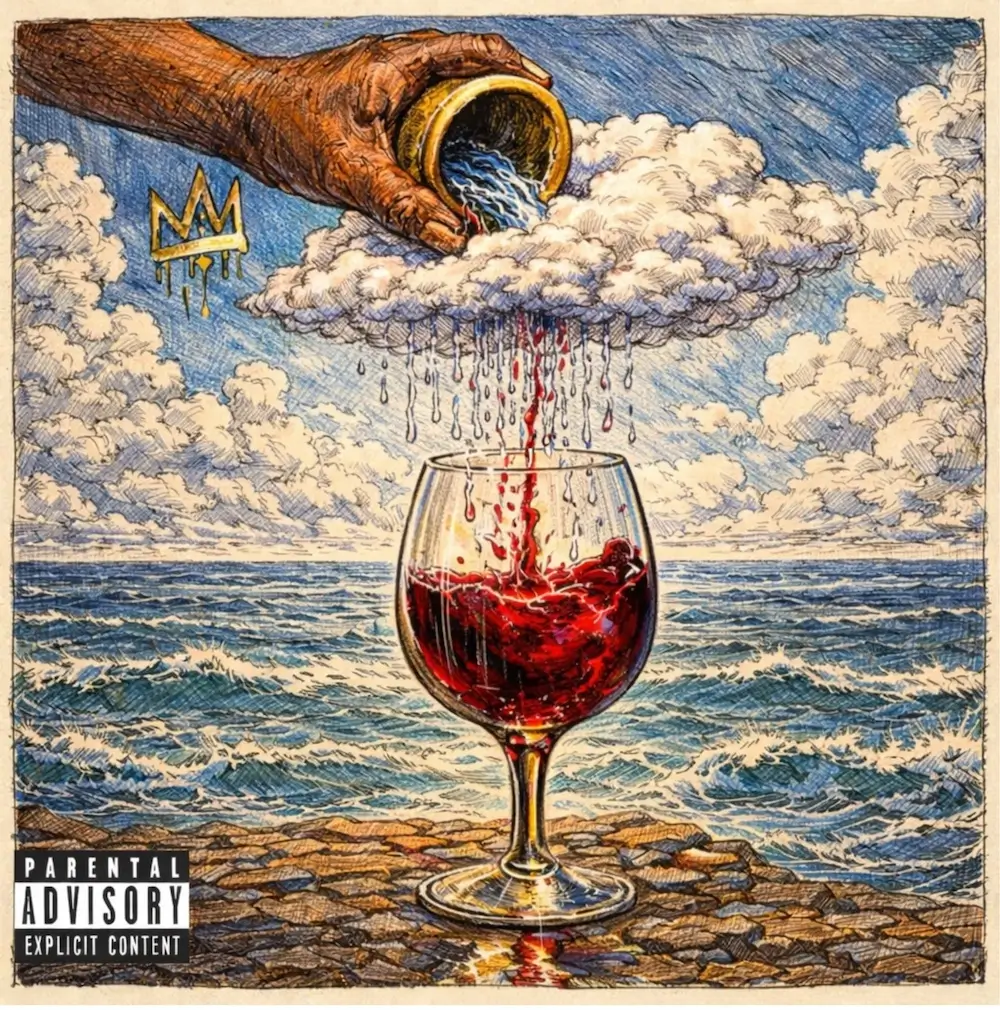
Water to Wine, the new collaborative album from Los Angeles rapper Cashus King and London producer Big O, takes that idea literally. The album’s central metaphor comes from the biblical story of Jesus turning water into wine and because apparently one metaphor wasn’t enough, Cashus spends fourteen tracks turning water into rain, rivers, soda, medicine, sweat, tears, holy water and eventually wine.
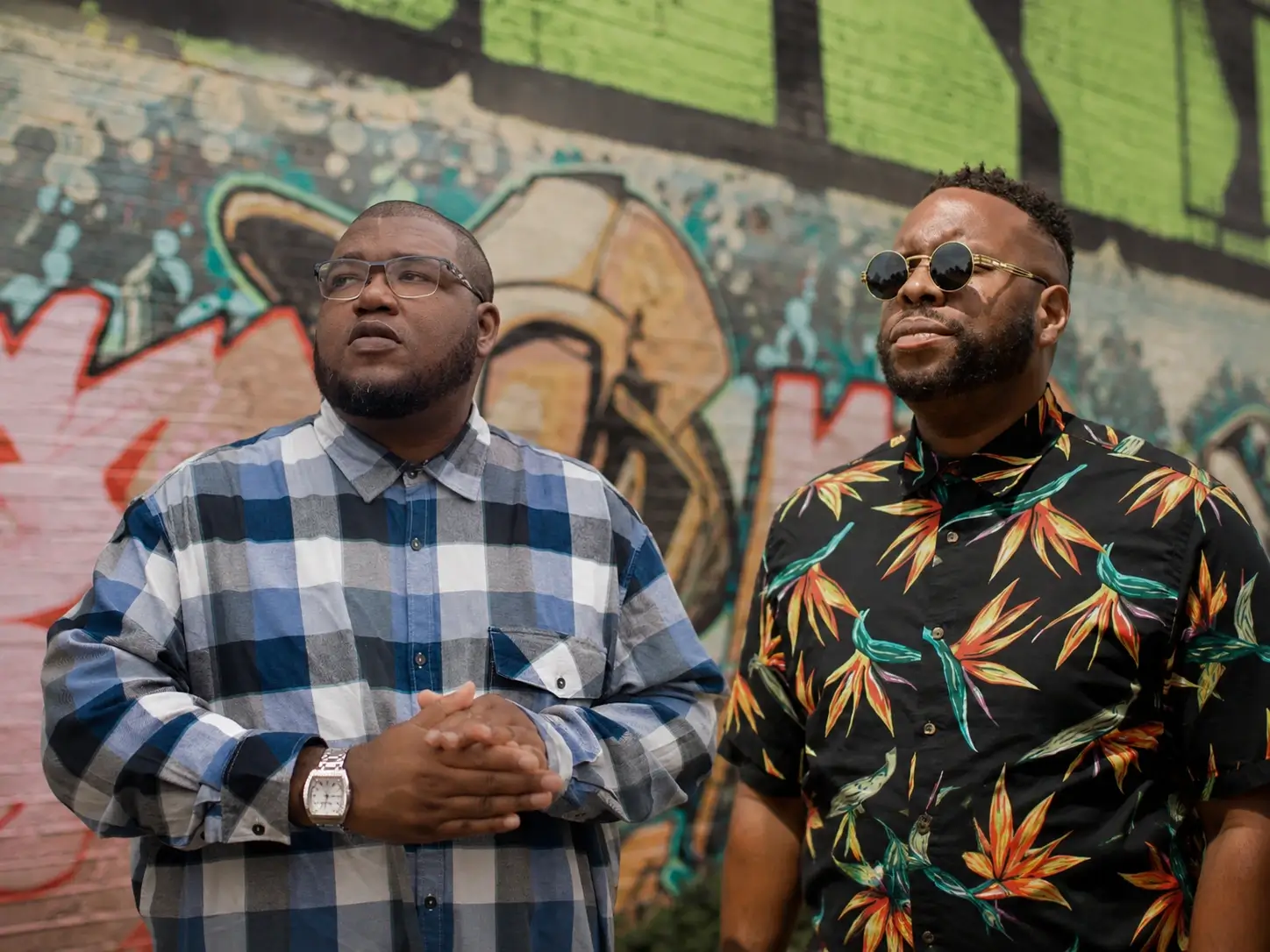
The album works because Cashus understands that transformation is not the same thing as pretending everything is fine. Water to Wine is interested in change, but it is also interested in addiction, grief, racism, family, history, poverty and the general inconvenience of being a human being with unresolved problems. Big O gives all of this a surprisingly coherent musical environment, building a world that feels fluid without making every song sound like somebody poured a swimming pool over the mixing desk.
“Barry Water” establishes the rules before Cashus really gets started. A spoken-word introduction sits over atmospheric instrumentation and frames humanity as something capable of creation and destruction. Then “LikWid (Big Fish)” throws us into the deep end. The production hits harder, Cashus starts moving faster, and the water imagery becomes street imagery: flooded neighborhoods, survival, addiction, police, hustling. His writing is dense enough that you could probably spend several listens just fishing individual lines out of it.
“Precipitation,” featuring Fashawn, expands the metaphor into history. Here, rain becomes a way of talking about slavery, forced conversion, colonialism and the long afterlife of systems designed to oppress Black people. This is where the album’s ambition becomes obvious. Cashus isn’t using water because it sounds poetic. He’s using it as a substance that can carry history from one place to another.
And then there is “Drippin’ (Soakin’ Poems),” which is basically what happens when a rapper decides the correct response to having a lot of things to say is to say approximately all of them at once. Cashus attacks the track with a frantic, almost electrically charged delivery, turning writing itself into a kind of chemical reaction. It is messy, aggressive and occasionally absurd, but the intensity is part of its charm.
The album becomes much more vulnerable on “Drownin’,” which may be its emotional low point in the best possible sense. Cashus describes grief and addiction as something physically inescapable: every attempt to reach the surface is followed by another wave. There is no inspirational speech waiting around the corner to rescue him. The line between surviving and simply continuing to drown is deliberately blurred.
Elsewhere, “Like Lava for Water” turns toward family, particularly his mother, with Cashus acknowledging the people who helped carry burdens he could not. “Hydration (Reign)” answers that heaviness with something gentler: an argument for continuing to water the things you still hope might grow. The album’s idea of hope is therefore refreshingly practical. You don’t wait around for a miracle. You keep watering the plant.
Big O deserves considerable credit for making all of this feel like one album rather than fourteen songs that happened to share a Dropbox folder. His production shifts between boom-bap, jazz, soul, G-funk and darker textures without losing the underlying identity of the project. “Potions,” featuring G-Holy, moves into a smoother West Coast groove, while “Swimmin’” goes for a more triumphant, trap-influenced energy.
“Swimmin’” is also where the album briefly loses some of its depth. The fish, sharks, Superman and Flash imagery becomes more about momentum than meaning. It isn’t bad; it just feels comparatively lightweight after songs dealing with addiction, colonialism and grief. Eventually someone has to rap about being a shark, I suppose.
“Streams,” featuring Blu, Frannie EL and Shari, brings the album back into more reflective territory, with Blu’s verse about fatherhood, loss and faith giving the song an emotional center.
After thirteen tracks of transformation, the album arrives at a culmination in the song “Wine” only to discover that transformation does not magically erase the things that caused it. Cashus reflects on his father’s death, writer’s block, purpose and the question of what any of this is actually for. The phrase “turn the water to the wine and turn the wine to art” could sound like a motivational poster if handled badly. Here, it lands as the album’s thesis.
The miracle isn’t that pain disappears.
The miracle is that you can make something from it.
That is what makes Water to Wine work. It is not subtle, and sometimes it is so determined to explain its metaphor that you can practically see the concept waving from across the room. But its sincerity is difficult to dismiss. Cashus King has spent much of his career turning lived experience into dense, searching rap, while Big O gives those thoughts a musical world spacious enough to breathe in.
This is an album about becoming something else without pretending you were never what you were before, and that’s about as close to a miracle as you’re going to get.
Follow Cashus King & Big O
About the Author

A tenured media critic known working as a ghost writer, freelance critic for various publications around the world, the former lead writer of review blogspace Atop The Treehouse and content creator for Manila Bulletin.