

loader image

New Music

BR33Z WORLD’s Black Heart Is a Tale of Life, Suffering, and Success

BR33Z WORLD’s Black Heart features eight tracks, but there’s much to unpack. It’s about survival, treachery, allegiance, ambition, the blocks, and resilience, but it’s not eight songs sounding the same. BR33Z WORLD moves through rage, regret, mistrust, edge, and resolve, making his personal story multifaceted. Born in San Francisco and raised in Oakland, but shaped by Fillmore— BR33Z WORLD made the album about his own struggle and the process of rebuilding his life after a life-changing experience. Now, that’s something to keep in mind, but the record is better off not being viewed as eight individual accounts of what he went through. Credit: Copy Right 2026 BR33Z WORLD ALL RIGHTS RESERVED “Can’t Run” is a good starting point because it establishes the album’s most intense side right away. Betrayal and difficult circumstances are among the song’s subject matter, but the more compelling notion is that of being stuck within a cycle: the title implies there’s no easy escape, and the writing keeps coming back to the notion of decisions and their outcomes. It elevates the song from being a straightforward street record into a prologue to the world the rest of the album is exploring. “It Ain’t Easy” gets much more intimate. With “It Ain’t Easy,” you don’t get all that far away from the camera. BR33Z WORLD shifts the direction a bit and goes inward, toward the experiences and humanity that brought him here. His West Coast melodic delivery graces the track with a calmer tone, but that doesn’t overshadow what the track is really about; in fact, it leaves more room for the narrative. “Can’t Change” picks up where “It Ain’t Easy” left off, focusing on the aftermath and what remains after an experience has already happened. Some things still become a part of you. One of the clearest and most specific messages of the entire album comes across here: just because you survive something doesn’t mean you can erase its effect on you. Then the album moves into its more assertive side. “The Plug” is full of street energy, while “Never Bite the Hand That Feeds” returns to the themes of loyalty and treachery. Even the latter’s title feels like an adage warning you off, which is appropriate for an album where relationships are often presented as something that can either bind people together or lead to complications. “Different View” broadens the scope of the album, while “Cry Baby” provides another musical change of pace. They’re necessary because Black Heart could have gotten predictable in a hurry if every song tackled its subject with the same intensity. As it turns out, varying the tone and delivery makes room for the heavier records. The end result is an album that sounds planned and thought out, not just put together. “Can’t Run” presents the conflict, “It Ain’t Easy” shifts the focus inward, and “Can’t Change” reflects on the permanence of difficult experiences. Then the more energetic tracks draw the listener back to street relationships, loyalty, and aspirations, while the more varied tracks keep the project from turning into one long, dark meditation. Which is exactly the point at which BR33Z WORLD’s melodic sensibility comes in handy. A West Coast sound isn’t merely an aesthetic label to slap on a rap project. Making each song sound like it belongs on the same album allows him to switch from the hardest rap delivery to a more melodic one without making the songs feel like they could have been recorded for different albums. Every single one of them zeroes in on a story that, in a way, we can take home: BR33Z WORLD has survived a lot, and Black Heart is interested in what’s next. This isn’t just a record about what happened to him. It’s about what follows; the lessons, the suspicion, the identity, the ambition, and the need to do his thing. Black Heart isn’t a neat, neatly explained redemption arc that finds its resolution by track eight. Rather, the project is filled with room for a dissonance that feels all the more resonant for its messiness: pain sits alongside grand ambition; wariness sits alongside dependence; painful memory sits alongside the urge to move forward. As a document of an artist getting on with the business of living after life-altering incidents, Black Heart is more concerned with the aftermath than with the event itself, and its most compelling moments arrive when that personal history informs rather than consumes the music. The story behind this album is as powerful as the music itself. After surviving being shot in the head and three times in the back, he faced a long road of recovery that included relearning how to walk and talk. That experience became a defining part of his life and the inspiration behind BLACK HEART, giving this album a deeper meaning rooted in survival, resilience, and the determination to rebuild a life from the ground up and finding purpose through pain. Survival isn’t the end of a story on this album. It’s the start of a new chapter, and with two more albums scheduled to follow, BR33Z WORLD still hasn’t closed the book. Follow BR33Z WORLD Globe Facebook X-twitter Spotify Youtube Instagram Tiktok Promoted Content About the Author

BR33Z WORLD’s Black Heart Is a Tale of Life, Suffering, and Success Read More »

Hamish’s “Singing in My Soul” Is an Old Song That Refuses to Stay Old

Some musicians collect records. Hamish seems to collect stories. Three decades spent wandering England’s music scene, setting up the Rabbit Hole at Glastonbury, quietly supporting young bands, hitchhiking across America with a guitar, and somehow ending up at Lisa Bonet’s party after getting lost in Venice Beach have all become part of his story. He also wrote “Singing In My Soul,” a track from his 1999 debut album, “Picture In My Bag,” and it’s only just now getting its day in the sun. And, to be honest, the song sounds exactly like something with that much history in it. Recorded at Hatfield Court, a sprawling, dilapidated mansion in Herefordshire, “Singing In My Soul” was produced by Les Penning, who is known for his work with Mike Oldfield. The recording environment isn’t so much a studio as a random setting: ‘There, I knew what it needed: an ancient oak-panelled drawing room. An old, wood-fired Aga.’ As a result, the song has a raw, atmospheric feel that places it firmly in the realm of real life. Local musicians were brought into the mansion and, instead of wiping away every abrasion, the song captures the vibrancy of that experience. “Singing In My Soul” is folk-rock, but not the sort that is poured into a glass display marked AUTHENTIC FOLK MUSIC. It’s more alive, human, and lived-in. Surprisingly for any song that has only just emerged from the musical equivalent of a forgotten drawer, it has already enjoyed a long existence. It became a hit on the New Zealand folk charts while Hamish was touring there and was subsequently featured in one of the country’s top television shows. The song also continues to be played at weddings and other functions to this day. That perseverance makes sense when you consider how simply Hamish approaches songwriting. It’s all about melody and storytelling, and “Singing In My Soul” doesn’t appear to be too preoccupied with impressing; it just wants to say something. It is somehow fitting that Hamish has come back to this material as he is on the cusp of releasing “Significant Others.” The album languished for 16 years under a mountain of cuttings before being resurrected by local musicians with producer Chris Oldfield, formerly of Dreadzone. Hamish’s history with up-and-coming artists makes that spirit of collaboration even more fitting. He hosted The Rabbit Hole at Glastonbury for 16 years, giving young and emerging bands a platform to be heard. The venue became so popular that even Hamish’s stage costume of a rabbit became part of his identity, and he eventually got a LEGO character made in his likeness. So “Singing In My Soul,” ultimately, is not just a song from 1999, but a snapshot of something Hamish seems to have known all along: Good songs, even old ones, can still live on if they have a little life left in them and keep finding new people. Follow Hamish Spotify Promoted Content About the Author

Hamish’s “Singing in My Soul” Is an Old Song That Refuses to Stay Old Read More »

Chet Nordy’s “For You” Turns a 15 Year Old Wedding Song Into a Rock Anthem

There is something slightly absurd about writing a love song for your wedding and then, 15 years later, deciding it needs electric guitars. This is also exactly why Chet Nordy’s “For You” works: the song’s grander rock treatment is built around something that was originally much smaller, more private, and presumably played with considerably fewer amps.  “For You” began as an acoustic song written by Dave Nordstrom, who performs as Chet Nordy, for his wife on their wedding day. The new version expands that intimate origin into a full rock production, with Josh Paulino handling the vocals and Nordstrom playing and recording the instruments himself. The arrangement understands the danger of this transformation. Turn a personal love song into a rock anthem and there is always a risk that the emotion gets buried under guitars, drums and the general sonic equivalent of someone shouting “THIS IS LOVE” through a megaphone. “For You” largely avoids that by giving its instrumentation a clear emotional function. The electric guitar establishes the song’s immediate character, with melodic licks providing the first major hook. Rather than using distortion simply for volume, Nordstrom uses the guitar to increase the song’s sense of momentum. The arrangement then pushes toward a broad, singable chorus, giving the private sentiment a more communal quality. Paulino sings it straight out, with just enough focus to compete with the ever-widening scope of the arrangement. This keeps the lyrics front and center rather than allowing the lush arrangement to overshadow them. The most effective decision, however, may be the acoustic guitar outro. After spending much of the track building toward a larger rock sound, “For You” returns to something closer to its original form. It is a simple structural idea, but an appropriate one: the song ends by reconnecting with the version that existed before the studio, amplification and production entered the picture. That gives the arrangement an emotional arc beyond simply “quiet bit becomes loud bit.” The electric guitars represent the song as a finished recording; the acoustic ending reminds us that it started as something meant for one person. The lyrics themselves are straightforward about commitment, which may be the point. Fifteen years after its original purpose, “For You” isn’t trying to make love sound mysterious. It treats lasting affection as something worth stating plainly and then turns that statement into a guitar song loud enough for everyone else to hear. Follow Chet Nordy Spotify Facebook Instagram Tiktok Promoted Content About the Author

Chet Nordy’s “For You” Turns a 15 Year Old Wedding Song Into a Rock Anthem Read More »

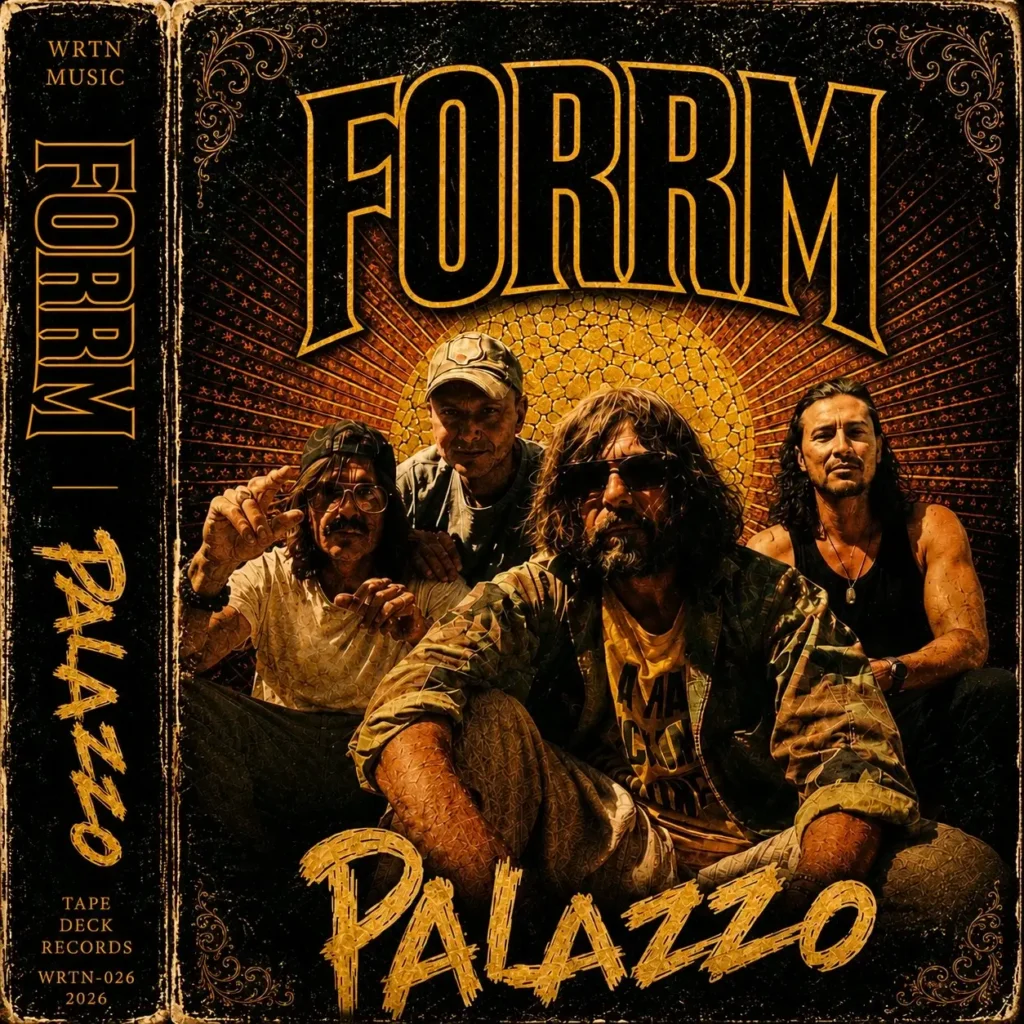
FORRM’s “PALAZZO” Builds an Expansive World Through Experimental Rock

PALAZZO finds FORRM working where experimental rock and electronic music collide with cinematic composition, using atmosphere as the fabric of a song rather than an afterthought. The single offers a taste of FORRM – the free-wielding multidisciplinary project helmed by Iranian-French artist/filmmaker/musician Firouz Farman Farmaian in an expansive track grounded in the physical. Written at Bloom Studios, “PALAZZO” plays with a back and forth between acoustic instrumentation and electronic sound design. The acoustic intentions create a window into the song, while guitars, bass, percussion, and electronic instrumentation shift and spiral around its center. The song avoids the usual repetition of verse, chorus, verse, chorus, instead swinging constantly and shifting in density, volume, and air. This is reflective of the general way in which FORRM operates: traveling between the worlds of music, film, contemporary art and site-specific work. “PALAZZO” obviously feels very much like it is built out of these other disciplines in the way it is developed; it creates its visual environment rather than following it. The Venice and Palazzo Dandolo references are perhaps the most helpful to this task. The production has an architectural feeling to it, with echo and multilayered instrumentation making it feel further away from the listener and larger. It is perhaps less about trying to sonically recreate Venice than about capturing an idea of the place: history, movement, spectacle, and mystery. The guitars really work on this track to keep it in touch with rock. The tone of the guitars keeps the production from becoming too slick while the electronic elements extend the sonic range without dominating the live instruments. The rhythm section delivers the drive beneath the atmospheric sections. Another major element to consider in the mix is the vocal performance. This is prominently featured because of its contrary directness to the spaciousness of the production, allowing the listener to feel as though there is a human element in a rather heavily designed setting. This prevents it from floating entirely as an ambient piece. However, a sacrifice has to be made. “PALAZZO” is less about single moments or “hooks”, or traditional song structure and more about a feeling, a mood and building slowly. For someone used to more traditionally-structured music, with tightly-wound hooks, it may take longer to get into. But that also means that the track retains its cinematic quality.The strength of “PALAZZO” lies precisely in the correspondence of ideas and implementation. FORRM’s desire to unite rock and cinema, visual art and physical spaces is taken to the music; it is not only in the presentation. “PALAZZO” is thus a house for exploring, and the focus is less on a resolution of a cliff-hanging hook than on the environment it is created to be experienced in. Follow FORRM Globe Soundcloud Bandcamp Instagram Play-circle Music Promoted Content About the Author

FORRM’s “PALAZZO” Builds an Expansive World Through Experimental Rock Read More »

Ivan Mudd’s “Getaway Car” Is Power Pop With Plenty of Momentum

“Getaway Car” by Ivan Mudd comes out of the gate racing. Ivan Mudd’s first single delivers with fuzzy guitars, crunch, punk attitude, and a catchy melodic hook that makes the track immediately inviting. While it is a straightforward power pop tune, the band knows exactly how much grit and melody it needs to keep the formula interesting. The Norwegian trio has a pretty rough-edged sound in their guitar work without resorting to full-on distortion, ensuring that the melodies aren’t sacrificed entirely, while the vocals keep things solidly in the realm of accessible pop. It all sounds intentionally basic without ever feeling underdeveloped or lacking. Credit: Photo by Kristin Adamsrød That straightforwardness actually works well for the momentum of the track. “Getaway Car” is a track that obviously wants to make you feel like you’re moving. It’s got that driving groove to it, and the guitars are just dogged about keeping the momentum going, so it can feel like you’ve been dumped in the trunk of a car and driven away. While its roughly textured surface and sweet songwriting seem mildly oppositional, there’s something conducive to harmony. Ivan Mudd is aware that distortion can add punch to the best power pop, but it shouldn’t drown the hook out. The fuzz gives substance, but the song provides the flesh. This song is from “Tales From The Valley,” the band’s concept album loosely centered on a fake television series and fictional city. That setup lends “Getaway Car” a cinematic element without making it unnecessarily convoluted. Even its title just implies that you’re arriving somewhere in the middle of a tale, as something is happening and someone is leaving. Above all, it captures the fundamental essence of power pop: hit people with a good tune, crank up the guitars, and don’t overanalyze it. “Getaway Car” hits people with a good tune, cranks up the guitars, and does so with a bit of grit and personality. Follow Ivan Mudd Facebook Spotify Youtube Instagram Tiktok Promoted Content About the Author

Ivan Mudd’s “Getaway Car” Is Power Pop With Plenty of Momentum Read More »

Electrobuddha’s “The Man Who Killed the World” Makes an Apocalypse You Can Dance To

“The Man Who Killed The World” is an extremely confident title. It suggests one spectacularly bad person, possibly wearing a cape and standing on top of a volcano. Electrobuddha’s song, thankfully, is a little more complicated than that. The track, which first surfaced in 2016 and was given a remixed 2026 version, punishes war, hunger, inequality and destruction to nature. There is a lot to pack into a single tune, but McCaffer, the Scottish artist who makes music as Electrobuddha, does not seem to be lecturing; rather, there’s a progressively more uncomfortable feel of psychedelic rock to it. The first sentence sets the scene right away: “Just look around you, satellites keep falling from the sky. It mystified you. Seems to me we are running out of time.” Hitting you over the head? Not so much. Hit you like a breath of fresh air? Yes. There is enough in the music itself to make it worthy of replay. A jagged, broken drumbeat makes the first heartbeat of the track, a wobbling bass line pulls the record into its mood, then guitars, synths and strings gather around it, attempting to make the record sound as crowded as possible. And yet, it doesn’t fall apart. That is mostly because the beat is still king. The drums are still beating relentlessly, with the bass bordering on tangible, the strings helping to build up the tension, the electronic sounds becoming strangely unnerving, while the vocal by McCaffer is right in the eye of the storm. The remix also has an advantage in that its subject matter has never exactly fallen out of date. If anything, the issues raised by the lyrics have acquired the unwelcome attribute of a perma-current zeitgeist. The world still has war. Still has hunger. Still has inequality. And still objects to any plan that doesn’t benefit billionaires. Anyways. McCaffer’s DIY methodology suits the genre’s can-be-chaotic subject material. Recording from his own home studio, he creates the track with samples, guitars, drums, strings and his own vocals. The video for the song, by McCaffer himself, is also painstakingly edited and synchronized; adding to the sense that this artist is assembling all of this himself. “The Man Who Killed The World” is not subtle, and it doesn’t have to be. Its most effective passages are when the protest message and music fuse, when the percussion endures, when the bass continues its relentless drive, and when the songwriting becomes taut. For “eco rock,” Electrobuddha has a simple message: get into a panic, but keep moving. Follow Electrobuddha Facebook Spotify Promoted Content About the Author

Electrobuddha’s “The Man Who Killed the World” Makes an Apocalypse You Can Dance To Read More »

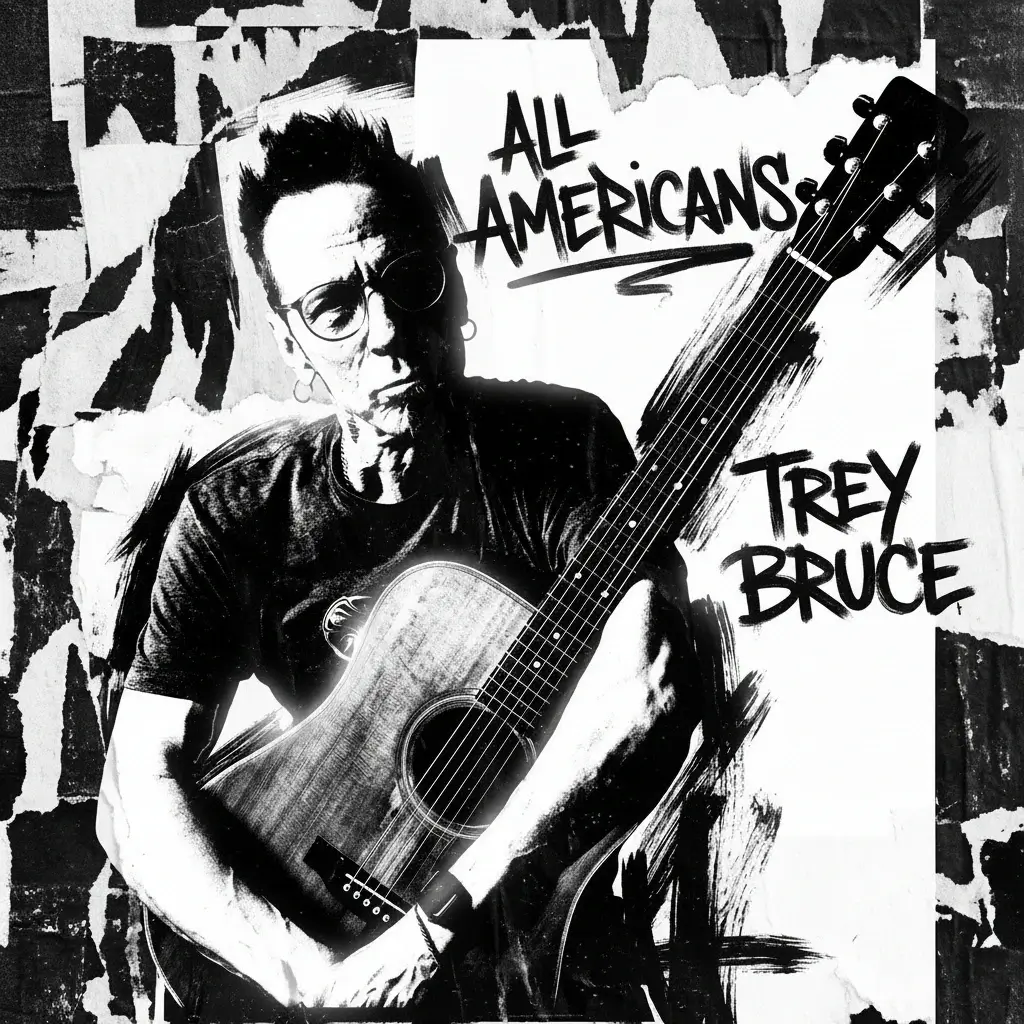
Trey Bruce’s “All Americans” Asks What Happened to Empathy

What if the person you disagree with is just as worried about the rent, the mortgage, the kids and the future as you are? Trey Bruce’s “All Americans” takes that deceptively simple question and turns it into a weary, roots-driven meditation on a country increasingly divided by fear, mistrust and resentment. Originally written 14 years ago and rebuilt for its September 11, 2026 release, the song doesn’t try to solve America so much as remind listeners that the people caught in its problems are, inconveniently, people. There is something almost suspiciously reasonable about Trey Bruce’s “All Americans.” In an era when songs about America seem increasingly interested in telling you exactly who is to blame, Bruce instead asks a much less satisfying question: what happens if we remember that the people we disagree with are people? That sounds dangerously close to a greeting-card sentiment. Fortunately, “All Americans” is too weary for that. The song surveys American life from ground level: strip malls, empty storefronts, nervous neighbors, disappearing jobs, unaffordable education, healthcare anxieties and the general sensation that the floor is becoming slightly less stable beneath everyone. Bruce doesn’t turn these into grand political abstractions. They remain ordinary problems happening to ordinary people, which is precisely what gives them their weight. The production helps as it is filled out with a wall of Americana instruments instead of the usual wall of AAR work, making Bruce’s perspective feel strangely intimate and unexpectedly heavy. The momentum is held by big, punchy beats and basslines, with his husky, whispery, world-weary voice doing most of the work. Acoustic guitar and synths fill out the edges, and his daughter’s soft harmonies bring an almost disarming warmth to the chorus.  And then the bridge makes the whole experience more personal. Maybe your kid’s school is shutting down? Maybe your mortgage is being transferred? Maybe your insurance company is denying you something you can’t live without? Maybe your job is going away? Instantly, those nameless Americans in the song have names and families and bills. That bridge between “them” and “us” just started to look kind of contrived.  The answer is modest: empathy, giving way, kindness. None of those things will pay a mortgage, reopen a school or get a job back. Bruce isn’t pretending otherwise. But perhaps that modesty is the point. “All Americans” never demands that we see eye to eye. It only asks if disagreement should lead us to treat strangers as throwaways. Apparently, that’s still a question worth singing about. Follow Trey Bruce Globe Facebook Spotify Youtube Instagram Tiktok Promoted Content About the Author

Trey Bruce’s “All Americans” Asks What Happened to Empathy Read More »

“Candy Smoking” by Romattic Illustrates Love and Devotion Over Gently Shimmering Guitars

A whole lot of songs about falling in love. Not as much about falling in love when people around you are all too eager to tell you that no, that’s wrong, you’re just an idiot. “Candy Smoking” by Romattic falls into that second category. On the surface, it is an alt-rock love song about a guy who is unquestionably all in love with a woman who just doesn’t quite reciprocate the love. Those around him can see it; he can see it; this would be where he leaves. He does not in fact leave. And it is in this area that “Candy Smoking” begins to reveal itself as infinitely more compelling than its superficial subject matter might imply. Because the song is not, in truth, nearly as invested in romantic devotion as something heroic or noble as it might first appear. Instead, it perceives the contemporary relationship as something you’re supposed to have: another pointed reminder that everyone else seems to have what you don’t. Singlehood has become a defeat. This makes the attempts to force the narrator to let go even more pathetic and very relatable as he’s effectively admitting the whole dilemma, while still perpetuating it. This isn’t a guy who fell prey to a mysterious, untraceable femme fatale; he’s been given the warning label. He has read it, and he’s decided to buy the candy. This production drives home that chaotic paradox. Romattic races forward with thundering drums, upbeat guitar riffs, rough electronic timbres and processed vocals, creating a song that feels far more victorious than it has any right to be. It’s catchier, louder and more livid than the subject matter and makes a welcome contrast to its theme of emotional reliance. Much of the band’s wider sound takes inspiration from alt-pop, alt-rock and nostalgic ’80s and ’90s textures, with a smattering of classic-rock influence added into the attic that’s becoming increasingly wild. This blending together of influences is what makes “Candy Smoking” seem less like a carefully curated nostalgia project and more like a modern-day band just rummaging through the recording archives and asking, “What if we did this?” By that metric, it’s very reminiscent of Arctic Monkeys. “Candy Smoking” simply succeeds in the end because it gets the fact that romantic desperation can be pretty damn stupid, and yet still uncommonly real. Because you know something’s up, and you do it anyway. And here, underneath the guitars and the roar, is a rather unattractive query the song leaves behind: what proportion of what we refer to as love is really love, and what proportion is just plain fear? Follow Romattic Spotify Youtube Instagram Tiktok X-twitter Promoted Content About the Author

“Candy Smoking” by Romattic Illustrates Love and Devotion Over Gently Shimmering Guitars Read More »

VelumVelvet’s “Woman’s Burden” Feels a Little Too Familiar

Nothing seems more striking than a song from a woman who knows the weight of what she writes about. VelumVelvet’s Woman’s Burden carries that sense of familiarity, like a shared language for feelings that are difficult to name. Maybe it’s because Donna James, the woman behind VelumVelvet, knows these feelings from somewhere. Based in Brigg, England, Donna first wrote the song as a poem back in 2011 before it found its way into her discography. The keys from the start are slow, almost hesitant. You can almost picture a woman sitting alone with her thoughts, staring out the window while repeatedly telling herself that she carries it all so well. Then come Donna’s vocals, bringing all the weight of loneliness to the surface.  For a song titled Woman’s Burden, this one hits home. The line, “breaking in the silence, standing all alone,” feels like the exact moment when keeping it together is no longer possible. But it doesn’t stay in that feeling for long, as it eventually finds a way to step out of the shadows and keep going. Somewhere in the imagery and metaphors, you can feel what the song is trying to say without it having to spell everything out. It simply comes through, because it’s anchored in something real. And as the track ends, you might just find yourself thinking, “Yeah, I totally know that feeling.”  Follow VelumVelvet Facebook Spotify Youtube Instagram Tiktok Promoted Content About the Author

VelumVelvet’s “Woman’s Burden” Feels a Little Too Familiar Read More »

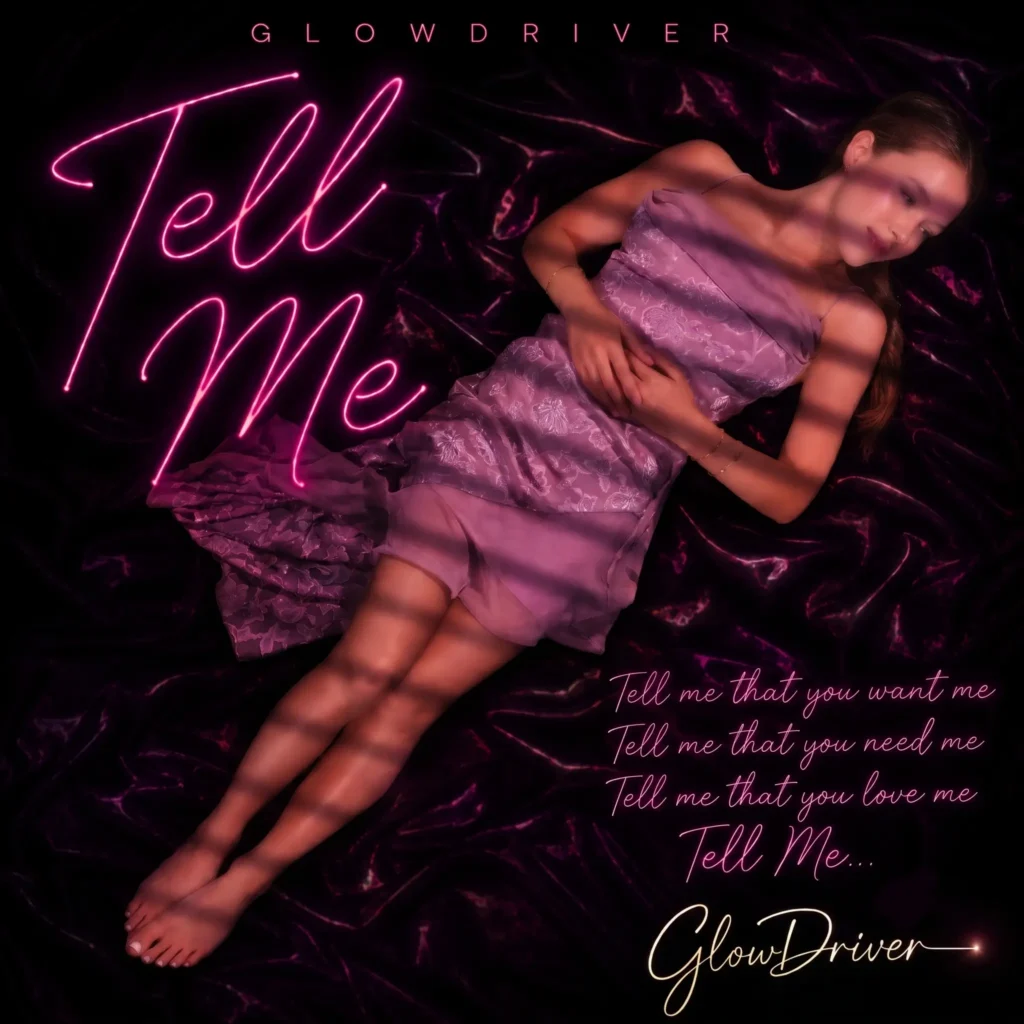
GlowDriver’s “Tell Me” Turns Relationship Uncertainty Into a Dancefloor Problem

There is a specific point in flirting where reading signals stops being fun and starts becoming an unpaid detective job. You noticed the looks. You felt the tension. There is clearly something happening. But eventually, someone has to actually say it. GlowDriver‘s “Tell Me” builds upon the concept of words of affirmation and transforms it into a cool dance-pop smash that’s about wishing someone would express his or her feelings in words. There’s a light flirtatiousness on the surface, but there’s a hint of vulnerability beneath. Maybe you’re already aware someone loves you, but you still want to hear it. And to be honest, that’s a pretty easy problem to see ourselves in. “Tell Me” blends the line of dance-pop, electropop and melodic EDM. There’s a thick bassline that drives the groove forward, joined by soft clouds of layered synths and electronic sounds that help create a sleek, anticipatory chug of a groove. The production teeters on the line between spotless pop production and the droning glow of a late-night DJ set, in the car or the clubs. That contrast is probably the song’s best trick. The lyrics are essentially asking for emotional clarity while the production is saying, “Well, we’re dancing now.” There are clear echoes of the glossy EDM-pop sound associated with artists such as Marshmello, The Chainsmokers’ remix-era material and Lost Kings. “Tell Me” uses that same basic appeal: an uncomplicated emotional idea gets wrapped in a big, clean electronic production that makes it easy to sing along to and, more importantly, easy to keep moving to. GlowDriver’s broader concept fits the track neatly. The project treats emotion as energy, with music becoming the thing that connects people when words, feelings and physical attraction all start overlapping. “Tell Me” is particularly suited to that idea because its entire premise is about making something internally explicit. What keeps the song from becoming overly serious is its sense of fun. GlowDriver does not treat vulnerability like a sad little confession that has to happen in a quiet room. Here, wanting reassurance gets bass, synths and a dancefloor. By the end, “Tell Me” feels less like the big confession itself and more like the moment right before it, when you already suspect you know the answer but would really appreciate hearing it from the person involved. Follow GlowDriver Globe Facebook X-twitter Spotify Soundcloud Youtube Instagram Tiktok Promoted Content About the Author

GlowDriver’s “Tell Me” Turns Relationship Uncertainty Into a Dancefloor Problem Read More »