loader image

New Music

Cydan’s Newest Track, “Falling 4 U” Hits Us Right in the Feels

Let me start by asking you a simple question. What makes love worth it? Before you answer that, let me say yes, you are correct. Let Cydan‘s newest track, “falling 4 u,” give you a different perspective and see if it still aligns with your answer. “falling 4 u” started with this melodic riff that created an overall positive and full of love feel to the overall track. Just by listening to that riff, I know that I’m ready to get “all the feels” The palm muted guitar sound works perfectly in this track. That specific style reached its peak in the early 2000s. It was everywhere. When I mean everywhere, I mean everywhere, and it got out of hand to a point that it became the norm, but listening to it now, I can definitely say that it suits the overall vibe of the track. The melodical phrasing and the note progression used in this track are what made “falling 4 u” catchy, giving you that “right in the feels” vibe. From the lyrical perspective, the song talks about love. A love that would conquer the lowest of lows. A love that would fight to the end, even in the face of rejection. Even with its lyrical depth, Cydan made it easy to digest so that listeners like you and me can easily devour it. “falling 4 u” made me reassess my original answer to the question in the first paragraph. After listening to this track multiple times, I can definitely say that I learned that love through the eyes of the beholder is worth it, regardless of whatever the outcome is. If you like this song and Cydan’s music, give it a listen and a follow.  Follow cydan Spotify Youtube Instagram Tiktok Promoted Content About the Author

Cydan’s Newest Track, “Falling 4 U” Hits Us Right in the Feels Read More »

“Fog” Is Bells Deep’s Take On A Fragmented World

Jumping right into this record, this one’s perfect for those who criticize, those who mourn global systems, or for those who just enjoy indie music in general. “Fog” is a collection of niche-sounding songs that you could tie up with the world today, deeming it a poetic, real, and unfiltered album. If there’s one thing you need to equip before pressing play, it’s an open mind. Bells Deep is Corey Bell’s brainchild, signed to Portal of Eels and based in Los Angeles, California. Expect timely and socially-conscious tunes from this guy, meshed with well-loved indie instrumentals ranging from rock, a little pop, and a bit more of this and that, which is always a hit for everyone listening. Sound-wise, if I was personally asked what my favorite indie song is, it would definitely sound like “DEAD2ME”. It seems like a passive aggressive song, based on the rage-like feel of the chorus. The constant wishing for happiness to the point of exploding passes the vibe check, along with the tempo change and switch-up, and the ruthless line of “you were dead to me long ago”. This might actually be the song equivalent to the frustration and all the intense emotions younger generations feel about society, primarily in politics. Now, “Start With Sorry” is just peak indie rock/pop. The drums in this are really intricate, noticeable, and matches the frantic, fast-paced nature of the track. If someone were to ask, “when did I become so jaded?” Probably before you got the chance to listen to this record. But seriously though, at first glance, this one seemingly sings about change, maybe the feeling of misplaced, and possibly relationships going south. But if you take the previously mentioned line, it may refer to ignorance, or lack of awareness to issues we need to be addressing. The opening energy of “Mr. Crackers” is curiosity-piquing. It, overall, sounds like a fun track, slightly reminiscent of nursery rhymes and songs by The Brobecks. There are some lines that mention nihilistic optimists, poets, and missionaries, as well as something along the lines of  “if you were to disappear, no one would miss you here”, which may refer to those who reframe trauma and injustice in today’s society. “Fog”, the title track, is imagery-driven, tamed down, and acoustic (at least, in the beginning) song with a background that sounds like literal fog that’s been tampered with. It’s safe to say that this track reminisces a lot; with the delivery and the words, it feels as though you’re walking alongside a deserted boulevard, thinking of all the days and moments you miss. The beautifully broken solo helps with that thought as well. Out to Sea by Bells Deep There’s a bit of a jazz vibe going on with “Sugar Cube”, and it talks about words dissolving their meanings, time slowing down, and ghosts reappearing. In a general context, this could mean anything, but when you render it down to something societal and political, one can deduce them into something about racism, even capitalism. Heck, the title itself is something to look into, being a thing that’s favored by most people, but when dissolved, it’s as if it wasn’t there to begin with, kind of like glorification or giving the light of day to those oppressed, then going back to discriminating them right after. Analysis aside, “Fog” is an album worth anticipating and appreciating, simply because of its honesty and how it sticks true to a genre that Bells Deep clearly excels in as an artist. Give it a go, we’re sure you’d find any of these songs useful to bring up in your social science class. Follow Bells Deep Instagram Bandcamp Promoted Content About the Author

“Fog” Is Bells Deep’s Take On A Fragmented World Read More »

Freya Magee’s “Forget Yourself Not” Is The Art of Not Losing Yourself

The ability to call out someone with grace? That’s a rare gem where it’s either bitterness, agony, or desperation that dominates the scene. Freya Magee flips the whole script with her latest single with Forget Yourself Not, and it feels like the last words you’d throw at someone to preserve yourself. Freya Magee is an indie singer-songwriter based in London. This time, she’s back to deliver a late-night alcohol-hazed London vibe with a blend of cinematic indie-folk palette and glistening indie pop texture.  The first thing you’ll notice from Forget Yourself Not is Freya’s voice. There’s boldness in her airy, ethereal voice that’s impossible to ignore. Her words drip with frustration along with restless acoustic and electric guitar with pulsing percussion hits. This track is not your typical heartbreak anthem filled with overly exaggerated drama and clichés. You won’t get revenge, nor something that drowns in sadness. Freya offers something more rooted in self-empowerment and clarity. The part, “I won’t give too much of myself to someone who forgets themselves,” is the emotional arc of the song. There’s no hint of self-pity, it’s Freya setting boundaries—to the one who can’t reciprocate, to the one taking what they couldn’t give. If you’ve ever asked, “What if Phoebe Bridgers’ indie folk sound and Gracie Abrams’ indie-pop sensibilities meet halfway?” Freya gives you the answer, but in a sharper, urgent production.  All in all, Forget Yourself Not by Freya Magee is the blurring contradictions of modern relationships, a reminder to hold space for yourself before you could even lose yourself in the process. Follow Freya Magee Globe X-twitter Spotify Soundcloud Bandcamp Instagram Tiktok Promoted Content About the Author

Freya Magee’s “Forget Yourself Not” Is The Art of Not Losing Yourself Read More »

Michellar’s “Never Say Sorry” Isn’t Just a Milestone Release; It’s a Statement of Intent

 At this point in the algorithmic haze of modern pop, it feels like every other single is described as “vulnerable” and “intimate”; usually codes for a Spotify-friendly ballad written by six people in a room who’ve never made eye contact. So when Michellar puts out “Never Say Sorry,” marking their one-year milestone in the music industry, the temptation is to brace yourself for more playlist filler. But then the track actually plays, and it becomes clear: this isn’t just another glossy product. It’s an attempt to wrestle with something messy and real. “Never Say Sorry” is a song about love, longing, and that quiet ache you get when you finally accept not every apology fixes anything. Where most artists would reach for melodrama by going for big strings, crashy pianos, “please sync me on Grey’s Anatomy” energy, Michellar goes the other way. The vocals are cracked, warm, confessional. Less studio polish, more someone leaning across the table at 3 a.m. to admit something they probably shouldn’t. The production matches that restraint. Guitars shimmer, synths hang like fog, percussion ticks steady as a heartbeat. No fireworks, no “Spotify drop,” just a patient build that slowly traps you in its atmosphere. It doesn’t grab attention; it surrounds you until you realize you’re caught in it. The production follows the same ethos. Instead of shining everything to a radio-ready gleam, the mix leaves space and air. Vocals aren’t perfectly isolated but tethered to the instrumentation, giving the impression of someone singing with their surroundings rather than above them. It’s less a pop single engineered for immediate gratification and more like a diary entry set to music. That’s part of why it lingers: the imperfections are left in, the silences feel intentional, and the result carries a human weight that algorithms can’t fake. What really elevates the track is its sense of balance. Michellar never tips too far into gloom or too far into uplift. There’s resilience here, yes, but it’s earned; not stapled on in the chorus as a hook. The hope comes from sitting with the wreckage, not ignoring it. “Never Say Sorry” isn’t just a milestone release; it’s a statement of intent. Michellar is making music that values mood, honesty, and narrative coherence over trend-chasing. It’s not built for the skip-happy world of playlists, and that’s exactly why it feels worth holding onto.  Follow Michellar Globe Soundcloud Bandcamp Instagram Facebook Promoted Content About the Author

Michellar’s “Never Say Sorry” Isn’t Just a Milestone Release; It’s a Statement of Intent Read More »

Brian Hunsaker’s Newest Single “Power Over You” is the Heavy Rock Anthem That You Need

In a world where mainstream pop is the go-to move, Brian Hunsaker’s single, “Power Over You,” decided to give us a taste of what real hard rock is. “Power Over You” started with a cinematic feel like walking in a deserted area imagery because of the guitar progression alongside the melodical phrasing. Brian’s voice works hand in hand with the heaviness of the track. You can hear the Dio influence in it. As a musician myself, I specifically like the bass guitar and guitar tone throughout the track. For the bass, there is a case to be made that some producers would say that “it’s not cutting through the mix,” but for me, the tone is what the song needs. Sure, you might want to add a bit more bass to it, but there are certain areas where the higher parts being played on the bass are working it’s magic. For the guitars, some would say that they lack that high and mid, but for me, the tone itself is what made Brian Hunsaker different from the rest of the music today. It’s his Identity, and for me, it’s what makes him, him. Brian Hunsaker’s “Power Over You” is a breath of fresh air. In today’s musical landscape, a lot of listeners would surely appreciate the track’s sheer heaviness and uniqueness.  Follow Brian Hunsaker Globe Facebook Spotify Youtube Promoted Content About the Author

Brian Hunsaker’s Newest Single “Power Over You” is the Heavy Rock Anthem That You Need Read More »

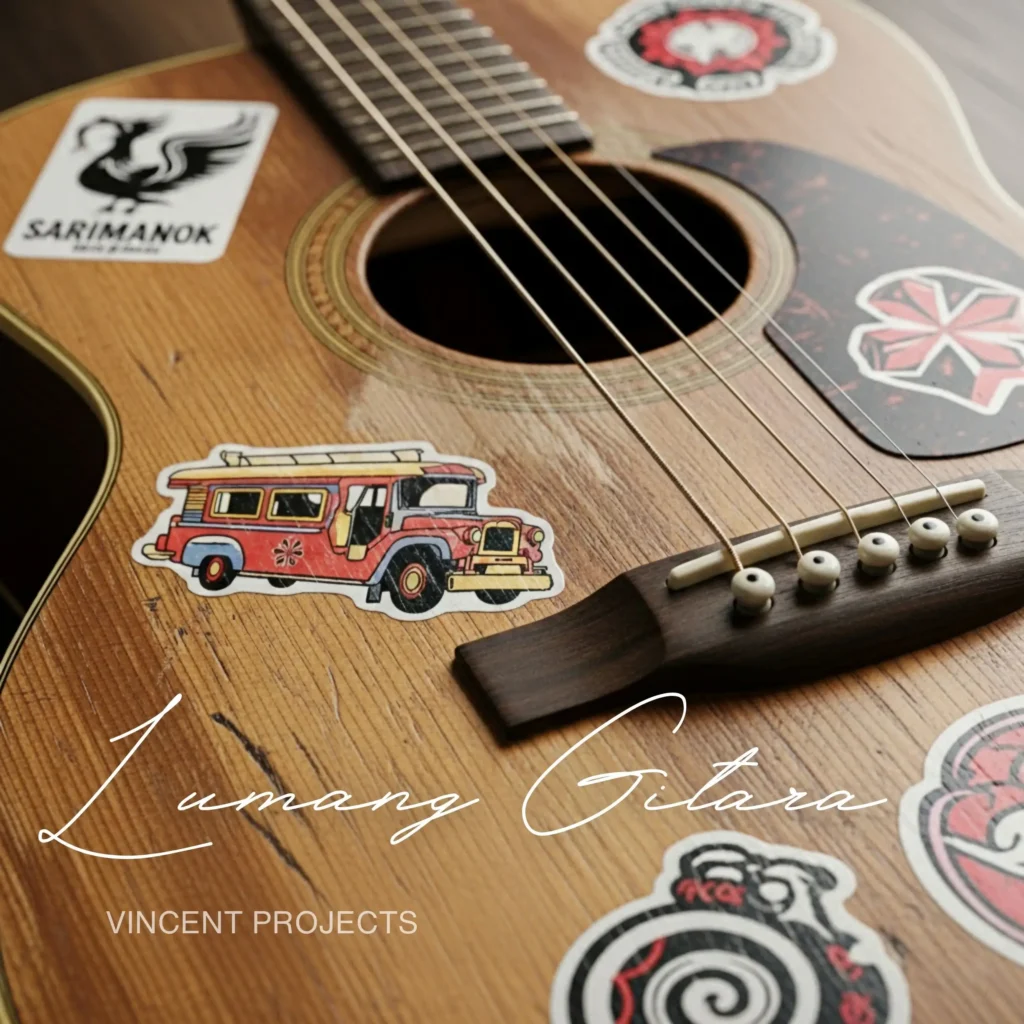
Vincent Projects “Lumang Gitara” Introduces Kundiman with AI

Let me ask a question that has been bugging my mind lately. Can I or anyone who calls themselves, “purist” really accept AI in music? Let Vincent Projects’ newest album, “Lumang Gitara,” make a case for that. Vincent Projects is an indie music producer from San Jose, California, but was born in the Philippines. This album is his take on Kundiman/Soul, that is made with AI. I’m not sure how much AI was put into this album, but we can always keep an open mind to it. Join me as I discuss “Lumang Gitara” in detail. The first song of the album, titled “Lihin ng Bituin”, started with this melancholic guitar lick that gave off an early 2010s acoustic feel. The melodical progression of the track resembled somewhat a song that Jay-R Siaboc would be singing because of its strong and swayful vocal texture alongside the chorus hook. “Habang May Buhay,” which is the second track of this album, has a strong Yeng Constantino influence in it because of the vocal and melodical progression. The song talks about resilience in the face of adversity. It’s evident in phrases like / Sa ilalim ng ulan, ako’y naglalakad / May bitbit na pangarap, di magwawakas / Habang may buhay, may pag-ibig / Habang may liwanag, may daang tatahakin / just to name a few.  I specifically like the melodic guitar riff in the intro for “Paghinga ng Mundo”, it perfectly captures that OPM sound. That “beating around the bush” type of guitar riff is what made it OPM. This track is about finding peace in the middle of life’s chaos. Phrases like / Sandali ng kapayapaan, Dito ko natagpuan / Kahit saan magtungo, Ikaw ang tahanan ko / captured the main theme of the track perfectly.  By the fourth track, “Huni ng Alaala,” I can already sense that most of the tracks in this album have the same song structure progression and the same melodical chorus hook formula. It’s an emerging pattern that created an identity and character in how Vincent Projects produces his songs. The fifth track of this album, titled “Sa Guhit ng Aking Palad”, took a different turn and talked about being patriotic about one’s country regardless of life’s challenges. Phrases like / Sa guhit ng aking palad, Nakasulat ang bukas / Kahit saan dalhin ng hangin, Babalik pa rin sa ’yo, Inang Bayan ko / perfectly set the mood for this melancholic but hopeful love for one’s country. I specifically like the chorus hook on the sixth track of the album titled “Laro ng Araw at Ulan.” It has this teleserye soundtrack feel to it. The hook is catchy. If I were to produce this album, I would make this song the carrier single. “Sandali ng Kapayapaan” tells us that in the midst of chaos, you have to rest and remember that you have someone or something that you can call home. Phrases like / Sandali ng kapayapaan, Dito ko natagpuan / Kahit saan magtungo, Ikaw ang tahanan ko / captured that exact feeling. And to end the album, we have “Yakap ng Katahimikan” that weighs heavily on peace and healing, which is evident in phrases like / Yakap ng katahimikan, Dito ko natagpuan / Dinuduyan ang damdamin sa payapang landas/. Vincent Projects’ Lumang Gitara weighs heavily on artistic expression versus human connection. It connected with me on a personal level because of the melodical progressions and the influence it’s rooted in. I can’t diminish the idea that it was purely created in AI because the thought process, writing style, and lyrics cannot have life without an idea first. It’s an open topic that has divided a lot of artists, but for me, change is inevitable, and we need to adapt to change. A soul is still a soul. Follow Vincent Projects Soundcloud Spotify Promoted Content About the Author

Vincent Projects “Lumang Gitara” Introduces Kundiman with AI Read More »

Audius’ “Trigger” Ricochets Between Desire And Destruction

You can’t go wrong with music that feels like a dual experience: sometimes painful, sometimes unexpectedly bright. Audius carries that exact energy with his latest single “Trigger”. Audius isn’t exactly new in the scene, offering his range from Urban to Amapiano and countless production collaborations with emerging artists. But even with over 20 years of experience, you’ll see an artist who never fails to reinvent himself without losing his own stylistic sound and identity.  First, let’s talk about the bouncy and infectious rhythm on Trigger’s surface, the kind that you’ll want to hear windows down on a spontaneous road trip. It’s playful, bright, with a distinct sound of rush you’ll only get from knowing you’re really down bad. But there’s more than just its catchy hooks and beats. Audius sneaks in lines that echoes betrayal and trauma when you lose your guard. You’ll notice a static in between once you’re done nodding along. Audius’ vocals ricochet off the arrangement, refusing to settle down with a hint of restlessness. Each line points to peak spiraling moment and the endless push and pull. It’s almost like running forward despite knowing you’ll hit the concrete face first because of its aching familiarity. All in all, Audius’ Trigger is the fickle nature of love—it’s desire and destruction tangled in the same loop, the one that will either be a spark or a trigger pulled to tear you wide open.  Follow Audius Globe Facebook Spotify Soundcloud Youtube Instagram Tiktok Promoted Content About the Author

Audius’ “Trigger” Ricochets Between Desire And Destruction Read More »

Memento Mori Comes Across Less Like a Polished Debut and More Like a Manifesto

So, here’s the situation: MEMENTO MORI, the debut album from Esbjerg-based artist L¥AN, isn’t just an album. It’s the soundtrack to a Psychedelic Horror Book they also wrote. Yes, really. On paper, that sounds pretentious. In practice? It’s surprisingly compelling. Recorded in a small apartment on what sounds like the barest of setups, MEMENTO MORI comes across less like a polished debut and more like a manifesto. It wants you to know who L¥AN is, what they’ve been through, and why their music matters. Sometimes that level of seriousness can sink a record. Here, it just about floats. The opening track, “SUN GOES DOWN”, wastes no time telling you what kind of album this is going to be. The production is vast, ominous, and borderline overblown; like someone took a church organ, a funeral procession, and a blockbuster movie trailer, and decided, “Yes, this is how we start.” It’s cinematic to the point of absurdity, but that’s also why it works. L¥AN doesn’t ease you in; they set the tone with all the subtlety of a hammer drop. And oddly, it’s refreshing. Too many debut albums stumble out of the gate, trying to be palatable. This one doesn’t care if you’re comfortable. It wants to announce itself, loudly, dramatically, and without apology. By the time you reach “VICTORY LAP,” though, you’re reminded: this is still a debut. The braggadocio is there, but it doesn’t land with the same conviction as the opener. The chopped-up samples feel more “inspired by” than groundbreaking, and the verses, while spirited, don’t entirely escape a sense of déjà vu. It’s not bad; it’s competent, even fun, but it highlights the tension running through MEMENTO MORI: ambition versus execution. You can hear what L¥AN wants to achieve, even when the track doesn’t quite get there. Another highlight comes in “NEED YOU NOW,” and suddenly the atmosphere shifts. Gone is the bombast, replaced with something raw and vulnerable. The track is heavy with longing, and it feels lived-in rather than performed. What makes it really click is the feature from Kayla, whose clean, soaring delivery slices through the mix like a ray of light. Her presence doesn’t just complement L¥AN’s, it reframes the song entirely, turning what could have been a one-note confession into a dialogue, almost a tug-of-war. For the first time, the album starts to breathe. It stops sounding like homage and starts sounding like someone laying themselves bare. The middle stretch of the record pushes into darker territory. “BLOOD ON YOUR HANDS” is stripped down to moody piano lines and guilt-soaked lyrics, like an internal monologue caught on tape. It’s tense, uneasy, and deeply personal, with just enough restraint to keep it from collapsing under its own melancholy. Then, without warning, “JIGSAW FALLING INTO PLACE” shifts the energy entirely; an acoustic-led track that dials up the tempo, restless where its predecessor was resigned. That jump might feel jarring on first listen, but in context, it makes sense. This is an album about fragmentation, about piecing yourself together after you’ve broken apart. The unevenness isn’t a flaw, it’s the point. The undisputed highlight arrives with “ONE STEP TOO FAR.” Everything comes together here: sparse but haunting percussion, L¥AN delivering their sharpest vocal performance yet, and a guest spot from Ariana Calaeno that transforms the song into something chilling. Her vocals don’t just decorate the track; they haunt it, weaving in and out like a specter. It’s eerie, it’s unforgettable, and it’s the one song where L¥AN fully steps out of the shadow of their influences. This is the track that proves what they’re capable of when the vision clicks into place. Finally, there’s “REACH ACROSS THE SKY.” After the intensity and fragmentation of the middle, it feels like a release. The production swells with a brightness that doesn’t erase the heaviness of the earlier songs but carries it forward. There’s no false triumph here, no neat resolution tied up with a bow. Instead, it feels like survival; fragile, hard-won, but real. And that’s what makes it the perfect closer. It doesn’t promise that everything is fine now. It promises that things will keep moving, and sometimes, that’s enough. Here’s the honest part: MEMENTO MORI is messy. It leans heavily on its influences, it risks over-seriousness, and it occasionally drags in its own ambition. But it’s also alive, and more importantly, it’s memorable. The best moments are gripping enough to make the flaws feel more like growing pains than failures. For a debut, that’s impressive. This isn’t a polished “industry product;” it’s a personal statement stitched together with what resources L¥AN had. And while it doesn’t always escape the shadow of the artists who clearly shaped it, it points toward a voice strong enough to one day stand on its own.  Follow L¥AN Globe Facebook Youtube Instagram Tiktok Music Promoted Content About the Author

Memento Mori Comes Across Less Like a Polished Debut and More Like a Manifesto Read More »

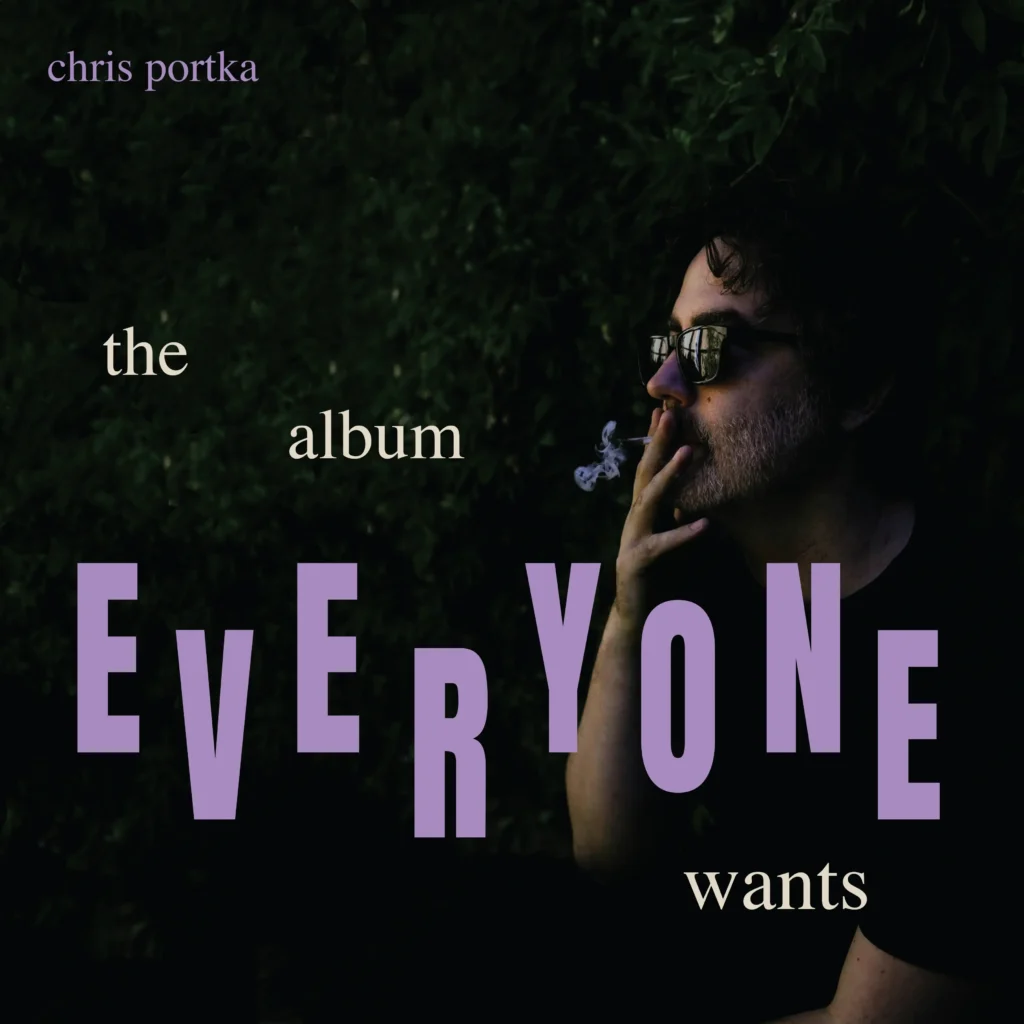
This Is in Fact the Album Everyone Wants: Messy, Collaborative, Equal Parts Heartfelt and Absurd

Chris Portka has named his record The Album Everyone Wants. Which is a bold move. Most people don’t want any album at all. Most people want, I don’t know, a sandwich, or functioning public transit. But Portka is nothing if not audacious, and it fits: this is the most collaborative, ambitious, and frankly bafflingly sincere thing he’s made yet. Recorded partly in the hallowed halls of Sear Sound in New York and partly in a little Oakland bunker, the album is an 11-track patchwork quilt stitched from four Portka originals and a handful of covers, all of which pull you into a strange headspace where indie rock, pedal steel country, and tripped-out psych swirl together like three people trying to steer the same shopping cart. The record kicks off with “She Looks So Good Tonight,” which is both the most straightforward love song on the album and also slightly terrifying. “The grace in her eyes is knives to my spine,” Portka sings, which, yeah, is technically romantic but also sounds like a line you’d find carved into a desk in detention. The song is earnest but crooked, and that’s Portka’s whole deal: he gives you beauty, then slips something sharp under the surface. “Fun in the Summer” is where things start to melt. It’s a driving song, but instead of the breezy freedom of summer anthems, Portka gives us lines like: “the flames are melting the skin off my face / and the love that shines through it.” This isn’t carefree nostalgia; it’s joy on the brink of combustion, like someone set a Beach Boys record on fire and then tried to play it anyway. Across the record, Portka’s lyrics sketch a universe where the mundane collides with the cosmic. On “Song for Carol,” he writes, “all days are lost, all days are free / we live a perpetual dream.” The sentiment could veer into cliché if it weren’t delivered with the cracked honesty of someone who actually believes it. And in “The Observer,” maybe the album’s emotional centerpiece, he paints himself as a man standing outside of time: “I’m just an observer / the one in the corner.” It’s almost self-deprecating; like he knows he’s a weirdo, but also deeply moving. That’s what Portka does best: he writes like someone both enthralled by and alienated from his own life. He’s wide-eyed enough to still get floored by the beauty of a sunset or a lover’s gaze, but self-aware enough to immediately trip over the absurdity of trying to put that feeling into words. It’s not irony (he doesn’t have the detachment for that) and it’s not parody (he cares too much). It’s sincerity, but sincerity filtered through a brain that can’t help but get snagged on the weirdness of being alive. A line like “the grace in her eyes is knives to my spine” isn’t reaching for cleverness; it’s the natural way his mind chews up raw feeling and spits it back out, half-beautiful, half-terrifying. And crucially, this isn’t just Portka strumming in the dark; it’s a full-blown conspiracy. The bass and synths anchor the chaos, the drums keep everything from dissolving into goo, pedal steel sneaks in moments of twangy grace, and then there’s the “beardwail” guitar, which really does sound like a beard screaming into the night. Together they make the record lush, loose, and perpetually one wrong note from collapse. That volatility is the point; it feels alive, unpredictable, more like a late-night séance than a studio session. You don’t listen to this album for precision; you listen because it teeters at the edge of falling apart, and in that fragility, it somehow becomes stronger. There’s also the covers, spanning from Syd Barrett, Skip Spence, even Tennessee Whiskey. But they don’t function as the “big hits” of the record. They’re more like postcards Portka found on the side of the road and taped into his scrapbook. And if the covers give you context, the originals are where the emotional weight lives. By the time you hit the closing track “Molly,” you realize the album has pulled off something rare: it’s a collection of songs that feel stitched together from different realities, yet still cohere into one voice. So is this really “the album everyone wants”? Of course not. Not everyone wants a song where the chorus is basically just “fun in the summer” repeated until it starts to sound like a curse. Not everyone wants to hear someone compare love to being stabbed in the spine. But that’s the joke. And like the best jokes, there’s a truth underneath it. This is in fact The Album Everyone Wants: messy, collaborative, equal parts heartfelt and absurd. It’s a love letter to music itself; to ballads, to weirdos, to cosmic jokes that land harder than they should. And if you’re the kind of person who finds sincerity more moving when it’s delivered with a cracked smile and a Mellotron drone, then maybe this really is the album you’ve been waiting for.  Stream this on Bandcamp:cportka.bandcamp.com/album/the-album-everyone-wants Physical album only on Seek Collective at:seekcollective.com/products/vinyl-the-album-everyone-wants Follow Chris Portka Instagram Twitter Youtube Threads Tiktok Promoted Content About the Author

This Is in Fact the Album Everyone Wants: Messy, Collaborative, Equal Parts Heartfelt and Absurd Read More »

Jordan Corey’s The Tunnel + The Light Is an Album for Liminal Spaces

Some albums arrive with a quiet confidence, and some storm into the room, waving their arms, demanding you listen. Jordan’s The Tunnel + The Light somehow does both. It isn’t shouting, but it radiates urgency, like someone leaning across the table at 2 a.m. to tell you a story they have to get out, because if they don’t, they’ll drown. Written while caring for her mother through cancer, it’s Jordan Corey’s most personal work to date and annoyingly enough, it might also be her best. What immediately distinguishes this album is its fixation on transition. Not the tidy, Hollywood version of “coming of age,” but the messier suspension between grief and healing, between who you were and who you’re clawing your way into becoming. It’s a record that doesn’t just acknowledge liminality. Rather, it inhabits it. Sonically, that comes through in the humid wash of indie electronica and alt-R&B, textures that feel tropical yet glitch-touched, like someone plugged a synth rack into a generator at the edge of the sea. The result is lush, sticky, cathartic, and strangely hopeful. If you come in looking for detached irony or TikTok-ready cleverness, you’re in the wrong place. Jordan traffics in sincerity, that rarest of pop commodities, and she leans into it with unselfconscious courage. There’s been plenty of talk about how this album balances groove and vulnerability, but the more interesting question is how. The production feels like Purity Ring if they ever stepped outside into actual sunlight: warm basslines sliding beneath ethereal vocal stacks, percussion flickering like neon bouncing off puddles. Imagine Little Dragon’s playful experimentation softened with Raveena’s tropical dreaminess, shaken into one cocktail. By rights, it shouldn’t work. But it does, and it works precisely because Jordan refuses to choose between alienness and intimacy, sunlight and shadow. The opener, “Friend Like Me,” makes that balancing act clear. It doesn’t ease you in—it yanks. The beats have jagged edges, immediately recalling K.Flay’s more abrasive pop experiments. On first listen, the rhythm feels breezy, almost flirty, but pay attention and the lyrics snap into focus: longing, loneliness, the exhaustion of wanting someone who never quite shows up. It’s a bait-and-switch pop track, seducing you with danceability before hitting you with emotional weight. The brilliance is that Jordan never lets the groove erase the vulnerability—she makes them walk hand in hand, so you find yourself swaying and wincing at the same time. If “Friend Like Me” is the warning shot, “Somethin Somethin” is the strut. It’s the showboat track and it knows it. From the moment that bassline kicks in; a bassline so slinky and infectious it might as well have been designed in a secret underground lab to irritate your neighbors, you know you’re in big territory. The song could slot comfortably alongside Demon Days-era Gorillaz, all funk and swagger with a whiff of menace. Yet Jordan keeps it grounded. Her delivery is conspiratorial, whisper-intimate, like she’s letting you in on a secret even as the production swaggers down the block in mirrored shades. It’s the rare song that proves groove and intimacy aren’t opposites—they’re accelerants. The album’s heart beats most strongly in “Try Me,” “Feel Me,” and “Go to Bed.” These tracks lean heavily into R&B terrain, evoking the velvety intimacy of Yuna or Raveena. But Jordan isn’t content to stop there. She overlays a colder, crystalline edge that calls Purity Ring to mind: synths shimmer like glass, beats flicker with almost sterile precision, while her vocals bring warmth back into the mix. It’s this tension of lush tropicality against icy detachment that makes them feel so alive. They’re love songs written in the middle of a storm: fragile, desperate, beautiful, and just unsettling enough to keep you awake. By contrast, “The Story” emerges as a sun-drenched reprieve. Funky bassline? Check. Breezy melodies? Check. Percussion that splits the difference between the precision of FINNEAS and the loose, playful touch of FKJ? Absolutely. It feels like golden hour bottled into four minutes; a bop that radiates warmth even as you sense it can’t last. Coming after the record’s emotional turbulence, it lands like a deep breath, a chance to unclench your fists. Jordan is flexing here, sure, but not with arrogance. It’s a flex of permission: the freedom to feel joy in the middle of grief. The closer, “Earthbound,” isn’t a fireworks finale but a benediction. Its tropical undertones ripple softly beneath vocals that recall Little Dragon’s knack for balancing alienness and tenderness. This is less about resolution than presence. It lands gently, like a hand on your shoulder, reminding you that closure doesn’t always arrive with thunderclaps. Sometimes it comes quietly, as a soft goodbye that lingers. What ultimately sets The Tunnel + The Light apart is that it doesn’t just sound good; it feels lived-in. Every lyric seems tested against actual grief, actual care, actual love. The result is music that functions both as escapism and as grounding. Jordan isn’t reinventing the wheel here, and she doesn’t need to. What she’s doing instead is threading the needle between extremes: groove and vulnerability, tropical warmth and icy glitch, sincerity and experimentation. Where Little Dragon might drift too far into the esoteric and Purity Ring too far into the sterile, Jordan holds the middle with warmth. In the end, Jordan Corey’s The Tunnel + The Light is an album for liminal spaces. It’s music for late-night drives when the freeway feels infinite, for dawn train rides when the world is too quiet, for those moments when you can’t tell if you’re falling apart or coming together. It insists that maybe both are true, and maybe that’s okay. It’s a record that doesn’t just accompany you through transition; it reminds you that transition is living. Follow Jordan Corey Instagram Tiktok Spotify Promoted Content About the Author


Jordan Corey’s The Tunnel + The Light Is an Album for Liminal Spaces Read More »