
loader image

New Music

Ratyński’s “Surprise Stopover” Moves Between Strings and Silence

Sometimes, music hits harder when it has no pretense, no disguise, bonus if it’s not afraid to fill the room with stories without uttering a single word. Ratyński’s “Surprise Stopover” does exactly that, and it’s less like an EP but more of threads weaved together with nothing but strings and silence in mind. Surprise Stopover is the kind of curation that is so much better than what you had in mind. Each track pivots on layered perspectives: how you see the world, its people, and the mundane, trivial stuff of everyday. With only four parts in total, it’s indeed a surprise stopover among the pool of music in today’s scene that talks too much but says nothing at all. Your Screen is Cracked opens the EP with a disorienting feeling. It doesn’t really sound dark or threatening in a sense but the unsettling, jagged edge pokes you once in a while as Ratyński’s fingers hit the strings. There’s this unpredictable strokes, thriving in an unfamiliar progression with pizzicato, harmonics, bass trills, and arpeggios. What you’ll get from this piece is less for entertainment but more of a fragmentation. Each note extends like an overused, cracked smartphone screen, mirroring the cognitive difficulty to understand the world. Whatever Your Screen is Cracked established is quickly countered by The Rising. At its core, there’s sunlit brightness in each note. You’ll also hear a sense of grounded layers from summoning a Beatlesque charm where playfulness and precision exists in the same space. It’s light, capturing that exact same feeling of walking through uncertainty and never-ending change without losing the optimism and child-like hopefulness. Firestarter stays true to its name, inviting you to its depth with verse-chorus structure from its folk sensibilities and early-music undertones. Despite its simplicity, the heavy, characteristic arpeggios sets the track’s tone and weight in a darker, sharper pull.  The Rising (Reprise) wraps the whole curation neatly without washing down the tension and perplexities of the tracks before it. And when I say neatly, it’s not exactly in a clean, polished way. It’s the type of closure that ties the threads together, letting it flow in restraint and resolution.  The way Ratyński stretched the strings of a classical guitar to capture folk’s texture and post rock sensibilities feels intimate and cinematic, flowing naturally all throughout the record. To say that it’s impressive might be an understatement, but it really shows when a musician is genuine with their work.  Surprise Stopover is such a refreshing take where everyone’s fixated on virality and being too relatable. It’s like locking a musician with just an old guitar and mic expecting something casual and half-baked, but then he casually drops complete, meaningful pieces. Overall, Ratyński’s Surprise Stopover is brief yet it feels fuller once you lean close to its contrasts and complexities. And by the time you reach the last minute, you’ll know this stopover wanted you to stay a little longer. Follow Ratyński Youtube Instagram Facebook Globe Promoted Content About the Author

Ratyński’s “Surprise Stopover” Moves Between Strings and Silence Read More »

The Charm of Dan Rose’s To the Bitter End Lies in the Way It Refuses to Smooth Over Imperfections

There’s a certain type of folk record that feels less like an album and more like someone cornered you at a bar and started telling you about their week with a battered acoustic guitar as punctuation. Dan Rose’s To The Bitter End falls squarely into that category, and I mean that in the best way possible. The whole thing was recorded in single takes with one microphone, the audio equivalent of refusing to wear makeup to a wedding, and yet it works, because it’s exactly the kind of lo-fi confession that thrives on its cracks. Rose may be Danish, but he’s clearly been doing the homework, because this project has the anxious earnestness of Conor Oberst and the obsessive cataloging of mundane-yet-devastating details you’d expect from The Mountain Goats. The opener We Need Someone To Take Charge sets the tone: blunt, impatient, and deeply human. The guitar sounds like it’s been strummed within an inch of its life, while Rose’s voice stumbles and soars in the same breath. The song reads almost like a political tract written at 2 a.m. on a napkin, but instead of collapsing into cynicism, it doubles down on pleading-type yearning. This is where the Mountain Goats comparison starts to crystallize: it’s not about vocal perfection, it’s about the way a desperate plea can be delivered with the conviction of a sermon. You don’t walk away humming the melody; you walk away remembering the sheer nerve of someone demanding change while clearly trying to convince themselves as much as anyone else. Inspired by a sign in a New York dive bar, Don’t Be An Asshole is Rose at his most wry. The premise is simple: being decent isn’t optional, it’s survival. And yet, Rose pivots from bartending etiquette to environmental collapse in under three minutes, which sounds ridiculous until you realize it’s basically how most of our real conversations about climate go; start with small talk, spiral into existential dread. The lo-fi production makes the guitar feel like it’s rattling against the walls, a barely contained frustration that mirrors the message, then letting the weight of the simplicity asked for hit like a brick. If the previous tracks are Rose pacing around and gesturing wildly, The Bench In The Secret Gardens is him sitting down and sighing. Written about finding quiet in one of New York’s hidden green spaces, the song is a kind of hopeful lament: yes, the world is on fire, but here’s a bench, here’s a flower, maybe we’re not completely doomed. Hyper-local details turn into an emotional anchor in the best way folk songs do in their core, and one could call it folk minimalism, but it feels more like Rose weaponizing understatement. The performance is hushed but not fragile, like he knows this tiny image can hold the weight of the entire song. Everything Changes On 86th Street is the EP’s most sprawling idea, if not musically then thematically. Rose sings about a street corner in Manhattan with the conviction of someone who’s decided that this particular block contains the whole of human experience. Which, of course it doesn’t, but that’s kind of the point. Rose is showing us that the specific is always universal if you stare at it long enough. The guitar is ragged, the vocal a little raw, but the effect is oddly triumphant: yes, everything changes, even here, even now. The charm of To The Bitter End lies in the way it refuses to smooth over imperfections. Each track feels like it’s been handed to you directly, scrawled in pen, coffee stain included. By leaning into lo-fi honesty, Rose doesn’t just nod to folk traditions; rather, he drags them into the present, pointing out that sincerity is still revolutionary. Follow Dan Rose Globe Instagram Facebook Spotify Youtube Promoted Content About the Author

The Charm of Dan Rose’s To the Bitter End Lies in the Way It Refuses to Smooth Over Imperfections Read More »

The Thing About Jesabel’s “Woman in the Woods” Is That It Resists Being Boxed In

Jesabel’s “Woman in the Woods” is not your standard empowerment single; the kind that gets slapped on a Spotify playlist called “Goddess Energy” and forgotten five minutes later. No, this one’s operating on a different register: it’s part mystical fairytale, part commentary on the nightmare we call society, and part proof that Jesabel would absolutely move into a moss-covered hut if given half the chance. Produced by multi-platinum wizard Zack Burke, the track feels like someone took folk-pop, wrapped it in incense smoke, and handed it to you with the seriousness of a tarot reading. At the center of it all is Jesabel’s archetype: the titular “woman in the woods.” She’s not your Instagram wellness influencer flogging mushroom coffee; she’s the mirror, the guide, the torchbearer of truth. The kind of woman who doesn’t care about your botox subscription plan or the latest TikTok face filter because she’s too busy communing with the dirt under her fingernails. Naturally, this makes her terrifying to polite society, because nothing is scarier to us than a woman who refuses to play along. And here’s where Jesabel makes it fun: she doesn’t present this figure as just a fantasy, but as essential. The woman in the woods isn’t waiting for your approval; she’ll burn the old system down while you’re still googling “what does shadow work mean?” The song doesn’t preach empowerment in the corporate sense, it reminds you that empowerment might mean dismantling the whole circus. Sonically, it’s all exactly where it needs to be. Dreamy ambience swells underneath Jesabel’s vocals, which are clear, emotive, and not trying too hard; thank God. Too many songs about mystical femininity end up sounding like someone whispering affirmations over whale noises. Here, the arrangement has patience. It lets the silence carry weight. The whole thing moves like mist in a forest: you can’t grab it, but you’re inside it before you realize. And mind you, Jesabel doesn’t just sing about this archetype. Rather, she lives it like a method actor with Wi-Fi. She decamped to Sintra, Portugal to record the visuals for this track, holed up in a literal cottage on a mountain like the protagonist of a gothic Instagram story. The video captures both the forest and her living inside it, blurring the line between documentary and fairytale. It’s not just aesthetic; it’s commitment. The thing about Jesabel’s “Woman in the Woods” is that it resists being boxed in. It’s part folk, part pop, part ambient, and all intention. Jesabel’s not trying to give you genre; she’s giving you story. And that’s the appeal: she’s not just making singles, she’s making modern myths.  Ultimately, this track is proof that music doesn’t have to be disposable or algorithm-friendly to matter. It can still work as myth, ritual, or mirror. And Jesabel? She’s not just writing songs. She’s building storybooks, and if you’re not careful, you’ll find yourself wandering into the forest with her. Which, let’s be honest, is probably what she wanted all along. Follow Jesabel Globe Facebook Spotify Youtube Instagram Soundcloud Promoted Content About the Author

The Thing About Jesabel’s “Woman in the Woods” Is That It Resists Being Boxed In Read More »

Haus of Sound Is Here to Light the Fire on Campfire Stories

Campfire Stories by Haus of Sound isn’t your standard “we jammed in the garage until we found our sound” narrative. Haus of Sound started as a cover band, which usually means doomed-to-mediocrity bar sets and endless requests for “Free Bird.” But instead of collapsing into irrelevance, they somehow converted that origin story into something interesting: a Frankenstein of influences glued together with operatic female vocals, nu-metal angst, synth theatrics, and enough emo sincerity to make a Hot Topic cashier cry. They went to Robert Lang Studios in Seattle to record it, which, if you don’t know, is one of those “real rock history happened here” places. And yes, they tried everything. Industrial stompers, nu-metal grooves, power ballads, ska-punk interludes. It’s ambitious to the point of absurdity, and that’s what makes it fascinating. Take the opening move, “Houdini (Campfire Story).” It’s not even really a song; it’s an interlude. A bit of narration, a bit of atmosphere, a flicker of firelight before the storm. It tells you up front that this isn’t going to be a conventional record; it’s an attempt at world-building. Then “Cold Shoulder” slams the door open with industrial crunch. Think Rob Zombie and Nine Inch Nails, but someone thought to put actual opera vocals on top. It sounds like two genres that should reject each other violently, but instead they fuse into this gleefully sinister anthem. “Pain in My Eyes” is more personal, less theatrical, but still carried by that same refusal to tone anything down. It’s got that confessional emo quality that makes you feel like you’re trespassing on someone’s diary. And then you get “Legend of Hollow,” which is Muse if Muse had the self-awareness to lean into their Dungeons & Dragons energy instead of pretending they’re about geopolitics. It gallops forward with pomp and circumstance, crashes into a big synth outro, and without a breath we’re in “Bloodbath”, a gothic ballad so melodramatic you’d think it was auditioning for the soundtrack to a vampire opera. And then there’s “Anxiety,” a ska/punk anthem that feels like someone swapped the CD halfway through. It’s absurd, jarring, and completely deliberate. And somehow, it works. It’s the musical equivalent of throwing cold water in your face mid-album. Of course, the band can’t resist storytelling for its own sake. “Mayor Butch (Campfire Story)” introduces “Butch’s Song,” a weird, theatrical character sketch that suggests Haus of Sound secretly wants to write a rock musical. And honestly? They probably should. They’re clearly good at it. The whole thing winds back down with another campfire interlude, which means the album ends not with a bang, not with a cathartic scream, but with a quiet flicker and fade. It’s not resolution; it’s an invitation to sit with the weirdness. Which, honestly, is the correct choice. Here’s the thing: Campfire Stories is not perfect. It sprawls, it indulges itself, it leaps genres with all the grace of a caffeinated toddler. But that’s exactly what makes it compelling. Too many debut albums play it safe; this one doesn’t even seem to know where “safe” is. And thank God for that. The operatic vocals tie the chaos together, the stories give the tracks a thematic spine, and the sheer nerve of it all is what makes it work. If you’re into the dark theatricality of Muse, the industrial crunch of Rammstein, the nu-metal heart-on-sleeve drama of Linkin Park, or just the idea of someone throwing all of that into a cauldron and then accidentally writing a ska song in the middle, Campfire Stories is worth your time. Haus of Sound aren’t here to give you a polished debut. They’re here to light the fire, tell you some wild stories, and dare you to follow them into the shadows.  Follow Haus of Sound Instagram Facebook Youtube Tiktok Spotify Promoted Content About the Author

Haus of Sound Is Here to Light the Fire on Campfire Stories Read More »

Beauty of the Wisdom Is Not Reinventing Rock, but It Is Fun

Cover albums are always weird little artifacts. They’re not quite nostalgia, not quite reinvention, but something awkwardly in between, like borrowing someone else’s clothes and hoping people compliment you on your taste. Weezer’s infamous Teal Album proved that if you lean hard enough into karaoke-level sincerity, you can make an entire generation simultaneously roll their eyes and say, “Fine, that was fun.” Teenbird’s second record, Beauty of the Wisdom, is very much in that camp, except instead of sounding like a dad band locked in a Guitar Center after hours, it feels like the kind of band James Gunn would casually shove into Peacemaker to soundtrack John Cena beating someone up with a trash can. This is a ten-track set of songs Teenbird openly loves, performed with a mix of reverence, recklessness, and garage-band scrappiness. Founder Mário Hailer Jr. describes Teenbird as a project free of “commercial pressure or filters,” and that independence really shows here. They’re not chasing perfect fidelity or re-engineering these classics for TikTok edits. They’re just blasting through the rock canon they adore, flaws and all. The opener, “Beauty of the Wisdom,” is the lone “original” cut; or rather, a reworking of one of their own songs from an earlier release. If that sounds like cheating, it’s actually kind of charming: before diving into nine tributes, Teenbird reminds you they do, in fact, exist outside of karaoke. The track itself lands somewhere between mid-period Foo Fighters and the last song of the night at your favorite dive, loud and heartfelt, with no concern for subtlety. Then comes the Everest: Journey’s “Don’t Stop Believin’.” And here’s the thing, everyone covers this song. Weddings, karaoke nights, that one uncle with an acoustic guitar. But Teenbird leans into the corniness rather than trying to “out-epic” Journey. Their version is rougher, noisier, but it carries that strange sincerity that transforms cliché into catharsis. It’s less Steve Perry’s operatic reach and more a group of friends yelling together at last call. “When It’s Done” is a moodier pivot, taking cues from post-punk rather than pure arena rock. The bones of the original (a deep cut with a cult following) are still intact, but Teenbird drags it into Joy Division territory, giving the bass line teeth and letting the vocals wobble between desperation and defiance. It’s one of the few tracks where they sound like they’re trying to make the song “theirs,” and it works. Their cover of “Watch Me Fly” feels like the album’s sleeper hit. Originally a glossy, optimistic rocker, Teenbird dials it down just enough to let the chorus soar without feeling saccharine. It’s the kind of performance where you can hear how much they wish they’d written it themselves. “Staying in Black,” yes, is their AC/DC moment. And no, the title’s not a typo. It’s exactly what you think: a tongue-in-cheek tweak of “Back in Black,” played almost straight but with enough winks to let you know they’re in on the joke. The vocals don’t quite rasp like Brian Johnson, but the guitars hit the pocket, and it’s the kind of cover that dares you not to grin. Iron Maiden’s “Caught Somewhere in Time” is probably the boldest choice here. Maiden’s version is a seven-minute gallop through sci-fi grandeur; Teenbird’s is shorter, scrappier, but weirdly endearing, like hearing your cousin’s band have a go at prog-metal. It’s not perfect; the tempo wobbles, the vocals don’t go full operatic, but it captures the thrill of trying. Which, honestly, is the point. “Battle Hymn” lands as the emotional centerpiece. Unlike “Don’t Stop Believin’” or “Staying in Black,” this one is played almost entirely straight. Teenbird’s version treats the original with almost religious reverence, layering guitars and vocals until it sounds like a rallying cry. And then there’s the overarching vibe: this whole record feels like if the Peacemaker soundtrack bands (Wig Wam, Quireboys, Hanoi Rocks) got handed Weezer’s Teal Album and told, “Make this louder, make it sillier, but also mean it.” The result is both hilarious and kind of brilliant. The joy of Beauty of the Wisdom isn’t that every cover is perfect; they’re not. It’s that Teenbird performs them with a mix of devotion and recklessness that makes you forget perfection was ever the point. By the time the album ends, you’re not marveling at their technical chops or nitpicking the fidelity to the originals. You’re remembering why you fell in love with these songs in the first place. Teenbird taps into the communal, ridiculous joy of rock ’n’ roll: loud guitars, overblown choruses, voices straining to hit impossible notes. Beauty of the Wisdom is not going to change the world. It’s not reinventing rock. But it is fun; fun in the way shouting along to “Don’t Stop Believin’” at 1 a.m. is fun, fun in the way AC/DC riffs will never stop being fun, fun in the way cover albums only work when the band believes every word. And Teenbird clearly does. In the end, this is less an album than a mixtape from a friend who really, really wants you to understand why rock still matters to them. And sometimes, that’s enough.  Follow Teenbird Instagram Youtube Facebook Globe Spotify Promoted Content About the Author

Beauty of the Wisdom Is Not Reinventing Rock, but It Is Fun Read More »

All in All, Gothic Aesthetic’s Tales of the Dark Forest Is Messy, Melodramatic, and Sometimes Absurd

Listening to Gothic Aesthetic’s debut Tales of the Dark Forest is like being handed a script to a play you didn’t know you’d been cast in. Every track feels like stage directions written in eyeliner; every riff is a velvet curtain being yanked open by someone who definitely owns a candelabra. It is gothic metal turned full-on theatre, complete with cursed brides, ravens, ghost kings, and choirs that probably live rent-free inside a cathedral somewhere. And here’s the thing: it works. It shouldn’t, by all laws of taste and reason it should collapse under the sheer weight of melodrama, but it doesn’t. This is music designed for listeners who gravitate toward bands like Type O Negative, Moonspell, or Powerwolf; the difference is that Gothic Aesthetic don’t just wallow in the gloom or revel in the power-fantasy side of things. Instead, they aim for something more cinematic and narrative. Every track feels less like a “song” and more like a ritual; a chapter in some cursed fairytale where the characters are doomed, but they’re going to sing their hearts out anyway. That narrative focus makes Tales of the Dark Forest feel less like a collection of gothic metal tropes and more like a staged production with an actual arc. The album opens with “Witch,” which sets the tone immediately: ritualistic chants, guitars so heavy you can practically see the fog machine being wheeled out. “The Raven” doubles down, riffing on Poe in a way that’s so literal it ought to be embarrassing, but because the delivery is dead serious, it somehow lands as both camp and conviction. “Blood of the Moon” and “Iron Mask” lean into galloping riffs that feel like they belong in the cutscenes of a forgotten PlayStation 2 RPG, right down to the overly dramatic narration. The centerpiece is “Bride of Shadows.” It’s the kind of track that makes you realize Gothic Aesthetic know exactly what they’re doing: choirs, tragic vows, a wedding march that’s less about matrimony and more about apocalypse. It should be ridiculous, and it is, but because it’s carried off with total sincerity, it becomes weirdly affecting. That’s the trick of this album: what could easily feel like a parody of gothic tropes instead feels like ritualized storytelling. Then comes the album’s running joke: “Final Bell.” By every rule of narrative logic, this should be the closer. The bell tolls, the lights dim, the curtain falls. But Gothic Aesthetic, in their infinite dramatic wisdom, decide otherwise. The so-called Final Bell rings, then the album just keeps going. Two more tracks roll out, like an encore you didn’t ask for but now have to process. And somehow, this refusal to end where it “should” end makes the record feel even more theatrical; because of course the gothic tale doesn’t stop at the final bell. There’s always another act. Those acts, “The Damned King” and “The Marionette”; they take the energy into quieter, more mournful places. Less spectacle, more dread. They play like epilogues, the ashes after the bonfire, and by the time the record finally does end, you realize the excess was part of the point. The forest doesn’t end where you expect it to; it keeps pulling you deeper. And that’s the genius of Tales of the Dark Forest. Gothic Aesthetic take the tropes of bands like Type O Negative or Powerwolf, from the romance, the theatricality, the obsession with death and ritual; and sharpen them into something even more overtly cinematic. They don’t just sing about ravens and cursed weddings; they build the stage, light the torches, and force you to sit through the ceremony. It’s uncanny at times, almost like The Velvet Sundown of metal: too perfectly gothic, too committed to the bit, like an AI generator that accidentally produced something great. But because the band never winks, never steps out of character, the uncanny becomes compelling. All in all,Gothic Aesthetic’s Tales of the Dark Forest is messy, melodramatic, and sometimes absurd, but it’s also atmospheric, deeply committed, and oddly unforgettable. It is less an album and more a ritual; a dark fairytale staged in ten acts where every track insists on its own gravity. It may feel uncanny, like metal written by a gothic generator, but it’s performed with such sincerity that it becomes impossible to dismiss. Gothic Aesthetic invite you into their ritual, and if you’re willing to play along, the spell lingers long after the final bell tolls.  Follow Gothic Aesthetic Globe Facebook Spotify Instagram Promoted Content About the Author

All in All, Gothic Aesthetic’s Tales of the Dark Forest Is Messy, Melodramatic, and Sometimes Absurd Read More »

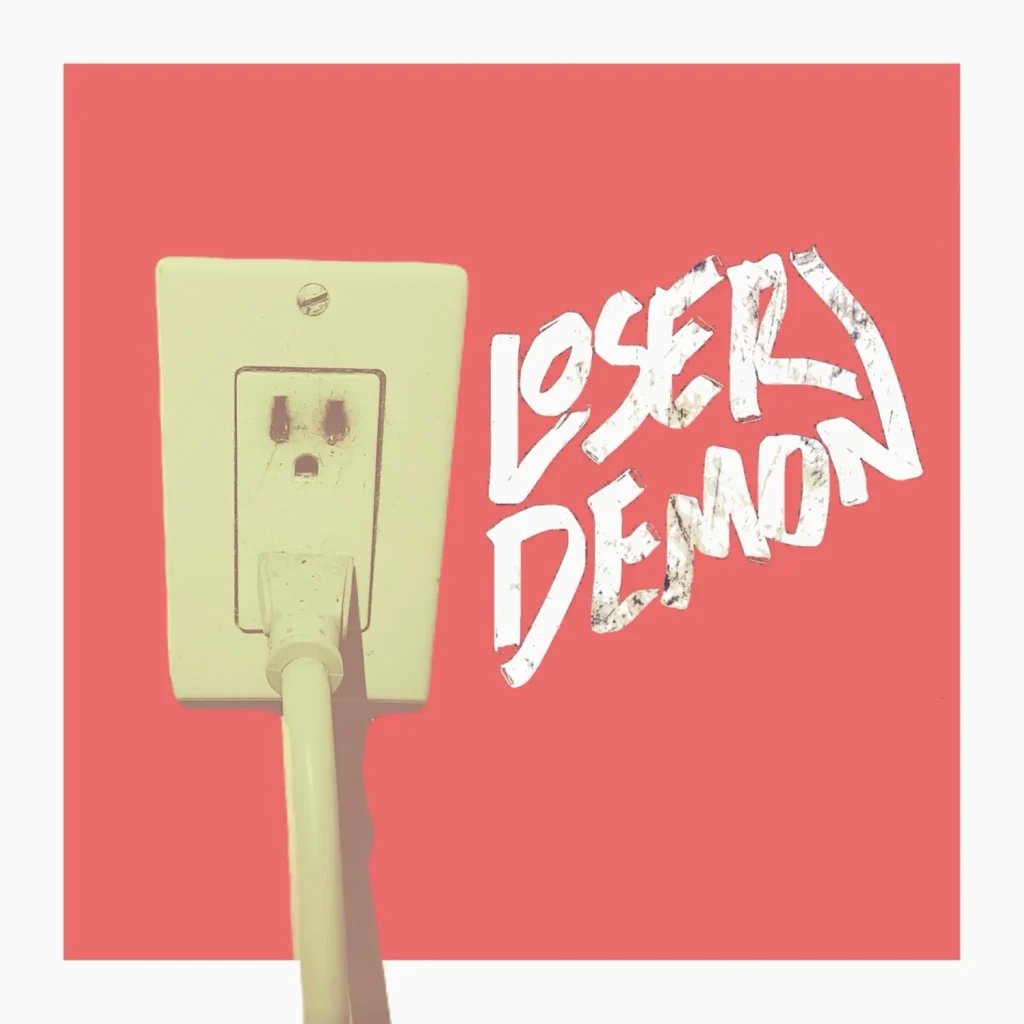
On EP2, Loser Demon Are Showing You the Sparks as They Hammer Their Sound Into Shape

Here’s the thing about sophomore releases: most of the time, they’re either a desperate attempt to copy what worked the first time or a wild overcorrection that makes you wonder if the band resents you for liking their debut. Loser Demon’s EP2 does neither. Instead, it feels like a band realizing they can actually stretch, flex, and throw a few wild punches without losing their footing. It’s scrappy, ambitious, and most importantly: it sounds like they’re enjoying the fight. Production-wise, EP2 is a major step up. The debut hinted at ideas; this one builds them out properly, layering grit and color without sanding off the rough edges. It’s power-pop smashed against post-punk walls, stitched with hints of classic bombast that make you go, “Oh right, this could actually fill a room instead of just a bedroom.” And the best part? The personality hasn’t been sacrificed in the process. Take opener “Holding Ground.” Imagine if Sturgill Simpson’s cosmic outlaw vibes got hijacked by Foxy Shazam’s carnival-rock bravado. That’s the energy here. The chorus doesn’t just “pop”; it practically kicks down the door in sequined boots. As an opener, it’s audacious in all the right ways: not subtle, not apologetic, and absolutely not background music. Then there’s “Two Times,” the closest thing here to a sugar-coated pop single. It’s got the sleek immediacy of Neon Trees’ Habits-era bangers, but with a grit that makes it feel less like radio pandering and more like someone smuggling candy into a mosh pit. The hook is ridiculous in the best way; sticky enough to be irritating if it weren’t so fun to shout along with. “Reliance” takes a darker turn, leaning into heavier guitars and urgent percussion that feel like they’ve been pulled from an alternate timeline where Enter Shikari decided to play it straight for once. The tension is baked into the song’s DNA: lyrics about self-preservation clashing with instrumentals that sound like they’re threatening to spin out at any second. It’s the EP’s most visceral track, proof that Loser Demon aren’t afraid to dip their hands into sharper, louder territory. Closer “Living in the Margins” is where the band’s ambition really shows. This is their “let’s be cinematic” moment, channeling that Heroes-era Bowie melancholia but dragging it through the neon haze of something like The 1975’s About You. It’s a track that lingers, less about catharsis and more about haunting. As a closer, it doesn’t send you off with fireworks; it leaves you standing in the aftermath, humming, wondering if you should hit replay or just sit in silence for a while. What makes EP2 work is that it understands contradiction as a feature, not a flaw. It’s loud but thoughtful, polished but scrappy, referential but not derivative. You can hear the lineage, from the glam eccentricities, the power-pop gloss, the post-punk twitch; yet it never collapses into pastiche. Instead, Loser Demon grab those threads, knot them into something messy, and wear it proudly like a frayed jacket. And yes, it’s messy. Sometimes choruses threaten to spill out of their frames; sometimes the production flirts with chaos. But that’s the point. Loser Demon aren’t trying to hand you a neat, sterile listening experience. They’re showing you the sparks as they hammer their sound into shape. If the first EP was a promising sketch, EP2 is the messy, colorful mural painted over it. It doesn’t pretend to have all the answers, but it has the confidence to ask better questions and the volume to make sure you hear them.  Follow Loser Demon Globe Instagram Spotify Bandcamp Icon-music1 Soundcloud Youtube Promoted Content About the Author

On EP2, Loser Demon Are Showing You the Sparks as They Hammer Their Sound Into Shape Read More »

Love Ghost’s Gas Mask Wedding Is Cathartic, Uncomfortable, and Unforgettable

Every once in a while, a band comes along that doesn’t just write songs; they build confessionals and then dare you to step inside. Love Ghost’s Gas Mask Wedding is one of those albums. It’s raw, often chaotic, occasionally melodramatic, but in a way that feels earned rather than indulgent. The whole thing reads like a messy diary scrawled in Sharpie, smudged by tears and cigarette smoke, yet somehow still legible enough to hurt. This is not an album about neat answers. Rather, it is about putting every unresolved ache on the table, about asking “Am I enough?” until the words lose their shape. And that, frankly, makes it fascinating. The album begins not with a bang, but with something worse: the quiet wreckage after impact. “Car Crash” is sparse, piano-led, and devastatingly direct. It refuses the temptation to cloak pain in noise; instead, it sits there, trembling, staring you down. Devastation doesn’t need to roar; it just needs to exist, unapologetically. And as an opener, it’s a bold flex: here’s our brokenness, deal with it. Next up, “Scrapbook,” a song that sounds like someone actually ripped the pages out of their heart and sang over the paper cuts. The lyrics veer between earnest longing and theatrical self-destruction. “Rip the pages out of my scrapbook heart / All those words that I kept in the dark.” It’s melodramatic, sure, but that’s the point. Memory is melodrama. Nostalgia isn’t subtle, and Love Ghost don’t try to pretend otherwise. Rather, they lean into it, and the result is catharsis you can sing along to. “Fucked Up Feelings” is where the honesty sharpens. “I’m in denial but I’m just like you” hits like a confession muttered into the void; too blunt to ignore, too simple to dodge. It’s a song that feels almost uncomfortably personal, and that’s exactly why it works. Love Ghost excel at forcing you to sit in a room with feelings you’d rather avoid, and this track builds the chair. Enter “Left on Read,” featuring Wiplash. It’s frantic, chaotic, emo-pop with insomnia at its core. The lyrics read like a panic text thread at 3 a.m.; all anxiety, no punctuation, desperate for someone to answer. It’s catchy, but it’s also ugly in a necessary way, a portrait of disconnection in the age of read receipts and ghosted calls. Then, surprisingly, there’s sunlight. “Sandcastles” (with Zach Goode of Smash Mouth, yes, really) shouldn’t work. Rather, it does, and almost perversely so. It’s a breakup song dressed up like a summer anthem. “I built this castle from sand / I watched it fade in my hands” is a line that could have been drowned in melodrama, but the delivery is bright, almost defiant. It’s heartbreak on the beach, and you can almost taste the salt in the air. And then we hit “Worth It,” the album’s centerpiece and its most dangerous question. This third collaboration with The Skinner Brothers doesn’t just tread old ground; it detonates it. The melodies hang like storm clouds, the guitars swell like walls closing in, and then the solo arrives: sharp, brief, and absolutely surgical. It doesn’t flourish; it stabs. Lyrically, this is the gut-punch. “I tried my best and it wasn’t even worth it / Screaming in my head, asking if I deserve it.” No metaphors, no masks. Just raw despair, uncut. The repetition of “Am I worth it? Worth it…” turns into a mantra of self-doubt, the kind that burrows under your skin and refuses to leave. This is the moment Gas Mask Wedding stops being a collection of songs and starts being a bloodletting. The back half veers into stranger, darker territory. “Hallucinations” feels like drowning in a dream, lyrics scattered like broken glass. “I’m in the ocean and my boat is broken / No need to scream, I’m floating.” It’s woozy, fragmented, deliberately unstable. “Reverie” carries the same energy but makes it sharper, angrier; like a bad dream you can’t wake from. These tracks aren’t singles. Rather, they’re scars. And finally, “Spirit Box.” If “Car Crash” was the confession, this is the echo. A three-minute séance of unresolved ache, the song doesn’t end so much as it fades into mist. Sparse, ghostly, almost cruel in its restraint, it leaves you with silence that somehow feels louder than noise. It’s not closure; it’s haunting. Which, frankly, is the right choice. Gas Mask Wedding is not an easy album, nor is it trying to be. It doesn’t flatter its listeners, doesn’t sugarcoat its pain. It is messy, bruised, and often melodramatic; but that melodrama is the point. Love Ghost don’t just write about heartbreak, trauma, or doubt. Rather, they let those things live in the music, uncontained, unpolished, and loud enough to force recognition. It’s not perfect. Sometimes it sprawls. Sometimes it teeters on the edge of indulgence. But honestly? That’s why it works. Perfection would make this sterile. Flaws make it human. Love Ghost have given us an album that doesn’t just play through your speakers; it lingers in your head like an argument you’re still losing. It doesn’t solve the problems it raises, because how could it? Rather, it gives them shape, puts them in your face, and dares you to keep listening. Basically, Love Ghost’ Gas Mask Wedding is cathartic, uncomfortable, and unforgettable. It’s not here to soothe. It’s here to haunt. Follow Love Ghost Globe Facebook Twitter Spotify Soundcloud Youtube Instagram Tiktok Promoted Content About the Author

Love Ghost’s Gas Mask Wedding Is Cathartic, Uncomfortable, and Unforgettable Read More »

HZPROD’s “War Within” and Resilience as a Shared Anthem Rather Than a Solo Boast

“War Within” opens like it’s auditioning for the trailer of a blockbuster that doesn’t exist yet. That’s not an insult; it’s actually the hook. HZPROD knows how to make his beats sound important. The arpeggios climb like someone pacing in a war room, the drums hit with the weight of incoming artillery, and before anyone’s even said a word, you’re bracing for impact. If that doesn’t scream “cinematic hip hop anthem,” nothing will. Now, cinematic ambition in rap can be risky. Sometimes you get Kendrick Lamar’s good kid, m.A.A.d city; a personal story blown up to Shakespearean scale. Sometimes you get… let’s just say, a forgettable mixtape that thought adding strings would make it profound. Thankfully, “War Within” lands closer to the former camp. Not because it’s Kendrick-level (few things are), but because it knows what it’s trying to do: provide a stage big enough for voices like Zombie Juice of Flatbush Zombies and West Coast group ShoeGang to sound larger than life. Here’s where HZPROD’s production earns extra points: it actually gives the rappers room to breathe. Too often, cinematic beats smother the verses they’re supposed to elevate. Not here. The mix keeps the vocals right on top, letting every line of grit and survival punch through. You feel the weight, not just of the beat, but of the words themselves. But here, it holds steady. The rappers keep it grounded, the beat keeps it urgent, and the mission behind it keeps it meaningful. And about those words; this isn’t some glossy escapist fantasy. “War Within” is built on testimony. Zombie Juice and ShoeGang don’t rap like they’re untouchable; they rap like they’ve survived something and are still fighting. There’s a streak of unity in the messaging too, something that echoes Kendrick’s “Alright” or ScHoolboy Q’s “Blessed.” Not in sound, but in spirit: resilience as a shared anthem rather than a solo boast. Of course, the track isn’t just music, it’s tied to HZPROD’s War Torn project, which funnels 100% of proceeds to families affected by war. That context changes the way you hear it. When he builds a beat that sounds like it’s shaking the ground beneath you, it’s not just flexing; it’s rooted in his own background of displacement and survival. The grandiosity feels earned, because it’s in service of something beyond itself. The result? A track that works on two levels: blast it in your headphones and feel like you’re marching into battle, or step back and see it as part of something bigger—a movement that’s as much about solidarity as it is about sound. That’s a delicate balance, and HZPROD, with help from his collaborators, mostly nails it.  Follow HZPROD Globe Facebook Spotify Soundcloud Youtube Instagram Tiktok Promoted Content About the Author

HZPROD’s “War Within” and Resilience as a Shared Anthem Rather Than a Solo Boast Read More »

Dee Dasher’s “Conscious Home” Feels Like A Space That Belongs To Everyone

You’ll always know when an artist isn’t fixated on the idea of polish and perfection from the way their music resonates. Dee Dasher‘s Conscious Home belongs to those rare cuts, and if you’re the type who loves their music raw, genuine, and honest, then you’re in for a treat. Jim Thorpe-based artist Dee Dasher is back with a 9-part album Conscious Home. This project threads around themes of vulnerability, reflection, and self-discovery, all weaved with folk intimacy with modern textures which expands indie pop into lived experiences in one record. Dreamscape opens the album in a fever dream atmosphere and stays there all throughout. Dasher‘s voice comes intimate yet holds this distinct weight that feels less like a whisper and more like a spell you’ll never want to wake up from. It’s soft, hazy, mimicking that subconscious drift you’ll only half-remember in the morning. But despite its lightness, the vivid snapshots from the lyrics sinks further into your mind the closer you lean in.  The lead single Out Here isn’t promising to save you, but it’s honest enough to let you know you will never be alone. Dasher’s vocals carry resilience in its purest form, gentle yet loud enough to charge forward with you. There’s vulnerability at its core, making it feel more lived in. The part, “I know I’ll make it if you do,” isn’t just optimism, it’s a mantra and a pact all at once.  You might want to ready a wine, a pair of red heels, or even a gun because Time’s A Killer feels like a noir movie disguised as a love song. The part, “whoa black phantom, loaded gun,” might just be the most fitting way to set the tone of this track. There’s desire and danger both tangled in Dasher’s breath. If you feel stuck waiting for love, this might be your next anthem.  Don’t Think got that retro vibe with its pulsing beats and bass. But don’t be fooled with its groove because there’s a quiet plea ringing all throughout: “take it easy on me.” What you’ll get isn’t just a song, but a dare to confront fragility and sit with the uncomfortable truth that the heaviest things we bear are the ones we refuse to let go.  Conscious Home‘s mild and mellow melody sticks into you and refuses to let go, making it clear why this album is named after it in the first place. Life Of A Snail ties all the loose ends of each track, and it’s more than just a resolution, it’s a reflection coming from Dasher’s embodied wisdom.  One thing that surprised me about this album is Dasher‘s range, may it be a confession, a statement, or a plea, you will never catch her lacking. She makes every sentiment feel valid and necessary, winning you over with her vocals that acts like a medium for her full-hearted songwriting to come to life.  Think of Natalie Merchant’s warm and expressive vocals with First Aid Kit’s authentic and melodious pull into one full album. Dasher sits in between with her own striking style that makes this whole record stand out among the others. We can also never ignore the touch of Billboard-charting songwriter Keath Lowry from the layered piano, synths, and subtle strings over organic instrumentation. The arrangement really made Dasher’s voice extend beyond intimacy without washing down its tenderness, creating a space where everything feels shared and universal.  All in all, Dee Dasher‘s Conscious Home breathes with weight and clarity. It’s a grounded record that connects and linger, something that belongs to everyone who wants to hear it.  Follow Dee Dasher Tiktok Facebook Instagram Spotify Promoted Content About the Author

Dee Dasher’s “Conscious Home” Feels Like A Space That Belongs To Everyone Read More »