
loader image

New Music

Too Much Blood in the Beer Stream By Left Handed Knives

Hell yeah. Left Handed Knives doesn’t hold back. These guys are here to bring the noise and rock you around. This is the kind of energy you want when you are absolutely fed up with your job. Of clocking in and being told what to do every day by people who literally can’t do your job as well as you can. And all the emotional turmoil that comes with that. Of backward social interactions and perspectives that make you feel inadequate even though the world is on your and your best mate’s shoulders. Look, is this the most original sound? No. If you’re looking for something novel or edgy, probably not the EP that you’re looking for today. But if you want that sound you rightly fell in love with at some point in your life, check these guys out. This ethos is timeless, and what does set this album apart is the lyrics. “Paranoid without you here”. “I don’t want to hear what you got to say about it”. “You steal souls for fun”. “By the time they see us coming it’s too late”. This is the sound of youth, but it’s combined with lyrical expression that’s very direct. It’s an awareness that comes with maturity, and it’s delivered with an aggression and pointedness that comes from being stuck in a loaded system for far too long. I’m all about this sound. And I think it’s important to say that this EP is well enough produced to be your workout or slope music. But it’s also a calling card to go see these guys live. The band has the kind of energy everyone needs to experience with a crowd to fully appreciate the catharsis of the sound. These guys are singing about stuff that happens in real life that a lot of people can identify with, and it creates a camaraderie and self-assurance when you’re able to identify, in a live setting, that other people are picking up on the same vibe. It’s easy for most of us to fall into the trap of blaming ourselves and dwelling on bad past experiences. Listening to this music reminds you that you’re not alone, that there’s less to hide than you think, and that there are good people in the world who’ve got your back. So instead of shirking in the corner, embrace the party, and let the good times roll. Check out this amazing track, available now in all music streaming platforms worldwide! Follow Left Handed Knives Globe Facebook Spotify Youtube Instagram About the Author

Too Much Blood in the Beer Stream By Left Handed Knives Read More »

“Break The Believer” Might Try To Break You, But Kudos For The Audacity

In trying to learn more about eccentric musician Tommy Trull, I came across his personal website’s artist description tagline, which reads: “Genre-hopping musician and writer blending raw vulnerability with sharp wit. Or so my mom says.” It may be a small detail, but that full stop between the blurb and the caveat of it being a pseudo-testimony provided by his mother is the form of dry, sardonic humor that bleeds into his newest album, Break the Believer.  Break the Believer is a sonic rollercoaster that absolutely refuses to stay within the boundaries of any genre you’ve ever heard of, and pulls it off more often than it should. With sharp lyrics, raw vulnerability, and a dash (meaning almost a lot) of sonic experimentation that may or may not make you stop and wonder if you’ve just stumbled into an alternate universe where genre doesn’t exist and this is simply a musical landscape that is constantly shattering beneath your feet, making you feel as if you’re listening to someone who’s always changing, never quite content to rest on a particular sound for too long as Tommy Trull has gone out of his way to communicate honest emotions through a maximum of at least seven different styles of music all at once. Despite its admittedly homespun quality, you can tell that all of this was lovingly pulled in own his home studio with a personality-ridden mix of cheap instruments and expensive synths with the vision board of the 15 tracks here featuring elements of indie folk, surf rock, minivan rock, prog rock, ambient soundscapes and experimental electronica to name a fraction of a few of the genres this thing takes a stab in, tinkered away like a workshop machination that looks fragile and yet is highly functional. I mean this in the best of compliments, but this album sounds like a contraption that Mr. Bean would have made in the animated series. Break the Believer isn’t an album for passive listening; it involves you into its method of madness. Every song feels like it’s carrying the weight of someone grappling with their personal belief system. At its core, this album is about the mess of modern life—disillusionment, fading faith, and the tiny ember of hope that refuses to die. It’s like a deep dive into the human condition, but with a very quirky soundtrack to the whole affair for the fun of it.  Tommy Trull channels the poetic intimacy of Leonard Cohen and the bold, shape-shifting energy of David Bowie. One moment you’re getting an alternate dimension cut of The 1975’s “I Like It When You Sleep For You Are So Beautiful Yet So Unaware Of It Lyrics” on standout track ‘Breath Control’ with its intimacy, and on the other side of the spectrum, you’re hit with a hijinx anthem that feels like a gag show crisis playing out in real-time set to the lyric “the Santa’s helpers’ been giving out handjobs to seniors” on ‘Franklin Blvd Believers’. If you’re looking for an album that’s not just fun, but actively challenges your expectations of what an album can do, Break the Believer is absolutely worth your time. If you want your music to mean something even if the background music can give the illusion to the contrary at points just for the challenge, then Break the Believer is definitely worth your time. It’s bold, it’s experimental, it’s frankly scattershot and if you’re the type of person who wants your music to push you, then Tommy Trull has you covered. This album is called Break the Believer, and much like the clown on the album cover, emphasis on the first thing you see will set the tone. This album might break you and you would like it for the audacity, if anything. Follow Tommy Trull Globe Spotify Youtube About the Author

“Break The Believer” Might Try To Break You, But Kudos For The Audacity Read More »

Whereafter’s “blessed & depressed” is Validation At Its Finest

In a nutshell, “blessed & depressed” tackles self-destruction but band-aiding and healing that feeling at the same time. Through pure, rock tunes and solid vocals, Whereafter has quite literally poured their emotions to create this concept. Recognizing the pattern, this is not your usual album. The thirteen tracks comprise of a mixture of narration/dialogue and actual songs, making the suggestion of listening to the whole thing in chronological order necessary as to not be confused by what is going on. It’s somewhat a battle of sensitive themes with the dialogues in-between songs acting as a mediator or something like a therapist. The title “Let’s Talk” kind of backs up that assumption. Starting off with a literal introduction of what the record is about, “Let’s Talk” goes on about being misunderstood and no one being alone to feel that way. Narrated in a monotone voice, it says something along the lines of: “It’s not uncommon to experience a sense of struggle while also recognizing the blessings life offers.” Right off the bat, listeners get a sense that this album is going to hit deep. What’s unique about this tracklist is that the song after a dialogue track acts like a response. For instance, “Blind Heart”, the first official song, is presumably about inner demons, with lines such as “I know I am blessed, still I’m a mess / my mind refuses to allow my mind to rest”. “Battleground”, another dialogue track which speaks on what the human mind goes through and its external stimuli, then followed by “The Curse”, a song that mainly sounds like an ongoing battle. “Uninvited Guest” feels as though it’s anxiety in audio form: “Tasks that once brought joy feel like insurmountable mountains”, “The mind, a relentless critic”. It’s tough yet real, allowing listeners to really relate to every feeling and expression relayed through these songs and poetic narrations. It is followed by “Wasting Away”, a song that features a chaotically good guitar solo, but speaks on the most devastating things: “Sometimes I’m fine / the clouds dissipate long enough to reveal all I love – All that I do not deserve” Moving forward, “Clarity” starts off with a distorted sound, and also has lines such as “We do not want these feelings to encapsulate our entire being; we do not want to be defined by our struggles”, yet another reassuring talk from the recurring monotone voice appearing on every other track. Essentially, it talks about identity and the crises of knowing who we are, hence the next track “Who I Am”, a song about giving up and accepting the current circumstance: “Why was I chosen to be this way? / If I could change I’d destroy it all and start again.” and “Escape from the darkness, feel something different”. “Familiar”, a dialogue talking about how change is scary and that humans would naturally stay in the comfort of stagnation and familiarity: “The idea of letting go to experience the slightest bit of change feels more terrifying than the weight itself”. Again, true and poetic, which is also scary. This is then followed by “Stuck On You”, which, adhering to the title, is about being stuck on a particular feeling and not being able to escape it, thereby not getting to change the self at all. Here’s a fun bit of trivia: Stuck On You is actually a cover of a song by Failure. Interestingly, Kellii, who played drums on this album, is also the drummer for Failure. The last pair of tracks touches on intimacy and its importance in the basic human life. “Saviour” refers to a partner or significant other’s capabilities to save someone from darkness, and maybe even become the reason for the other party’s willingness to continue in this life.  “Crooked Line” is a sweet, acoustic love song to wrap everything up (right before “You Are Not Alone (Broken Record), the final dialogue of the album). It is very much in contrast with how everything sounds, but there’s something special about records having a special, simple acoustic song despite the artist’s actual genre. It’s quite literally about love: “I can be harsh sometimes, the loudness version of love / I’m not perfect but I’m good enough for you”. Overall, a really great and creative concept. It’s been a thrill experiencing this album, going over every track for the first time. Not to mention its relevance and importance in expressing how people feel about their mental states, opening a window for others to share or relate their own emotions and experiences. Pre save this album here: https://hypeddit.com/whereafter/blesseddepressed Follow Whereafter Globe Facebook Youtube Instagram About the Author

Whereafter’s “blessed & depressed” is Validation At Its Finest Read More »

Paying homage to Faisal Sketty with “Raise A Glass For My Brother”

One of my favourite books is ‘A Monster Calls’ by Patrick Ness, though originally from an original idea by Siobhan Dowd, who passed away before she could finish the book herself. Ness ended up being the one to finish the novel since the story was something that could be given tribute to Dowd and her work, and not doing so arguably would have been a disservice. Enter Ross Murphy, whose new track “Raise A Glass For My Brother” is an even more direct tribute to Faisal Sketty, a much-loved figure in the Hampshire/Portsmouth music scene as a locally acclaimed harmonica player and this track is their tribute to the musician, written after the heartbreaking loss and dripping with emotion and how much Faisal Sketty’s memory was such a tribute to them, because how else do you explain the absence of someone who was so central to the band and to so many lives? “Raise A Glass for My Brother” is upbeat and powerfully nostalgic; the kind of track that makes you feel like you’re celebrating something—but you’re also kind of mourning, and not in a sad, ‘I’m going to cry on my own while eating an entire pizza’ way. More like, ‘I’m raising a glass for a person who meant everything to everyone around them, and this song is the only way to honor them without making everyone uncomfortable at the wake.’ The track flutters with an amazing soul polish and strings that sound straight-up from early disco records and the result is one that is equal parts cathartic and fun. Faisal—who was a massive Stevie Wonder fan—was like, ‘Actually, why don’t we make this upbeat and give it some groove?’ So, the band flips the script with “Raise A Glass for My Brother” with a bright and bouncy track full of that early ‘70s soul energy. This isn’t just a slow, mournful dirge about loss; it’s an homage to Faisal’s love of that era and the kind of music he would’ve been absolutely thrilled to jam along with. Southerlies are very good at vocal harmonies, an apparent fact upon listening to the track, and I’ve definitely spent some time in awe at how they make this song so colorful. You get those massive guitar riffs in the middle of the track that is essentially what would hope and expect from any great homage to Stevie Wonder and his era of groove. Oh, and because no tribute song is complete without a cheeky nod to the past, the bass player—who, for reasons that only the most dedicated music nerds will truly appreciate—plays a little harmonica part in honor of Faisal. I think Faisal himself would’ve been touched by such an homage; I certainly am, for what it’s worth. “Raise A Glass For My Brother” is a celebration, a goodbye, and a big “thank you” all rolled into one. So, go ahead—Raise A Glass for My Brother, and let’s remember the good times, the music, and the way Faisal made everything sound just a little bit more beautiful. Follow Southerlies Globe Facebook Spotify Youtube Instagram About the Author

Paying homage to Faisal Sketty with “Raise A Glass For My Brother” Read More »

Kinsley Make the Macabre Vivid on DEMONS

North Carolina-based act Kinsley comes at us with a new extended play called DEMONS, and it’s definitely got a lot going on. Taking cues from horror movie scores, William Blake, and even Psalm 34, the EP features a familiar gothic, theatrical vibe now refurbished with more focus on polish, synths, and heavier riffs that manage to bridge the gap between experimental and infectious as compared to their prior releases spanning the last eight years, veteran-style. In regards to the production, this project sounds huge, and I admittedly first listened to track 1 and personal favourite “Ruin” on full volume, unaware that within fifteen seconds after hitting Play that I would be pummeled by distressed djent riffs that could give acts like Code Orange a run for their money, paired with the bass hits that oddly sound like they’re straight of the breakthrough The Weeknd track The Hills, leaving me in a flurry but with my arm extending to give a thumbs up. The mix between the three tracks is slick, crisp, and borderline over-the-top, with every element feeling otherworldly and cataclysmic from the soaring guitar riffs to the lush synths to the vocals which while muffled, still presents a form of clarity that is extremely commendable. This EP is an absolute wall of sound and it’s a sturdy one at that. There’s also the matter of the songwriting, wherein things get a little murky on my end, but I will admit that given my ears are not all too quick on the draw when it comes to picking up the vocal complexities when it comes to the delivery in regards to metal songs, I’ll personally cop to a grain of salt to them. I did do my best, and this EP merits that. To my understanding, the opening track “Ruin” is a short story of sorts wherein God and Satan are just vibing, watching the whole human race fall for their own amusement. Then there’s “Possession,” which is for lack of a better turn of phrase, a nauseating, confessional exploration of addiction, and it’s raw. You can almost feel the weight of it all collapsing in on itself right through your eardrums like a burrowing drill of sorts. The whole song just combusts, carrying a sense of desperation like someone trying to escape a cycle they can’t control. Last track “Exorcism” runs like an intense cry for redemption and while the emotionality is palpable, it does feel like a cliffhanger. Like the EP could go on longer and in a macabre way, I would like it to, but it feels more like a taste of what’s to come and well, between bouncing at Hillsborough and Raleigh, North Carolina to craft this trifecta of tracks from two elder statesmen of this genre that is unapologetically heavy, dark, and downright uncomfortable in the best ways possible, I can be brought onboard. If you’re into anything that revels in the method just as much as the madness, DEMONS might do the trick. Though for a group like Kinsley, I personally hope there’s more to come. If these are the DEMONS, I can’t wait for the rest of the monsters to come forth. Follow Kinsley Globe Facebook Spotify Youtube Instagram About the Author

Kinsley Make the Macabre Vivid on DEMONS Read More »

Join Shaven Primates on Chasing Dragons with their New EP

Despite being a short-lived EP with three tracks, Shaven Primates made sure to make every second of “Chasing The Dragon” count by having that familiar rock sound in every song that hits close to home. The arrangements and the layers of instruments within the entire record is full, captures the entirety of sound, and overall phenomenal. It shows off their passion and knowledge on making music and making it in such a way that it reaches its best form. Starting off with “Airwaves”, the guitar tone is emphasized greatly, with the vocals suiting the energy just as well. The different guitar parts and the drums just go together in harmony, making the song sound like an anthem. It’s not too complicated lyric-wise, so it’s easy to follow along to; the chorus is mainly a series of “you’re stuck in a rut dreaming of airwaves”. Coming on as a pleasant surprise, Shaven Primates covered Kate Bush’s “Babooshka”, deeming it the second track on their EP. Already introduced to their rock sound and capability as a band, they have done the English singer-songwriter’s song justice, if not, made a fuller instrumental to accompany the vocals — which, with its rasp, contrasts the original, but in a way, it made up for it due to the background voices. As all cover songs go, especially those included in EPs and albums, this is a solid one. “I’ll Quit Tomorrow”, the third and final song, stands out as it gives a nod to the EP’s title with the recurring lyrics of “I need me a bigger dragon to chase”. Lyrically, it’s honestly catchy and clever, especially the different versions of the pre-chorus throughout the song: “Who am I kidding? I need to displace // there’s truth I must face // screw this rat race”. There’s also a subtle emotion of not giving a damn present within this song, with how the lyrics are delivered. The message of the track itself seems to somewhat refer to starting all over again, making new things again, or simply rewinding the record again (we won’t blame you if you do). Conveniently, the ambience of all three songs match each other finely, that you barely notice the EP ending already, and you’re off to the first track all over again. Overall, “Chasing The Dragon” truly is one of a kind. Solid tone, rhythm, an energy that just screams rock n’ roll. The way you can hear and notice the guitar, bass, and every other component is incredible. Follow Shaven Primates Globe Facebook Spotify Youtube Bandcamp Instagram About the Author

Join Shaven Primates on Chasing Dragons with their New EP Read More »

In Luna’s Garden Turns Weakness Into Strength With “Mina vs the Pit of Despair”

As per the album’s first track, “Mina vs the Pit of Despair” features dark themes such as suicide and self-harm. With a record comprising thirteen songs revolving around a certain topic, listeners are advised to think twice before giving this a go. But, if you’re stable and exploring new music, let me give you an overview: In Luna’s Garden’s latest release is an interest-piquing album with a concept like no other. Genre-wise, it is mostly stagnant on electro, pop punk, and may even have the slightest resemblance to metal bands.  As the name suggests, the concept centers around a character called Mina, a nineteen-year-old girl. In the course of all the songs, her journey of navigating darkness to light is narrated. “SOS” serves as the introductory track, giving listeners firsthand experience of what to expect moving forward: “If these words reach your headphones / would you tell my story?” Additionally, it seems as though the mention of rabbit holes sparks the element of fantasy and fictitious within the storytelling, which greatly contrasts what everything actually means. Speaking of contrasts, the next track, “Mina’s Daily Routine” sounds completely different to the previous one, which adds variety and a whole new perspective to the story. Although, at this point, it all seems to be a cry for help in Mina’s case. The creative expression of sympathy through “Finds a dead rabbit and thinks of its children” and “Thinking of genocide and how much suffering can fit into just one lifetime” accurately depicts how fast a human mind can run. “Better than Nothing?” brings a sense of reflection to the table, most likely a battle of the self within itself, and is most certainly up to consumers’ interpretations unless explicitly stated. It also comprises a great instrumental towards the near end. What really intrigued me is the use of other characters or point of views throughout the album. For instance, “Doctor! Doctor!” features several: Mina’s parents, the receptionist, the doctor, the psychotherapist, and Mina herself. The tracks “Loneliness” and “Pain” are also depicted as characters within themselves. In “Down the Rabbit Hole”, Remorse is introduced, a character in which its lines always end up twisted and negative, to which Mina responds to deny its claims. Remorse later on reappears on a number of tracks, including “We’re Painting the Roses Black”, making it seem like it symbolizes Mina’s inner demons, the main antagonist of the story.  There’s not much art curated these days that include character-like elements, which makes “Mina vs the Pit of Despair” a great concept, maybe even a runner up for other adaptations. Amidst the pop punk vibe in almost all the tracks, the small “Intermission” between it all features soft melodic piano, and “Katana/Training Montage” is heavily JPOP inspired with matching Japanese lyrics despite retaining the same theme; a little break from the usual endearing, distorted vocals every listener met at the beginning of the record.  By track eleven, Mina seems to be confronting death in “Death”, claiming that she misses the thought of it, like an old friend she wishes to meet again. In the end, however, she seems to let go of that thought through the following lines: “My first memory was thinking about you / in that way you’ve always been home / don’t say I must let go of you now”.  “Chemical Suicide” is a song worth noting. It features vivid imagery, a sense of reminiscence and nostalgia: “I can’t keep track of the days or the years it all blends together / but I know it’s been thirty-six packs of cigarettes since I’ve last been home”. It’s a recollection, with the acknowledgement of “The world keeps on turning and now it’s your choice to play / your part or let it pass you by / sew you away”. It ends on a positive note, “ I love you and need you / to promise me that you won’t be resigned to a chemical suicide” which is just utterly beautiful for something that discusses a sensitive topic.  The story ends with “Daughter of the Moon”, featuring the persona of Remorse trying to pull Mina back in the dark while she refuses, claiming that she won’t go without a fight. “Cheers to hope for better days / that’s something more / something we all can search for”. After listening to this record back to back, there’s a sense of relief that all of it is just a blissful expression of the feeling of despair, and the light seeping through the cracks brings fulfillment, in a way.  Follow In Luna’s Garden Instagram Spotify Youtube Tiktok Bandcamp About the Author

In Luna’s Garden Turns Weakness Into Strength With “Mina vs the Pit of Despair” Read More »

“Campamento” and the bliss of transcending boundaries

There is a kind of pure bliss to just hearing music transcend boundaries. Whether that be the boundary between genres, the boundaries between artists and even the boundaries between language, music is one of the best ways to just have things connect, and the world is all the better for it. Take for example, the double-track release of Argentinian-based band El Poder De La Infancia of Campamento. Released through their amazing label Tunitemusic, the two tracks Ascensor and Purificacion segueing into each other to create a piece that is vibrant, free-flowing, groove-ridden and yet methodical in its mood. In learning more from the band, which was an admittedly tougher than I initially thought otherwise given the disconnect in language, I have come to learn that the band had their name was taken from the Leon Tolstoi story of the same name and that the band was created around 2017 while the various members were studying cinema at the Audiovisual Arts School of Santa Fe city. El Poder De La Infancia seem to take a series of influences from art-rock, progressive rock, post-rock, jazz, psychedelia and a plethora of multiple genres such as rock nacional or more commonly known as Argentine rock and even elements of chacarera as I can hear upbeat drum rhythms and a soft Spanish guitar in some of the progressions of their to ultimately create a fascinatingly unique style of instrumental music. I personally find this to be a pleasant blend of experimentation played with a healthy blend of passion, perseverance, and proper charm as you can hear every instrument coming in and out of the two tracks with the giddiness of hearing notes for the first time, learning the song as the musicians go and working around it; a real sense of MacGyver-type improvisation that was honed in a great environment and complemented by some really tasteful mixing. The two tracks coalesce together like a prepared piece, and for a quick intermission: a prepared piano is a piano that has been altered to create unusual sounds and timbres by placing objects on or between its strings, with these objects called “preparations” composing of bolts, screws, rubber erasers, and mutes depending on what the artist feels like adding on. I bring this up because of Ascensor and Purificacion, each instrument bends and brightens and bounces like preparations, coming together in a way that is just pure bliss. I did my best to keep this review rather vague in hopes not spoiling any of the surprises whilst at the same time doing my best to entice you into giving these two tracks a listen as discovery of these progressions itself is one to be believed. Give them a listen as soon as you are able and thank me later. Follow El Poder De La Infancia Facebook Spotify Instagram About the Author

“Campamento” and the bliss of transcending boundaries Read More »

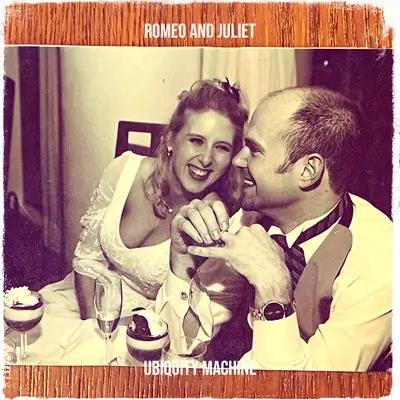
“Romeo and Juliet” Deems Essential for Every Wedding Reception

From visuals to the sound itself, the five tracks of “Romeo and Juliet” radiate wedding energy. And with every one of them having their own flair and catchiness, it’s safe to say that Ubiquity Machine hit the mark with this record. Right off the bat, listeners are met with the title track “Romeo and Juliet”, followed by “Betty and Steve” which, you guessed it, both have very post-wedding sounds. They are the type of songs played immediately after both parties say ‘I do’, or when the groom carries his bride away from the ceremony with big grins on their faces. What’s really creatively striking about “Betty and Steve” is how wedding bell-like sounds are integrated to start off the song. It has a resounding and ear-catching feel-good vibe; the bassline and melody is brilliant, which probably makes this one a crowd favorite from the EP. The usage of names on songs are endearing especially when they make up the contents of the song itself, which is what is happening with these first two tracks. “I Think It’s Funny” has that unserious, mystery/thriller undertone, but still impressively fits a reception playlist. It features a wah-wah-like guitar solo, and lyrics like “They say I’m no Einstein but I can pray”, “Don’t believe what they’re telling you / they want your money / need to keep you around”, and “Buying beers with my honey / you know I think it’s funny”. Overall, it’s a fun track to listen to. The bassline and piano in “I Met a Boy” is immaculate. The constant repetition of the title, along with the simple and mellow piano gives off a ballad vibe. Honestly, it’s a solid contender for a couple’s first dance as husband and wife. “I met a boy that I loved too much / it’s a joy because I love to love”, “Loving is easy, loving is free / and what I need, give it to me”, “Would you die for me?”. With lyrics like these, this song could be interpreted in more ways than one. Either reflecting on your current partner, or yearning, or even grieving for someone as well. It all ends with “Losing Your Mind”, which returns to the upbeat bassline and piano as opposed to the last track. It almost sounds like a part two to “I Think It’s Funny”, except you just know that the EP is about to conclude. After a few listens back to back, this song confirms that Ubiquity Machine can come up with amazing basslines and melodies, which leave a great impression on first time listeners. Follow Ubiquity Machine Globe Soundcloud Spotify Youtube About the Author

“Romeo and Juliet” Deems Essential for Every Wedding Reception Read More »

A Modern Lyrical Art: Good In Blue by Carrying Torches

A magician never tells their secrets. A great lyricist never explains their lyrics because it would ruin the magic, and I firmly believe that many lyricists today have lost their magic because of AI. But let me introduce you to Carrying Torches and their newest track, “Good In Blue,” and explain why this track is special.  The band wasted no chance and started with the first verse at the 3-second mark. The whole theme and flow of the track closely resemble this early 2010s sound because of the palmed-mute guitars and the drum pattern, which is resonant to that sound.   The chorus hook is catchy because of its climactic melody, drum pattern, and overdriven guitar tone that just hits the spot. I try not to be biased, but I always have a spark of passion for guitar-driven tracks. To me, it’s a lost art that we need to reclaim; but again, that’s subjective.  What sets this track apart is the lyrics and the overall meaning behind them. I would love to decipher them into bits and pieces, but the thing about “Good In Blue” is that every time I listen to it, the overall lyrical idea of the song changes.   The powerful thing about this track is that its soulful, poetic lyrics give room for listeners to interpret them. I’m 100% sure that interpretations will differ from one person to another, and that is awesome!  Overall, “Good In Blue” doesn’t have that exploding flow like the music today, but it’s a song worth discussing because of its lyrical prowess. I truly hope that Carrying Torches will not blow the whole meaning behind it, but let us fans banter and talk about it for years on end.   Give them some love by following their social media page. Listen to “Good In Blue” today!  Follow Carrying Torches Globe Facebook Spotify Youtube Instagram Tiktok About the Author

A Modern Lyrical Art: Good In Blue by Carrying Torches Read More »