loader image

New Music

Sunrise in Jupiter Releases The Heartfelt And Powerful “Take Me Home”

Distance can be a downer, let’s face it. In fact, it can even feel like you’re light years away from the ones you love. Sunrise in Jupiter takes that cosmic concept into this song, and maybe even so in their album Mission to Mars Vol. 1. With how they approach these feelings, they have turned their second single into something audiences can immerse in, and effectively gain anticipation for their current and future craft. “Take Me Home” viewed as a standalone song, however, is upbeat and energetic at best, all the while tackling something so emotionally driven. You’re instantly met with the introductory guitar riffs and a solid bassline. And once the overall sound comes into play, listeners should expect to be instantly drawn to it. It all sounds hopeful, and “soaring” would be the correct and appropriate term to describe how it all sounds. Sunrise in Jupiter takes the yearning, the urge to reach out to those you love despite the distance, into something empowering and comforting. All in all, the message couldn’t be more meaningful, and the sound itself couldn’t be more full and well-arranged. It encourages listeners to gauge and appreciate this song altogether, something that’ll get them to realize that they are not alone. Plus, it’s very cinematic, making it easy to incorporate into visual aid to make it even more special. Definitely a hit you wouldn’t want to miss. Follow Sunrise in Jupiter Globe Spotify Instagram Youtube About the Author

Sunrise in Jupiter Releases The Heartfelt And Powerful “Take Me Home” Read More »

“Meant To Be” by blossoming doesn’t push; It invites

“Meant To Be” by blossoming is one of those songs that sounds like it was recorded at 3AM in a room lit only by a phone screen. It’s not dramatic. It doesn’t build to an epic chorus. No one yells. Nothing explodes. And yet, somehow, by the end, you’re left staring into the middle distance like you just remembered every mistake you made in 2017. This is the kind of track that understands emotional devastation isn’t always loud. Sometimes it’s just a synth note held a little too long, or a lyric sung like the artist is afraid they might actually believe it. Drawing from the raw minimalism of Royal Blood, the digital tenderness of Porter Robinson, and the late-night-too-honest energy of Twenty-One Pilots, blossoming builds a song that doesn’t need volume to be overwhelming. The instrumentation is sparse, and deliberately so. There’s just enough here to hold the weight of the song’s feeling, and absolutely nothing more. It’s like someone took the idea of emotional restraint and built an entire track around it. Every sound arrives on purpose, lingers just long enough to make you uncomfortable, and then disappears, leaving you with yourself. Which is, incidentally, the most emotionally confronting experience a person can have. Lyrically, “Meant To Be” deals with longing, acceptance, and the kind of slow-motion heartbreak that doesn’t involve a big fight; just the gradual, soul-softening realization that something beautiful is no longer alive, and maybe never was in the way you thought. It’s not a breakup song. It’s a “we quietly stopped texting and now I think about you every time I pass a café we never went to” song. It’s a gentle disintegration. A soft collapse. The emotional equivalent of watching fog roll in through a cracked window. And that’s the power of it. In a music landscape increasingly desperate to say something, blossoming instead feels something, and lets the listener do the rest. “Meant To Be” by blossoming doesn’t push; It invites. It doesn’t resolve anything, and it certainly doesn’t pretend to heal you. It just sits next to you on the couch while you stare into space, sigh, and think: “Yeah… same.” If you’ve ever felt like your heart has a leak that never quite seals, this one’s for you. Follow blossoming Facebook Spotify Youtube Bandcamp Instagram Tiktok About the Author

“Meant To Be” by blossoming doesn’t push; It invites Read More »

If you’re looking for another brooding, genre-fluid, emotionally raw track that might accidentally expose one of your unresolved issues, “Choker” by SkyDxddy’s got you covered

SkyDxddy dropped a new track called “Choker”, and it’s essentially what happens when you take all the emotional volatility of a late-night Tumblr post, filter it through a digital haze of trap percussion and moody synths, and then somehow make it really work. Now, to be clear, this isn’t your average “sad rap over lo-fi beat” situation. “Choker” is doing something more precise, and honestly, kind of sinister. It lures you in with this lush, almost ethereal soundscape, and the next thing you know, you’re in the middle of an emotional autopsy. SkyDxddy’s lyrics don’t just gesture vaguely at vulnerability; they weaponize it like what you do with cutting words. It’s confessional in a way that feels less like a diary entry and more like a carefully sharpened monologue from someone who knows exactly what strings they’re pulling. What makes this track interesting is that it’s mainly deliberately uncomfortable. It plays with themes of power, control, and emotional exposure without ever slipping into melodrama. And that’s impressive. Because nine times out of ten, a song like this ends up sounding like it was written by someone who just discovered metaphors. But “Choker” feels deliberate. It knows what it’s doing. If you’re looking for another brooding, genre-fluid, emotionally raw track that might accidentally expose one of your unresolved issues, “Choker” by SkyDxddy’s got you covered. Follow SkyDxddy Spotify Soundcloud Youtube Instagram About the Author

If you’re looking for another brooding, genre-fluid, emotionally raw track that might accidentally expose one of your unresolved issues, “Choker” by SkyDxddy’s got you covered Read More »

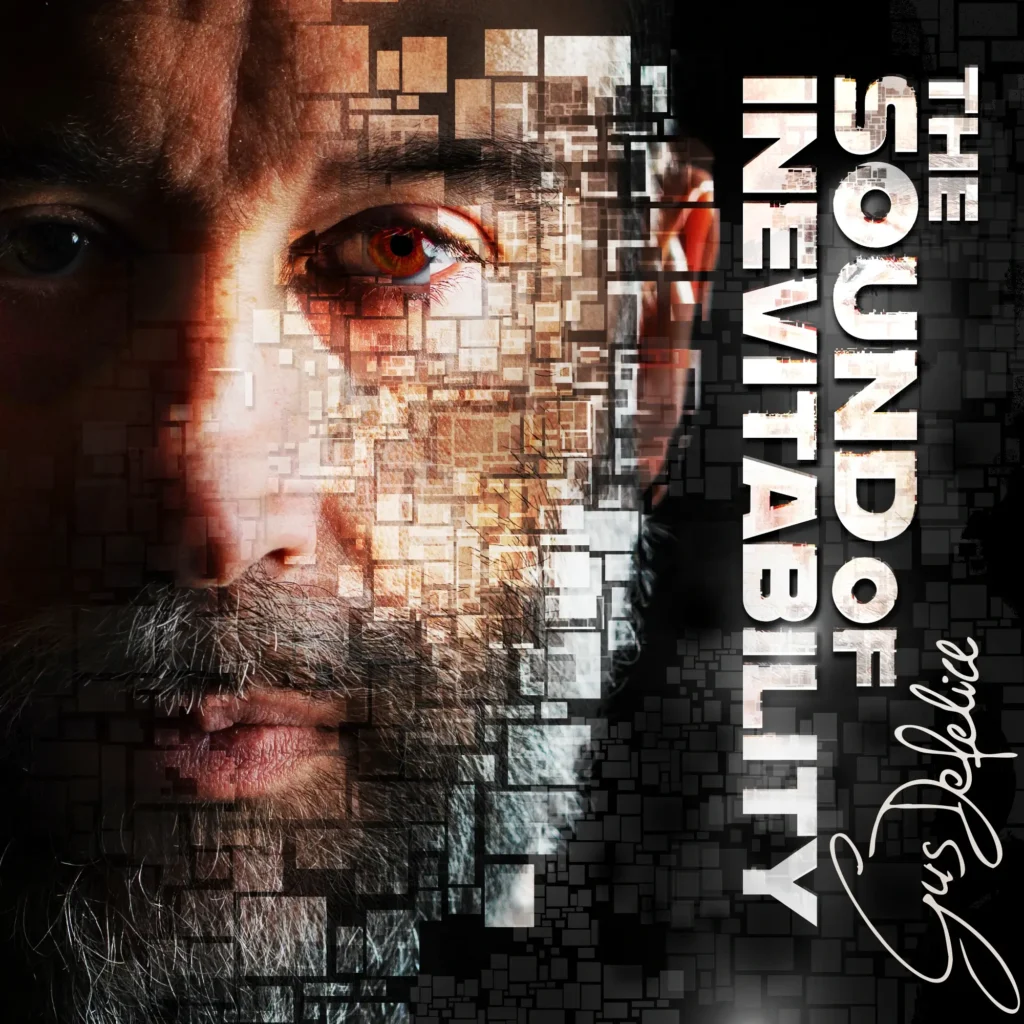
Gus Defelice actually understands what makes the world-ending feel like something, and The Sound of Inevitability soundtracks that well

There’s a particular kind of bravery in writing an instrumental concept album about inevitability. It’s one thing to scream about the void. It’s another thing entirely to sit down, look it in the eye, and try to transcribe it into 7 tracks of progressive metal and ambient textures without saying a single word. And yet, that’s exactly what Gus Defelice has done with The Sound of Inevitability, an album that somehow manages to be crushingly existential and quietly life-affirming at the same time. Now, I know what you’re thinking: “Oh great, another prog metal record. Let me guess… odd time signatures, ambient interludes, maybe a surprise sax solo?” And sure, some of the genre trademarks are present. But if you’re looking for a display of technical pyrotechnics for its own sake, you’ve come to the wrong place. This album isn’t a YouTube tutorial on polymeter. It’s more like an audio diary written by someone who just realized that they, too, are a temporary configuration of atoms on a rock hurtling through space, and decided to make peace with it. The album takes as its subjects the Big Seven: Time, Death, Change, Entropy, Aging, Evolution, and Conflict; then takes them as the structural and emotional scaffolding of the entire project. Each piece feels like it’s wrestling with the essence of its theme, not in a clumsy “here’s the sad one, here’s the angry one” way, but with a kind of sonic honesty that’s rare in metal or frankly any genre. “It’s Coming!” for instance, is a highlight not because it’s especially complex, but because it’s decaying, spazzing out with its riffs and fraying at the edges, like the track itself is unraveling as you listen. You don’t need lyrics to tell you what’s happening. You feel it. You feel yourself in it. There’s a sense that this isn’t just music; it’s a process. It’s meditation. It’s what happens when someone uses progressive metal not as a blunt-force hammer, but as a chisel to sculpt something impossibly delicate from the granite of trauma and transformation. Each progression counts as the connective tissue, the quiet moments between emotional avalanches, where the record breathes and remembers it doesn’t have to resolve everything in one breakdown. And then there’s “Desert Dunes,” the emotional nucleus of the record. If the rest of the album is a descent into the metaphysical muck of life, this is the climb back out. Slowly. Painfully. But it’s happening. It’s one of the only moments where the music dares to be hopeful, and not in a triumphant, movie-trailer kind of way; more like someone planting a flower in scorched soil because it’s all they know how to do. It builds with humility, not bravado, and that makes it more powerful than any riff-based victory lap. What’s honestly refreshing here is that The Sound of Inevitability never once feels like it’s condescending to its audience.  It assumes you’ve thought about death before. It assumes you’ve watched something fall apart. It assumes you’ve laid in bed at 3AM feeling like the future is a foreign country you’re being deported to without warning. And rather than offering easy answers, it just sits with you in that space. And sometimes, that’s exactly what art is for. Because let’s be real: the market is saturated with music that pretends to be deep. Everyone wants to be cinematic, epic, world-ending. Gus Defelice actually understands what makes the world-ending feel like something, and The Sound of Inevitability soundtracks that well. There’s something radical about that. So no, this isn’t an album you throw on while washing the dishes. It demands your time. It demands your presence. It asks you to listen not just with your ears, but with whatever emotional muscle you use to process things you haven’t quite found the words for yet. And for those of us who have ever been broken down, confused, hurt, or simply aware of our own slow decay into nonexistence; this album might not fix anything. But it will feel like someone else understands. And that, as it turns out, is the point. It doesn’t yell. It doesn’t beg. It just looks at you, quietly hands you a mirror, and says: “Same.” Follow Gus Defelice Globe Facebook Youtube Spotify Instagram Tiktok About the Author

Gus Defelice actually understands what makes the world-ending feel like something, and The Sound of Inevitability soundtracks that well Read More »

“Paralyzed” by Satellite Train Aims To Uplift

With a perfect mix of pop and rock, Satellite Train creates an empowering track surrounding the feeling of uncertainty, self-doubt, and perhaps dread, turning it into something hopeful. The vocals soar and power through, making sure every line is heard for listeners to digest. It’s the type of song to play when you’re at the brink of giving up or despair, as the instrumental sounds bright, something that will make your ears perk. Not only does it feel like a helping hand, but it somewhat dictates (in a positive way) how someone should be, entirely for their well-being. The repetitions of “Why can’t you hear? I’m calling out” emphasizes the main point of standing back up, a sign that no one is ever really alone, with the vocals acting as voices from friends and loved ones. Comforting in its own way, may it be through intent or through technical sound, “Paralyzed” also comprises an energy that belongs to a beloved picture or play. The way the layers harmonize makes it a great contender for something bigger, to fully utilize the impact the whole song holds. Overall, it truly is such an uplifting song. It’s for everyone to listen to in more ways than one, as the sound’s versatility is sure to be appealing for most – if not all – audiences. Give this a shot! You won’t regret it. Follow Satellite Train Globe Facebook Twitter Youtube Spotify Instagram Tiktok About the Author

“Paralyzed” by Satellite Train Aims To Uplift Read More »

MTVKID is a messy, beautiful scream into the void. Play it loud

Let’s set the scene. You’re in your early twenties. You just screamed into your steering wheel. You haven’t really slept in two days, and your best friend just sent you a song that somehow gets it; that weird, vibrating ache of being alive in the year of our lord whatever-this-is. That band? It might be MTVKID. This self-titled debut is not just an album. Rather, it’s a collection of nervous breakdowns wrapped in distortion pedals, duct tape, and unprocessed trauma. Which, of course, is a compliment. MTVKID doesn’t play coy. It doesn’t ask for your attention; it kicks down your door like a sugar-high punk gremlin and demands that you feel something. Right off the bat, MTVKID comes at you with that unmistakable blend of punk immediacy, alt-rock angst, and just enough pop-rock sheen to remind you that, yes, this could’ve easily soundtracked a pivotal scene in a 2007 teen drama where someone runs out of a high school gym in the rain. The influences are obvious, sure: there’s some early Paramore, a little Jimmy Eat World, flashes of Joyce Manor, even dashes of The 1975’s debut in terms of the hooks if they stopped vaping long enough to feel feelings honestly. But it doesn’t feel derivative. It feels like a love letter to growing up with cracked CD cases and too many opinions. More importantly, it feels like a band that has lived with these songs. There’s wear and tear on every track. That’s because this album wasn’t whipped up overnight in a content farm; it took three years. Three years of watching your dreams wobble, of texting your ex various things you regret, of staying up until 3 a.m. wondering if you’ve made a horrible mistake and then writing lyrics about it. You can hear that time in every tempo shift, every scream, every weirdly sincere lyric that catches you off guard between guitar stabs. Tracks like “Dying Fast” run like an anthem for when your life is speeding toward something and you’re not sure if it’s a goal or a crash. It rips, it snarls, it fully sends, “Bro” might be the most disarmingly real moment of the album, with its energy of a bro-down at a dive bar where someone accidentally brings up real emotions and no one knows what to do. “Sunbride” shifts the tone with a kind of aching sincerity that doesn’t feel performative. It’s warm. It hurts a little. It hits like nostalgia you didn’t expect to feel.“Move On” is a banger, but it’s a sad banger of sorts, and it’s the best kind. Each track pulls from a different part of your psyche: the punk kid who never grew out of flannel, the emotionally-repressed guy pretending he’s fine, the overthinker who cries to voice notes. MTVKID has something for all of them. Not to mention, this record isn’t just catchy. It balances youthful, punchy fun with an undercurrent of real, lived-in struggle. There’s a kind of emotional awareness underneath all the fuzz and chorus pedals that suggests MTVKID is not just yelling for the sake of it; they know what they’re yelling about. And in a time when mental health is more buzzword than battle scar, it’s refreshing to hear a band who writes about struggle without sounding like they’re selling you a self-help app. It’s ironic, it’s sad, it’s cathartic, and sometimes it’s funny in a way that feels almost dangerous, because laughter is a defense mechanism, and these kids are fluent in that dialect. As far as debuts go, MTVKID is the kind of statement you make with a cracked skateboard in one hand and a bleeding heart in the other. It’s not trying to be perfect. It’s trying to be honest, and that’s way harder. It captures the feeling of being in your twenties in a world that’s constantly melting down; too old to be naive, too young to be resigned, and way too online to process anything in peace. There’s a lot of talk about “authenticity” in music, but most of it is PR fluff. This? This sounds like the real thing. A band writing music not to be playlisted, but to survive. MTVKID isn’t just another pop-punk-adjacent debut. It’s a sonic diary; chaotic, joyful, anxious, overwhelmed, hopeful, and more than anything, alive. It reminds you that music doesn’t have to be perfect to be powerful. It just has to be true. MTVKID is a messy, beautiful scream into the void. Play it loud. Then text your friends. They probably need to hear it too. Follow mtvkid Instagram Tiktok Youtube Spotify Promoted Content About the Author


MTVKID is a messy, beautiful scream into the void. Play it loud Read More »

Paradimyo’s “Ligaya” Is Every Hopeless Romantic’s New Anthem

In the world of OPM, the range of genres gets constantly bigger through time, as artists, old and new alike, explore different sound profiles throughout their respective careers. Paradimyo, an indie band based in Cavite, Philippines, takes what’s there to love about OPM and combines them in a beautiful arrangement called “Ligaya”. Firstly, the opening sounds like something straight out of a coming-of-age film, not to mention it’s immediately ear-catching in general. It’s vibrant, from the guitar, to the bass line, and the vocals; it’s like revealing a whole, bright scenario of a cliché love story that everyone is bound to get into. Secondly, the lyrics are striking and relatable. The playful bargaining is evident in a situation that’s bound to fail. In the end, selflessness prevails. “Ligaya” is a fresh, new entry in the absolute bangers category in OPM – the brightness in every second, every instrument, makes it somewhat timeless. It’s a perfect song for battle of the bands, for example, or just something for everyday jamming. We can anticipate the amount of replays from a mile away already, given that it gets the recognition it deserves. Its catchiness is truly unmatched, and it would definitely be an immediate recommendation to anyone. Don’t miss out — stream “Ligaya” now on Spotify and feel the joy for yourself. Follow Paradimyo Facebook Spotify About the Author

Paradimyo’s “Ligaya” Is Every Hopeless Romantic’s New Anthem Read More »

Canary Complex’ Album “A Whisper of Spring” Radiates Elegance

Each track off this record will make vibrant colors pop, or a scenery that solo project Canary Complex paints in every listener’s mind. This album being his brainchild is an understatement, as it really does feel like every instrument is plucked and every word is written and arranged with precision, not to mention pure skill with how immersive “A Whisper of Spring” is. There’s nothing better than genres mixed and experimented with together, creating sounds no one ever deemed possible. This one gives off chamber pop and progressive rock, as if everything there is to know about both worlds are used in a unique way within these songs.  Starting strong with “Corsets Fall”, the overall intensity of each component is combined to perfection that the probability of getting lost in the music is relatively high. There’s something powerful about the vocals once it comes into play; the drums – not to be dramatic – are exceptional. The different tempos and methods seamlessly blend in with the continuous flow of melody. The line “sadness became your work of art” seems to be an ‘enough said’ statement, proven true through these songs. “The Face of God” has gentle beginnings before the main event of sound starts up. The dynamics are great, leaving you pleasantly perplexed between each switch-up. “Oh, the world is dizzy as you start to spin / Pirouette between the people that you’ve been, / I’ve seen those faces, I’ve loved each one” has a beautiful connotation and revelation to it. Similarly, “Seance” shares the same energy in terms of components; plus, the effects in this song just go harmoniously well together like puzzle pieces. Vocals booming, sounding like it’s preaching, and by the end of it, we come to realize that it’s all self-explanatory, from the title to everything else. The delivery of “I miss you all the time” is devastating. Moving forward, “Hyacinthine” begins with a catchy hook, just like all its neighboring songs. The piano grabs you by the collar, sitting you down so you could listen to it in full. Everything uttered in the lyrics gives you a vivid image of what’s described and brought to life; the vocals perfectly mellow, allowing you to do just that. Plus, the vision of this song being played at an empty stage, arena, or space with just the singer and his piano comes to mind. The way the key change was handled was endearing – it adds character to these songs and the artist himself. One key factor about this record are the French chansons. The references are utilized well, which deems the decision of incorporating them being great. “Déshabillez-Moi” directly translates to ‘undress me’, to which the brass-like introduction and the intimacy in the air would start to make sense. It all sounds cheerful yet fitting to the theme; the interlude consists of a marimba or xylophone-like solo, and the fact that you could still significantly hear the bass amidst everything else is a nice touch. “Papillon ~Snow Angel~” immediately gives off a cozy café kind of vibe. The word papillon means ‘butterfly’ in French, and just like the last chanson, all meaning unfolds once you get ahold of that knowledge. Once the vocals make themselves known once more, the tune starts to feel like something you could dance to – this thought is proven right by the interludes sounding so complex and hip-sway worthy. Next, “Pierrot (deep sky)” is deeply intimate, like it’s reaching outward to express and send the message. Pierrot, upon searching, is a fictional pantomime that’s related to hiding one’s true feelings. The words overall do sound like thoughts, or things someone wouldn’t usually say out loud: “I tried not to wake you when I left you this morning / The promise of dawn came through a soft, pink sunrise”. Lastly, “It’s Up To You” is the eight track, upbeat like it’s intended to end the album with a bang. The following line of “Do you remember how sentimental and existential I become with too much time alone?” is weirdly beautiful and relatable, but it could also apply as a question to the audience who have just listened to this record front to back. From the beginning up to the end, each instrument remained consistently mesmerizing, and the quality did not falter at all.  The first few seconds of listening came with a few realizations: one, there would be a lot of people that dig this kind of music, and two, people who aren’t that fond of it have a great chance of enjoying this record nevertheless. Follow Canary Complex Globe Facebook X-twitter Youtube Spotify Bandcamp Instagram Tiktok About the Author

Canary Complex’ Album “A Whisper of Spring” Radiates Elegance Read More »

Paul Cogley’s The Silent Sea is less “an album” and more “a meticulously crafted emotional gut-punch”

Disguised cleverly as a collection of songs. It’s the kind of record that doesn’t politely shuffle into the background. Rather, it sits you down, stares into your eyes, and asks if you’ve really thought about the crushing absurdity of modern life lately. And when you say “yes,” it stares harder. Sonically, The Silent Sea is absurdly well-done. The production is lush without ever getting self-indulgent about it — which is almost suspicious in a world where every bedroom pop EP now sounds like it was mixed inside a tin can filled with bees. Every sound here, from the brooding basslines to the world-weary guitar sighs, feels sculpted with the kind of care usually reserved for endangered artifacts or extremely pretentious sandwiches. It’s rich, it’s textured, and it breathes in a way that makes 99% of other albums feel like they’re suffocating under their own plug-ins. Somehow, Paul Cogley makes “patient sound design” feel radical, like not screaming into a megaphone is a bold artistic choice. A list of my personal highlights include Lies, where Paul Cogley immediately establishes that yes, things are bad, and no, you’re not imagining it. Then there’s Searching For Signals, where Cogley somehow captures the exact emotional experience of trying to make sense of anything online without having a complete existential collapse. It doesn’t really “build” so much as it “slowly spirals into a very beautiful panic attack,” which, if nothing else, feels extremely accurate. Lost at Sea finds Cogley leaning fully into that wonderful “what if existing was a mistake?” energy. It’s slow, it’s sorrowful, and it refuses to give you anything resembling catharsis. Drifting aimlessly never sounded this intentional. By the time we get to The Eye I Eyed, the record shifts from “the world is collapsing” to “oh no, so am I.” It’s an intense, deeply personal track that practically demands you sit there and think about your own emotional baggage. Thanks, Paul. Another highlight comes in with The Dream Of White Horses, which is an absolutely gorgeous interlude that basically weaponizes nostalgia. It’s so fragile and wistful that it feels like it might disintegrate in your headphones if you breathe too hard. Imagine your fondest childhood memory, except halfway through you realize it was sad the entire time. Later on, Analog Child steps up to deliver a deeply melancholy “remember when screens didn’t ruin everything?” moment. Instead of just shaking his fist at the cloud, Cogley dissects nostalgia itself, like someone slowly realizing their comforting childhood blanket is actually made of existential dread. When we hit the track Time To Go, the album reaches its inevitable sigh of resignation. It’s not furious. It’s not even particularly sad anymore. It’s just a calm, knowing, exhausted “yeah, fair enough”; the musical equivalent of closing your laptop after reading literally any piece of news. And finally for track highlights, there’s Moments, which gives the album a small, battered flicker of hope. It’s not some grand triumph. It’s more like the stubborn, tired knowledge that surviving, even badly, is still surviving. Which feels weirdly uplifting, if you tilt your head and squint at it hard enough. In the end, Paul Cogley’s The Silent Sea is a shockingly cohesive, emotionally rich work that somehow makes being completely crushed under the weight of modern existence feel kind of beautiful. He skips irony, skips posturing, and just opts for sincerity; a move so genuinely rare these days it almost counts as performance art. It’s extraordinary, it’s depressing, and it’s kind of inspiring. Also, it sounds fantastic. What more do you want? Follow Paul Cogley Globe Facebook Youtube Spotify Instagram Tiktok About the Author

Paul Cogley’s The Silent Sea is less “an album” and more “a meticulously crafted emotional gut-punch” Read More »

Ken Woods and The Old Blue Gang Introduces Their Turf In “Sundown Town”

From the title to the sound, you’d immediately get a sense of belongingness, as everything sounds old fashioned yet absolutely fitting, and “Sundown Town” just has a kick to it. Of course, that’s the surface level thought of someone who is not American. According to these bands featured in the song, they aim to tell the tale of American History. You could just feel the passion coursing through every chord, every note – they’re on a mission, they say, and there’s nothing better than fulfilling that duty with ease. The overall vibe through the guitars, the upbeatness of the percussion, and the catchiness of the bassline is bound to get anyone to tune in to what Ken Woods and The Old Gang has to say. What more could you ask for? It’s history by means of music. It’s not everyday you get to see something as unique as this. All in all, it’s a great track instrumentally, but most especially by its intentions – to impart knowledge on their history to those who listen. It’s not easy to squeeze in details while ensuring the replayability of the song, but for some reason, they’ve done it. As such, everyone should give this one a shot. Follow Ken Woods Globe Facebook X-twitter Spotify Bandcamp Instagram About the Author

Ken Woods and The Old Blue Gang Introduces Their Turf In “Sundown Town” Read More »