loader image

New Music

Eleanor Idlewood’s The Roommates is a sensational, neon-lit ode to queer romance

Eleanor Idlewood does more than just music, she delivers with plot, lush, and a touch of mischief. With the release of The Roommates, Eleanor spins a synthwave track for that playful and neon-lit salute to queer intimacy. Hailing from Bordeaux, France, the queer French electronic artist thrives in lush and atmospheric synths for that VHS aesthetic feel. If you worship the popular roommates trope, this latest release gives you exactly just that. The Roommates details the story of Sonny and Flint, sleek and unfiltered. Two men perceived as roommates yet behind closed doors and pulled blinds, there’s intimacy and love in full bloom.  The Roommates unravel with whispers and murmurs cradled by thin walls. It was followed by dreamy and futuristic beats that pulses in your ears, bringing that uncontrollable urge to nod and move. It’s such a wonder how this sounds new and familiar at the same time. Right from the start, the track already established that it’s not going to be soft and gentle. It’s straightforward and unapologetically wild, while Eleanor’s vocals allow you to immerse yourself in Flint and Sonny’s eyes – their romantic glances, sensual innuendos, and nighttime noises. Imagine Depeche Mode and Yazoo singing a slow-burn queer romance narrated through pulsing ’80s synths.  If you want tracks that celebrate choices, identity, and expression, even without other’s recognition and approval, The Roommates by Eleanor Idlewood truly gets it.  Follow Eleanor Idlewood Globe Facebook Spotify Soundcloud Instagram About the Author

Eleanor Idlewood’s The Roommates is a sensational, neon-lit ode to queer romance Read More »

Amy Field yearns deep and fierce with a whiskey-soaked track Universe

If you’ve ever watched James Bond on an old and grainy TV from your parents’ house or followed each one of it, then you’ll totally love this standout track “Universe” from Amy Field. Universe unravels slowly with Amy’s whiskey-soaked voice, which honestly drives the whole track. The vocals are gripping with texture and it’s not trying too hard to cling to your ears as it naturally glides over you. There are overpolished tracks that somehow outshines the vocals of the artist. But in this case, the fascinating guitar solo from Robby Hodgey with the production quality delivered by Jack Murphy allowed Amy’s voice to dominate and take the center stage.  The track is alluring and intriguing at the same time, it’s overflowing with desire and temptation to dive in and take risks, reflecting from the part, “this universe was meant for all, like me and you”. It sounds like it’s never content and always yearning for more, leaning towards the wrong and unattainable. It has that James Bond-esque sound that sounds retro, echoing a cinematic and dark touch.  Amy Field is gearing up to debut her new songs, and if Universe is just a teaser of what’s ahead, then there’s a promising stage setting up to deliver her exceptional craft.   Follow Amy Field Facebook Spotify Instagram Tiktok About the Author

Amy Field yearns deep and fierce with a whiskey-soaked track Universe Read More »

We’re Digging The Vibe Jermaine Fleur Brings To The Function With “All I Need”

Hands down, this song has the potential to draw people in, regardless of their style and taste in music. Like a shiny object no one can look away from, the beat and the hook is bound to draw anyone from everywhere in to join in the carefree groove. Based in Amsterdam, Jermaine Fleur is a vibrant artist overflowing with charm just enough to win you over. With “All I Need” only being his second single out to the world, there’s no telling what we can expect from him if he keeps releasing bangers like this one.  This song quite literally feels like your favorite drink on a perfect day, or even your favorite person in the world walking into the room. Fleur’s smooth, flowing vocals are guaranteed to remind you of legends like Michael Jackson, with an overall addicting sound profile that defines pop and R&B to its core. It even has hints of that catchy flair found in KPop songs. Get lost in the rhythm of “All I Need” — the chorus alone is enough to get your head fixated on a beat all summer, nay, all year. With a combination like that, what more could you ask for? Listen now, and don’t miss out. Follow Jermaine Fleur Globe Facebook Twitter Spotify Soundcloud Youtube Instagram Tiktok About the Author

We’re Digging The Vibe Jermaine Fleur Brings To The Function With “All I Need” Read More »

“Mine” from DayEyez, is a meditation on quiet tragedy

There’s a particular kind of heartbreak that doesn’t make headlines. Not betrayal, not unrequited passion; just logistics. Calendars. Conflicting schedules. The brutal fact that love, no matter how sincere, has to make room for rent payments and 12-hour shifts. “Mine,” the latest single from DayEyez, is a three-minute meditation on that quiet tragedy. It’s about getting thirty minutes with someone you adore before they vanish again into the night. Not forever. Just long enough for it to sting. “Mine” opens with the kind of tension usually reserved for psychological thrillers, with sparse production, heartbeat-like drums, a sense that something is ticking down. It’s not melodrama; it’s lived-in dread. The kind of dread you get when you realize the person you love is sitting next to you, and you’re already missing them. Then the chorus hits. And this isn’t some stadium-sized flex or Top 40 belt-a-thon. Rather, DayEyez aims for something harder: restraint that hurts. The track swells into a soaring power-ballad chorus, but not the kind that fixes anything. It’s a crescendo that just underlines the problem. You’re not out of time, but you’re close. It’s like watching the end credits roll on a film you weren’t ready to stop watching. Sonically, “Mine” is cinematic in that uniquely modern way; it’s part alt-rock, part anxiety spiral. Think if The War on Drugs scored an episode of Black Mirror. The drums mimic a racing pulse, the reverb feels like walls closing in, and somewhere beneath it all, there’s a kind of emotional spyware quietly watching you fall apart. And then there’s the context. DayEyez isn’t just another guitar-wielding guy with feelings. There’s AI involved in the production here. Not in a dystopian, art-is-dead way, but in a “what if digital tools could enhance emotional storytelling instead of sterilize it?” kind of way. It’s a bold choice, and it works because the track doesn’t sound robotic; it sounds haunted. Like it was engineered by someone trying to capture a memory they’re already starting to forget. If you’ve been following DayEyez’s trajectory, from the debut single “Bubblegum Pop” to more introspective cuts like “Insecurities” and “Cast Away”, “Mine” feels like a significant pivot. It’s darker, sharper, and somehow even more vulnerable. Not in a TikTok-trauma-dump kind of way, but in a way that suggests he’s stopped performing sadness and started confronting it. What’s most compelling about “Mine” is how utterly uncurious it is about fixing anything. There’s no fantasy here about love triumphing over time, or a bridge that promises better days. It just sits in discomfort. It stares you down and says, this is what love looks like right now: timed, tired, and still trying. And somehow, that honesty hits harder than any dramatic crescendo ever could. Follow DayEyez Globe Facebook X-twitter Spotify Soundcloud Bandcamp Youtube Instagram Tiktok About the Author

“Mine” from DayEyez, is a meditation on quiet tragedy Read More »

Mosh Pit’s “LCD” Is A Personal Call-Out

Woken up by sharp, gritty guitars, which make up most of this song’s sound profile, “LCD” is reminiscent of iconic rock anthems sung and screamed along to in early 2000s music festivals. It’s as if its main goal is to call you out for your deepest shame, but the overall feel makes you warm and nostalgic. If you’re into alternative rock goodness, this one’s definitely for you. It’s clear that Mosh Pit’s music is known for its rawness, loudness (both literally and figuratively), and emotional drive. Cry, crashout, scream as much as you want – but they don’t stop there; they want you to feel, but they also want you to rise up. “LCD” isn’t just a call-out, it’s a wake-up call. The chorus alone is bound to make you question everything you believe in: “Look to your creator / Your lowest common denominator / I’ve been serving you for years / I’ve been worshipping till tears”. Mosh Pit has even gone to the point of using a term people learn in math class to describe the lowest of the low. It’s vague, yet you’re going to remember specifics. Overall, it’s as if this song has been thrown forward from two decades ago, because it truly sounds like hugging your knees on your bedroom floor (it’s that iconic). The concept is eye-opening, something that would make audiences think and feel. It’s also proof that rock is a timeless and likeable genre. Don’t miss out and listen now. Follow Mosh Pit Spotify About the Author

Mosh Pit’s “LCD” Is A Personal Call-Out Read More »

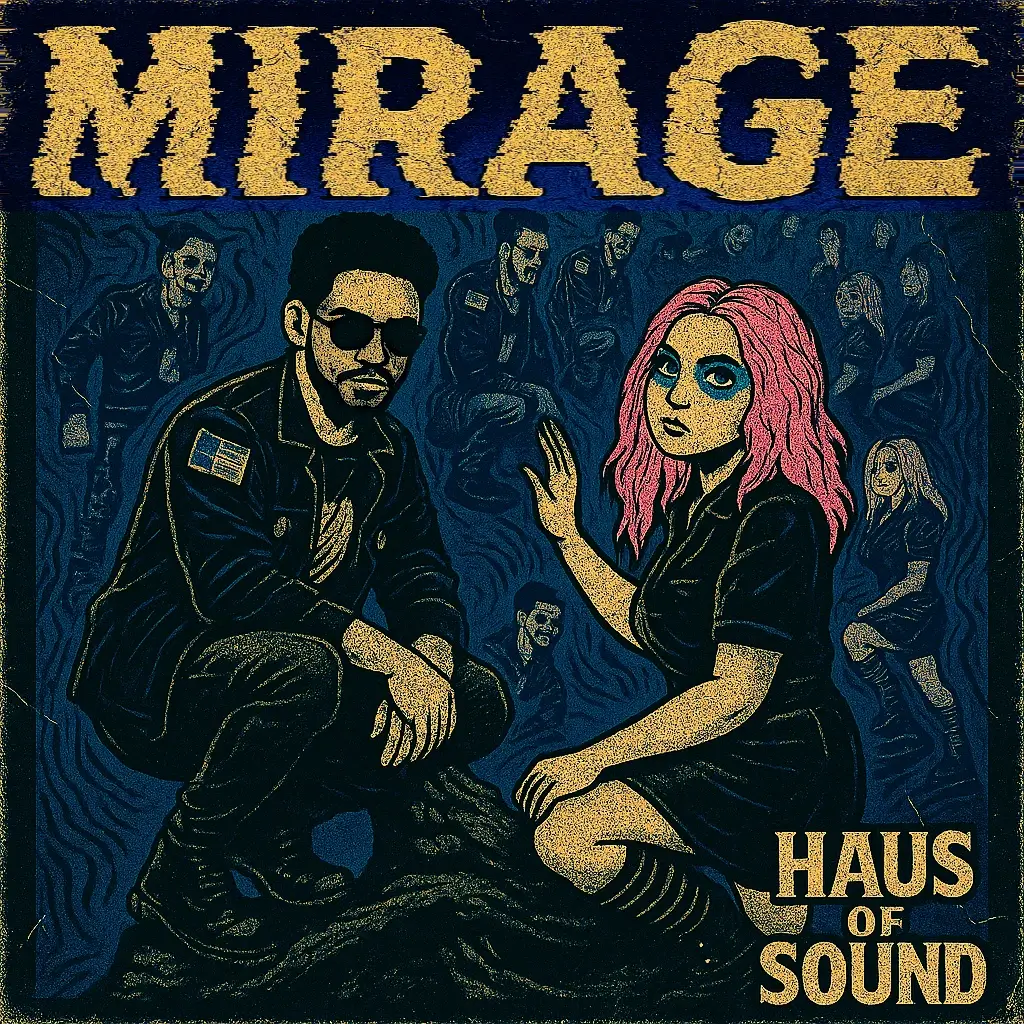
Haus of Sound’s Mirage is a reality check in a synth-driven alt-rock statement

Haus of Sound is back to weave out their name in the scene – but this time, in a sharp and synth-driven alt-rock way. The release of Mirage keeps the momentum of their rich and growing discography. Mirage jumps off with heavy instrumental, but not in a way that overwhelms. Just enough to crawl into your ears and lure you in with its weight. After successfully getting your attention, it clings harder to you. Gabrielle locks you in entirely with her powerful vocals, while the spoken rap adds a shot of urgency which elevates the tension and emotional build up of the track.  Another thing that stands out is the lyrics written like a flow of thoughts at midnight. It successfully imitates the voices trapped in your head. It captures the exact feeling of going through a downward spiral, falling into the dread of chasing dreams and ambitions. Imagine Evanescence and Linkin Park got stuck in a studio after juggling three jobs, studying, and meeting people, trying to climb the corporate ladder. It ends with, “so what’s the point of it all?”, and it’s so real. Mirage is the goals we’re trying to reach, the person we’re trying to become, and the life we dreamed to have. But the catch? The closer we think we are, the farther it gets, leaving questions in your head if every step is still worth it.  As they build towards their debut album Campfire Stories, it’s clear that the band has so much more to offer for us to anticipate. If you love company on days where you feel like you’re circling around or going through a downward spiral, Haus of Sound’s Mirage is a solid addition to your playlist.  Follow Haus of Sound Globe Facebook Spotify Youtube Instagram Tiktok About the Author

Haus of Sound’s Mirage is a reality check in a synth-driven alt-rock statement Read More »

May: 21–26 by Evan de Roeper isn’t here to save you, and it’s not pretending it can

There’s a moment, about thirty seconds into “Howl”, the opening track on Evan de Roeper’s May: 21–26, where you realize you’re not just listening to music; you’re eavesdropping on something intensely private. It’s that soft-spoken, hard-hitting emotional espionage that defines the whole EP. Evan doesn’t so much perform these songs as he disassembles himself in real-time and dares you to keep listening. Released the day after his 27th birthday, May: 21–26 isn’t just an EP; it’s more like a week in the life, archived in foley, static, and the kind of reverb-drenched self-reflection that would make even the most stoic therapist need a minute. It’s raw, it’s strange, and somehow it makes vulnerability feel like a flex. Let’s talk about the production, because Evan sure did. He doesn’t just include foley sounds for atmosphere; he weaponizes them. There are footsteps, whispered breaths, clinking noises you’re not sure are keys or nerves, all stitched into the songs like a heartbeat you didn’t know you needed to hear. It’s not subtle, but it’s not gimmicky either. It’s textured. It’s intimate. It’s the sound of someone choosing honesty over aesthetics and somehow still landing both. Track highlights include “Howl”, which runs with all the theatrical restraint of a candle slowly burning through a letter you never sent. The track doesn’t build so much as hover, soaked in melancholy but not paralyzed by it. It sets the tone perfectly: this is not music for escapism; it’s music for sitting in your feelings until they either leave or learn to pay rent. “Haste” is where the EP starts moving, albeit like someone trying to run in a dream. The tempo picks up, but it still feels disoriented in the best possible way; there’s urgency without clarity. It’s anxious, but not panicked. Imagine if anxiety had a lo-fi hip-hop playlist, and it just found a track it could finally cry to. Then we hit “Ground Zero,” which is less a song and more an emotional sinkhole. It’s the EP’s heavy hitter; not because it’s loud (it’s not), but because it carries the quiet weight of personal collapse. The production here is gorgeous in a kind of low-light, velvet-curtain, slow-bleed way. The vocals feel half-buried, like Evan is trying to protect you from what he’s saying even as he’s saying it. It’s the musical equivalent of staring into the middle distance for just a beat too long. Throughout the EP, there’s this tension between being heard and being understood. Evan isn’t writing choruses for mass singalongs. Rather, he’s building sonic diaries that you accidentally find under the bed. There’s an intentionality to the restraint, as though the songs know that going for a higher peak would break the spell. And the spell is the point. What’s genuinely refreshing here is the refusal to perform resilience. So much of independent music, especially in the post-streaming age, seems obsessed with wrapping vulnerability in marketable optimism. Evan doesn’t bother. May: 21–26 doesn’t try to comfort you. It tries to level with you. It’s music made by someone who’s not done figuring things out, and thank God for that. As for the structure, the EP doesn’t build to a cathartic explosion or a feel-good resolution. There’s no grand finale. It ends the same way it lives: quietly, honestly, and slightly off-kilter. It’s an open door, not a closed book. And maybe that’s what makes May: 21–26 kind of brilliant. In a world where every artist is trying to go viral or reinvent the genre wheel, Evan de Roeper made something that just… feels. It’s messy. It’s fragile. It’s a little awkward at times. But so is being a person. May: 21–26 by Evan de Roeper isn’t here to save you, and it’s not pretending it can. It’s here to sit with you in the mess. And honestly? That’s more comforting than any triumphant hook ever could be. Follow Evan de Roeper Spotify Soundcloud Youtube Instagram About the Author

May: 21–26 by Evan de Roeper isn’t here to save you, and it’s not pretending it can Read More »

Activation by The Shields. is the sound of someone picking up the pieces, not to make a mosaic, but just to hold them for a while

There’s a certain kind of album that doesn’t try to be more than it is, and somehow, that’s exactly what makes it more than it seems. The debut LP from The Shields. called Activation is one of those albums. It doesn’t show up in neon and shout about how deep and emotional it is. Rather, it just quietly is those things. This is not the sound of a band screaming for attention; it’s the sound of someone talking to themselves in a quiet room, and letting you overhear it. The Shields. is a studio project from James Stringfellow, joined by a lineup that reads like a niche alt-rock supergroup: Jan Alkema of Compulsion, Jordi Alkema and Jimi Wheelwright of Tigercub, and producer Dan Swift known for his work with Snow Patrol and The Futureheads who clearly understands that “polished” is not the same thing as “sanded down.” You can hear the humanity in this record. And crucially, you can hear the weathering; like an old denim jacket, or a voice that’s spent years learning how to say that they’re fine and almost mean it. If you squint, you can see the ghosts of Springsteen, The Psychedelic Furs, and The Replacements haunting this album’s sonic palette: jangly guitars, echoey vocals, drums that sound like they’re being played in the rain. But Activation doesn’t feel like a throwback or an homage; it feels more like a continuation, music made by people who grew up on that emotional urgency, and never quite stopped needing it. The album opens with “Sleeping Pill,” a title that suggests drowsiness but delivers the opposite; this is less a lullaby and more a jolt of headlights on a dark highway. It kicks off like the Springsteen B-side that never made it to a classic album of his. It’s full of grit, momentum, and just enough world-weariness to make it feel lived-in. There’s no dream haze here, just the wide-eyed urgency of someone who’s already halfway out the door, heart on fire, chasing down something they can’t quite name. By the time “Say My Name” kicks in, you’re already in it. It’s a track about recognition and disintegration, as if being asking to be remembered by someone is both a comfort and a curse, depending on how you feel about it. “Love Is Violence” is another highlight, and despite the title sounding like it belongs on a metalcore tour poster, the track lands with a punch that’s sleek, stylish, and soaked in just enough neon haze. It’s got a pulsing, almost 80s new wave backbone; think late-night FM radio fused with just a hint of psychedelia drifting in from the edges. There’s no screaming here, just shimmer and ache. The song doesn’t crescendo so much as it glows, slowly unraveling the feeling of love not as destruction, but as a surreal, slow-motion spiral. It’s one of Activation’s most compelling sleights of hand: emotional intensity delivered through a mirrorball instead of a megaphone. There’s “I Feel Your Pain,” a title that sounds like it could be printed on a novelty mug, but the song itself is startling in its sincerity. This is where Activation starts sounding like a therapy session set to music. Not one of the trendy “mental health awareness” songs you hear in car commercials; but something real. It’s weary and hopeful in equal measure, like watching someone try to open a stuck window on the tenth attempt. The penultimate track, “Don’t Let Me Go,” is the album’s emotional keystone. It’s an open letter that never got sent, a last-minute voicemail you almost deleted. The arrangement is deceptively simple—just enough instrumentation to hold the weight of the sentiment without turning it into a Hallmark moment. There’s power in its restraint, like a fire being carefully tended instead of set loose. And then, just as you’re beginning to emotionally resurface, the album closes with “Being Big”; a track that feels less like an ending and more like the curtain slowly drawing back to reveal… yourself. Musically, it’s one of Activation’s most ambitious moments, layering instrumentation into a kaleidoscope of sonic details that echo a modern, melancholic twist on Sgt. Pepper’s orchestral surrealism. The production is rich without being bloated, playful without losing its emotional weight. It doesn’t build to a grand finale; rather, it drifts, spirals, and soft-lands in a space somewhere between reflection and release. It’s not closure. It’s composition as acceptance. Production-wise, Dan Swift deserves a slow clap. This is an album that feels like a room. You can hear the air between the notes. The guitars ring but don’t shimmer. The drums are present without being pushy. There’s enough clarity to let everything live, and enough roughness to make it real. Nothing feels copy-pasted or overthought; it’s music made by people who still remember what a take feels like. In a cultural moment where every album is either a high-concept spectacle or a desperate bid for TikTok virality, Activation opts for something much riskier: honesty. It’s not trying to be “the future of rock” or a nostalgic retread. It’s just trying to tell the truth in 4-minute increments. And in an era of curated vulnerability and algorithmic emotion, that’s quietly revolutionary. Activation by The Shields. is the sound of someone picking up the pieces, not to make a mosaic, but just to hold them for a while. And if that sounds boring to you, maybe you’ve forgotten what it’s like to feel something without being told exactly how. Follow The Shields. Spotify Soundcloud About the Author


Activation by The Shields. is the sound of someone picking up the pieces, not to make a mosaic, but just to hold them for a while Read More »

Apeiron Bound’s Firmament: Redux delivers what most tracks don’t: quality and unpredictability

If you’ve had enough of the same formulaic and unsurprising music flooding in the mainstream, Apeiron Bound is back with a fresh and cinematic prog-metal track Firmament: Redux. If you like your music good and unpredictable, this band from Tampa, Florida gives you an expansive sonic experience to immerse and enjoy. Firmament: Redux slowly delivers you to cosmic skies with ethereal vocals. While underneath its beauty lies a subtle voice singing like a threatening storm. After the one minute mark, it explodes into booming drums and powerful guitar riffs. The harsh and clean vocals layered together feels like heaven unsealing its gates as hell breaks open reaching above to meet it in the middle.  It continuously moves forward, shifting towards a calmer atmosphere then immediately goes back to its raw and loud growls. One thing about this track is it refuses to settle. Just when you thought you’ve already figured it out, it transforms itself into something new. It’s more than just a handful of their stand alone singles. It’s a mosaic delicately glued together to make a cinematic sound that is full of twists and turns.  It’s amazing how Firmament: Redux feels graceful and haunting at the same time. Despite the dramatic dynamic shifts from the start until the end, the harmony and cohesiveness rings with clarity which highlights the band’s technicality and artistic identity. As Apeiron Bound prepares for their highly-anticipated album, it’s safe to say that they’re one of the fascinating bands to watch out for in the progressive metal scene. Follow Apeiron Bound Facebook Spotify Bandcamp Instagram Youtube About the Author

Apeiron Bound’s Firmament: Redux delivers what most tracks don’t: quality and unpredictability Read More »

Blunt Blade makes the bold choice to slow things down and ask for something deeper on Forgiveness

Blunt Blade’s Forgiveness is one of those albums that feels like it was engineered in a lab somewhere deep under Abbey Road Studios with a bunch of old-school rock nerds and orchestral obsessives locked in a room together. It’s a sprawling, thirty eight minute prog-rock epic that’s basically the soundtrack to your existential crisis, but, you know, in a good way. If The Cure and The Buggles had a less catchy, more emotionally serious lovechild, this would be up the ballpark. Right off the bat, the opener “Sprawling” lives up to its name like a vast, brooding fog that rolls in and refuses to leave. It’s like standing at the edge of a storm, knowing something big is coming but not quite sure if it’s going to smash your windows or just make things a bit uncomfortable. The kind of song you don’t so much listen to as you get immersed in, like you’ve accidentally wandered into a moody film noir but with more synths and fewer trench coats. This album isn’t afraid to be dark. I mean, it’s really dark. It’s got that melancholic vibe you get from The Cure’s more introspective moments. It’s the kind of music that sounds like Robert Smith’s diary if it was written during an extended power outage. And then there’s this unmistakable nod to The Buggles, not their bouncy “Video Killed the Radio Star” stuff, but their more serious, almost somber moments like “Elstree,” where the synths aren’t trying to make you dance but to haunt your brain. It’s like if someone took the synth-pop blueprint and handed it over to a gothic philosopher. Tracks like “The Journey to Hope/Esperanza” remind you this isn’t just a doom-fest, though. It’s a glimpse of light in the darkness, a complicated hopeful thing that doesn’t pretend everything’s going to be fine but maybe might be okay-ish someday. The orchestral parts swell just right, the guitars cut through like sunlight through fog, and you realize you’re on some kind of emotional rollercoaster you didn’t quite sign up for but you’re here for it anyway. And then there’s the title track, Forgiveness, the big, sprawling finale. It’s one of those epic prog-rock sagas that takes its sweet time getting somewhere meaningful, slowly building from a whisper to a roar, ending with a sort of resigned hopefulness that feels earned, not slapped on like a cheesy movie ending. It’s the kind of song where you can almost smell the Abbey Road air-conditioning hum as the layers pile up across its 10-and-a-half-minutes of runtime and you sit back thinking, “Okay, that was something.” Blunt Blade is clearly a one-person band with serious multi-instrumentalist chops. There’s no lazy sampling here, no “plug in the synth preset and call it a day.” This is real instruments, real passion, and a serious understanding of how to build tension and release in music. It’s the kind of album that feels alive, like a living, breathing organism that occasionally wants to punch you in the feelings. Lyrically, the album doesn’t shy away from heavy stuff, but it’s smart about it. No cliché lines about “finding the light” or “rising from the ashes.” It’s nuanced, like the soundtrack to a very intense therapy session, minus the awkward silences. If you’re into progressive rock that doesn’t feel like a nostalgia act; think the brooding intensity of early Porcupine Tree mixed with the cinematic scope of Riverside, all wrapped up in the shadowy, synth-driven atmosphere of The Cure’s darker albums, Forgiveness by Blunt Blade is well worth your time. Imagine if the emotional depth of Steven Wilson’s solo work collided with the vintage, eerie synth textures of The Buggles’ more serious tracks like “Elstree,” and you start to get a sense of the album’s vibe. The guitars aren’t just instruments here; they’re wielded like emotional scalpels, slicing through the haze with precision and raw feeling, reminiscent of Radiohead’s more introspective moments or even the haunting, layered guitars of Nick Drake’s quieter work. Forgiveness by Blunt Blade isn’t just music you listen to; it’s something you experience, as cliché as that may sound. It seeps into your consciousness and lingers like a ghost humming melancholic tunes while you go about your day, tugging at your thoughts in unexpected moments. It’s the kind of album that demands patience and attention, rewarding you with a complex emotional journey rather than quick, disposable hooks. In an era where much of today’s music is designed to be consumed in bite-sized, forgettable pieces, Blunt Blade makes the bold choice to slow things down and ask for something deeper on Forgiveness. The album invites you to reflect, not just on the music itself but on the concept of forgiveness, both the act of giving it and the more-often-than-not harder process of receiving it. That exploration, dark and uncertain as it can be, is a rare and powerful thing in modern music. Whether you find that terrifying or comforting likely depends on where you are in life, but either way, you won’t be able to turn away once you start listening. Follow Blunt Blade Globe Facebook Twitter Youtube Bandcamp Instagram Soundcloud Spotify About the Author

Blunt Blade makes the bold choice to slow things down and ask for something deeper on Forgiveness Read More »