

loader image

New Music

Shelita’s Not Begging for Your Attention on You Will Want My Love; She’s Assuming She Already Has It

Pop music in 2025 is split clean down the middle. On one side, you’ve got the overcaffeinated algorithm-bait songs where the chorus kicks in before you’ve even realized there was a verse, desperately waving its arms for your attention like it’s about to drown. On the other side, you’ve got the slow-burners: tracks that sound like they wandered into the room halfway through a conversation and are perfectly fine with letting you catch up. You Will Want My Love, the new single from Shelita, is firmly in the second one. It doesn’t shout to be noticed. Rather, it just sits there, confident you’ll eventually stop scrolling long enough to notice how good it looks in that corner. The song was co-written with William Henshall of Londonbeat and Bellringer, who has worked with Britney Spears. This is the sort of credit list that, in lesser hands, could produce something that sounds like a committee-approved Applebee’s commercial. But Shelita doesn’t do that. The track opens with what I can only describe as the bare minimum you can get away with and still call it a pop song; heartbeat percussion, faint synth glows, and a lot of silence in between. And then Shelita’s voice arrives. It’s rich, soulful, cinematic, and crucially: present. You can almost hear the breath between phrases, which is either excellent mic technique or just her being genuinely that good. Now, the production might nod toward modern minimalist pop in the vein of Tate McRae’s recent work, but Shelita’s vocals… well, they lean more toward “What if Christina Aguilera decided she wanted to do an intimate session for NPR’s Tiny Desk?” It’s a fascinating blend: the instrumental’s all cool detachment, the voice is all emotional heat, and together they form this tension that feels like it might crack the song in half at any moment. The title, You Will Want My Love, isn’t a request. It’s a promise. The chorus refuses to do the big pop explosion you expect. Instead, it doubles down on the hypnotic vibe, looping its melody and wrapping you in airy harmonies until you forget what other music sounds like. It’s sneaky. You think it’s underplaying its hand, but by the third listen, you’re humming it without realizing. Production-wise, it’s all about the negative space. Every reverb tail, every delayed vocal echo feels like it’s been placed with tweezers. The result is that cinematic, moody quality you usually get from high-budget HBO drama soundtracks, the kind of scene where two characters are looking at each other in a way that’s both loving and threatening. As the first single from her upcoming album Into the Depths, it works as both a teaser and a declaration of intent. Yes, the industry credentials are impressive. But the reason it works is because it doesn’t feel like a product. Shelita’s not begging for your attention on You Will Want My Love; she’s assuming she already has it. And given how this song sticks around in your head long after it ends, she’s probably right.  Follow Shelita Globe Facebook X-twitter Spotify Soundcloud Youtube Instagram Promoted Content About the Author


Shelita’s Not Begging for Your Attention on You Will Want My Love; She’s Assuming She Already Has It Read More »

Chikit’s Pretty Like a Devil Is an Album About Vulnerability and Bravado

Debut albums often function as calling cards: an artist laying out their influences, sketching out their voice, and signaling where they might go next. Chikit’s Pretty Like A Devil doesn’t just hand over a business card. Rather, it slams the whole binder down on the desk. Written, tracked, and produced entirely by Chikit alone, the record is a deeply personal alternative rock project that uses the genre’s many dialects from emo-adjacent pop-punk to folksy balladry to swaggering experimental rock as tools for telling stories of love, heartbreak, and self-revelation.  At its core, Chikit’s Pretty Like A Devil is an album about vulnerability and bravado. Its songs are threaded with the tension between opening oneself up and putting walls back up again, between romantic sincerity and the armor of irony. The result is a debut that feels raw, eclectic, and quietly ambitious.  The album opens with its lead single, “Guard Down Baby,” a track that could easily slot into the tracklist of a mid-2000s Yellowcard record. It’s a jangly, earnest slice of alternative rock with just enough grit on the guitars to keep it from floating away into pop-punk sweetness. Lyrically, it’s about that terrifying and exhilarating moment of letting someone past your defenses, and Chikit delivers the vocals with just enough crack in the edges to make the fear feel real. As a mission statement, it works: here’s someone ready to tell you exactly how it feels to risk heartbreak, guitars turned up loud enough to drown out the doubt.  From there, “Pretty Lil Devil” takes a turn into something more playful; a track that sounds like a lost Weezer cut from their Green Album days. It’s bouncy, wry, and self-aware, leaning into a kind of tongue-in-cheek portrait of a dangerous crush. The guitars are crunchy but never overbearing, and the chorus is one of the album’s most immediate earworms. There’s a hint of irony in the delivery, but it doesn’t collapse into parody. Instead, it channels that slacker-rock energy into something sharp, fun, and deceptively smart.  A personal favourite amongst the record is “Opened Eyes (In Another Life),” a duet that softens the palette considerably. Imagine Semisonic collaborating with The Civil Wars: harmonies intertwining over restrained guitars, creating an intimate, aching ballad. It’s a song about parallel lives; about the kind of love that might have worked if timing, circumstance, or fate hadn’t gotten in the way. The track is delicate but never flimsy, and the interplay between the two voices gives it a resonance that lingers long after it ends. It’s a testament to Chikit’s range as both a songwriter and producer, demonstrating that the project isn’t confined to just riff-heavy rockers. If the first half of the album is about grounding the listener in familiar alt-rock territory, “Greek Gods & Television” is where Chikit swerves. It’s a swaggering, slightly psychedelic experiment: “imagine if Ed Sheeran made a Sound & Fury-era Sturgill Simpson track” is the best shorthand, but even that doesn’t quite capture its odd charm. The song marries mythological allusions with modern ennui, riffing on the absurdity of seeking transcendence while glued to a screen. The production leans into fuzzier guitar tones and heavier percussion, creating a wall of sound that’s more abrasive than anything else on the album. It’s messy, weird, and exactly the kind of risk-taking you want from a debut.  Across Pretty Like A Devil, the throughline is emotional honesty. Even Chikit’s rough-hewn quality is part of the album’s charm; it feels less like a polished product and more like a direct transmission. Sonically, Chikit isn’t reinventing the wheel, but they’re clearly drawing from a deep well of alt-rock touchstones and recombining them in ways that feel fresh. Yellowcard, Weezer, Semisonic, Sturgill Simpson; these are reference points, not blueprints. The record nods to all of them and more without collapsing into imitation. That said, the album does occasionally show its seams. Some chord progressions veer toward the predictable, and a couple of choruses feel like they could use one more melodic twist to elevate them fully. But even at its weaker moments, the conviction in the performances carries it through. Chikit’s knack for vocal phrasing, in particular, makes even familiar lines hit with weight. What’s most striking is the confidence. For a debut, there’s very little hesitation here. Chikit isn’t hedging bets or soft-pedaling emotions; the songs are direct, often brash, and unafraid to shift tone from track to track. That boldness pays off in replay value; each listen uncovers a new detail, whether it’s a subtle guitar flourish or a lyrical turn you missed the first time.  Pretty Like A Devil is a debut that wears its influences proudly while carving out a voice of its own. It’s messy in the ways a first record should be; full of experimentation, bursting with ideas, sometimes sprawling, sometimes strikingly precise. But it’s also cohesive, tied together by themes of love, heartbreak, and the contradictory ways we armor and expose ourselves in relationships. If you’re looking for a debut that plays it safe, this isn’t it. Chikit has built something more ambitious: a record that swings for multiple fences, sometimes missing, sometimes connecting squarely, but always taking the risk. It’s an album that makes you want to stick around for the follow-up, because if this is the starting point, the next chapter could be something explosive. Pretty Like A Devil is a promising, eclectic debut that proves Chikit isn’t afraid to make noise, make mistakes, and make something that matters. Follow Chikit Instagram Spotify Instagram Promoted Content About the Author

Chikit’s Pretty Like a Devil Is an Album About Vulnerability and Bravado Read More »

WhiteRoomNightmare’s “Space Cadet” Will Knock Your Socks Off

“Space Cadet” takes an out-of-this-world concept into a space where rock n’ roll and determination collide. With the song’s sonic and gritty soundscape, listeners are promised three minutes of fun and a new favorite artist. WhiteRoomNightmare is an Ireland-based artist that arranges and fine-tunes his music just right, along with what they all mean. According to him, “Space Cadet” is the third single from his upcoming album. For a song that’s part of a much bigger picture and concept, new audiences aren’t totally out of the loop here; it’s still as great as a standalone just as much as being part of a whole album. For those who dig the rock scene, no one can ever really go wrong with too much drive. I mean, is there even such a thing as too much? The song starts off with an intro that will get your adrenaline pumping, as if you’re a rocket preparing to blast off. The vocals match perfectly with its audio environment, adding plus points to cohesiveness and overall aesthetic. Will we listen to this again? Yes. Should you even try and listen to this song in the first place? Also yes. WhiteRoomNightmare gives us a whole new look, a whole new face of rock music through “Space Cadet”, which means it’s a whole new way to appreciate the genre. Follow WhiteRoomNightmare Facebook Twitter Spotify Soundcloud Bandcamp Youtube Instagram Tiktok Promoted Content About the Author

WhiteRoomNightmare’s “Space Cadet” Will Knock Your Socks Off Read More »

Captain Mantis Makes A Significant Mark With “Vice Market”

Taste the sweetness of seduction through resounding sound profiles and ear-catching concepts, because we’re sure you’ll be having nothing but a good time with “Vice Market” — the rigorous nature of everything in this record will keep anyone intact and wanting more. If you enjoy artists such as The Romantics, Arctic Monkeys, or even The Young Veins, keep reading. Captain Mantis is a Mexican band making themselves known one song at a time, starting with their earlier releases, “Which One of Us” and “The Game” released in 2020. This August, they’re gracing the platforms again to showcase their vintage yet modern twist on rock with their EP, “Vice Market”. One thing for sure is that this band will get you hooked right off the bat without even trying. “Moonshine Alley”, the first song off the record, seems isolated yet it is well-supported at the same time, making it sound as though the guitar riffs and sequences are in-depth in themselves already. For first time listeners, they get the chance to hear the rawness and grittiness of the vocals, something you’d expect in a rock band. This song quite literally paints you a picture of what goes on within an alleyway with its dark, midnight feel. Slightly contradicting the previous track—for the first few moments, anyway—”Simon Frost” introduces every component one by one, followed by a subtle tempo change which is a snappy, funky beat. It’s reminiscent of rock classics, with the guitar solos crisp and resounding, as if it has its own personality. It’s also a worthy entry to being the next iconic song with a name for a title, the next Jolene or Billie Jean, if you will. “Galatea” withholds a sense of intricacy with the guitar work, and in this particular track, the vocals have a certain charm in them that is bound to remind you of The Smiths. It’s intimate yet whimsical and toned down. This song stays in its space, as there’s no switch up or clever turning point, just a moment of tranquility. Last but not the least, the title track “Vice Market” incorporates a surf rock vibe. For a six minute song, you won’t ever get to feel a sense of dullness, because every second will either have you immersed in the vocals, or enthralled by the confident strokes of the guitar or the dialect changes. All in all, this moment of experiencing Captain Mantis’ musicality is short-lived, because after the fourth and last track, all you want is more. It’s remarkable how their music will allow you to recall familiar favorites, but these songs specifically have their own appeal and modern take. “Vice Market” is an EP worth listening to and repeating, hands down. Follow Captain Mantis Spotify Instagram Promoted Content About the Author

Captain Mantis Makes A Significant Mark With “Vice Market” Read More »

Listening to Chandra’s “Just With You” Will Never Leave You The Same

Some songs will make you feel things. While there are others that rewires and alters something in you—then you are never the same. This is how Chandra breathes life into their newest pop-rock ballad Just With You. Chandra is a pop-rock band based in Bristol, UK. This latest single marks their first release with Rexius Records and it’s more than just an addition to their growing discography.  Just With You doesn’t just fill the room, it creates space. The track starts cradling you with soft beats and fluid pluckings, while the vocals are hemmed in deep with the mix.  Every verse holds a shared sentiment, and that edge is what defines it. Just With You is a recollection of old memories we carry in every step, a part of us that will never be swept away by time. It unfolds like an ode sung to a person who will listen to all these experiences. As if all the simple and quiet moments collected over the years—the ones that seem too ordinary or soft to matter will bear meaning once shared and seen.  There’s a significant detail that echoes all throughout the song, and it’s Chandra‘s ability to lay bare their heart and soul in every note. They leave a small, subtle fragment that stays and resonates.  Writing something deeply personal is one thing, but to create a familiar and grounded statement is another. And while the industry leans on to shallow and algorithm-driven outputs, Chandra’s Just With You delivers something more real, more human.  Follow Chandra Globe Facebook Spotify Youtube Instagram Tiktok Bandcamp Promoted Content About the Author

Listening to Chandra’s “Just With You” Will Never Leave You The Same Read More »

Jane N’ The Jungle’s “Parasite” Is Not Subtle

Jane N’ The Jungle’s “Parasite” is not subtle. It does not sneak into your headphones like a thought-provoking podcast or drift softly out of a lo-fi playlist while you sip existential dread out of a novelty mug. No. “Parasite” kicks the door in, points to the strange shimmering thing hovering over your feed, and shouts, “That’s not normal. That’s not human. And it’s eating us.” Now, this is technically a song about artificial intelligence; the Great Contemporary Boogeyman that, depending on who you ask, is either going to write all your emails or displace every artist from now until the sun explodes. But while most musical attempts to grapple with technology end up sounding like a stoned TED Talk or a confused episode of Black Mirror, Jane N’ The Jungle takes a different route. They crank up the guitars, spit in the eye of the algorithm, and serve the whole thing with a vocal performance from Jordan White that lands somewhere between a war cry and an exorcism. Produced by Cameron Mizell, who has had a hand in shaping high-gloss chaos for artists like Machine Gun Kelly (“Hollywood Whore”), Avril Lavigne (“Bite Me”), and Jelly Roll (“Dead Man Walking”), the song is sleek in all the ways you want modern rock to be, but still manages to sound dangerous. That’s not an easy balance to strike. A lot of rock these days either polishes itself into sterile oblivion or clings to garage-band grit like it’s a personality trait. Jane N’ The Jungle, thankfully, opts for the third route: actual conviction. “Parasite” is sharp, lean, and deliberately built, like someone’s been sitting with a feeling they can’t quite name, until it finally explodes out as a three-minute sermon with guitars. Mizell’s production doesn’t just elevate the track; it weaponizes it, giving every scream, stomp, and snarl a cinematic punch without ever sanding down the splinters. Lyrically, “Parasite” avoids the obvious pitfall of making the whole thing about AI in the most literal sense. It’s interested in something primal; the creeping feeling that we’re all slowly becoming less us. Less human, less grounded, more algorithmic. More predictable. The track doesn’t try to analyze AI; it channels the sensation of being outpaced by something you helped build. It doesn’t offer a solution, but that’s kind of the point; there isn’t one… yet. And while tech CEOs are busy rhapsodizing about “disruption,” “Parasite” is already standing in the rubble, screaming back. It also helps that the band knows how to get out of the way when it matters. The instrumental is tight, propulsive, and doesn’t feel the need to prove itself with a 12-bar solo or unnecessary tempo change. The guitars snarl, the drums punch holes through the mix, and everything else is laser-focused on moving the song forward. It’s rock music that remembers what rock music is for: making noise about things that matter, when silence starts to feel complicit. In short, “Parasite” is a protest song for the age of engagement metrics, and it doesn’t care whether you “liked” it. Listen to it. Loud.  Follow Jane N’ The Jungle Globe Facebook Twitter Spotify Soundcloud Youtube Instagram Tiktok Promoted Content About the Author

Jane N’ The Jungle’s “Parasite” Is Not Subtle Read More »

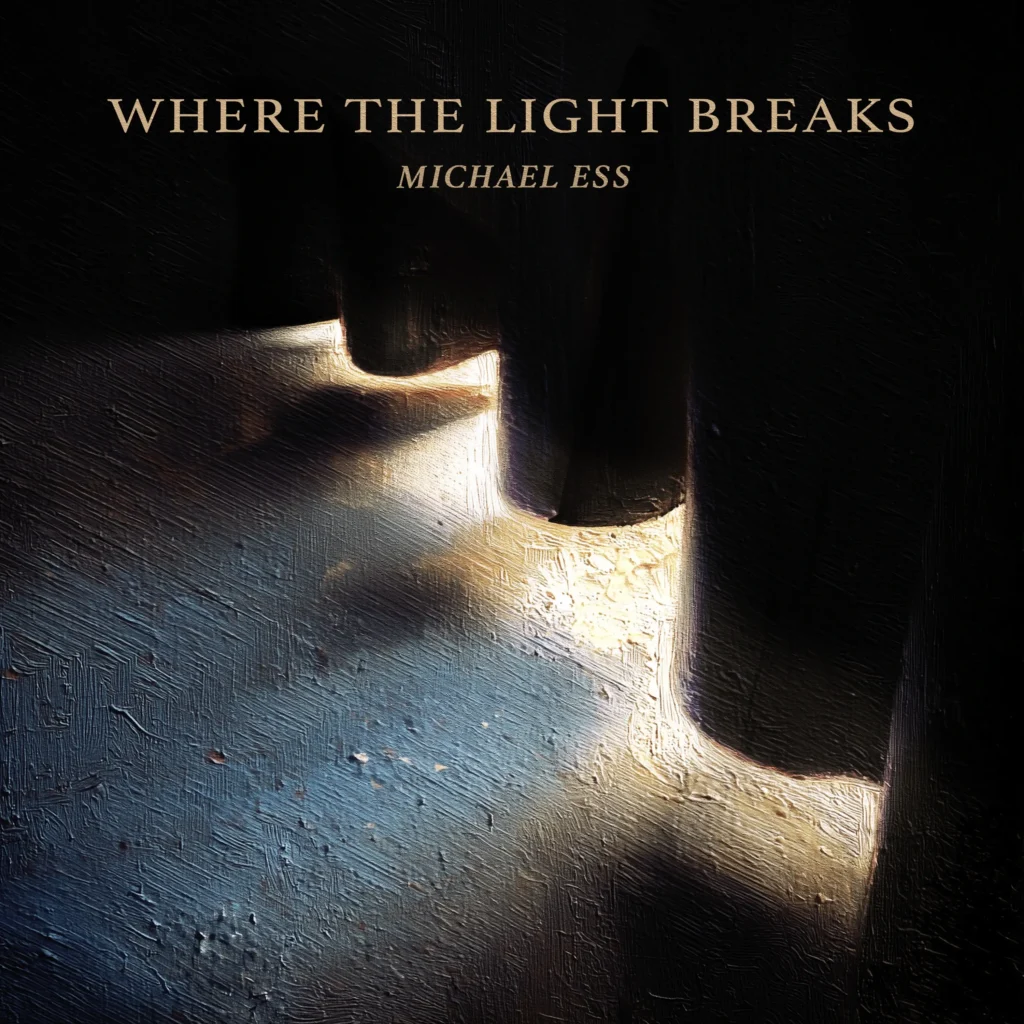
Michael Ess Offers A Little Bit Of Everything With “Where The Light Breaks”

With what seems to be a collection of love songs for the typical gentle lover, “Where The Light Breaks” is more than just its heartfelt lyricism — this album has a diverse musicality, ranging from blues, progressive rock, a sprinkle of pop essence in there, and the like. For seventeen songs, expect to be immersed and be drawn into in different ways. Michael Ess is the type of musician to reflect on things, and to dive into the intrapersonal aspect of things, as seen through his work. His music does not take the form of one genre nor can be categorized into one area, no; Michael blends and fuses different types of music. Yes, you may get the feeling that you’ve heard it before, but rest assured that every song in “Where The Light Breaks” has its own unique sound. Yearning, and the admiration for someone is evident in the thought-provoking “Aphrodite Dancing”, which sounds like a dance between tinkers and acoustic guitar. And when the chorus rolls around, the instrumentals are enhanced with newly introduced elements, serving as a sort of emphasis to what the song is about. Everything you hear is intricate in nature, and you really get the fantasy and symbolic aspect of what it all means, essentially creating a picture in every listener’s mind. “Reunion” is more of an upbeat track, with a consistent rhythm that keeps you upright. Compared to the first song, this one is different yet familiar in terms of the components in it, like the guitar fill-ins, as they have the same charm and style despite the overall difference in arrangement. The wordplay and rhyming scheme is fun to listen to; it can easily attract audiences of all ages with its similarity to classic tunes and the lyrics’ relatability. Think The Smiths, but a different font. Right off the bat, you can already tell what makes “As Silence Steeps” distinct from its neighbors just from the first few seconds of listening to it. Everything is more subtle, abrupt when it comes to the rhythm, but it also takes its time. It’s immersive, and it lets the melody of the vocals shine, with the instrumentals rendered as a mere accompaniment. “Two Hearts” steadily brews what it has to offer, starting off gentle, then slowly introducing the hypeman element that is the electric guitar. The variety in vocals adds depth and uniqueness to the record itself. By introducing a companion, it’s as if the album just had a full circle moment. Listeners essentially get the best of both worlds with this song, having both rock and a bit of a dreamy, pop situation going on. If a personal favorite were to be picked, it would be “My True Home”, a song that greatly contrasts “As Silence Steeps”. It has a hint of Beatles nostalgia, and nostalgia in general, due to the song’s nature. Incredibly catchy, the vocals and the guitar don’t outshine each other at all, as if they’re skipping side by side to achieve ultimate harmony. With every line, it provides a sense of security and comfort at the thought of home. Similarly, “Perfect” has the same base. It wraps up the album, as it once started with a bit of yearning, to become incredibly insightful, patient, while still managing to remain effortlessly in love and genuine as when it began. All in all, “Where The Light Breaks” not only offers a totally extensive experience of Michael Ess’ style of music, but it also has a notable concept or framework of what each song means and wishes to impart to the listeners. This album is a great pick for those who are genuine, those who seek or are in a relationship, or for those who wish to connect with the self or have a deeper connection with the world around them. Follow Michael Ess Globe Instagram Spotify Promoted Content About the Author

Michael Ess Offers A Little Bit Of Everything With “Where The Light Breaks” Read More »

No Rush, Just Rock with Electric High’s “Ain´t Got Nothing But Time”

While others try too hard to chase trends for that flashy, modern sound, Electric High does the opposite. They unearth the gold and classic rock n’ roll that’s exceptionally timeless with their latest single, Ain´t Got Nothing But Time. Electric High got the track rolling with impact right from the first note. The type that immediately makes you think, “Yeah, this is going to be good.” The riffs,  punchy drum strikes, and cracking bass guitar solo carry an irresistible groove and rhythm that locks you in until you can’t help but nod and stomp along. Ain´t Got Nothing But Time isn’t just all about its catchy, infectious arrangement—because lyrically? It’s just as sharp and impossible to shake off your ears.  “You ain’t got nothing but time Don’t rush it, don’t rush it Ain’t got nothing but time Stop spinning your head around” These are the kind of words you say when you’re overwhelmed but realizing that you also need to breathe. It goes on like a reassurance to release some tension and just vibe along until everything works out.  Electric High got that cool, ragged attitude of The Rolling Stones with moody, hypnotic energy of The Cult. But despite having that good old sound, there’s still a cutting edge that’s unmistakably theirs. And what you’ll hear from Ain´t Got Nothing But Time is like the work of a band who just had a great night and decided to capture that spark overnight at the studio. No overthinking, no rules—just pure grit and groove.  Follow Electric High Globe Facebook Twitter Spotify Soundcloud Bandcamp Youtube Instagram Promoted Content About the Author

No Rush, Just Rock with Electric High’s “Ain´t Got Nothing But Time” Read More »

By Blending That Precision With Mythological Weight, Exzenya Turns Intermittent Love Into Something More Than Just a Breakup Song

Some songs tell you a story about heartbreak. Others make you feel it. Intermittent Love from Exzenya, does both and then has the audacity to pull up a whiteboard and explain exactly how the heartbreak happened, complete with psychological terminology. It’s a soul-infused pop/R&B track built not just on emotion, but on the cold, clinical mechanics of human attachment. Specifically, something called intermittent reinforcement and intermittent punishment. That’s where love isn’t a steady, reliable presence, but a chaotic system of unpredictable rewards and punishments that somehow keeps you coming back. Imagine your favourite slot machine, but the jackpot is affection, and losing means emotional devastation. The first thing you notice is how dark the production feels. Not “sad ballad” dark; more like the kind of darkness you get when you’ve been underwater too long and you’re not entirely sure which way is up. There’s a slow, steady pulse, giving the song a sense of inevitability, like it’s not rushing to the chorus because it already knows you’re not going anywhere. Exzenya’s lead vocal is arresting. It’s warm enough to feel intimate, yet carrying a quiet edge that makes you wonder if you should trust it. And then there are the background vocals: high, pure, and intentionally siren-like. The moments of connection feel like salvation, so you ignore the rocks waiting beneath the surface. In the song, this plays out through arrangement choices; melodies that shimmer for a second before vanishing, harmonies that seem to hold you in place while the rest of the instrumentation subtly pulls away. It’s rare for a pop track to commit this hard to its concept without overexplaining it. The psychology is there for anyone who wants to dig; the behavioural science that shows why inconsistent affection creates such unshakable bonds, but you don’t need to know the term “variable-ratio schedule” to feel the trap closing. You just have to listen. By blending that precision with mythological weight, Exzenya turns Intermittent Love into something more than just a breakup song. It’s a map of a very specific emotional terrain; one where beauty and danger share the same address. And like any good map, it makes you curious enough to explore… even if you already suspect it ends somewhere you’d rather not go. In the end, it’s not about whether you recognize the behavioural psychology at work, or catch every lyrical reference. The song’s real trick is making you feel the cycle: the rush, the drop, the hope, the dread. And once you’ve felt it, good luck breaking free.  Follow Exzenya Globe Facebook X-twitter Soundcloud Youtube Instagram Tiktok Spotify Promoted Content About the Author
By Blending That Precision With Mythological Weight, Exzenya Turns Intermittent Love Into Something More Than Just a Breakup Song Read More »

Cowards and Shadows by Fiona Amaka Works Because It’s Not Forcing You to Feel Anything Specific

Some songs announce themselves like they’re running for office. Big choruses, flashy riffs, a handshake for every voter. Fiona Amaka’s Cowards and Shadows is… not that. This is the musical equivalent of someone slipping you a note in a crowded room and walking away before you can read it. It doesn’t beg for your attention; it just sort of exists, knowing full well that if you’re the right kind of person, you’ll lean in. First thing you notice? Warmth. But not “sunny beach holiday” warmth; more like the slow, creeping kind you get standing too close to a radiator in a small venue, the amps humming like they’ve been awake longer than you have. The mix feels physical. The bass doesn’t sit politely in the background. Rather, it wraps around the track like a heavy coat you didn’t know you needed. The guitars shimmer without ever tipping into “jangly optimism,” and the drums keep everything moving with the kind of patience usually reserved for good therapists and cats deciding whether to sit on you. Vocals? Imagine early Alanis Morissette fronting The Cranberries, except she’s just come from a long, slightly mysterious night out and she’s decided she’s going to tell you some of what happened, but not all of it. There’s vulnerability, sure, but also bite. The kind of delivery that lets a note hang in the air just long enough to make you wonder if it’s deliberate. Cowards and Shadows isn’t sneaking out in platform boots and face paint, waving a copy of Bowie’s Hunky Dory in your face. The Bowie link is subtler; more a shared instinct than a shared style. It’s in how the song holds two truths at once: sincerity and performance, confession and construction. Fiona Amaka delivers every line in that strange space where you can’t tell if she’s revealing something personal or just masterfully embodying a character who would. You lean in, not waiting for the mask to drop, but wondering if there ever was a mask or if the mask is the face. By the time Cowards and Shadows ends, it feels less like a conclusion and more like a pause. For those who like their indie rock cinematic, ambiguous, and driven more by mood than fireworks, Fiona Amaka has just built you your new favourite corner to stand in. Cowards and Shadows by Fiona Amaka works because it’s not forcing you to feel anything specific. It’s confident enough to just be, trusting you’ll meet it halfway. By the time it fades out, it doesn’t feel like an ending so much as a pause; the kind that makes you think, “Yeah, I’ll probably go back and live there again for a bit.” Basically, if you like your indie rock cinematic, slightly ambiguous, and more interested in mood than fireworks, congratulations: Fiona Amaka just gave you your new favourite corner to stand in.  Follow Fiona Amaka Spotify Youtube Instagram Promoted Content About the Author

Cowards and Shadows by Fiona Amaka Works Because It’s Not Forcing You to Feel Anything Specific Read More »