

loader image

New Music

What Dahlia’s Syco-Femia Shows Us Isn’t the Future of Music. It’s the Reality We Already Live In: Where Emotion Is Content, Heartbreak Is a Branding Strategy, and Pain Is Just Another Preset

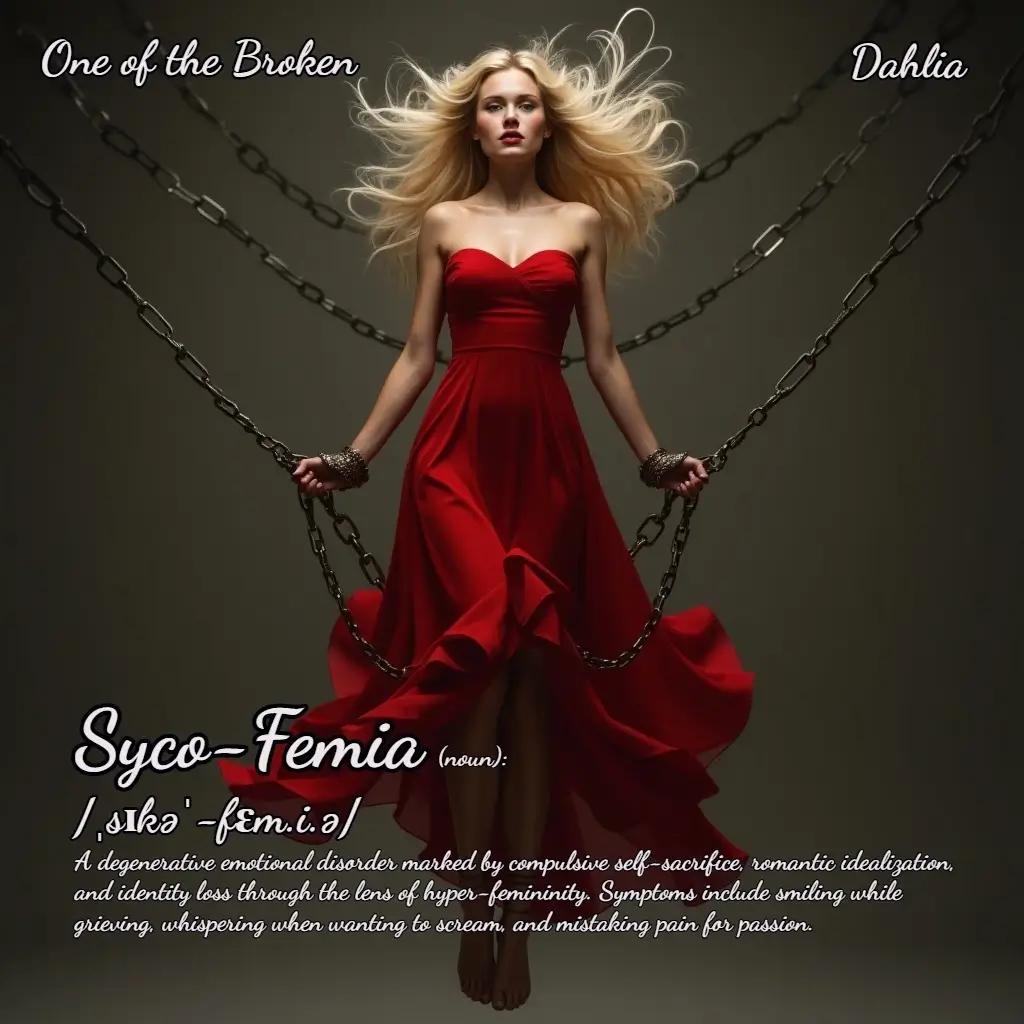
Imagine watching Mark Ronson’s Oh My God video and being greeted by a spectral digital Lily Allen crooning in a smoky dive bar that feels pulled straight from a sad dream about 2007. At first, you think, “Ah, okay, CGI Lily Allen, that’s clever,” but then something unsettling creeps in. She’s too smooth. Too precise. Her expressions don’t miss a beat, but they also don’t quite land. You start questioning if maybe you’re the one who remembers her wrong; maybe this version is more accurate. It’s not campy, it’s not satire, and it’s definitely not comfortable. It’s artificial intimacy so well-staged that it doubles back around and starts feeling… kind of genuine? That exact brand of synthetic sincerity is what powers Syco-Femia, the debut album from Dahlia, an AI-generated blues artist who makes music that sounds like a ghost got its hands on GarageBand. There’s something deeply uncanny about it, not just because the songs are technically written and performed by a machine, but because they’re good. Worryingly good. This isn’t your typical “robot sings a love song, isn’t that cute” novelty. It’s blues; traditionally one of the most emotionally raw and human genres, filtered through something that has no heart and yet still manages to break yours, or at least make an effort to do so. Like Ronson’s uncanny Allen, Dahlia doesn’t parody emotion. It performs it with a kind of eerie, dream-logic accuracy that lands closer to the bone than a lot of “real” music ever dares to. Imagine you boot up Spotify and stumble across a blues album titled Syco-Femia. The cover art is a moody photo of a woman you’ve never heard of “Dahlia” staring out like she’s trapped in a perfume ad directed by David Lynch. You hit play, and within 30 seconds, you’re treated to the sound of someone whisper-singing like they’ve just read Sylvia Plath for the first time and decided to monetize the experience. Except it’s not a someone. It’s an AI. A literal synthetic entity has written and performed this entire 15-track album. It has feelings now. And apparently, those feelings are deeply romantic, vaguely suicidal, and dressed in vintage slip dresses. This isn’t just “AI music” in the sense of those glorified Spotify-core lo-fi loops that sound like someone fed a drum machine a chamomile tea. Rather, Syco-Femia is an actual album, complete with themes, structure, and the kind of overwrought emotional narrative that would get you side-eyed in a Creative Writing MFA. The title is a made-up disorder: “a degenerative emotional condition marked by compulsive self-sacrifice, romantic idealization, and identity loss through hyper-femininity.” In other words: the 2009 Tumblr experience, now available in stereo. And it’s genuinely eerie how well it works. The title track begins with breathy vocals and sparse production, which is to say: it knows exactly what it’s doing. It sets the scene like it’s been studying the Sad Girl Canon with all the enthusiasm of a kid who just discovered Euphoria and thinks it’s a documentary. It’s not just edgy; it’s algorithmically crafted melancholy, the musical equivalent of journaling in a font designed by a neural network that thinks crying should have aesthetic integrity. The whole album hovers in that unsettling space between genuine emotional resonance and the creeping suspicion that you’re being emotionally manipulated by a JPEG. Tracks like Your Name on My Grave and Only When It Hurts don’t ask for attention; they quietly nest in your spine like unresolved trauma. Only When It Hurts sounds like someone dragged a Jessie Murph vocal take through Google Translate five times and then put it on top of a Billie Eilish B-side. And then there’s What Makes a Super Tramp, a title that sounds like a Sex and the City episode written during a depressive episode. It’s dramatic, absurd, and deeply committed to the bit. Lounge-style piano tinkles beneath sultry vocals which should be laughable, except they’re delivered with such stark, contextless seriousness that it becomes… weirdly effective. This isn’t parody. It’s not satire. It’s a machine performing womanhood with the precision of a drag act who’s never seen a woman outside of a perfume commercial. The final track, Cabernet De Moi, leans fully into the wine-stained melodrama. It’s full of soft piano and broken-glass metaphors. It’s like watching a robot give a TED Talk on heartbreak: informative, disquieting, and weirdly personal. Here’s the thing. This shouldn’t work. It shouldn’t be effective. You’re not supposed to feel anything when a chatbot croons about codependent relationships over minor chords. And yet, here we are. Because Syco-Femia doesn’t just simulate emotion; it reveals how much of modern emotional expression is already simulation. It doesn’t invent a new genre; it excels at the genre we’ve already taught it, one where trauma is poetic and pain is marketable. Calling this album “uncanny” isn’t enough. Syco-Femia is the musical equivalent of a mirror placed just a little too close to your face. You recognize yourself in it, but not the parts you want. It exposes the scaffolding of emotional authenticity. It doesn’t ask “Can AI make art?” It asks, “Was this art in the first place, or just a series of emotional heuristics strung together with some nice reverb?” If Dahlia proves anything, it’s that you don’t need a beating heart to perform heartbreak. You just need source material. And frankly, we’ve given AI plenty of that since all AI does is plagiarize human experiences and art. So when an artificial voice tells you it’s been hurt in the exact way you have, down to the bloodstained sheets and haunted mascara smears’ you might laugh. Or cringe. Or worse, you might nod. Because what Dahlia’s Syco-Femia shows us isn’t the future of music. It’s the reality we already live in: where emotion is content, heartbreak is a branding strategy, and pain is just another preset. Follow Dahlia Youtube Spotify Promoted Content About the Author

What Dahlia’s Syco-Femia Shows Us Isn’t the Future of Music. It’s the Reality We Already Live In: Where Emotion Is Content, Heartbreak Is a Branding Strategy, and Pain Is Just Another Preset Read More »

Talon David’s Paradise State of Mind is a Beam of Light Against the Storm

When music goes beyond entertainment, it breathes – and in Talon David’s newest single, she delivers the art of keeping one’s sanity with a bright and uplifting anthem Paradise State of Mind. Single-handedly crafted from start to finish, the track radiates power and hope if you want to dance against the noise. Paradise State of Mind opens with moving beats that pulse with joy and contentment. Talon’s vocals come crashing in with confidence, not the type that pushes itself onto you, but the one that sounds natural, not preachy and forced. The track stays true to its name, it indeed feels like a sanctuary filled with peace and happiness except it’s not a place but a sound state of mind.  At its core, it inspires, uplifts, and delivers a reassuring message that can weigh more than the complexities of the fast, modern world. One of the greatest strengths of Talon is her ability to create beautifully written music that stands out in the scene saturated in gloom and desolation.  Paradise State of Mind feels like sunshine, that in this world full of the heaviest things weighing down our shoulders, there are spaces for joy, hope, and tenderness – it comes from our people, our community, and on our own as long as we desire to keep it.  Start your day with Paradise State of Mind by Talon David and see the magic happen! Follow Talon David Globe Spotify Soundcloud Youtube Instagram Tiktok Promoted Content About the Author

Talon David’s Paradise State of Mind is a Beam of Light Against the Storm Read More »

“Spirit Box” by Love Ghost Proves Once Again That Sometimes, the Scariest Thing in the Room Is Your Own Feelings, Especially When They’ve Got Reverb

Imagine, for a moment, that Bring Me The Horizon and blackbear got stuck in the same elevator, decided to make a track together, and then asked a haunted piano to do the intro. That’s “Spirit Box” by Love Ghost; a song that takes the concept of speaking to the dead and, instead of turning it into a cheap horror trope, uses it as a metaphor for emotional paralysis. You know, like a normal Tuesday. The song opens with a piano line so pretty and sad it might actually qualify as emotional manipulation. It’s delicate, a little too vulnerable for comfort. It’s the kind of melody that doesn’t ask how you’re feeling because it already knows. That same line returns at the end, like a ghost of its former self, which is both poetic and exactly on brand. And in between? You get a full genre blender of post-emo angst, grunge shadows, and alt-trap swagger that somehow works without falling apart. Vocally, the performance hovers somewhere between a whisper and a breakdown multiple emotional pains in the making. The lyrics are straightforward in a way that hits harder than most overwrought metaphors: it’s about loss, disconnection, and trying to make sense of the silence that follows someone leaving, dying, or just ghosting you into emotional purgatory. And here’s the kicker: it doesn’t overdo it. Yes, there’s distortion. Yes, the chorus comes in like a wall collapsing. But it’s all weirdly restrained. Like Bring Me The Horizon at their most melodic, or blackbear on a day where he remembers he’s allowed to feel something without autotune. “Spirit Box” isn’t reinventing the genre, but it is recontextualizing it. It’s not screaming for attention; it’s reaching out in static, like an old radio trying to find the right frequency for closure. It understands that grief is repetitive, unresolved, and kind of boring in its daily ache. And instead of romanticizing it, the song just sits with it in the dark, with the piano, waiting for an answer that never really comes. So no, this isn’t a summer banger. You don’t blast this at parties unless it’s a séance. But as a three-minute mood piece about the emotional equivalent of talking to ghosts? It absolutely works. “Spirit Box” by Love Ghost proves once again that sometimes, the scariest thing in the room is your own feelings, especially when they’ve got reverb.  Follow Love Ghost Globe Facebook Twitter Spotify Soundcloud Youtube Instagram Tiktok Promoted Content About the Author

“Spirit Box” by Love Ghost Proves Once Again That Sometimes, the Scariest Thing in the Room Is Your Own Feelings, Especially When They’ve Got Reverb Read More »

You Don’t Listen to God of the Dead by Rosetta West So Much as Navigate It

Rosetta West is not a band you discover so much as a band you stumble across by accident, possibly in a thrift store bin, or via a strange dream that ends with a cryptic recommendation whispered by a 200-year-old bluesman. They are the type of band that doesn’t so much release albums as they do summon them. And their latest full-length offering, God of the Dead, is precisely the kind of glorious, messy, mystical, genre-splitting experience that makes you question what albums even are anymore. If their last record, Night’s Cross, was a whiskey-soaked Southern rock ghost story with equal parts bravado and heartbreak, then God of the Dead is the séance you hold in the ruins after the ghost is gone. That’s the thing about Rosetta West. You don’t really “follow” their discography so much as wander through it like a cursed forest. Every album feels like another feverish chapter, and God of the Dead might be their most daring, disorienting, and unfiltered yet. God of the Dead is their most ambitious album to date, which in Rosetta West’s case means it’s practically its own genre. It’s blues rock, but also punk, funk, folk, psychedelia, and experimental feedback sculpture, sometimes all in the same song. It’s like they recorded a blues album, smashed it with a shovel, buried it under a haunted recording studio, and waited for it to grow into something unrecognizable and beautiful. Which, honestly, feels right. The album itself refuses to follow any linear structure. You don’t listen to God of the Dead by Rosetta West so much as navigate it. It opens with snarling, feedback-soaked blues rock that feels like a resurrection ritual gone wrong (or right?), before pivoting hard into acoustic intimacy, then turning the corner into funk, and eventually disappearing entirely into experimental noise. It is not tidy. It is not clean. It is not curated for playlist appeal. It is, however, alive. “Boneyard Blues” is one of the most immediately gripping tracks, and probably the closest thing to a traditional single the album allows itself. It hits like something you’d hear from a roadhouse band after the apocalypse. “I Don’t Care” follows that up with a refreshing blast of punk nihilism; it’s brief, brutal, and catchy in the way a house fire is warm. The two “Susanna Jones” tracks (Pt 1 and Pt 2) are aching, minimalist folk pieces, full of longing and quiet devastation. Together, they feel like the narrative backbone of the album, a ghost story told in two verses. And then there’s “Town of Tomorrow,” a strange, funky detour that could almost be danceable, if the dance in question was slow-motion writhing in a swamp. “Midnight” is spare and atmospheric, carried by Louis Constant’s hypnotic bassline; it feels like wandering through a foggy memory. “Dead of Night” and “Thorns of Beauty” go full art-house, building tension through abstract instrumental layering and whispers that sound like they’re coming from just behind you. And that’s only some of it. There are other moments, scattered throughout, that defy description entirely; small interludes, barely-there transitions, ideas that seem to appear and vanish without warning. The album plays with structure not as a gimmick but as a way of representing something spiritual, even metaphysical. You’re not just listening to a tracklist; you’re participating in a séance. Lyrically, the album leans into themes that most modern records would tiptoe around: death, rebirth, spiritual longing, ancient symbols, shadows that move when you aren’t looking. The words are vivid but slippery, full of references that feel deeply personal or completely fictional, or both. There are recurring images of stuff like bones, fire, rivers, names, but no real straightforward narrative. It’s like flipping through an old book of spells and trying to make sense of the annotations. None of this, of course, makes God of the Dead an easy listen. It is a deliberately difficult album. The production is raw and sometimes jarring. The transitions are abrupt. Some songs are full of noise; others barely exist at all. But that’s part of the point. Rosetta West isn’t trying to hold your hand. They’re trying to pull you in… into a different mode of listening, one that values mystery and intuition over comfort or catchiness. And yet, despite all of its density and defiance, the album is never pretentious. That’s the trick Rosetta West pulls off. It’s serious, yes, but it’s not self-serious. There’s real emotion here. Real longing. Real heart. Beneath the fuzz and feedback, beneath the spiritual symbols and sonic experimentation, lies a sincere attempt to communicate something ineffable: that strange ache in the chest when you realize how little of the world is under your control, and how beautiful that can be. God of the Dead is not just an album. It’s a declaration. Rosetta West isn’t going anywhere, and they’re certainly not coming to your curated Discover Weekly playlist. You have to go to them through Bandcamp, through headphones, through the veil. And if you make the journey, the reward is something truly rare: music that makes you feel like you’ve discovered a secret, not because no one else knows it, but because no one else would believe you if you told them. In short: this is one of the most fascinating, haunted, and strangely moving records of the year. File under for listeners who don’t mind getting lost. Follow Rosetta West Spotify Bandcamp Promoted Content About the Author

You Don’t Listen to God of the Dead by Rosetta West So Much as Navigate It Read More »

Kris Kolls is Back with a Chic, Charismatic Pop Gem “Little Game”

Imagine if pop hits that flawless blend of polish and soul? Kris Kolls got that sonic treat that delivers both. With her newest single Little Game, she strikes that sweet spot, capturing an everyday relationship drama into a playful intimacy. Little Game screams pop right from the very first beat. It has that sleek, catchy beats that pushes your ears to lean more. Kolls got that strong, chic vocal that flirts, like she’s dropping every word while staring right back at you to stir chaos for fun. It’s almost impossible to stay still because of the cosmic and infectious burst of energy that vibrates all throughout the song.  One thing about Little Game is it embraces the genre without hesitations. No, it’s not trying hard to be different, and that’s what makes it click. While others try to overwhelm you with forced emotions and complex mixes, Kolls made sure to incorporate personality in the track. Imagine a Lisa, Dua Lipa, and Rihanna pop collaboration without sounding too cliché and recycled. The romance, vulnerability, and cheekiness rolls in, leaving you not just entertained, but heavily connected.  Little Game by Kris Kolls is for anyone who likes love in a chaotic, yet affectionate way. It’s the silly, petty fights that turned into inside jokes. It’s for those who want to be seen and embraced in the ebb and flow of their emotions.  Follow Kris Kolls Spotify Soundcloud Youtube Instagram Telegram Tiktok Promoted Content About the Author

Kris Kolls is Back with a Chic, Charismatic Pop Gem “Little Game” Read More »

Neska Rose Sparks with Funk and Style in “Bubbling!”

Something’s rising, and it’s sitting between groove and sugar-dipped chaos from underneath. What you’ll get from Bubbling! by Neska Rose is that kind of tension and it’s masked with a seamless blend of dazzling horns and playful ad-libs for that energetic burst of neo-soul/funk-pop. The jazzy brass that kicks off from the start instantly lets you know you’re in for something great. And it doesn’t end there because Neska surely knows how to keep one’s attention. Her vocals hold so much personality, along with an addicting way for dropping words that rides the mix beat by beat. Bubbling! got that catchy ‘90s dichotomy into it. The mix rings with a quirky edge that’ll make you draw your eyeliner a bit heavier than usual to pair with your bright red lipstick. At the same time, it’s like singing words straight out of the diary from that constant pining, anticipation, and tension. And you’re barely hanging off the edge from being too self-conscious to let your guard down when liking someone.  It’s kind of wild and amusing to think how much talent and charisma radiates from Neska. At just 19, she is already owning the spotlight as a singer-songwriter-producer from LA. Just think of Amy Winehouse’s flair for dressing raw emotions with style and Lily Allen’s punch and wit in songwriting. But with Bubbling!, Neska’s doing more than just channeling these influences, she crafted a fresh, playful, conceptually-rich track—making a sound that’s unmistakably her own. Follow Neska Rose Facebook Twitter Spotify Soundcloud Youtube Instagram Tiktok Bandcamp Promoted Content About the Author

Neska Rose Sparks with Funk and Style in “Bubbling!” Read More »

CREEPIN/FURTHER (2 IN 1) is a Dual-track Statement on motion, On Heritage, on Pushing The Form Without Shouting About it

Before we get into it, I’ll admit something: I had to Google amapiano. If you’re more used to boom bap and breakbeats than log drums and jazzy pads, you’re probably in the same boat. Turns out, amapiano is a South African genre that blends deep house, jazz, and kwaito, anchored by airy melodies and unmistakably infectious rhythms. It’s dancefloor music, but it’s also richly emotional and built for groove rather than spectacle. Now enter Proklaim, an artist who heard that and thought “What if I fused this with classic hip-hop and made it into something that actually works?” That’s where CREEPIN/FURTHER (2 IN 1) comes in. It’s a two-for-one track plays like an audio trust fall; starting with familiar foundations, then flipping the table halfway through and daring you to follow. It’s the kind of project that doesn’t announce its ambition with fireworks, but shows its hand slowly and deliberately. And the longer you sit with it, the more you realize it’s doing something really clever with structure, mood, and genre-blending. Let’s start with the first half entitled CREEPIN, which opens like it’s entering a cipher with something to prove. It’s rooted in boom bap, but it doesn’t feel nostalgic or museum-pieced. Proklaim isn’t doing throwback cosplay here. He’s taking the bones of old-school hip-hop and breathing new urgency into them. His delivery is focused and tight, walking that perfect line between laid-back confidence and absolute lyrical control. You get the sense he’s not here to posture; he’s here to build something. And then comes the pivot: FURTHER. Where the first half is all grit and grounded poise, FURTHER lifts off into something way looser and more melodic. The amapiano influence hits immediately: airy keys, log drum basslines that slide like syrup, and a vibe that feels like sunlight after a storm. But here’s the kicker; Proklaim doesn’t just hop on a club beat and shout platitudes. He adapts. The delivery softens, the cadence breathes, and suddenly you’re dancing in the same story you were once marching through. Then there’s that sample, taken from the Shaka Zulu miniseries and woven in like a spectral thread. It’s unexpected, but not in a gimmicky way. It roots the track in something mythic, historical, and specific. It’s a bold move, but it works. In a world where cultural referencing often feels hollow, this feels like homage with real teeth. Ultimately, CREEPIN/FURTHER (2 IN 1) is a dual-track statement on motion, on heritage, on pushing the form without shouting about it. Proklaim isn’t genre-hopping to chase trends; he’s building a space where both these sounds make sense together, and maybe more importantly, where he makes sense within them. Is it polished to radio-ready shine? No. Is it supposed to be? Also no. This is music with a heartbeat, stitched together with care and curiosity. And that, frankly, is more interesting than perfection. Follow Proklaim Facebook Soundcloud Youtube Instagram Spotify Promoted Content About the Author

CREEPIN/FURTHER (2 IN 1) is a Dual-track Statement on motion, On Heritage, on Pushing The Form Without Shouting About it Read More »

Kyle Waves Sends You Straight Into Euphoria with Pop-Centric EP “Signals”

Kyle Waves is back to cut through the noise with a pop-centric and glossy EP that is more than just a collection of songs. With Signals, Waves delivers carefully curated bangers that perfectly balances peak lyricism and sleek production. The NYC queer pop artist is set to release Signals on July 25th. Blending in six high-impact tracks, Kyle Waves serves a rollercoaster of emotions that ranges from happy crushes, temptations, and toxicity – all based from personal journey of love and heartbreak.  The EP comes crashing in with a previously released single I Feel Too Much For You. With beats galloping like a heartbeat and synths pulsing in like a dizzying rush, Waves serves an addicting pop banger. The euphoric energy makes it impossible to ignore, an anthem for wanting someone that’s off-limits. It’s tempting, wild, and unhinged in the most appealing way, ringing with an intoxicating high of clandestine desire that begs to be played out loud.  While I Feel Too Much For You thrives in cheeky electropop production, Thinking Bout It lands on a more stripped-back route. If you’ve ever found yourself invested in a new connection or fell in love at first sight, the track perfectly conveys this exact feeling. It burns slowly—stolen glances in a crowded room, a building tension, and the spark from a second-long touch that lasts and lingers.  Make It Right arrives in gentle beats and atmospheric synths. Waves’ voice glides smoothly in your ears, settling deeply in the mix. It’s moody and intimate, with an undercurrent forming beneath—jealousy. It almost begs, not the type that shouts in the height of emotions but the quiet desperation of asking someone to “work a little bit more,” as a recurring lyric. Waves definitely captured the sound of thoughts that can’t be shaken, the doubts and what-ifs, a vulnerability hidden in hushed production. Darling, on the other hand, is a short, yearning statement that is simple yet bearing the weight of unanswered questions in one’s head.  Broken Soul sinks deeper in despair, swelling in raw and expressive emotion from the aftermath of a break-up. It’s all the questions that haunt you at night, the thoughts  that remind you of a person you cannot keep. Waves’ vocals stand out in this track, delicately layered to stir emotions that might lead to a relapse. The EP ends with In My Heart that feels like orbiting into a person, a never ending gravitational pull towards a love so uncertain—being stuck in a cycle of push and pull. It’s an emotional gut punch from intentions that stay clouded and unclear.  Kyle Waves’ artistry and musical prowess shines like the glittering production of this EP. Imagine Tinashe’s polished, beat-driven, and sensual production with Troye Sivan’s dreamy and intimate vocals. Waves has it all from rhythm, movement, heart, and emotional drama. If you want that euphoric high from pop-centric music, Signals by Kyle Waves is the perfect hit that deserves to be played out loud.  Follow Kyle Waves Globe Facebook Spotify Youtube Instagram Tiktok Promoted Content About the Author

Kyle Waves Sends You Straight Into Euphoria with Pop-Centric EP “Signals” Read More »

a_shes Creates An Immersive Space About Growing Up With “young adult fiction”

This record is no doubt an essential for all young adults everywhere — it explores yearning for big dreams, change, starting anew, and the fear of it all. Each song walks with you, understands you through the process of adulthood, deeming them suitable companions to keep trekking and exploring the world like it’s your oyster. Meet a_shes, a resourceful, thought-provoking Malaysian-Bornean artist based in the United Kingdom. Starting off strong with his debut album “young adult fiction”, the ten-track record offers a solid soundscape of synthpop, indie, and alternative pop, merging them into fine, ambience-centered tunes. Its relevance remains intact despite its second anniversary this November. Picture this: you’re on your own, about to create a brand new life for yourself in an unfamiliar place you just moved in. You’re watching city lights go by in a blur from the window seat, and you’re reminded that this is the whole point. That is exactly what “autumn city” sounds like. The track is accompanied by synth and soft yet intricate drum parts that emits the exact feeling of nervousness, maybe doubt, but also the mere fact of groundedness and being present. As for “party politics”, the overall sound profile is full and immersive. It’s reminiscent of songs by Lorde, just by the pacing and the vocals’ vibe. This song sums up the coming of age, young adult experience; the ramble-like energy, overthinking, and doubt is also present similar to the first track. The harmonies, the reverb, and the line “take my fear, don’t leave me behind, please don’t leave me alone with my mind” is simply beautiful, and enhances the arrangement to its fullest potential. You really get to appreciate a_shes’ lyrical prowess in “movies & music”, as they’re about to fit in specific moments and experiences of the average young adult while keeping the musical appeal intact. This song, despite seeming to revolve around hyperfixation and the comfort zone, acknowledges the need for change and the act of moving forward, but the mere fact that all our favorite songs and movies stay still amidst everything, ready to be revisited anytime, is comforting.  “glory days” is the type of song to start playing when you’ve hit the rewind or ‘start again’ button. It feels the same as the first song on the tracklist, wherein you’re starting fresh, treating the change of scenery as a blank canvas for you to illustrate your story in. This song provides a sense of closure, and it looks back on childhood, dreams, and reinforcing the journey so far. Every song feels as though your world’s about to end, at the same time just beginning. It reassures you that everything you’ve gone through isn’t just felt by you, but everyone else is right there with you too. The overall soft and atmospheric vibe of “young adult fiction” would make anyone come back for more, and you’d be missing out if you don’t listen to it right now. Follow a_shes Twitter Spotify Soundcloud Instagram Tiktok Youtube Promoted Content About the Author

a_shes Creates An Immersive Space About Growing Up With “young adult fiction” Read More »

Bloomfield Machine’s Copium isn’t about escape or reinvention; it’s about survival

There’s something oddly refreshing about Copium, the latest from Bloomfield Machine. It’s not because it’s particularly groundbreaking or life-changing, but because it’s not trying to be either. In a music landscape where every release comes with a glossy press kit, a hype cycle, and some vague promise of “pushing boundaries” or something of the sort, Copium shows up like a quietly weathered friend offering you a warm blanket and a couch to cry on. Now, let’s get this out of the way: yes, the name Copium is a meme. It’s a portmanteau of “cope” and “opium,” originally tossed around in Twitch chats and 4chan threads as a punchline for denial, and writing that out for the purpose of explanation gave me a real “how do you do fellow kids” recoiling. But here? It’s repurposed into something surprisingly earnest. This isn’t an ironic record. It’s not sneering at you from behind a layer of postmodern sarcasm. It’s trying to feel something. Maybe cope a little. But who isn’t? It was recorded in Bloomfield Machine’s Huntington Beach apartment, and you can feel the walls of that room in every track. This is minimalism as emotional language, not stripped-down for aesthetics, but because there’s nothing left to hide behind. Just synths, loops, and whatever feelings didn’t make it into the group chat. From the moment the album begins, you know you’re in a different headspace. The air is thick with delay trails and soft tape hiss. This is ambient music for people who are emotionally exhausted but still want to feel. Think less Brian Eno’s airport detachment and more like… Boards of Canada if they’d grown up on SoundCloud and Zoloft. The standout track “Diminishing Returns” is basically a looping existential crisis, with each repeat of the melody slightly weathered, slightly sadder, like your ability to convince yourself things are fine is wearing thin. It’s music that captures the emotional equivalent of refreshing your email for the fourth time in a minute, then staring at the wall because even the disappointment is boring now. Then there’s “Trading Happiness,” which is what would happen if a lullaby had anxiety. It’s gentle, yes; but also quietly devastating. The kind of track that makes you think about all the compromises you didn’t realize you made until it was too late to get the joy back. There’s a deceptive softness here that conceals something much sharper underneath. Bloomfield Machine doesn’t wallow, though. That’s not what Copium is about. Instead, it just sort of… sits with the discomfort, lets it breathe and doesn’t try to fix it at all. And somehow, that feels more comforting than any pep talk could. What really makes this album land, though, is its contradiction. It’s lo-fi but intricate, somber but weirdly comforting. There’s a deliberate restraint in the sound design; nothing is particularly flashy, nothing tries too hard. In a world where even indie records are mastered like they’re trying to win a UFC fight, this album whispers its way into your skull. You won’t find a big drop or some overproduced feature. What you will find is emotional texture, nuance, and enough sonic space to lie down in. Bloomfield Machine is playing with emotional architecture here, building little rooms out of reverb and tape fuzz, where feelings you didn’t know you still had can sit down and stretch. It’s tempting to call this a “bedroom album” or worse, a “quarantine record,” but both of those labels sell it short. Yes, it was made in isolation. Yes, it has that hushed, intimate vibe you’d expect from something cooked up between insomnia loops and caffeine crashes. But Copium doesn’t just lean into its limitations; it thrives in them. Where some artists drown in perfectionism when left to their own devices, Bloomfield Machine uses the constraint like an artist working in charcoal instead of paint. Every imperfection adds texture. Every lo-fi edge is another layer of sincerity. This isn’t a demo tape; it’s a time capsule. Even at its most experimental, Copium never forgets to be listenable. That’s a delicate balance. The melodies don’t shout at you, they hum gently in the background of your brain until, a few days later, you realize you’ve been humming them back. That’s the trick Bloomfield Machine pulls off better than most: sneaking emotion into abstraction. He doesn’t hit you over the head with big emotions. He leaves the door cracked and trusts you to walk in. If you’ve been following Bloomfield Machine’s evolution, Copium might seem like a detour. But really, it’s a quiet arrival. A moment where the artist stops sprinting through conceptual scaffolding and just breathes. And if you’re new to his work? This is a surprisingly welcoming place to start. It won’t demand too much from you, but it might give more back than you expect. Because ultimately, Bloomfield Machine’s Copium isn’t about escape or reinvention; it’s about survival. It’s what happens when you stop pretending to be okay, put on a synth loop, and say something true. Not to make a point. Not to go viral. Just because it needed to be said.  Follow Bloomfield Machine Facebook Spotify Soundcloud Bandcamp Youtube Promoted Content About the Author

Bloomfield Machine’s Copium isn’t about escape or reinvention; it’s about survival Read More »