
Artists are constantly confronted with the expectation to innovate and reinvent themselves, and to produce something that is timeless and can outlast the very trends that made their music relevant. The concept of originality is often outweighed by factors reliant on how palatable something is—if it is catchy or if it has a familiar tune; and it is more cutthroat given the fact that the musical landscape of today is an ever-changing ecosystem of sounds, techniques, and technologies. That is to say, artificial intelligence (AI) has changed the game forever.
In fact, AI has become a source of buzzing debate both of fascination and contention because it challenged many traditions in music. It also sparked many conversations regarding creativity and authenticity, as well as the relationship of the artist and their art. Some listeners may find themselves unknowingly drawn to several artificially produced music and may find it quite difficult to recognize its origin and may say that AI produced work rivals that of human musicians. In fact, and this may sound a bit controversial, some may even say that AI produced music sounds way better than organically produced ones. However, it still stands that technical proficiency and emotional resonance are not necessarily interchangeable.
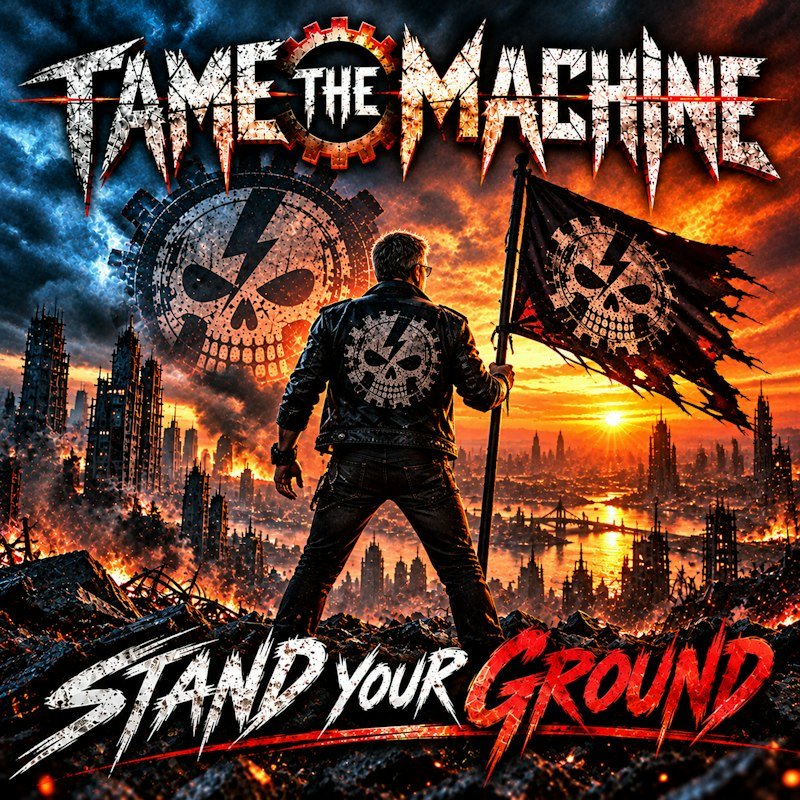
Tame The Machine, in this case, is a conception of a human-machine creative collaboration. The core goal is to produce music that pushes the limits of creative and sonic boundaries. That, they did with the release of Stand Your Ground, which explores human sensibility, technology, and storytelling. Rather than treating technology as a convenient shortcut, AI is positioned as part of a larger creative conversation.
On one hand, the same way that traditional music techniques are used, AI platforms to produce music can also generate and reproduce sound, but this time, with extraordinary efficiency and consistency. On the other hand, human creativity brings intention and interpretation. The collaboration of these two concepts brings about the whole premise of Stand Your Ground.
At the forefront of the record, Beneath The Breaking Point establishes the atmosphere and mood of the album. Its gritty vocals, strong beat of the drums, the rhythmic articulation of the bass and guitar forms a crucial introduction for the sonic identity of the album.
Having known the origin of how the album was made, songs like The Line We Draw and Heart Of The Champion prove to be more technically impressive. The chord progression and harmonic movement are expertly plated along with delivery of each lyric.
There are also moments where a delayed entrance introduces a certain tension in the sense of arrival of the song. This is especially true for One Foot In The Bar where timing is equally nuanced. A deliberate change in the instrumental colors and rhythmic patterns can alter the song’s energy, and definitely, a shift in register can make the song feel more expansive or intimate. Likewise, the register and tonal character of the voice accompaniment can change the perceived emotional distance between the artist and the listener.
Viewed in a wider lens, Stand Your Ground is an album that makes one ponder on how technological intervention can create something artistically meaningful. For the record, this is a rhetoric, answerable through the balance of production and composition by advanced AI technology and human sensibility.
The conversation should not stop with the involvement of AI technology. In the end, the whole point of art and creation is not simply about whether a machine can make music that sounds human. It is whether the music, however it was made, can make a human being feel something—and Tame The Machine seemed to understand that perfectly.
Follow Tame The Machine
About the Author

Writing works ranging from news, features, press releases, and scripts for technical and creative content.