
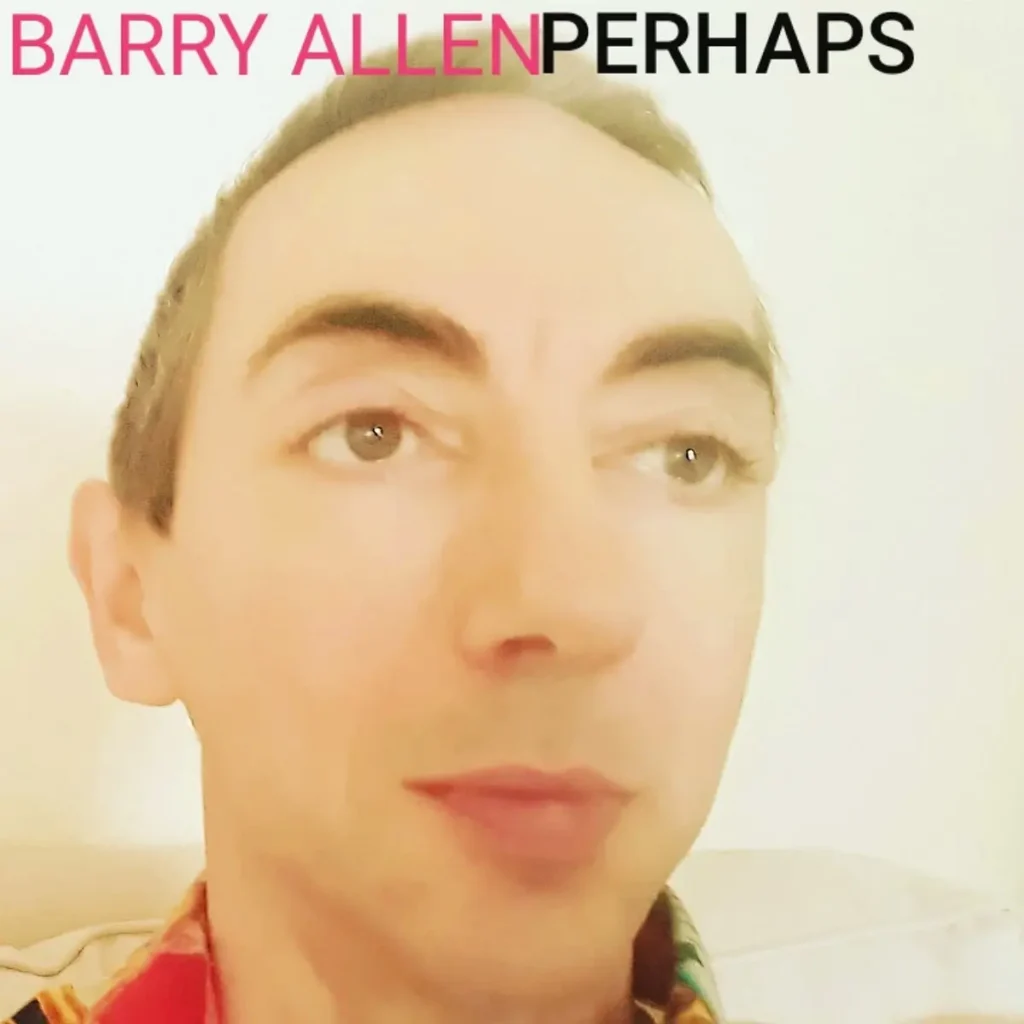
There’s a certain kind of album that doesn’t try to win you over. It doesn’t do the big, glossy, “look how important I am” thing. It just kind of sits there, awkwardly, like someone in the corner of a party holding a drink and hoping you’ll come talk to them. Perhaps is very much that kind of record. Barry Allen’s album doesn’t announce itself as a masterpiece, or even as something especially bold. Instead, it just quietly opens up and starts telling you how it feels, which is somehow both incredibly disarming and a little terrifying.
Allen draws heavily from the lineage of folk confessionals like Joni Mitchell’s emotional clarity and Roy Orbison’s operatic vulnerability, but Perhaps isn’t just an exercise in tasteful nostalgia. The album was recorded in a home studio in Chessington with pianist Mike Cliffe, a classically trained musician Allen met at the YMCA, which feels like a detail from a lost Richard Curtis film but ends up being crucial to the album’s texture. This is not a slick, industry-shaped project. It sounds like two people sitting in a room, trying very hard to tell the truth. And that truth is, quite frankly, messy as their head space.

The opening track, “Stay,” doesn’t ease you in so much as it drops you straight into the emotional deep end. It’s a plea that barely disguises how terrified it is of being ignored. The song’s restraint is what makes it devastating; no bombast, no dramatic climax, just the quiet ache of wanting someone to choose you. In the context of the album, it establishes a theme that will keep resurfacing: the fear that love is temporary, and that maybe you are too.
“Beautiful Thing” and “Perhaps” continue this tension between hope and doubt. The title track in particular feels like an entire philosophy compressed into three minutes. “Perhaps” is not just a word here; it’s a worldview. Everything in this song feels provisional, tentative, as if Allen is constantly leaving himself emotional escape routes. It’s not indecisive; it’s honest. Certainty, after all, is usually a performance.
“We’re Here, We’re Queer” is a song that could have easily been clumsy or slogan-heavy but instead comes across as gently defiant. It doesn’t demand attention; it asserts existence. In an album so preoccupied with being seen and loved, this track feels like a turning point. For a moment, Allen isn’t asking for permission to be himself; he’s just stating it.
“The Two of Us” and “Marvellous” pull the album back into intimate territory. These songs feel almost too small for the weight they carry, which is exactly why they work. There’s something incredibly moving about hearing someone articulate devotion in such unassuming terms. No grand gestures, just the quiet miracle of choosing another person over and over again.
“High and Lowly” closes the record on a note that isn’t quite hopeful, but isn’t hopeless either. It feels like acceptance; not of happiness, necessarily, but of complexity. Of the fact that being alive means constantly oscillating between the two.
Perhaps isn’t the kind of album that kicks down your door and demands you listen to it. It doesn’t scream for attention, and it definitely doesn’t try to convince you it’s important. It just kind of… exists. It sits there quietly, like a friend on the couch who’s not going to start talking unless you do first. And if you’re in the right mood; if you’re a little tired, a little reflective, maybe a little emotionally bruised, it slowly opens up.
You don’t get everything from this record on the first listen. It doesn’t really work like that. It’s not built for instant hooks or viral moments. It’s built for when you’re driving alone at night, or lying in bed staring at the ceiling, or washing dishes and letting your brain wander into places you usually try to avoid. That’s when it starts to hit. That’s when you realize the songs aren’t trying to impress you; they’re just trying to sit with you.
And that’s kind of the whole deal with Perhaps; it waits for you to show up. It waits for you to bring your own feelings into it. If you’re not in the headspace for that, it’ll just sound like some nice, soft folk songs and that’s fine. But if you are; if you’re willing to be a little emotionally honest with yourself, it suddenly feels like the album is talking directly to you. Not in a spooky, magical way. Just in that very human way where someone else has put words to something you’ve been carrying around without knowing how to say it.
All in all, Perhaps is a record that doesn’t pretend to have answers, but is brave enough to ask the questions out loud.
Follow Barry Allen
About the Author

A tenured media critic known working as a ghost writer, freelance critic for various publications around the world, the former lead writer of review blogspace Atop The Treehouse and content creator for Manila Bulletin.