
There are two kinds of protest albums. The first kind are loud about it. You know the type: guitars turned up, slogans shouted directly at the nearest microphone, maybe a chorus that feels designed specifically for chanting at a demonstration. They’re not subtle, but that’s sort of the point.The second kind are quieter. Reflective. The sort of records that don’t so much shout about injustice as stare at it for a long time and then write something thoughtful, sometimes angry, sometimes sad and all of it really more about how strange the world has become.
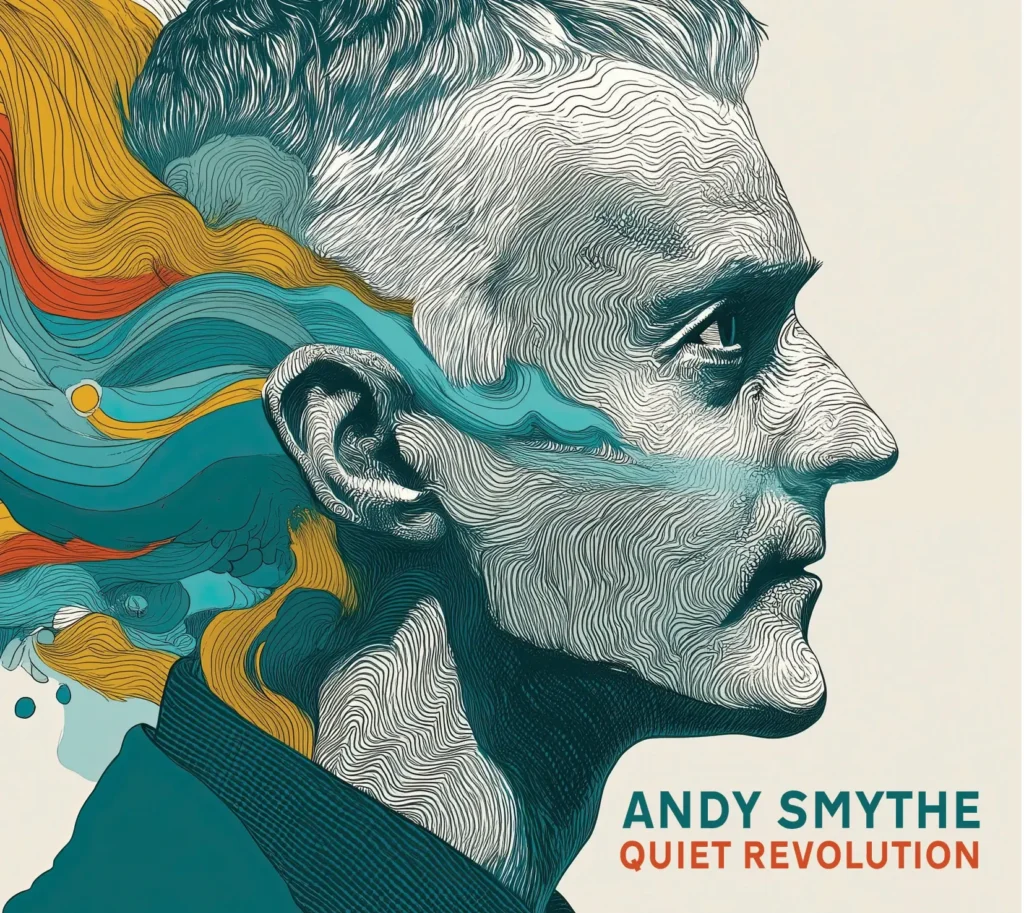
Andy Smythe’s Quiet Revolution very clearly belongs to the second category.
This is Smythe’s ninth studio album, which is the sort of fact that tells you two things immediately. First, this is not a new artist suddenly discovering songwriting as a vehicle for social commentary. Second, he’s been doing this long enough to have figured out exactly how he wants his records to sound.

His influences are pretty clear: stuff from Nick Drake, Leonard Cohen, Bob Dylan and the Lennon/McCartney songwriting tradition all hover somewhere in the background, but Quiet Revolution doesn’t feel like a nostalgia exercise. Instead, it plays more like a carefully constructed snapshot of a particular moment in time: specifically, the strange political and cultural atmosphere of our current days.
The album opens with “Life of a Man” and it immediately establishes the record’s central tension. Musically it’s warm and almost laid-back; a shuffle supported by horns and harmonica, but lyrically it’s sharp and observant. Smythe writes about generational pressure, social expectations and the uneasy feeling that the rules of modern life don’t quite make sense anymore and that sense of quiet frustration becomes a recurring theme.
The album’s title, Quiet Revolution, is less about literal revolution and more about the emotional state of someone watching the world drift toward increasing inequality and wondering how we got here. Smythe’s songs circle around issues like the concentration of wealth, social fragmentation and the gradual erosion of civic ideals but he rarely addresses them directly. Instead, he frames them through stories, relationships, and personal reflections.
Take “Love Ain’t Free.” On the surface it’s a relationship song, but underneath it’s clearly grappling with the fallout from Brexit, not through political slogans but through the emotional confusion that followed it. The arrangement wraps the song in acoustic guitar, fiddle, and layered vocals, while Smythe poses a simple but pointed question: “Whatever happened to liberty, free speech and dignity?” It’s protest music, but filtered through introspection.
Musically the album moves through a surprising range of textures. Smythe is a multi-instrumentalist. He’s playing guitars, piano, bass, organ, harmonica and that flexibility shows up in the arrangements. Across the record you’ll hear strings, trumpet, saxophone, fiddle, and various acoustic instruments weaving together into something that occasionally resembles a small folk orchestra.
At times the album even feels slightly theatrical, unfolding more like a musical narrative than a straightforward collection of songs. There are moments that recall the ambitious studio experimentation of late-60s records; the kind of sprawling conceptual thinking associated with albums like Sgt. Pepper’s Lonely Hearts Band.
That theatrical quality becomes especially clear in the way Smythe uses his voice. The contrast makes the album feel like it’s moving through different characters or perspectives. One of the more striking songs is “Half Empty, Half Full.” The track begins sparsely before the full band enters about a minute in, adding weight to Smythe’s lyrics about resilience and perception. A trumpet line drifts through the arrangement, giving the song a slightly Waterboys-like sense of grandeur.
Meanwhile “The Rage In Me” introduces a darker, more percussive atmosphere. It’s one of the album’s angrier moments, though even here the anger feels measured rather than full-on explosive.
Elsewhere, Smythe experiments with lighter tonal shifts. “Leviathan,” for example, incorporates a subtle ska rhythm, which adds a surprising sense of optimism to a song otherwise concerned with large-scale societal problems.
The album’s central identity remains consistent: thoughtful, observant songwriting supported by carefully crafted arrangements. Smythe clearly spends time shaping the musical environment around each lyric, making sure the instrumentation reflects the emotional tone of the stories being told and that attention to detail is what ultimately makes Quiet Revolution great.
This isn’t a protest album that tries to overwhelm the listener with anger. Instead, it’s a record that captures the feeling of living through uncertain times; the frustration, the disbelief, the occasional flashes of hope.
Smythe doesn’t present himself as a revolutionary leader. If anything, he comes across more like an observer standing slightly to the side of the crowd, quietly documenting what he sees which, in the end, may be exactly what the title was suggesting all along.
Follow Andy Smythe
About the Author

A tenured media critic known working as a ghost writer, freelance critic for various publications around the world, the former lead writer of review blogspace Atop The Treehouse and content creator for Manila Bulletin.