
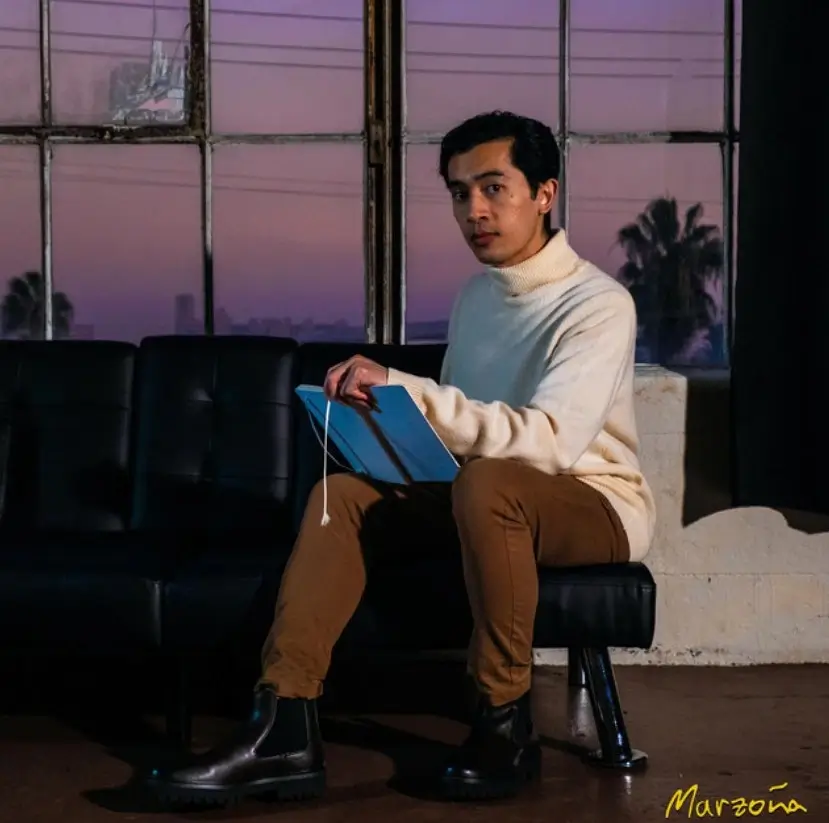
There is a very specific emotional phenomenon that happens when the weather gets cold. Suddenly, everyone becomes reflective. Playlists get sadder. Text messages get longer. Memories you thought were safely archived in your brain’s “Do Not Reopen” folder start aggressively resurfacing. And into this seasonal emotional chaos steps Marzoña with Love Songs For Colder Weather, an album that understands, on a molecular level, what it feels like to be a hopeless romantic in a hoodie at 11 p.m.
This is not an album for people who are “chill about relationships.” This is an album for people who overthink, romanticize conversations from three months ago, and somehow convince themselves that winter is spiritually important. Marzoña frames the record around the idea that colder months reignite old feelings and emotional patterns. Cuffing season becomes less of a meme and more of a psychological case study. And honestly? He makes a compelling argument.

Structurally, this album works like a seasonal diary. Each track feels like a chapter in an ongoing emotional narrative, documenting the cycle of attraction, hope, disappointment, recovery, and immediate relapse. Marzoña’s background love for musical theater plays a big role here. Many of these songs aren’t just “vibes.” They have arcs. They have emotional beats. They have beginnings, middles, and ends. Sometimes they feel like tiny one-act plays about modern romance, just with better hooks.
Musically, Love Songs For Colder Weather exists in an interesting crossroads. You can hear traces of Childish Gambino’s genre flexibility, Ed Sheeran’s intimacy, Arctic Monkeys’ emotional restraint, Justin Timberlake’s polish, and even Drake Bell’s early pop-rock earnestness. But the strongest DNA I found comes from bands like Now, Now, Great Good Fine Ok and Aim and Ignite-era fun. That blend gives the album its soft indie-pop core with bursts of theatrical energy and emotional brightness.
Vocally, Marzoña often lands close to Jon Bellion territory for me: tight, expressive, intimate, and slightly confessional. It feels like he is performing inside your headphones rather than at you. This works in the album’s favor, because these songs are fundamentally about internal dialogue; about what people say out loud versus what they’re actually thinking.
The tracklist unfolds with intention. “A-List” opens things up by tackling validation and emotional ambition: wanting to matter, wanting to be chosen, wanting to be someone’s priority. It establishes the album’s central tension between confidence and insecurity. “Down For Whatever” follows with early-stage optimism, that phase where everything feels possible and red flags are still politely ignored.
“Obviously” and “Plans” mark the point where reality starts creeping in. These songs examine mismatched expectations and emotional assumptions with surprising maturity. Marzoña doesn’t dramatize conflict. He documents it. The quiet frustration in these tracks feels painfully familiar to anyone who has ever pretended they were “fine” with something they were absolutely not fine with.
“Honeymoon” leans into fantasy and idealization, capturing the emotional high of believing that this time is different. It’s earnest, dramatic, and intentionally a little over-the-top—like love itself tends to be. This is where the album’s theatrical instincts shine brightest.
The back half turns inward. “Cuticles” uses small, almost mundane imagery to represent emotional anxiety, proving that heartbreak doesn’t always arrive with fireworks. Sometimes it shows up in nervous habits and overanalyzed gestures. “Something About You” revisits obsession and emotional residue, that lingering attachment that refuses to fade.
“Maybe Tomorrow” closes the album with uncertainty instead of resolution. There is no grand emotional bow tied around the narrative. Just cautious optimism and the quiet acceptance that some stories don’t end neatly. Which, frankly, is the most honest choice possible.
What makes Love Songs For Colder Weather work is its balance of self-awareness and sincerity. Marzoña knows he is writing romantic, emotionally exposed music. He knows it borders on dramatic. He knows it risks cliché. And he commits anyway. There is no ironic distancing here. No emotional safety net. These songs mean what they say.
Production remains clean and approachable without becoming sterile. Everything is arranged to support the emotional core rather than distract from it. You can tell this album was carefully constructed, revised, and genuinely cared for. It feels made, not assembled.
Love Songs For Colder Weather stands out by being unapologetically earnest. It is thoughtful without being pretentious, dramatic without being exhausting, and sincere without being naive. This is music for cold nights, long walks, unsent messages, and people who still believe feelings are worth the trouble. With this album, Marzoña proves that being a hopeless romantic is not a weakness; it is a creative superpower.
Follow Marzoña
About the Author

A tenured media critic known working as a ghost writer, freelance critic for various publications around the world, the former lead writer of review blogspace Atop The Treehouse and content creator for Manila Bulletin.