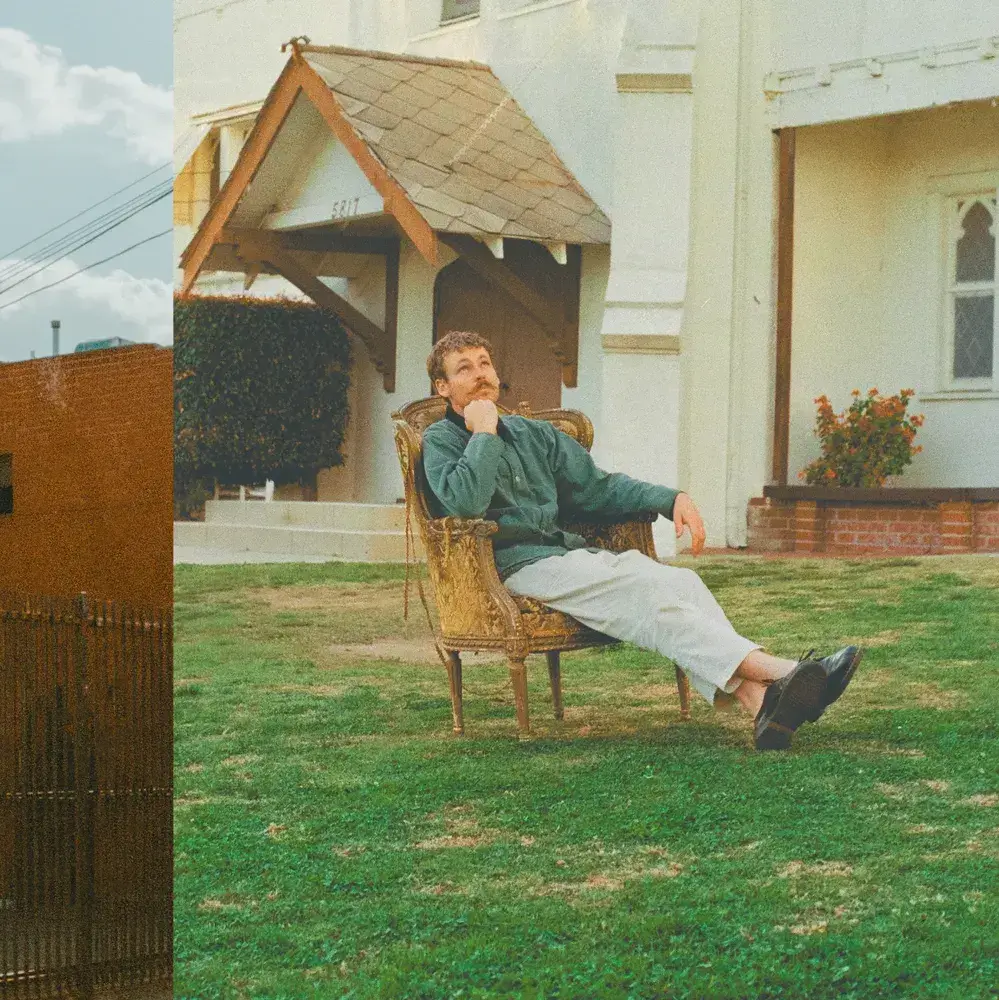

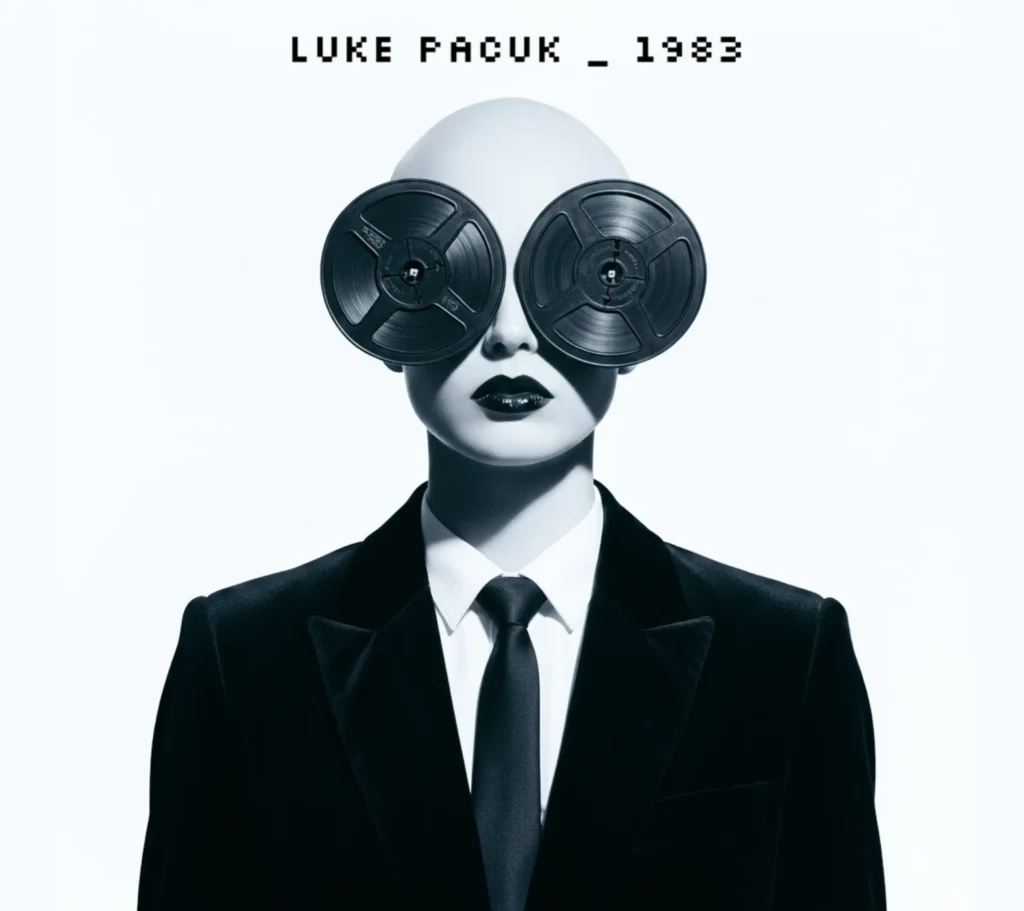
Luke Pacuk’s 1983 isn’t just another artist raiding the thrift shop of eighties nostalgia. If anything, it’s a full-scale reconstruction project. This record doesn’t merely wear its influences on its sleeve; it embalms them, reanimates them, and sends them staggering into the modern world with unnerving confidence. The result sounds less like a retro pastiche and more like a broadcast from a parallel timeline where post-punk and new wave never died, just got meaner, smarter, and slightly more self-aware.
Luke Pacuk (who wrote, performed, and produced everything himself) has built a sonic universe that feels tactile and human despite its mechanical surface. He leans into the contradictions that defined the best eighties records: synthetic yet emotional, angular yet lush, alien yet somehow deeply personal. The title itself is an obvious homage, but what 1983 really captures is the anxiety of living in an era that worships the future while quietly mourning the present.
The opener, Emily is the first real spark of warmth, riding a bassline that sounds straight out of a lost Factory Records session. It’s got that post-punk propulsion; the feeling that the song itself is sprinting toward a horizon it’ll never reach. Pacuk’s vocal delivery is more emotional here, less filtered, and it’s where his approach to melody starts to shine. He doesn’t write hooks so much as haunt them. Everything feels slightly unfinished, as if he’s deliberately leaving space for the listener to fill in the blanks. That tension between construction and collapse becomes the album’s recurring motif.
By the time Death Has Found Us arrives, the record has fully slipped into its nocturnal groove. The track fuses post-punk basslines with art-rock atmospherics, channeling the kind of manic energy that makes you feel both alive and slightly doomed. It’s dark but not self-serious; Pacuk clearly understands that melodrama only works if you let it border on the absurd. The production feels bigger here, with swirling guitar feedback and synth layers stacked like scaffolding. It’s the sort of track that could easily collapse under its own weight, but Pacuk holds it together through sheer conviction.
The title track, 1983, hits like a time machine crash-landing in a neon alley. The drums slam around in huge reverb, the synths swirl like a storm over a half-dead city. It’s moody, weirdly cinematic, and just self-aware enough to avoid sounding like a costume party. Instead of just copying the ’80s, Pacuk digs into its ruins; finding beauty in the decay, emotion in the static. It feels less like nostalgia and more like someone rebuilding a broken future out of flickering lights and old tape hiss.
Keep Dreaming shifts the energy again, embracing synth-pop brightness without losing the album’s underlying unease. It’s sleek, danceable, and deceptively optimistic; like someone smiling while the ceiling caves in. This is where Pacuk’s production really shines. He knows how to make cheap gear sound expensive and polished equipment sound like it’s being held together by duct tape. There’s a tactile messiness to it all; a reminder that perfection is often the enemy of emotion.
Tracks like Blue Morning and The Sound of Fire operate as two halves of the same nervous system. Blue Morning is introspective and slow-burning, a haze of synth swells that feels suspended in time. It’s the comedown after the rush, the moment you realize the party’s over and the lights are still flickering. The Sound of Fire picks the pace back up, driven by sharp, chiming guitar riffs that wouldn’t sound out of place on an early U2 record, but filtered through Pacuk’s more claustrophobic sensibilities. Together, these two tracks form the emotional core of 1983: the push and pull between hope and decay, between holding on and letting go.
As the album moves into its final act, It’s Over Now strips away much of the gloss. The production becomes minimal, giving space for Pacuk’s vocals to sit closer to the surface than anywhere else on the record. It’s quietly devastating; the sound of someone coming to terms with everything that’s already fallen apart. There’s no grand catharsis here, just resignation. And yet, in that restraint, there’s something almost comforting.
Then comes You Gotta Go Home, the closing track that feels deliberately out of step with everything that precedes it. Gone are the synths and mechanical rhythms; in their place are acoustic guitars and the faint hum of something that might actually be hope. It’s raw and vulnerable in a way that feels almost jarring after thirty minutes of digital tension. It doesn’t resolve the album’s emotional contradictions; it just acknowledges them, and maybe that’s the point.
Across its ten tracks, 1983 doesn’t so much revive the sound of a bygone era as it interrogates it. Pacuk uses the familiar language of the eighties; its drum machines, its shimmering guitars, its longing: all of it to ask what happens when we realize the future those sounds once promised never arrived. The result is an album that feels haunted by its own influences but never trapped by them.
Luke Pacuk’s 1983 is less a nostalgia trip than a reckoning; a reminder that the past we romanticize was never as simple, or as shiny, as we’d like to believe. It’s an album that understands something most retro records forget: that nostalgia isn’t about returning to what was, but confronting what still lingers.
Follow Luke Pacuk
About the Author

A tenured media critic known working as a ghost writer, freelance critic for various publications around the world, the former lead writer of review blogspace Atop The Treehouse and content creator for Manila Bulletin.