
With Loose Omens, Absinthe Vows have very clearly decided that “making a normal album” is not on the table, locked in a drawer, and thrown into the sea. This is a double album, which in 2026 is already a mildly unhinged act of confidence.
This isn’t a victory lap or a retrospective or a playlist padded out to justify the runtime. It’s more like an intentional descent. A controlled fall. Less “here are 20 songs” and more “you’re entering a space now, please do not expect a guided tour.” From the jump, the album positions itself less as a record and more as an environment; something you inhabit rather than casually sample. Listening to it feels like being invited into someone else’s ritual and realizing, about ten minutes in, that leaving early would be rude.
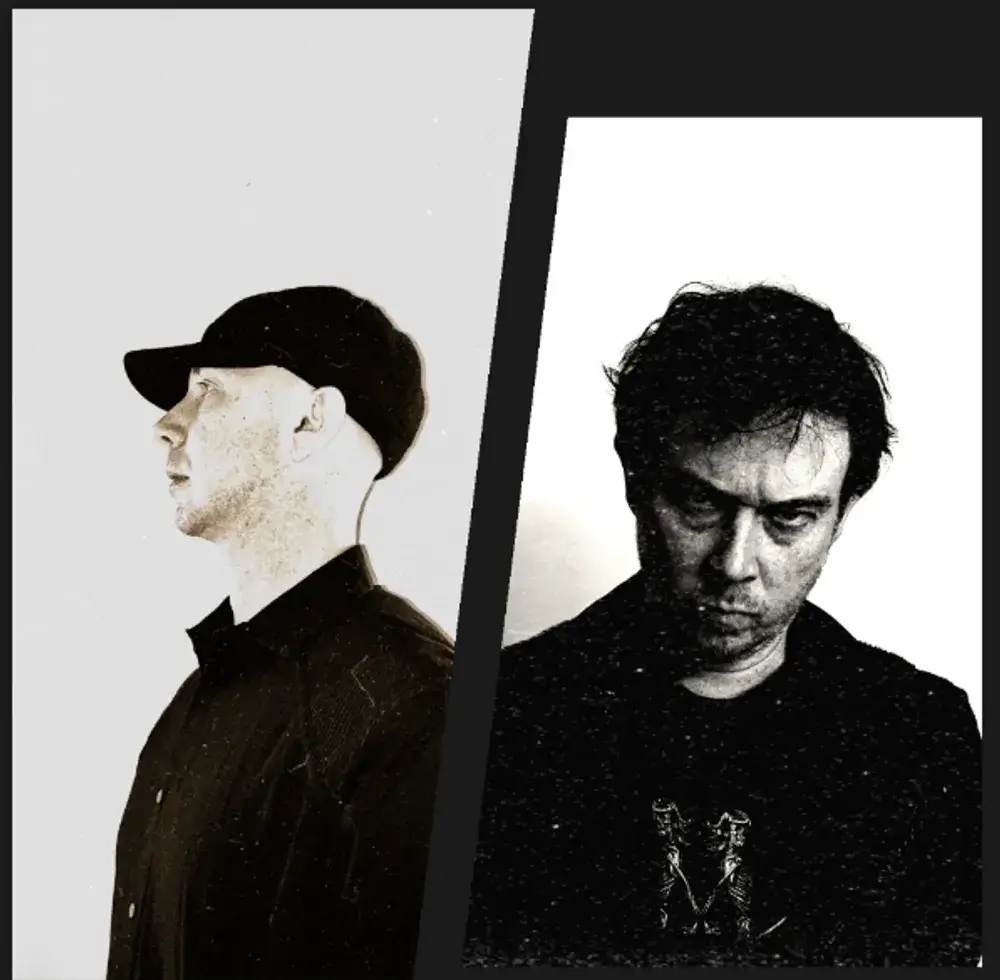
As Absinthe Vows’ fourth full-length, Loose Omens carries the confidence of a band that knows exactly who they are and doesn’t feel the need to explain it. There’s no hand-holding here. No obvious entry point designed to ease newcomers in. The album assumes you’re either willing to meet it where it is, or you’re not. And if you’re not, that’s fine. It will continue without you and there’s something refreshing but slightly intimidating about that posture.
The album opens with “Fatally Sung,” which barely qualifies as a song in the traditional sense. It’s more of a mood-setting invocation, a throat-clearing spell that lets you know what kind of headspace you’re about to occupy. It’s short, ominous, and deeply uncomfortable in a quiet way, like standing in a room where something bad definitely happened but nobody’s going to explain it. This is where Loose Omens draws its line in the sand. There will be ceremony. There will be dread. And you’re not getting eased into either.
From there, the album settles into its early rhythm, establishing the sound palette that will carry it for the long haul. “Throb” introduces a more mechanical pulse, flirting openly with industrial textures while still clinging to a post-punk backbone. It feels cold and physical at the same time, like a heartbeat you’re not sure belongs to you. There’s a push-and-pull here between movement and restraint, between something that wants to be danced to and something that actively resents the idea. That tension becomes one of the album’s defining traits, repeating in different forms across the runtime.
One of the early moments where everything clicks is “Painting Over the Blood Tarot.” This is where Loose Omens really locks into its identity. The track takes its time, layering ghostly guitars and ritualistic rhythms with a patience that feels intentional rather than self-indulgent. Nothing rushes. Nothing explodes. Instead, the song creeps forward, letting its atmosphere do the work. Thematically, this is where the album’s obsessions start to surface more clearly: erasure, reinvention, symbolic violence, and the uneasy act of covering something up without ever fully removing it.
“Staring at Ghost Ships” pulls things back again, shorter and more restrained, but no less effective. It feels distant and hollowed out, like watching something important drift away without being able to stop it. That sense of abandonment and emotional distance threads through a lot of Loose Omens, and here it’s expressed with a minimalist precision that keeps it from tipping into melodrama. As the album unfolds, Absinthe Vows arrives like a mission statement. Every track are brooding confidence and grim resolve, a crystallization of the band’s aesthetic and emotional goals.
The pairing of “Deth Masque” and “Death Mask” is one of the album’s smarter structural choices. Placed back-to-back, the tracks feel like reflections of each other; two sides of the same idea, circling themes of identity, concealment, and performance. It’s not subtle, but subtlety isn’t really the point. The effectiveness comes from how clearly the mirroring is communicated, reinforcing the album’s fixation on masks, roles, and the spaces between them.
Later tracks like “Still Rebirth” offer reflection without comfort, while “An Ancient Heart” taps into a more classic gothic sensibility that feels timeless rather than nostalgic. By the time the album reaches its closing stretch, it’s unapologetically heavy with “This Will Be the End of Everything” living up to its title, collapsing the album’s themes into a looming, terminal statement as a personal highlight.
What makes Loose Omens work, especially at this length, is restraint. For all its darkness and density, the album never collapses under its own weight. Absinthe Vows understand that atmosphere is about tension, not excess, and that goth music is most powerful when it’s precise rather than theatrical. This isn’t a record that demands your attention. It waits for you to give it. And if you do, it doesn’t let go easily.
As a double album, Loose Omens could have easily overstayed its welcome. Instead, it feels intentional from start to finish, guided by a clear artistic vision and a refusal to compromise. It’s not a casual listen, and it’s definitely not background music. But if you’re willing to sit with it and I mean really sit with it… it rewards that patience.
Follow Absinthe Vows
About the Author

A tenured media critic known working as a ghost writer, freelance critic for various publications around the world, the former lead writer of review blogspace Atop The Treehouse and content creator for Manila Bulletin.