

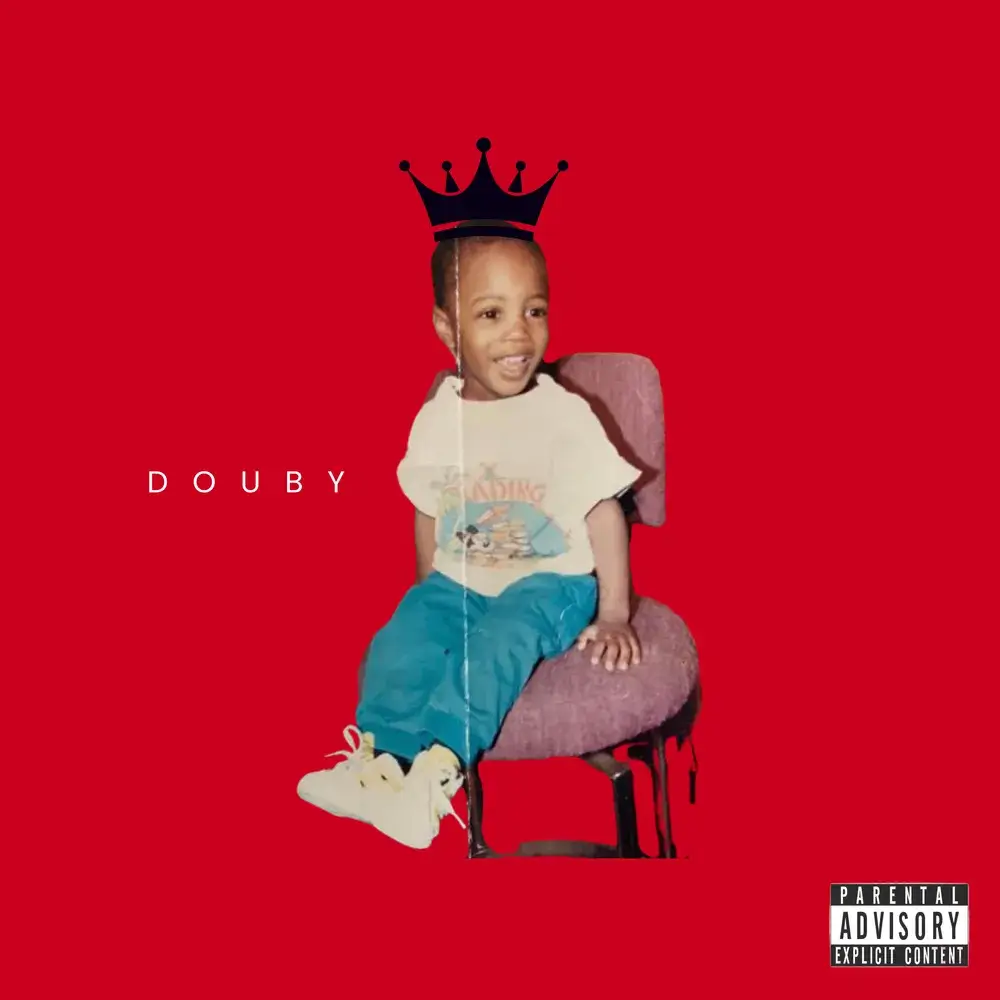
There’s a certain confidence that comes with looseness. Not the careless kind, but the kind that comes from knowing your instincts are sharp enough to trust. Douby, the debut album from DJ SoulChild AC, lives squarely in that space. It’s an album that doesn’t beg to be decoded track-by-track in a rigid order. Instead, it invites you to press shuffle, let go, and let the grooves do the talking. And somehow, no matter where you drop the needle, it lands like a perfectly timed dance mix.
Set for release on February 27, Douby is a genre-fluid statement that fuses hip-hop, house, soul, Brazilian funk, and club music into something that feels lived-in rather than labored over. For an artist with half a million monthly Spotify listeners and a massive social following, this being SoulChild AC’s first official album is kind of wild, but it also explains why the record feels less like an introduction and more like a victory lap.

From the jump, Douby moves with a DJ’s logic rather than an album purist’s. “PARIS MEETS RIO” is a good example of this philosophy in action: global in rhythm, playful in percussion, and built like a late-night set where borders blur and bodies move on instinct. The Brazilian funk influence is unmistakable, but it never feels pasted on for trend points. It feels earned, as if SoulChild AC has actually lived inside these sounds rather than studied them from afar.
That sense of musical citizenship places Douby in conversation with artists like Flying Lotus, who’s long blurred the lines between beat tapes, jazz fusion, and hip-hop futurism. Like FlyLo, SoulChild AC understands negative space, rhythmic tension, and the power of letting tracks breathe. Songs like “ENVY” and “MORE TO THE MUSIC” don’t rush to prove themselves; they unfold, stretch, and let their textures simmer. There’s groove here, but also restraint.
Elsewhere, the album leans more overtly club-forward. “BOUNCE” and “BOUNCE PT 2” function like twin engines, both punchy and elastic, built for movement without sacrificing musicality. They hit hard, but never feel stiff; another testament to the album’s loose, human feel. That looseness is where Douby shines most. Even tracks with similar BPMs or moods never feel redundant because the album isn’t obsessed with linear storytelling. It’s obsessed with feel.
That approach naturally invites comparisons to KAYTRANADA, especially in how SoulChild AC balances groove with soul. Tracks like “LOVERS GROOVE” and “KITTY KAT KAT” (and its sequel) thrive in that sweet spot where dance music flirts with intimacy. They’re songs you can move to in a crowded room, but also ones that hit just as hard alone with headphones on. The swing is subtle, the basslines warm, and the emotional register stays light without becoming shallow.
One of the album’s biggest strengths is how comfortable it is with contradiction. “I DONT WANT EM” carries an almost dismissive cool, while “KICK BACK” feels like a Sunday afternoon stretched into sound. “STUDIO 54” nods to disco lineage without getting stuck in nostalgia, and “SAO PAULO” pulses with kinetic energy that feels both modern and rooted. Even “APOCOLYPTO,” despite its ominous title, feels more like release than destruction; chaos transformed into rhythm.
In terms of sequencing, Douby reminds me a lot of Skrillex’s Quest for Fire. That album thrived on the idea that electronic records don’t always need a fixed narrative arc to make sense. SoulChild AC adopts a similar mindset here. You can shuffle Douby endlessly and it still works, each track acting like a self-contained moment that connects organically to the next. That’s a hard thing to pull off, and it speaks to the cohesion of the album’s sonic palette rather than its track order.
“EAT IT UP” and “THE MOOVEMENT” feel like mission statements in that regard: music as motion, as physical response, as something you experience more than analyze. There’s no anxiety here about genre boundaries or expectations. Hip-hop drums slide into house rhythms. Soulful textures brush up against club maximalism. Everything feels porous.
What makes Douby particularly impressive is how unforced it all sounds. For a debut album, it resists the temptation to over-explain who the artist is. Instead, SoulChild AC lets the music speak, trusting that listeners will follow. That trust pays off. The album doesn’t demand your attention; it earns it by being fun, fluid, and deeply replayable.
In the end, Douby feels less like a debut and more like an open door. It’s an album that understands dance music not as a rigid format, but as a living, breathing ecosystem. Shuffle it, play it straight through, drop it into a DJ set and it holds up every time. Loose, free, and confident in its own rhythm, Douby is proof that sometimes the best albums don’t try to control the moment. They just move with it.
Follow DJ SoulChild AC
About the Author

A tenured media critic known working as a ghost writer, freelance critic for various publications around the world, the former lead writer of review blogspace Atop The Treehouse and content creator for Manila Bulletin.





amoxicillin antibiotic summary
amoxicillin antibiotic summary
costco prilosec otc
costco prilosec otc
sildenafil weight lifting
sildenafil weight lifting
generic tadalafil philippines
generic tadalafil philippines
metoprololo
metoprololo