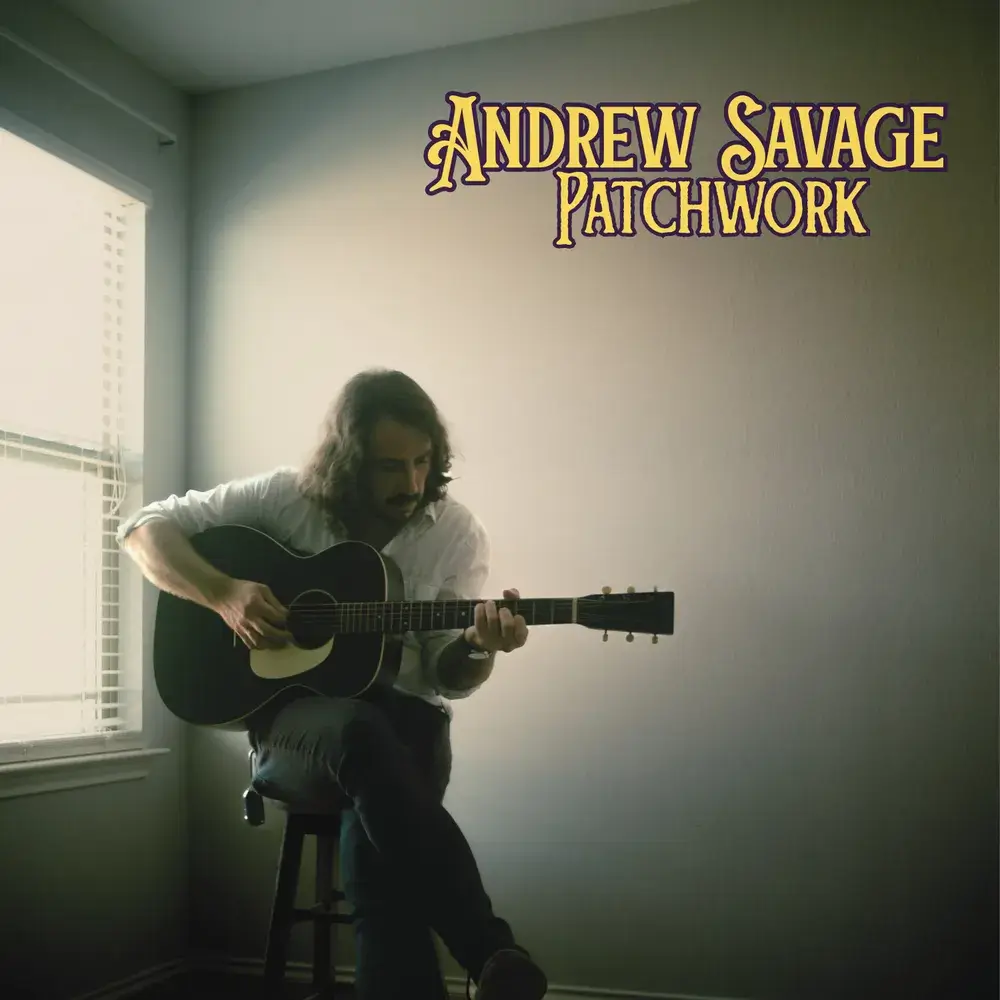
Andrew Savage’s Patchwork is the kind of debut album that sounds like it was recorded by three people who wandered into a studio, shrugged collectively, and said, “Yeah, that seems in tune enough.” And I mean that in the most complimentary way possible. It’s unpolished, a little wobbly, very human and brilliant. This is an album that rejects perfection the way a cat rejects the expensive toy you bought it: aggressively and with principle.
Savage recorded the whole thing over two Saturdays with Joe Hilling on drums and Jack Meidel on bass, and instead of layering overdubs until their souls left their bodies, they mostly hit “record,” played the songs, and went home. No click track. No Frankenstein editing. Just whatever happened in the room, preserved like a fossil in amber; if amber also included the occasional missed cue and an endearingly overconfident tempo change.
And honestly? The vibe is immaculate.
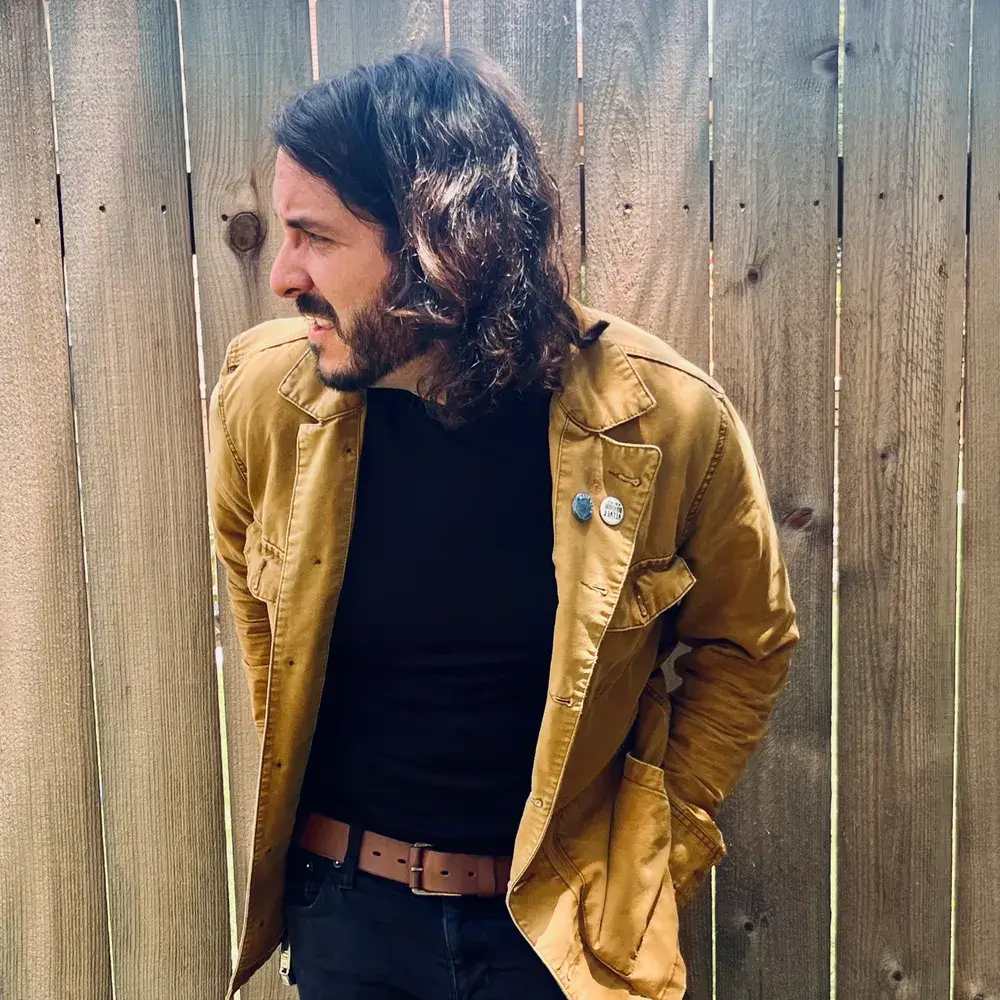
The album opens with “Another Restless Life,” a track that feels like Tom Cochrane if he’d suddenly decided to cosplayer as a country songwriter. It’s upbeat, slightly scruffy, and unmistakably a “first track” song in the sense that it kicks the album awake without spilling its coffee. Savage’s vocals have that “I’ve lived a life, but like, in a polite way” energy. It’s the perfect handshake to the album: warm, slightly calloused, and probably belonging to someone who knows where to buy good firewood.
“Water the Cat” leans more into Eric Church territory; heartland-country but without the corporate gloss, like you’re listening to a very gifted mechanic sing about his feelings. The production stays charmingly roomy, as though the instruments are giving each other enough personal space to avoid conflict.
Then the album goes full “You know what? Let’s just do bluegrass.” On “Goddess of War”, the track is delightfully bouncy and jangly, like a track that accidentally tripped into existence while the band was tuning. It’s fun because it doesn’t try to be profound. It just exists, happily vibrating at bluegrass frequency.
“Fire Me Up” kicks everything sideways into blues-rock, and suddenly Savage is channeling Sturgill Simpson if Sturgill had been raised in a barn powered exclusively by guitar solos. The riffing here is genuinely great; loose, dusty, confident and you can practically hear the amps sweating. This is the first track where the “record it live” philosophy stops being charming and starts being legitimately cool.
But Patchwork is secretly an emotional album, which becomes obvious with “Disposable Camera.” Savage goes solo for this one, and the result is a gentle, confessional track that sounds like it wandered in from a Luke Combs B-side that was simply too sincere for radio. It’s tender without collapsing under its own sincerity, which is a difficult line to walk unless you are a person with exactly one microphone, one acoustic guitar, and important feelings.
Then comes “$2 Movie,” the most Neil Young thing here. And I don’t mean that lightly. This track is so Neil Young-coded that if you told me Savage recorded it while wearing a flannel shirt that spontaneously regenerated as he played, I’d believe you. It’s slow, woolly, unhurried, and hypnotic. The band sinks into a groove that feels like it could’ve lasted ten minutes and nobody would’ve complained. It’s one of the best tracks on the album because it stops trying to be anything but itself.
After a quick acoustic interlude, there is “Down to the Bone,” which is barely a minute long but serves as a nice breath; the album veers into grunge-country with “Parking Lot Puddle.” This is where everything gets a little murkier, a little heavier, and a little more Blake Shelton if Blake Shelton had a rebellious phase in a garage somewhere. It’s grimy in a friendly way.
And then there’s “Great Divide,” the closer, which is simply the band saying: “Hey, remember when The White Stripes got weird on Get Behind Me Satan? Let’s do that but country.” It’s sprawling, jammy, experimental, and the musical equivalent of spilling a box of wires on the floor and discovering that they’re already plugged in correctly. It’s a surprisingly ambitious ending, the kind that makes you rewind the album to figure out how the hell you got from point A to point “Jack White wearing cowboy boots.”
What makes Patchwork genuinely special is that Savage and his band embraced the chaos of live recording in a way that actually improves the music. The slight tempo drifts, the breathing room between instruments, the sense that these are songs played by actual humans in an actual room; it all adds up to something more compelling than a slick, polished version ever could’ve been. It’s an album that feels alive because it is alive.
Savage wanted to make a record that captured a moment instead of chasing perfection. And he did exactly that. Patchwork is warm, unpretentious and remarkably cohesive despite genre-hopping like it’s collecting stamps. It’s a debut that doesn’t try to prove anything except that three musicians can show up, play honestly, and make something that resonates.
Follow Andrew Savage
About the Author
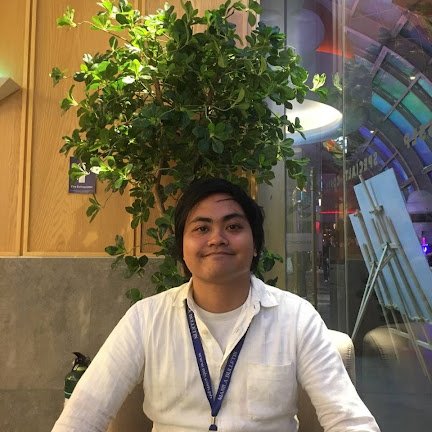
A tenured media critic known working as a ghost writer, freelance critic for various publications around the world, the former lead writer of review blogspace Atop The Treehouse and content creator for Manila Bulletin.