

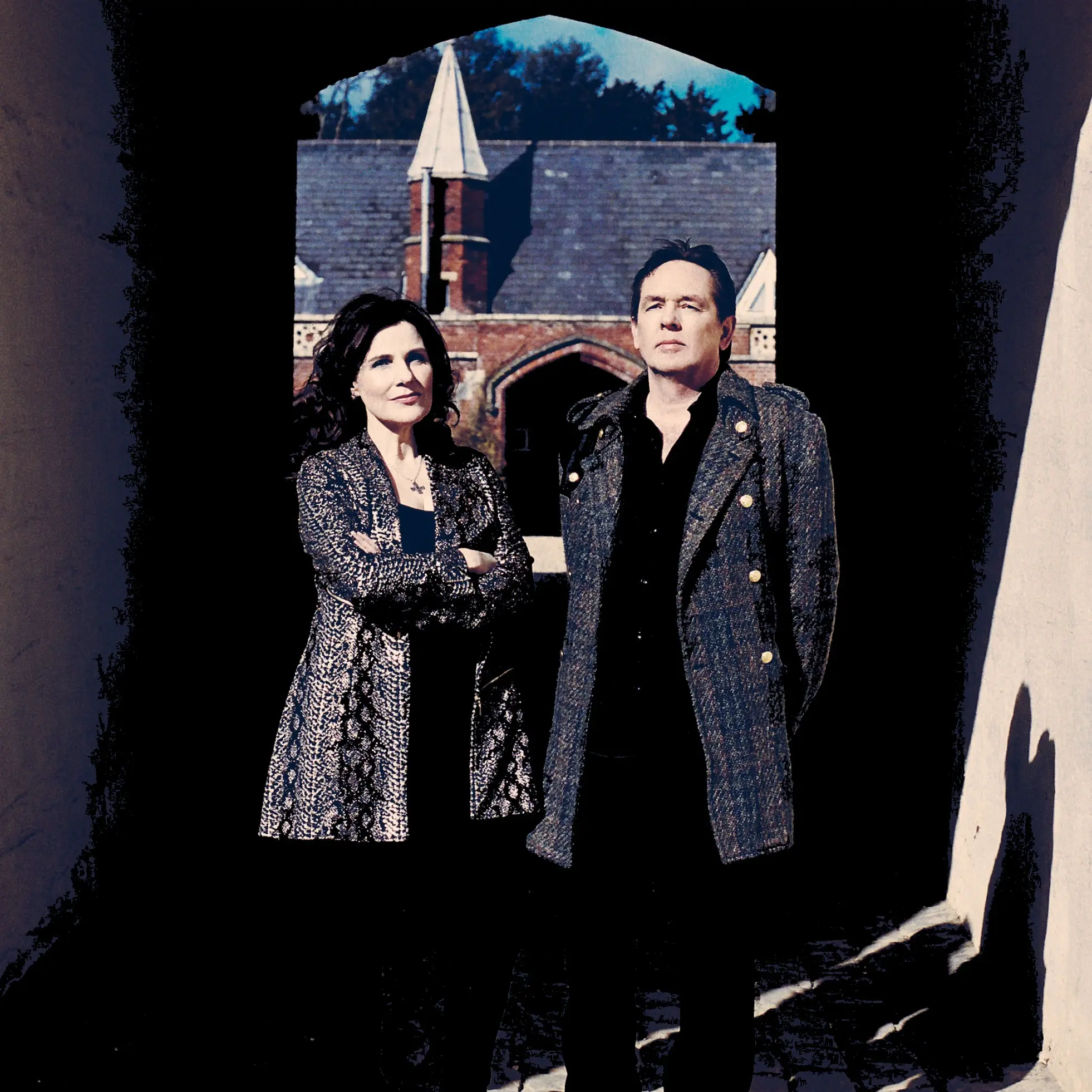
There’s something quietly rebellious about an album like Pertinax. Suris, composed of the duo of Lindsey and David Mackie, have decided to make something defiantly sincere. It’s the sound of two people who have been doing this long enough to know better, but went ahead and did it anyway.
“Pertinax” literally means “resolute,” which is fitting, because this album refuses to apologize for caring deeply about things. It’s a record full of lush arrangements, dramatic vocals, and uncomfortably honest songwriting; the kind of thing that makes you realize how allergic most modern music has become to risk.
The first track, “Mended,” arrives like a transmission from a different era, the place where 70s mysticism and 80s romanticism got drunk together and forgot to go home. Lindsey Mackie sounds like Stevie Nicks if she’d fronted Purity Ring, while David’s production layers shimmering synths and guitar textures that teeter between comfort and unease. The song’s title is optimistic, but the tone isn’t quite; it’s about trying to put yourself back together when the world keeps handing you the wrong pieces. It’s the perfect thesis statement for the album: beauty and ruin, cohabiting politely.
“Last Train Home” picks up the tempo, and suddenly you’re in what sounds like an Arcade Fire B-side; if Arcade Fire had the restraint to stop shouting about suburbia for five minutes. The track pulses with urgency but avoids the self-importance that usually comes with that territory. It’s cinematic, but not in a “look, we’ve got string sections!” way; more like the cinematic feeling of being the only person left on the last carriage home, staring at your reflection and wondering if you’ve already missed something important.
“Whole” is the point where the album leans into its art-rock credentials. It’s the most obviously Kate Bush-adjacent track here, but what makes it work is Lindsey’s vocal delivery; unguarded to the point of it being conversational, like she’s telling you something too personal but can’t help herself. There’s a fragility in how she phrases the chorus, a kind of emotional risk that feels rare these days. You can tell this isn’t a song built for playlists; it’s one of those tracks that sits quietly in your brain until it decides to hurt you a bit later.
Then there’s “Take All She Brings,” which opens with an upbeat, jangly rhythm that could almost fool you into thinking it’s a feel-good track. Spoiler: it’s not. It’s a song about giving too much of time, of love, of energy and realizing that nobody’s coming to refill the tank. It’s got this Florence + The Machine-before-the-theatrics energy, all tambourine and ache. It’s one of the album’s standouts because it weaponizes charm; it sounds sweet, but there’s poison in the sugar.
The back half of Pertinax settles into reflection. “Born to Be With You” is a slow, smoky ballad that feels like early Bowie after a long night of thinking too much. It’s patient, self-contained, and utterly sincere. Lindsey’s voice — rich, slightly cracked, full of restraint — carries it effortlessly. It’s a song about companionship, but not in the Hallmark sense; it’s about the quiet, unglamorous kind of love that survives the weather.
And then there’s “Fugue.” Oh, “Fugue.” This is the part of the album where Suris stop pretending they’re playing by anyone’s rules. It’s huge, weird, and operatic; imagine if Celine Dion and Björk tried to write a song together, and somehow it worked. The song builds into this layered, dizzying crescendo that feels like a reckoning. Not a conclusion, but an unraveling. It’s the album’s final statement, a reminder that art doesn’t have to resolve to mean something. Sometimes you just end on a sustained note and let it haunt people.
What makes Pertinax compelling isn’t that it’s technically flawless; it’s that it feels lived in. You can hear the fingerprints all over it. The production is detailed but never sterile; the performances are passionate without drifting into melodrama. Suris don’t sound like they’re chasing a sound; they sound like they’ve already found it, years ago, and just decided to polish it into the shape of who they are now.
What’s more interesting is how Suris take all those influences and fold them into something unmistakably human. There’s no irony here, no wink at the camera. Pertinax is, at its core, a record about being earnest in an age that keeps trying to convince you not to be.
That might be why it hits so hard. Because while everyone else is busy making clever music about detachment, Suris are out here writing songs about feeling too much. And that’s what makes Pertinax special: it’s not trying to be relevant. It’s trying to be real.
Follow Suris
About the Author

A tenured media critic known working as a ghost writer, freelance critic for various publications around the world, the former lead writer of review blogspace Atop The Treehouse and content creator for Manila Bulletin.