

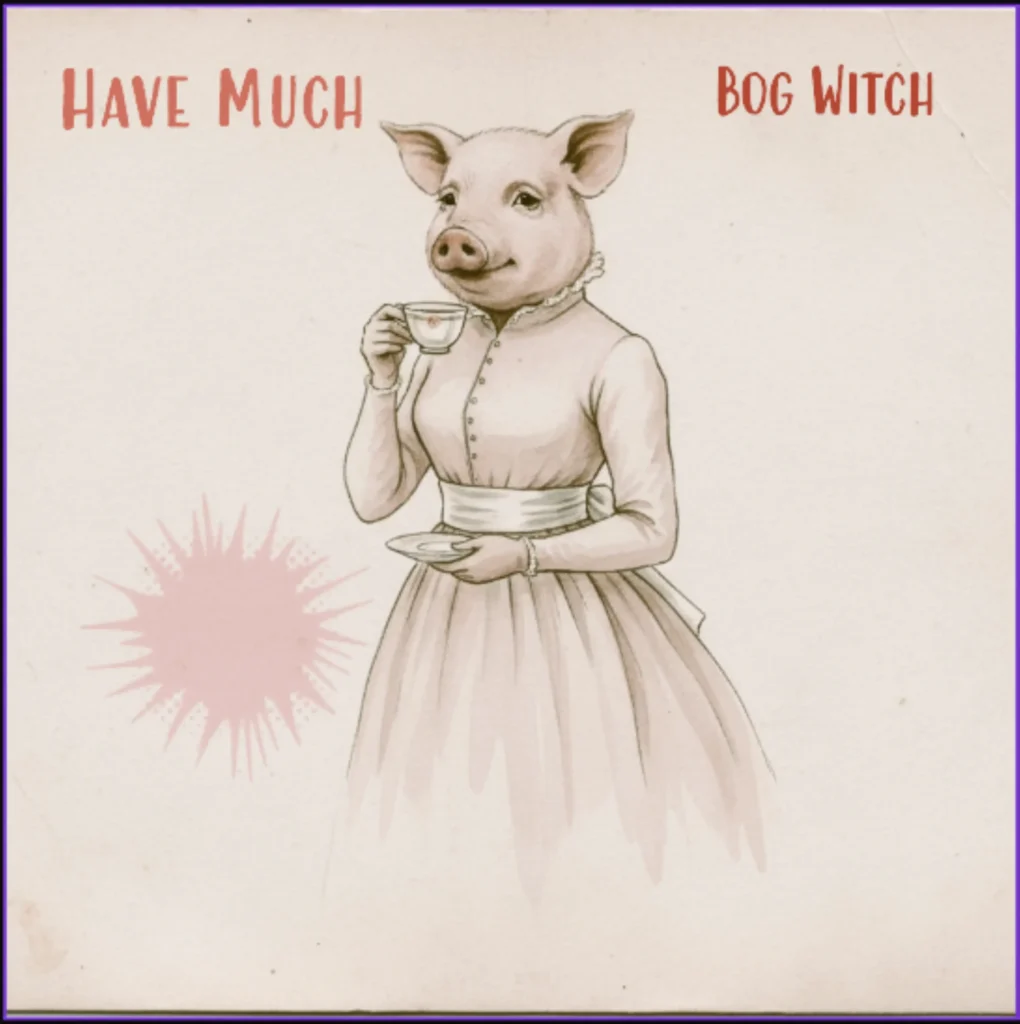
What if the person telling you the story isn’t the most trustworthy person in the room? That’s the delicious little trap at the center of “Have Much,” the new single from Wendy DuMond’s Bog Witch project. Built around betrayal, self-deception and the increasingly complicated gulf between what we know and what we want to believe, the song doesn’t simply tell you what happened. It asks you to question the person doing the telling and that makes “Have Much” a significantly more interesting song than a straightforward breakup song.
DuMond wraps her tale in the atmospheric rock and dream pop of gothic folk, creating a sound that is appropriately shadowy without tilting into melodramatics. Layered harmonies on the song create a hazy quality, and spoken passages inspired by Edna St. Vincent Millay pull the material firmly into the realm of literary fiction.
But it’s the unreliable narrator at the heart of the thing that’s the real hook. “Have Much” demands that the listener differentiate fact from interpretation from possibly outright self-delusion. Betrayal is rarely neat – it’s not as simple as “Someone did X, now I’m sad.”
DuMond understands all of that messiness. Her own background, paired with such specific, place-based influences as a Montana upbringing and much of her adult life spent in the American South, coalesce into a distinct atmosphere that’s at once airy and prone to spooky shadows, storytelling driven, but with a keen sense for the disquieting corners of narrative construction.
Her most recognized work, be it solo under her own name, as Bog Witch, or in Americana-flavored Blackfoot Daisy, leans into the spectral, the introspective and the quietly subversive, but “Have Much” particularly seems at home in the Bog Witch identity: strange, hushed, intimate and unsettling just enough to make you fear you’ve misheard something crucial.
“Have Much” achieves this largely through its’ cinematic structure. Instead of trampling the narrative, the production has given the storytelling ample space to breathe. The shimmering harmonies drift and shimmer over the central narrative and the interjections of spoken word interrupt what might otherwise be a too-comfortable rhythm in a very mewithoutyou-type way; the effect is something that feels slightly askew in a way perfectly suited to the track.
Ultimately, “Have Much” succeeds with where the song leaves you: with no easy answers, only the insistent thought that the story you just heard might have been the meticulously curated version of a person desperately trying to tell herself and the rest of us that everything is okay, despite overwhelming evidence to the contrary.
Listen with the understanding that “Have Much” is trying to make a deal: what story can you be convinced of?
Follow Bog Witch
About the Author

A tenured media critic known working as a ghost writer, freelance critic for various publications around the world, the former lead writer of review blogspace Atop The Treehouse and content creator for Manila Bulletin.